How Does the Electric Rear Axle Work in Hybrids?
You are looking at the rear of a front-wheel-drive hybrid and you cannot see anything: there is no driveshaft. Yet the brochure says AWD, and you are looking for four-wheel grip on a snowy road. So how does power get to the rear? The answer lies in a small component most drivers never notice but which is active at every start: a separate electric motor sitting on the rear axle.
Replacing the decades-long engineering tradition of mechanical four-wheel drive with a few cables and a compact motor unit sounds simple. But this architecture has its own logic, its own limits, and its own failure profile. In this guide, we explain step by step how the electric rear axle (e-AWD) works, when the motor kicks in, how it differs from classic AWD, and for whom this system makes sense.
Four-Wheel Drive Without a Shaft: The System's Basic Architecture
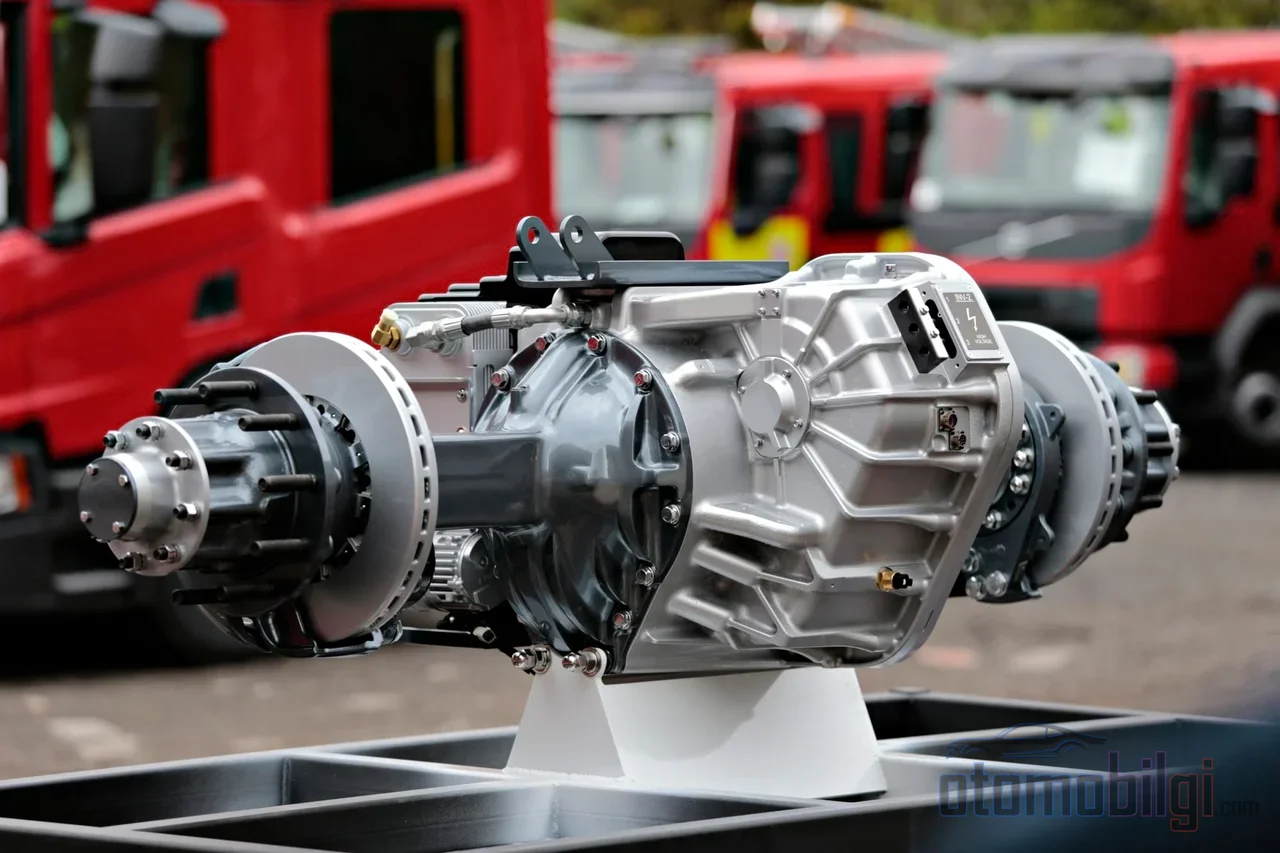
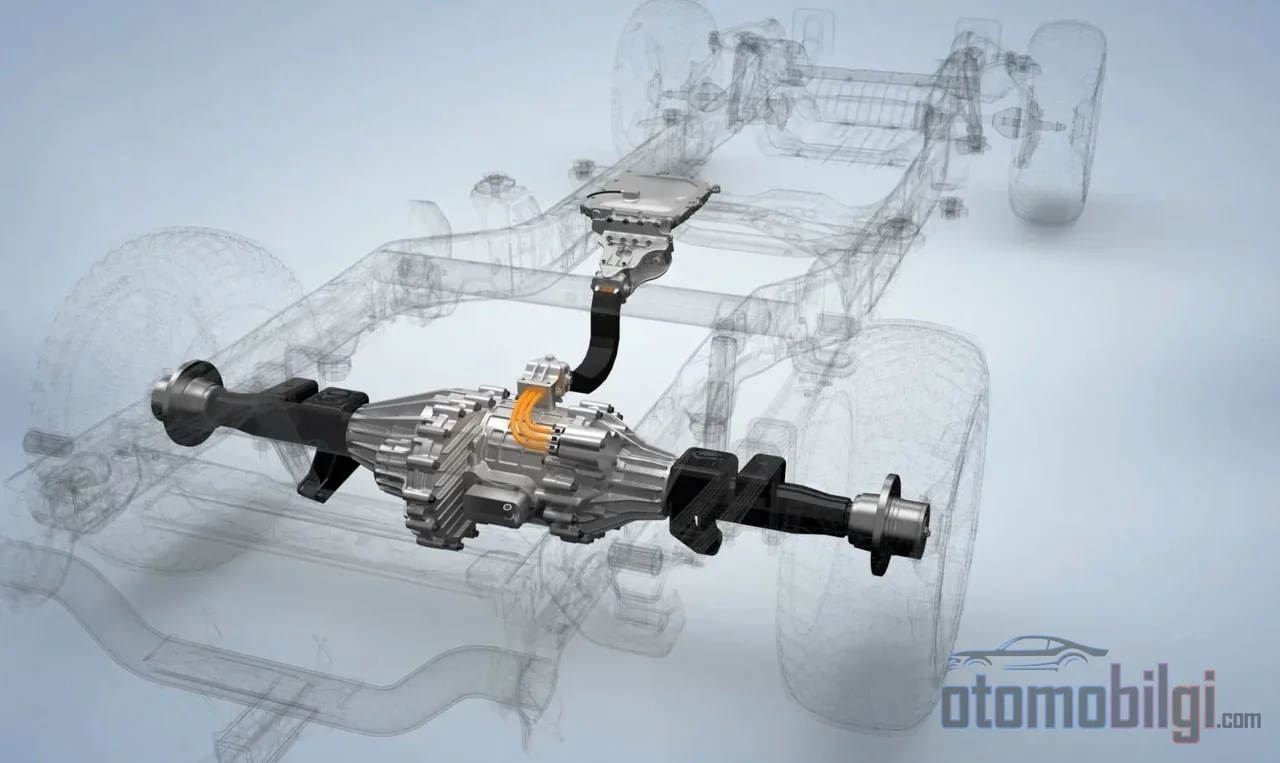
In a classic AWD vehicle, power comes from a single source: the torque produced by the engine is distributed to the front and rear wheels via the drivetrain through a driveshaft (propeller shaft). In the electric rear axle architecture, this chain is physically broken. The front axle continues to work with the gasoline engine and hybrid drivetrain; the rear axle, however, is fed only by an electric cable, and the torque is produced by its own electric motor sitting at the rear. There is no mechanical connection between the front and rear axles.
Toyota uses this approach under the name Electronic On-Demand AWD (AWD-i / E-Four), placing a dedicated electric motor on the rear axle instead of a driveshaft; this motor has no mechanical link to the front motor. Honda has also officially announced that in its next-generation e:HEV systems, it will move to a new rear drive unit that powers the rear wheels with an electric motor, replacing the traditional Real Time AWD with a propeller shaft. A typical full hybrid setup is arranged like this: a gasoline engine and a motor/generator pair at the front, and a relatively small electric motor at the rear that is only called into action when needed. Some systems drive the car mostly on a single axle and add the other axle the moment it is needed.
Highlights
- In an electric rear axle setup, there is no driveshaft between the front and rear axles; the rear is fed only by cables.
- The rear motor typically engages at startup and when the front wheels slip.
- Thanks to the hybrid battery being moved under the floor, the shaft tunnel shrinks and interior space and cargo volume grow.
- The AWD version, with the extra motor's weight, can bring approximately a 10% loss in fuel economy/range.
- In consumer surveys, hybrids stand out as the group with fewer problems than gasoline-only vehicles.
When Does the Rear Motor Kick In?
The critical point is this: the rear electric motor does not run continuously. When the system decides that rear traction would be beneficial, it brings the power in quickly; the rest of the time, the car is effectively a front-wheel-drive hybrid. Engagement moments can be grouped into three categories.
Launch and Acceleration
Electric motors are far more capable than gasoline engines at producing torque instantly from zero; so at launch the system can add force to the rear to maximize the grip of all four wheels. According to Honda's explanation, as load shifts to the rear axle during launch and acceleration, the force sent to the rear wheels is increased. Based on unverified experience reports from owners, a Toyota RAV4 hybrid's rear motor engages from a standstill up to about 11 km/h on dry ground and can assist up to about 68 km/h; above that, the vehicle mostly runs in front-wheel drive. This should be read as a characteristic of the system: all-wheel drive as an event rather than a permanent state.
Slippery Surfaces and Corners
When the front wheels begin to slip, the system proactively adds power to the rear; in Toyota's description, this is defined as instant torque and proactive stability provided by independent motor/generators. In corners, Honda's approach includes an interesting detail: the grip limit of the inner rear wheel is calculated and the force sent to the rear is increased, thereby reducing the load on the front wheels and balancing the vehicle's behavior.
Deceleration and Regeneration
The rear motor does more than just push. During deceleration, the rear wheels' regenerative braking complements the front braking; energy recovery is maximized while the vehicle's pitching during sudden stops is suppressed. In other words, the rear axle becomes part of the braking chain as well.
A New-Generation Approach to Torque Control: Throttling the Slipping Wheel Without Losing Power
In mechanical AWD, when slip is detected, the entire output of that axle is usually throttled. Honda developed a new traction control system (TCS) that manages the front and rear motors independently: separate motor control units detect slip individually and throttle only the output of the slipping wheel. The result is a significant difference compared to a mechanical AWD - instead of cutting the entire driving force, only the lost portion is cut and the vehicle retains its traction. This is presented not as a weakness of the shaftless architecture, but as an advantage gained through independent control.
Differences Between the Electric Rear Axle and Mechanical AWD
Comparing the two architectures in the same table clarifies the logic behind the design decisions:
| Feature | Mechanical AWD | Electric Rear Axle (e-AWD) |
|---|---|---|
| Power transmission | Distribution to front and rear via a driveshaft | A cable to the rear; the rear axle's own motor |
| Front-rear connection | Continuous mechanical connection | No mechanical connection at all |
| Rear torque source | The same power source | A separate electric motor, instant torque |
| Packaging | Requires a driveshaft tunnel | Flatter floor, increased cargo volume |
| Regenerative braking | Limited to the front axle | The rear wheels can also recover energy during braking |
The packaging gain is more tangible than it looks on paper. Shrinking the driveshaft tunnel yields a flatter floor; rear seat comfort improves. Moving the hybrid battery under the seats also increases cargo volume. The volume that would normally be reserved for a mechanical AWD's driveshaft, drivetrain, and tunnel goes to passengers and cargo here.
Reliability and Possible Failure Scenarios
The overall picture favors hybrids: in broad consumer surveys, hybrid vehicles repeatedly stand out as the group that produces fewer problems than their gasoline-only counterparts. The hybrid battery and electric motors are also considered components that require no regular maintenance; among known electrical issues, one can cite battery degradation with age and motor problems seen with increasing mileage.
Failure scenarios specific to the rear drive unit are a separate topic. In unverified complaint examples from owners, the most direct consequence of a failure is loss of power to the rear wheels; grinding, whistling, or rattling noises are also among the common complaints. Across the hybrid system in general, notifications such as sudden jolting, hybrid system failure warnings, and loss of power can be seen. On the other hand, these units are not unknown parts: for the rear drive units used in some 2019-2025 Toyota and Lexus models, there are established diagnostic procedures used by technicians. So when a problem arises, you are not left in the dark.
Snow, Mud, and Realistic Expectations: How Useful Is It in Winter?
The most common mistake about the winter performance of four-wheel drive is misreading the system's capability limits. AWD helps prevent wheel slip on wet, icy, and snowy surfaces during takeoff and hill climbing; but it does not improve stopping distance or cornering grip. The tires do the real work - an AWD vehicle with worn tires can perform worse than a front-wheel-drive vehicle with good tires.
Current examples of the system are shaped according to this need. The 2026 model year RAV4, which offers AWD as standard across the full hybrid lineup, features a system that responds to slip in real time and snow-calibrated driving modes; a new SNOW mode was also added in this generation, and since no gasoline AWD variant remains, it is stated that the hybrid's AWD system has been strengthened. Winter model selection lists include both hybrid AWD options like the Tucson Hybrid and examples like the Subaru Outback, which stands out with its full-time AWD and high ground clearance. A cost note: due to the extra motor's weight, the AWD version can bring an estimated loss of about 10% in range and fuel economy - a price paid in return for a grip advantage that compensates for this loss.
Who Does This System Make Sense For?
The electric rear axle, by its function, does the same job as classic four-wheel drive: it sends power to the wheels with grip. The feel, however, varies from vehicle to vehicle; the most honest advice is to take a test drive yourself. We can reduce who it makes sense for to three questions:
- Do you live in a region with snow, ice, or steep hills? You get a real advantage in takeoff and climbing; the system is designed precisely for these moments.
- If city use dominates and you are consumption-sensitive? Know that the rear motor mostly stays idle; but still factor in an economy loss of roughly 10%.
- Are you buying it only for the feeling of safety? AWD does not improve braking or cornering grip; devoting part of your budget to good tires pays off more than four-wheel drive.
A practical note for diagnosing issues: you can tell whether your car is hybrid and AWD from the listing text, the badge on the vehicle, or the window sticker. And let's answer the most common question on your mind: a hybrid AWD may not have a driveshaft; in many models, only an electric motor drives the rear. Gasoline-powered front wheels and electric-powered rear wheels is not an engineering fiction, but a real architecture on the roads today.
Conclusion: What Did They Put in Place of the Driveshaft?
The electric rear axle turns all-wheel drive from a mechanical problem into a software and power distribution problem. The motor sitting on the rear axle delivers instant torque at takeoff and during slip, and recovers energy under braking; the cables that replace the driveshaft flatten the floor and enlarge the interior. In return, there is a slight economy loss and a fault profile unique to the rear drive unit, one that is well established for diagnosis. Independent control, able to rein in only the slipping wheel at the moment of slip, is the system's strongest trump card against mechanics. For the driver seeking traction at takeoff, tackling tough winter surfaces, and unwilling to compromise on cargo space, this architecture is one of the most sensible AWD solutions today; and no system changes the fact that tires determine stopping safety.
Sources
- Next-Generation Electric AWD | Honda Technology | Honda Global
- How All-Wheel Drive Works on Hybrids and EVs | F&F Motors
- How Toyota Electronic On-Demand AWD Works on Hybrid Models
- What Is the Toyota Dynamic Torque Control AWD System? (MotorTrend)
- Hybrids Are Still the Most Reliable Cars, CR Survey Shows
- 2019-2025 Toyota/Lexus Rear Electric Motor Drive Unit Diagnostics
- Is the Toyota RAV4 Good in Snow?
- Best AWD Cars to Buy Before Winter in 2026 (US News)
- Pros and Cons of FWD, RWD, & AWD EVs
- New SNOW mode in 2026 RAV4 AWD Models (rav4world)