How Does an Inverter Failure Affect Hybrid Vehicles?
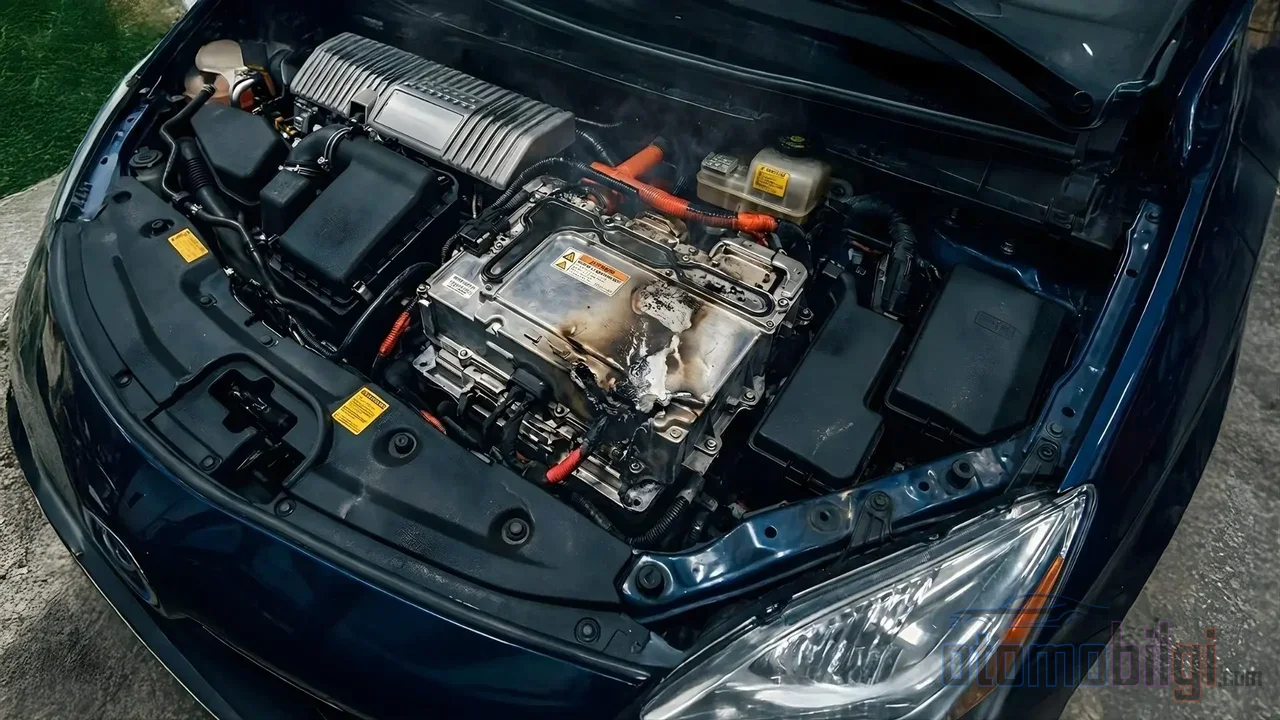
In a hybrid vehicle, if the dashboard suddenly fills with warning lights, the engine refuses to deliver power, and the car puts itself into a restricted driving mode, the culprit is often not the battery but the metal box next to it: the inverter. This component is at least as critical as the battery, yet it is the least talked-about part of the vehicle. When it fails, it radically changes the driving experience; when neglected, it leads to costly secondary damage. In this guide, we will go step by step, with engineering logic, through exactly what the inverter does, how it fails, its symptoms, and the repair cost.
What Does the Inverter Do in a Hybrid System?
Let's start by clarifying the question: the battery stores electricity as direct current, that is, DC. Electric motors, on the other hand, require alternating current, that is, AC, in order to operate efficiently and to control the speed-torque relationship with precision. The bridge between these two worlds is the inverter. It converts the DC power coming from the battery into the AC power going to the motor; during regenerative braking, it does the exact opposite, converting the AC produced by the motor into DC and charging the battery.
Its function is not merely current conversion. Modern inverters continuously regulate the voltage and frequency of the AC power sent to the motor, effectively controlling the vehicle's speed and torque. Smooth acceleration, energy recovery, and switching between different drive modes such as Eco or Sport are all the result of this regulation. In addition, diagnostic and system protection functions are also handled through the inverter. That is why the inverter is described as the brain of the electric drivetrain; it is critical in terms of performance, efficiency, and safety.
Why Can't Everything Be DC?
This is one of the frequently asked questions: couldn't we just take DC power directly from the battery and feed the motor with DC as well? It doesn't work; because AC motors offer the possibility of precise control in terms of speed and torque. By changing the voltage and frequency, you can adjust the motor's rotational speed with millimeter-level precision. This control is not possible with DC. Conversion is a necessity, not a luxury.
What's Inside: IGBT Modules
At the heart of the traction inverter are IGBT (Insulated Gate Bipolar Transistor) modules. These components combine the easily driven gate control of MOSFETs with the high current-carrying capacity of BJTs. Their task is to switch the high-voltage DC power coming from the battery with the lowest possible losses and at the highest speed, producing the AC the motor needs. These switches, which open and close thousands of times per second, provide both high current and fast control in a single component; they are the ideal structure for motor drives and DC-AC conversion.
Looking at the system as a whole, the picture is this: the high-voltage battery stores the energy, the inverter manages the flow of this energy between the motor and itself, the DC/DC converter steps the high-voltage DC down to a low voltage that the vehicle's 12-volt circuits can use, and the thermal system keeps the engine, the electric motors, and the power electronics within their operating temperature range. In some designs, the inverter unit takes, for example, 288 VDC from the battery and steps it up to a higher voltage with the help of a reactor; the values vary depending on the model and manufacturer. The inverter performs the same basic task in full hybrids (HEV) just as it does in plug-in hybrids (PHEV), battery electric vehicles (BEV), and hydrogen fuel cell vehicles. Conventional internal combustion vehicles have no inverter in this sense.
Highlights
- The inverter converts the battery's DC power into the AC power the motor needs, and by doing the reverse it enables charging through regenerative braking.
- The most common failure symptoms: warning lights, loss of power, limp mode, overheating, and unusual noises.
- If ignored, an inverter failure can also lead to damage to the hybrid battery.
- The cost of repair or replacement roughly ranges between $3,000–6,000; the variables are the model year and the extent of the damage.
What Are the Symptoms of Inverter Failure?
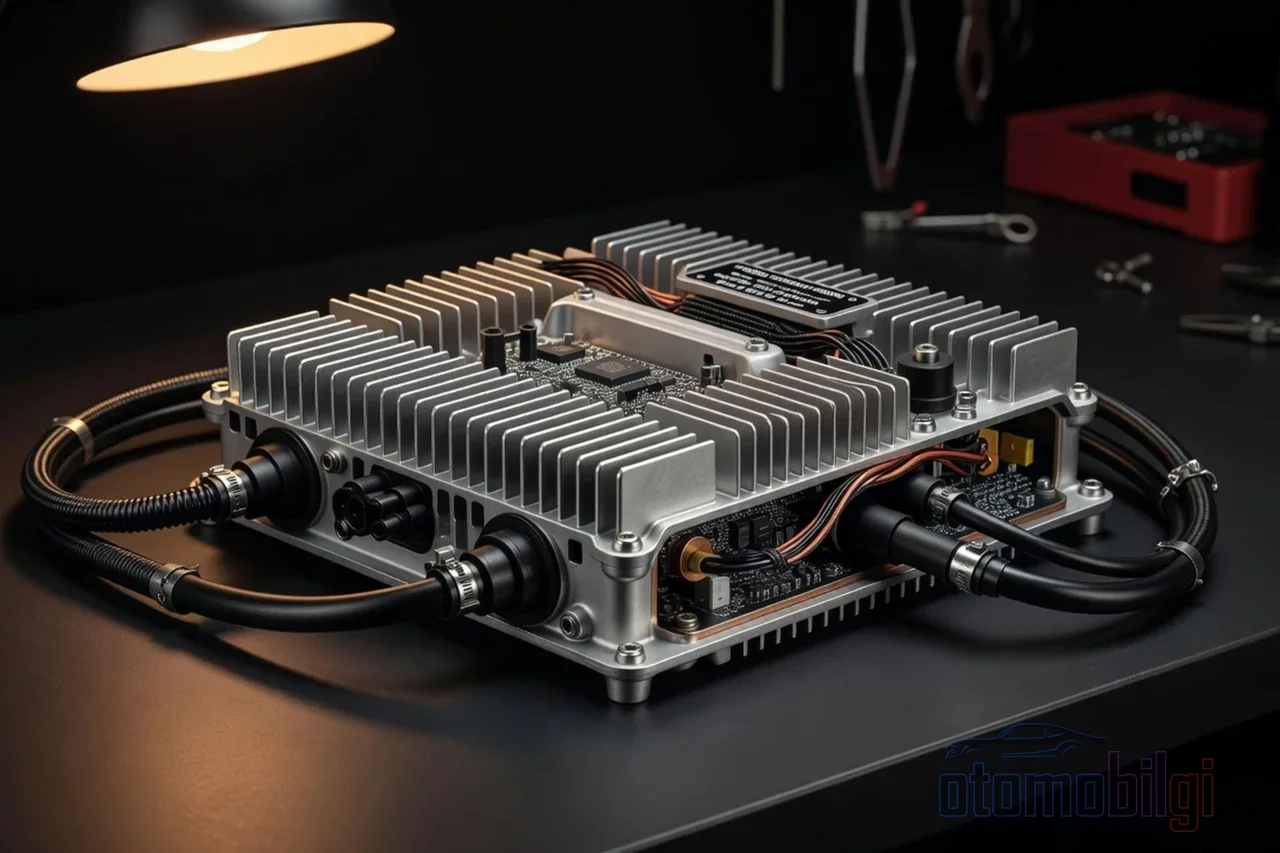
An inverter failure usually does not announce itself suddenly, but gradually. Its symptoms can be grouped under five headings:
- Warning lights and error messages: One or many warnings light up on the instrument panel at once. If the inverter fan can be heard running loudly along with a hybrid system warning, this is one of the clearest early signs that the cooling system needs maintenance.
- Loss of power and limp mode: Low power, poor acceleration, or the vehicle putting itself into limp mode, meaning restricted driving mode.
- Overheating: When the power electronics approach thermal limits, the system puts itself into protection mode.
- Unusual noises: Unfamiliar sounds coming from the inverter area.
- Performance degradation: Difficulty switching between drive modes, reduced range, and loss of efficiency; in some cases, the vehicle failing to shift into gear or not charging.
None of these signs should be ignored; because an inverter failure has a domino effect. For example, looseness in a fastener holding the electric motor can create an electrical arc and carry the problem from a single bolt to the entire inverter unit. When symptoms appear, the first thing to do is clear: have the vehicle inspected as soon as possible.
Why Does an Inverter Fail?
It is useful to think of failure mechanisms in three groups. The first is heat: the inverter is a power hub full of semiconductors that switch thousands of times per second, and it must stay within a suitable temperature range. The second is the cooling circuit: a faulty coolant pump - also known as the inverter pump - a blockage in this circuit, or a drop in fluid level directly pushes the power electronics toward overheating. The third is communication and connections: a loss of ECU communication or a loose connection inside can produce electrical arcs and secondary damage associated with them.
The chain of consequences follows a predictable logic: An overheating or poorly functioning inverter reduces efficiency, causes loss of drive power, and uncontrolled voltage fluctuations can spread to other systems, first to small cooling components and then all the way to the battery. There are known cases where the failure of a roughly $300 electric fan triggered a $7,000 battery replacement through the overheating it caused. A cheap part taking out an expensive one is the cost dynamic of hybrid ownership that needs to be understood.
How Does the Diagnostic Process Proceed?
Hybrid diagnostics require different equipment and expertise than classic gasoline vehicle diagnostics. In practice, the process follows these steps:
- Scanning fault codes: The fault detection device called a scan tool communicates with the vehicle, reads the DTCs in the hybrid system, and matches them against technical service bulletins. For modern vehicles, devices that support bidirectional diagnostics via CAN FD and DoIP protocols are recommended.
- Checking the coolant level: The fluid level in the inverter cooling circuit is a simple but decisive first physical check.
- Listening to the cooling pump: The pump's operating sound provides a quick clue as to whether the circuit is circulating.
- Examining battery and motor data: A quality diagnostic report shows the voltage and state of charge of the battery modules one by one; this way, it is determined whether the problem lies in the inverter or the battery.
The critical point here is the quality of the service. Inverter repair and replacement require advanced technical knowledge, specialized diagnostic equipment not found in most standard shops, high-voltage safety protocols, and genuine hybrid system experience. Not every mechanic can do this job; choosing the right service is decisive in terms of both safety and cost.
How Does Inverter Failure Affect Ownership Cost?
Before getting to the numbers, let's list the variables that determine the cost: model year, the extent of the damage, whether the inverter will be fully replaced or can be repaired, and labor cost. These four variables move the bill across a band that is several times wide.
An example from the real world: In an approximately 2010 Prius with 130,000 miles, after a hybrid system warning, the price quoted by the dealer for an inverter replacement was around $3,720. The general band, depending on whether it is a repair or a replacement, varies roughly between $3,000 and $6,000. For comparison: a full hybrid battery replacement ranges from $1,000-$6,000 in common models, and from $4,000-$9,000 in other calculations; the difference depends on the model and supplier.
The engineering takeaway from these figures is this: the inverter is an expensive component, but in most failure types it can be repaired more cheaply than a full battery replacement. So an inverter failure does not have to be a reason to get rid of the vehicle. On the other hand, neglecting a seemingly insignificant cooling component can create a chain of damage extending all the way to the battery. The savings hybrids provide in fuel can genuinely melt away with unpredictable power electronics repairs; periodic checks and early intervention are the antidote to this risk.
OEM or aftermarket?
When inverter replacement is needed, a second decision point opens up: OEM part or aftermarket part? This choice is not merely a price decision; it directly affects the vehicle's safety, performance, and long-term operating costs. Aftermarket parts may be affordable, but in a high-voltage power electronics component, compatibility and reliability must remain the top priorities.
How Does Inverter Failure Affect a Hybrid Vehicle? Short Answer
Since the question itself is the essence of this page, let's give a clear answer: Inverter failure effectively disables the hybrid vehicle's electric drivetrain. Because the DC-AC conversion is interrupted, the electric motor receives no power, regenerative braking stops working, and the vehicle ends up being driven with power loss and in restricted mode; warning lights multiply, and if ignored, secondary damage extending to the battery begins. When diagnosed early, however, it can usually be repaired at a more reasonable cost than a battery replacement.
Conclusion: Knowing the Critical Part Means Controlling the Cost
The inverter is as important as the battery in a hybrid vehicle, but a far less well-known component. Taking signals such as warning lights, power loss, overheating, and unusual noises seriously, including the cooling circuit in routine checks, and having the diagnosis done at a service with hybrid experience and the right equipment determines the cost of ownership by a margin of several thousand dollars. An owner who knows the part cuts the failure chain at its cheapest link.
Sources
- How Do Hybrid Electric Cars Work?
- How a Vehicle Inverter Works
- What is the Function of the Inverter in a Hybrid or EV?
- How to Diagnose Hybrid Inverter Problems Before Repair
- Hybrid Inverter Failure: 5 Warning Signs
- Will a Failed Prius Inverter Cause the Hybrid Battery to Fail?
- How IGBTs Enable Efficient Motor Drives and Inverters
- Why Your Hybrid Inverter Might Be Failing