Why Do Brake Pads Wear Less in Hybrid Vehicles?
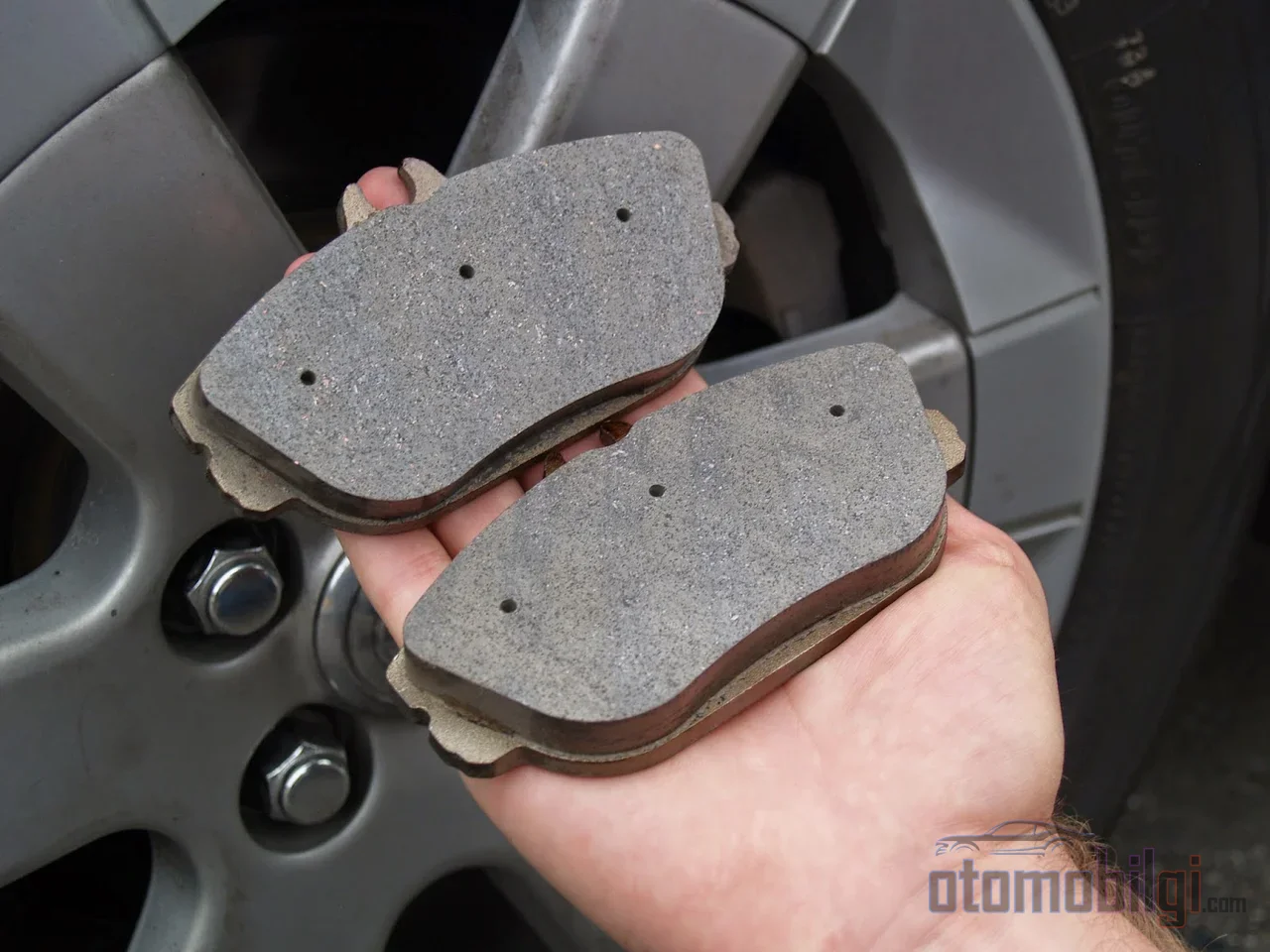
A hybrid owner comes in for service after 150,000 kilometers, and the mechanic looks at the brake pads to find they've barely been touched. In a gasoline vehicle, pads would have been replaced at least once, often twice, over the same distance. This difference is not a manufacturing miracle, but the result of a simple division of labor: in a hybrid, most of the slowing-down is done not by friction but by the electric motor. So when does the mechanical brake kick in, does pad life really increase two- to threefold, and how does this affect maintenance costs? Interestingly, the second half of the answer ends with a problem most drivers don't expect: when wear decreases, rusting takes center stage.
How Does Regenerative Braking Replace the Pads?
Regenerative braking is a recovery mechanism that converts the vehicle's kinetic energy into electricity and stores it in the battery, instead of wasting it as heat. Its physical mechanism is surprisingly simple: At the moment of braking, the electric motor starts working as a generator. The wheels, which normally turn the motor, this time force the motor to generate electricity, and the resistance of that generation slows the vehicle down. Unlike friction braking, where the pads press against the disc, here the pads barely touch the disc at all.
The critical point is how the brake pedal is managed. In hybrids, the pedal is not directly connected to the mechanical brake; every time the pedal is pressed, the vehicle's computer decides how much of the slowing down will be done by regenerative braking and how much by friction braking. The moment regenerative braking alone is not enough - for example, in a sudden emergency or when speed drops very low - the conventional brake kicks in. The two systems work together seamlessly; for the driver, the pedal always behaves the same way.
Key Takeaways
- In gasoline vehicles, pad life is typically 50,000-100,000 km, while in hybrids it can reach 110,000-160,000 km or more.
- Specialist service shops report seeing hybrids that have exceeded 320,000 km on their original brakes.
- The real threat in hybrid brakes is not wear, but corrosion and seized caliper pins.
- Stop-and-go city driving is the type of use that most amplifies the difference in brake life.
Pad Life in Numbers: The Difference Between Gasoline and Hybrid
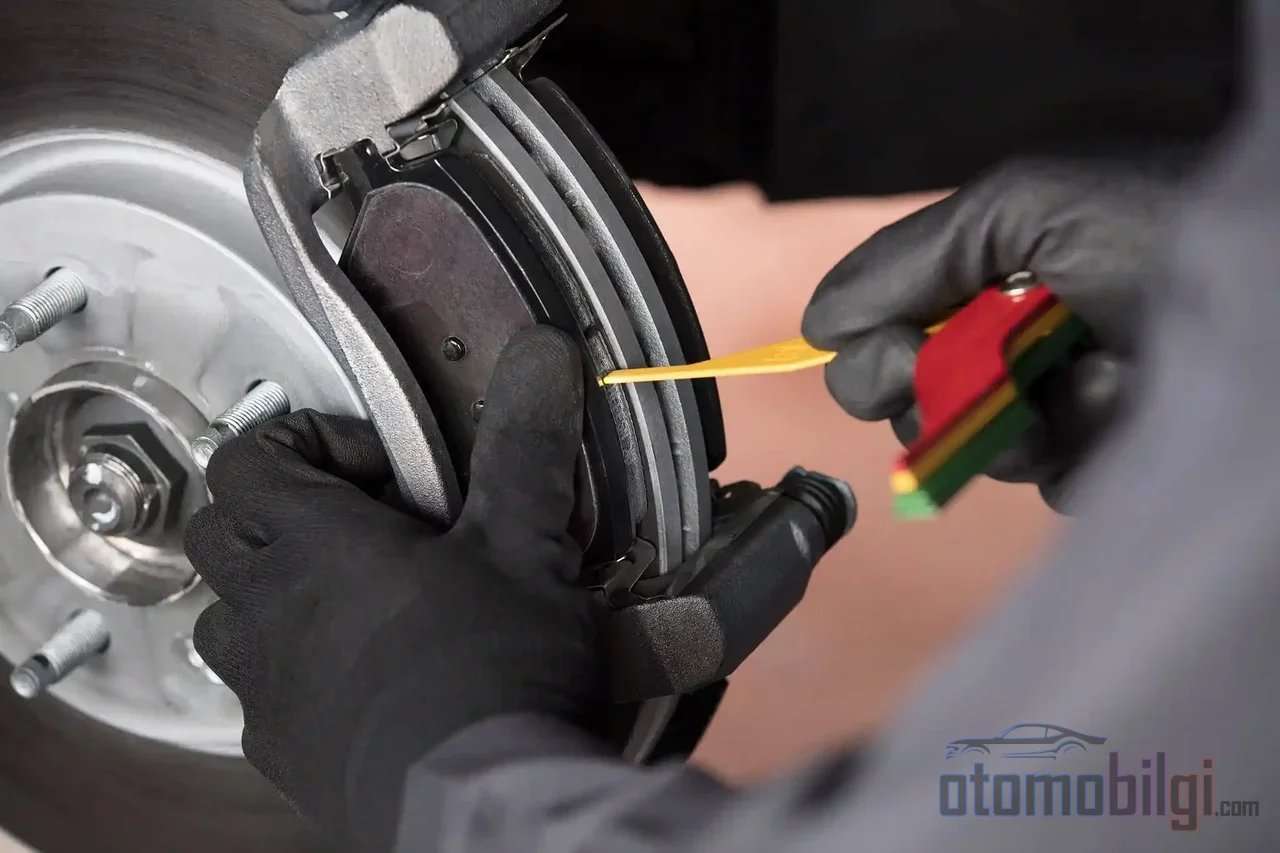
The numbers are the clearest part of the story. In a gasoline car, brake pads typically last between 50,000 and 100,000 kilometers. On the hybrid side, this range shifts noticeably upward: In models like the RAV4 Hybrid, going as far as 110,000-160,000 kilometers on original brakes is considered routine. Workshops specializing in hybrid and electric vehicle service report routinely seeing examples exceeding 320,000 kilometers on original pads and discs in vehicles with regular maintenance.
| Criterion | Gasoline Vehicle | Hybrid Vehicle |
|---|---|---|
| Typical pad life | 50,000-100,000 km | 110,000-160,000 km and above |
| Wear pattern | Gradual and continuous | Very slow; corrosion takes over |
| Key maintenance item | Pad and disc replacement | Caliper cleaning and lubrication service |
Dealers give more cautious ranges and, for Prius pads, cite a lifespan of 50,000 to 110,000 kilometers depending on driving habits. This difference is not a contradiction; it is a difference in measurement methods. The dealers' 50,000-kilometer periodic service protocol defines the inspection interval, not the pad lifespan. The actual wear rate depends on the traffic the vehicle is driven in and the braking style used.
Why Does the 4 mm Rule Not Apply to Hybrids?
The general consensus is that the time to replace the pads has come when the pad thickness drops to 4 millimeters; new pads are approximately 12 mm thick. In a gasoline vehicle this rule makes sense, because at 4 mm there is still a safety margin of about 8,000 kilometers and the wear rate is high. In a hybrid, however, the wear rate is so low that the same threshold loses its meaning.
A simple calculation makes this clear: a hybrid pad that has worn down to 4 mm at 200,000 kilometers has worn approximately 50,000 kilometers per millimeter. That means the pad still has close to 100,000 kilometers of life left in it. Applying the general replacement rule to a hybrid ignores this calculation and creates unnecessary expense. The correct method is not threshold-based but rate-based: the remaining lifespan is calculated by measuring how much thinner the pad gets per kilometer. A pad in the 3-4 mm range can be used trouble-free for another 2-3 years in models like the Prius or Fusion Hybrid.
The Difference Grows Even More in the City
The regime where regenerative braking is most efficient is the one drivers complain about the most: stop-and-go traffic. At low speeds and with frequent braking, the electric motor handles the deceleration almost single-handedly, the battery charges, and the mechanical braking drops to a minimum. As a result, intensive city use is the factor that most widens the difference in brake lifespan.
There is also a calculable side to the matter: approximately 80 percent of the energy lost through friction braking turns into heat and is wasted. Regenerative braking can recover half of this loss; the battery gets charged and fuel consumption drops. In other words, the same mechanism both extends pad life and reduces operating costs - a double gain arising from a single principle of physics.
When Wear Decreases, the Real Problem Is: Corrosion
So far, everything favors the hybrid. However, a lightly used brake system creates its own problem. The industry's concise summary is this: gasoline cars wear out their pads, hybrids rust their brakes. Because the brakes work so little, they do not heat up; and because they do not heat up, they cannot dry off the moisture on them. Since the discs are cast from iron, they rust when exposed to moisture, and this rust accumulates on the disc surface that the pads rarely sweep.
Surface Rust or Real Damage?
The thin surface rust that forms overnight from moisture cleans itself off with the first few brakes in the morning. It is common to assume that the squeaking sound heard when reversing in the morning is metal-on-metal contact, but it is often misleading; typically it is the sound of this temporary surface rust. If the noise disappears after the first few stops, there is no need to panic. If it does not wear down, the pad needs to be checked for separation from its bonding layer, i.e. delamination.
The really serious picture occurs at the rear brakes. Regenerative braking especially triggers rear brake corrosion; very low-mileage hybrids arriving at workshops with rusty rear discs has become a well-known case. The second problem that accompanies this is in the calipers: The grease on their guide pins dries out over time, the pins seize, and the caliper sticks. A dragging brake does not only make noise; it also raises fuel consumption.
Practical Methods for Fighting Corrosion
- Periodic hard braking: At a safe spot, for example on a highway exit, making a few strong brake applications disables the regenerator and cleans surface rust off the mechanical brake.
- Caliper cleaning and lubrication service: The most effective way to prevent seized pins; it is a preventive treatment, not a parts replacement. In its warranty and maintenance guide, Toyota recommends a brake service of this scope roughly every 50,000 kilometers.
- Coated discs: Rust-resistant coated discs are a suitable replacement part option for hybrid use.
- Quality pads: Original pads are designed to resist rust transfer (rust jacking); cheap aftermarket pads with painted steel backing plates can fail within 1-2 years.
Impact on Maintenance Costs: A Shrinking Line Item, a Shifting Line Item
Long pad life is a direct saving of hybrid ownership. When maintenance costs are evaluated overall, hybrids are reported to be owned with expenses similar to or lower than gasoline cars; pad replacement becomes less frequent, while brake fluid and caliper services come to the fore in return. There is also a claim of savings of up to 35-45 percent in annual maintenance and repair, based on a single service handover; independent data confirming this rate is still weak, so it should be read as a claim.
There is a shift on the service side too: While general mechanics quote a standard pad and disc package price over the phone, workshops experienced with hybrids avoid quoting a price without seeing the car - because the problem is often not the pads, but rusty discs or seized pins. Wrong diagnosis, wrong replacement; the right diagnosis, on the other hand, often eliminates a few hundred dollars of unnecessary parts expense.
Short Answer: Why Do Pads Last So Long in Hybrids?
The summary of the summary is this: In hybrid cars, the motor, which generates electricity from the wheels' rotation, handles most of the braking work; the mechanical brakes only engage in the final stage of slowing down and in emergencies. For this reason, pad and disc life can extend two to three times compared to gasoline vehicles. In return, the hybrid brake demands regular inspection against rust and seized caliper pins; what extends its life is not neglecting its maintenance. In dense city use this gap grows even wider, and the corrosion risk comes to the fore proportionally. A long-lasting brake is not an unmaintained brake - it is a more smartly maintained one.
Sources
- Hybrid Brake Pads at 4mm? Why That Rule Doesn't Apply
- Regenerative Braking and Hybrid Brake Service
- Your Hybrid's Brake Pads Are Barely Worn and the Brakes Still Need Work
- Regenerative Braking and Rear Brake Corrosion Explained
- Why Your EV or Hybrid Brakes Are Rusting (and How Coated Rotors Fix It)
- Why Hybrid and EV Brake Pads Last So Long but the Rotors Rust
- What's the Difference Between Friction and Regenerative Car Brakes
- Hybrid Regenerative Braking: How It Works & Service Needs
- EV Brake Pad Life: Myths vs Reality
- Regenerative Brakes: How Do They Work?