Tips for Driving a Hybrid Efficiently
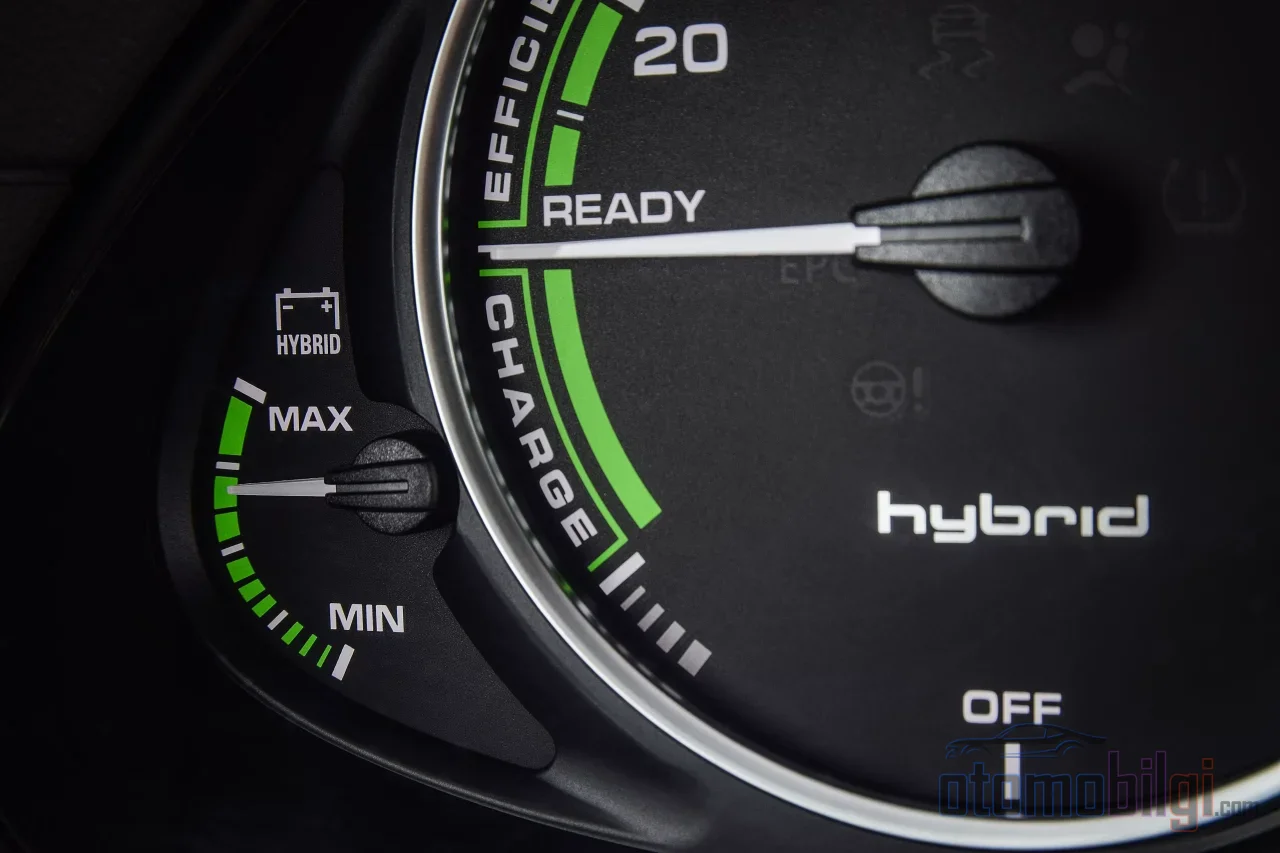
A consumption difference of up to 15% can be seen between two drivers in the same hybrid model; same car, same battery, same software. What makes the difference is the approach to the accelerator pedal, the brake pedal, and speed management. The hybrid system is intelligent on its own, but the speed and load ranges where it operates efficiently are specific - when the driver manages to stay within these ranges, the system pays off; every time they leave them, the gasoline engine kicks in and the gains begin to melt away.
This guide is not about what a hybrid vehicle is, but about how you drive it efficiently: from gentle throttle use to braking technique that maximizes regenerative braking, from the Pulse & Glide strategy to the real role of Cruise Control in a hybrid. We will also explain technical concepts in plain language - because the biggest obstacle to efficient hybrid driving is not knowing what the system is doing.
Why Does the Hybrid System Reward Certain Driving Styles?
In most hybrid vehicles, the gasoline engine operates with the Atkinson cycle. This cycle delays the closing moment of the intake valve to extract more work from each combustion event; less fuel is needed for the same power. Measurements show that the Atkinson engine can improve fuel consumption at 2000 rpm by about 9% and at 3000 rpm by 8%. So why does this depend on the driver? Because the advantage of the Atkinson cycle is most pronounced in a narrow rev range - the hybrid system's job is to keep the engine within this range, and the driver's job is not to strain the system.
The second cornerstone of the system is regenerative braking: while slowing down, the electric motor turns into a generator and recovers part of the kinetic energy back into the battery as electricity. This recovery can salvage up to 70% of the kinetic energy lost in braking and corresponds to an overall consumption gain of 5-10%. However, there is one condition: braking must be smooth and early, and the energy must not be allowed to be wasted as heat in the brake pads.
Highlights
- Regenerative braking can recover up to 70% of the kinetic energy lost in braking - with the right braking technique.
- The Atkinson cycle provides 8-9% better fuel efficiency at the appropriate rev range.
- With the Pulse & Glide technique, a practical ~15% reduction in consumption has been reported.
- EV mode in most vehicles allows fully electric driving up to speeds of about 40 km/h.
- Hybrids are the most efficient in stop-and-go traffic and the vehicles with the least advantage at constant highway speeds.
Throttle and Brake: The Two Fundamental Pedals of Efficient Hybrid Driving

Gentle acceleration is left to the electric motor
Hybrid vehicles deliver their best efficiency at low-speed, gradual acceleration; because under these conditions, the electric motor alone can carry the load. Sudden and aggressive starts, on the other hand, engage the gasoline engine earlier and more harshly than necessary - a scenario that takes you exactly outside the advantage zone of the Atkinson cycle. Simple rule: apply the throttle gently enough to extend the acceleration time but not enough to wake the engine. The hybrid monitor and instant consumption indicator on the dashboard come in handy exactly here; watching the energy flow and trying to stay in the efficient zone of the gauge drills the right pedal touch into muscle memory.
Early and gentle braking: the key to regeneration
Pressing the brake pedal in the last few meters means converting kinetic energy into heat on the brake pads. Instead, spot the stop (the light, the intersection, the queue) in advance and release the pedal early: the car first loses speed through free rolling (coasting), and then a light touch on the brake pedal activates regenerative braking. The gentle touch-release-touch-again rhythm establishes communication between you and the system. Avoid hard braking; as braking force increases, the system shifts to friction braking and regeneration drops. Experienced hybrid drivers never arrive at stops by braking; they approach by gliding and use the brakes only for the final part.
Anticipatory driving is a technique in its own right: reading the traffic flow ahead and lifting off the accelerator early directly reduces the need for braking, and every opportunity to slow down is converted into battery charging. Smoothness rests on the same logic - consistent and gentle pedal use allows the system to intelligently manage the power distribution between the gasoline engine and the electric motor.
Steady Speed or Fluctuating Speed? Its Relation to the Atkinson Cycle
The classic advice says "keep a steady speed," but in a hybrid the picture is more nuanced. The Pulse & Glide strategy, common in hybrid communities, advocates exactly the opposite: have the engine perform a short and efficient "pulse" phase, release the accelerator completely, wait for the gasoline engine to shut off, and then touch the pedal very lightly as the car glides on electricity along the balance line between engine and electric power. This shortens the engine's total running time - the Atkinson engine is efficient from the moment it runs; the strategy is based on collecting this efficient operation in few but full doses.
What do the numbers say? A Lexus driver who adopts this technique reports a gain of about 15% over typical 6.4 L/100 km consumption (5.8 L/100 km). A Honda Civic Hybrid user reports reaching values of 23-25 km/liter; the tactic's optimal speed range is roughly around 50-65 km/h (30-40 mph). Practical recipe: raise your speed to about 55-65 km/h, release the accelerator, and after giving the engine a chance to shut down, press the pedal gently enough that electric driving continues.
The point to note: while the same technique can improve consumption by up to 90% in a conventional vehicle, the gain in a hybrid typically stays around 10%. The reason is simple - the hybrid system already runs the engine in efficient ranges. So Pulse & Glide has a marginal return, but for most drivers the fundamentals like gentle acceleration and anticipatory braking deliver higher and easier gains. Also, leave the car in D while coasting; shifting to N is not for triggering electric coasting, but for being able to brake.
When Is Cruise Control Useful in Hybrids?
Cruise Control is valuable for maintaining a constant speed on long, straight roads; when used together with Eco mode, it reduces consumption and can be engaged at any speed above 30 mph (approximately 50 km/h). Dealer and manufacturer recommendations point in this direction. On the other hand, Cruise Control's primary design purpose is not efficiency but holding a constant speed on open roads - efficiency is a result, not the goal.
Keep two nuances in mind. First: Adaptive Cruise Control (ACC) simulations show it can improve both energy efficiency and safety in plug-in hybrids; by providing safe distance and smooth speed changes, it balances the load on the hybrid system. Second: it is not recommended for use in heavy traffic or on wet surfaces; the ideal constant speed band is 55-70 mph (approximately 90-110 km/h). Some users report using Cruise Control to force the car to maintain speed in electric mode - a creative hack, but one that works depending on conditions, not the system as a whole.
Using Drive Modes and EV Mode Smartly
Drive modes in hybrids are not marketing gimmicks, they are genuinely different calibrations:
- Eco Mode: It softens throttle pedal response, reduces the energy draw of climate control, adjusts the transmission to upshift early and downshift late, and increases the regenerative braking level; it may limit total power output.
- EV Mode: It runs the car on the electric motor alone at speeds up to about 40 km/h (25 mph). Its typical range is between 3-5 km; it has been reported to reach up to 10 km under ideal conditions.
- Normal/Sport: In city driving, Eco and EV modes provide the greatest savings, while on the highway Normal mode may be more effective.
Knowing the limits of EV mode turns it into efficiency: going downhill, the system may disable EV mode; even when coasting with a fully charged battery, the system may start the engine for braking purposes. The practical method for city driving is this: reach the desired speed using battery power, then lift off the accelerator to use the battery as much as possible. On long downhill stretches, the standard D position is best, because the system controls speed with regenerative braking.
There is also stop-start behavior: the engine shutting off automatically in stop-and-go traffic and at red lights is part of the hybrid's most efficient scenario - the goal here is not to keep the engine idling, but to combine stopping with electric transitions. Hybrids are already at their most efficient in stop-and-go traffic, and their advantage is smallest at constant highway speeds; build your driving strategy according to this reality. If the vehicle has an B position, use it on long downhill descents because it increases regenerative braking and reduces brake pad wear.
Feedback and Supporting Habits
The common measuring tool for all these techniques is the dashboard. Use the energy flow screen, the instant consumption gauge, and in some vehicles Eco Assist type systems that visually reward gentle acceleration. Devices can also show whether braking is regenerative or frictional; driving with this feedback for a few weeks permanently corrects pedal habits.
- Reduce short trips and cold starts; combine errands, choose routes with fewer stops.
- Remove unnecessary loads and unused roof/rail systems.
- Check tire pressure once a month; inflation should be done on cold tires, low pressure increases rolling resistance.
- In cold weather battery performance drops and the engine runs more often; park in a garage or in the shade, prefer seat heaters over cabin heating.
The Short Recipe for Efficient Hybrid Driving
To sum up all the techniques in one sentence: driving a hybrid efficiently means running the gasoline engine as little as possible and within its efficient range, and converting decelerations into battery charge, doing this with a soft throttle, early anticipatory braking, and smart mode selection. This recipe has three pillars: opening up room for the electric motor when accelerating, feeding regenerative braking when slowing down, and letting the engine rest at stops.
Keeping expectations realistic is also part of the recipe: applying the basic techniques noticeably lowers most drivers' consumption; advanced techniques like Pulse & Glide offer an additional layer of roughly 10-15% on top of that. Advice promising ninety percent gains applies to conventional vehicles - the hybrid system has already built efficiency into itself. The driver's job is not to spoil this efficiency, and to make it pay off with pedal discipline.