The Parts That Most Commonly Fail in Hybrid Cars
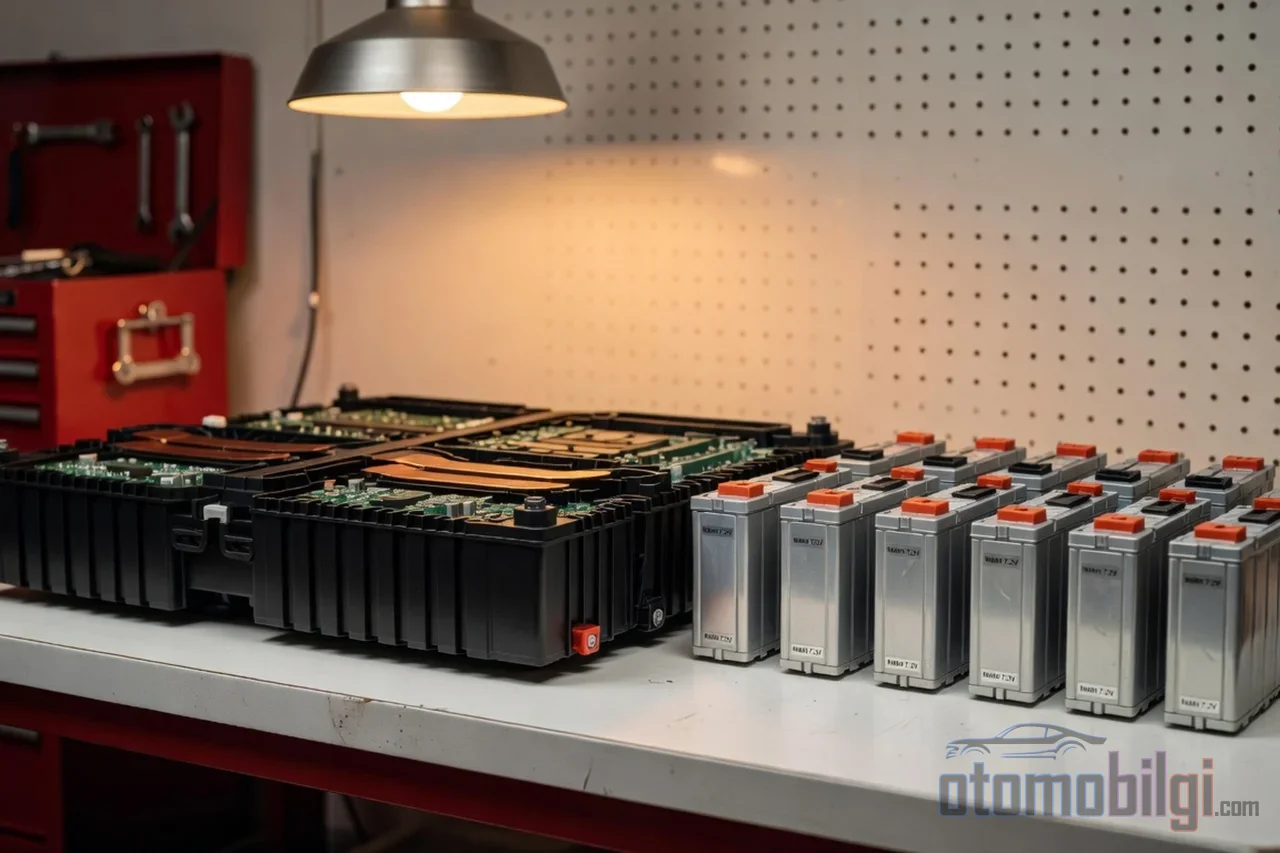
The biggest misconception about hybrid car ownership-not the biggest fear-is the high-voltage battery. Everyone assumes that when the warning light comes on, that expensive pack will have to be replaced; yet the component that most often ends up on the bench at hybrid service centers is a far more humble part: the 12-volt battery. The truly expensive surprises are hidden elsewhere: in the inverter, the brake actuator, and a cooling pump. So at exactly which mileages do these parts cause trouble, with which symptoms, and at what cost?
This page is not a hybrid maintenance or battery life guide; it is a failure map. It takes a closer look at where the statistically most frequent and most costly failures cluster, the early warning sign for each one, and the logic behind repair costs. Since this is a knowledge-rich topic, let's first draw the big picture:
Key Takeaways
- Hybrid owners spend an average of $408 per year on repairs; the overall average for all vehicles is $652.
- The most frequent failure point in hybrids is not the high-voltage battery, but the 12-volt auxiliary battery.
- The three most expensive repairs: the battery pack ($1,500–5,000+), the inverter ($2,000–3,500), and the brake actuator ($2,000–4,000).
- If the inverter cooling pump fails before 100,000 miles, the combined bill can climb to $3,000–4,500.
- Early detection can turn a $3,000–5,000 repair into $400–800 worth of maintenance.
Why Don't Hybrid Failures Spread Randomly?
A hybrid car actually has two full powertrains: a conventional gasoline engine and an electric drive system. Components on the gasoline side are parts that have matured over decades; their failures are rare and cheap. The hybrid side, however, consists of the high-voltage battery, the inverter, dedicated cooling circuits, and actuators found only in this technology. Failures cluster precisely here, within this set.
The second shared characteristic of these parts is their cost logic. Both the parts themselves are expensive and the labor requires a technician trained in hybrid safety. A two-hour job at a general repair shop can turn into a three-week wait because the right part cannot be found. The third common thread is predictability: Nearly all of these components signal trouble within specific mileage ranges and with specific symptoms. The difference between a driver who recognizes the signs and one who doesn't is often $3,000.
The 12-Volt Battery: The Smallest and Most Frequent Part to Fail
Surprising but true: In hybrids, the most common failure point is not the big high-voltage pack, but the 12-volt auxiliary battery found in pretty much every gasoline car. In hybrids, this battery is usually of smaller capacity and cycles more frequently than in internal combustion vehicles. In rarely used vehicles, on short trips, and in energy-saving driving modes, the problem becomes even more pronounced; owners typically report in their experiences that it needs replacing every 3–5 years.
The subtlety of this small battery is this: When it weakens, it can trigger the fault light that alerts the entire hybrid system and can even leave the vehicle completely unable to run. The first thing that comes to an owner's mind upon seeing the red triangle is the high-voltage pack, but the part usually diagnosed is the 12-volt battery. The good news is that a faulty 12-volt battery does not cause permanent damage to the high-voltage battery.
Inverter: What Happens If the Hybrid's Electrical Brain Fails?
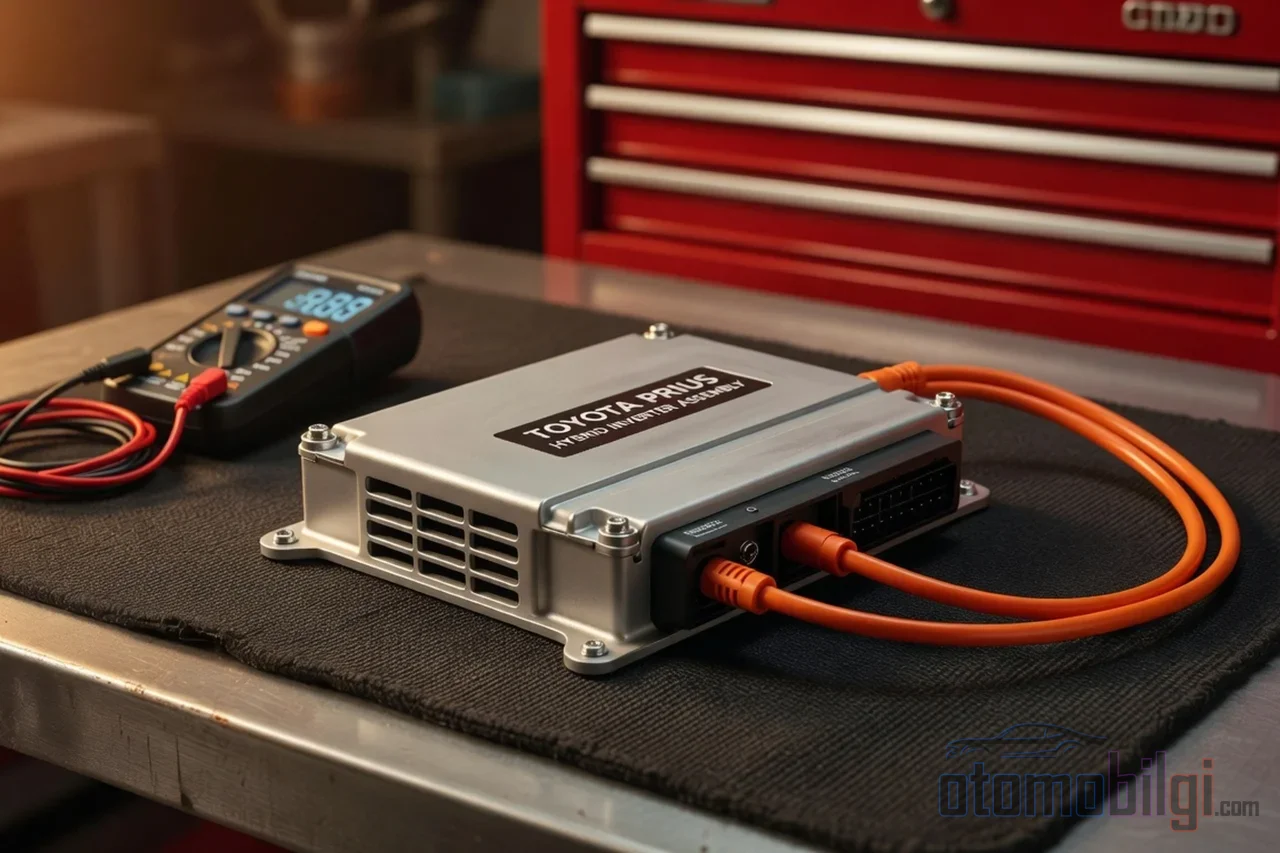
The inverter is the unit that converts the direct current (DC) in the high-voltage battery into the alternating current (AC) the electric motor needs; in regenerative braking, it works in the reverse direction, returning the recovered energy to the battery. In short, it is the hybrid's electrical brain. When it fails, the result is dramatic: Power doesn't just drop - the driver loses power completely.
Failure Mechanism and Symptoms
The most common causes of inverter failure are power semiconductors worn down by thermal stress, fatigue of solder joints, contaminated coolant, moisture-induced corrosion, and manufacturing defects. The symptom list is alarming: a hybrid system warning appearing on the screen, sudden power loss especially at highway speed, the traction and ABS warning lights illuminated together, stalling at low speeds, electrical whining noises, and a burning smell.
This component is also in the current news: Toyota, at the end of 2025, issued an inverter recall involving sudden power loss and fire risk for approximately 55,000 units of the 2025-2026 Camry Hybrid and 2026 Corolla Cross Hybrid. Checking whether an owned vehicle falls under this coverage is more important than it appears at first glance.
Cost Table
With good cooling maintenance, an inverter can last 150,000-200,000 miles. When it fails, repair at an independent shop falls in the $2,000-3,500 range; dealers usually quote prices 30-50 percent higher, and the labor takes 2-4 hours. Extreme cases also exist: There are known cases where the dealer's quote for a high-mileage SUV reached $10,000.
Inverter Cooling Pump: An $800 Part, a $4,500 Risk
The inverter's most critical weak point is thermal stress; which is why it has its own dedicated cooling circuit. This circuit, which does not share the engine's main cooling system, operates with an electric water pump. Since the pumps use brushless motors, most failures come from bearing wear: First it announces itself with a squealing or humming noise from the motor, and in some cases it goes offline suddenly without any sound, only with an overheating error code.
The mileage data follows a clear pattern: In second-generation Priuses, the pumps start having problems at around 100,000 miles, and in the third generation this range shifts to 120,000-150,000 miles. In high-mileage vehicles whose coolant has never been changed, failure before 150,000 miles is common and - here lies the critical point - entirely preventable. The manufacturer's specification points in the same direction: replacement of the inverter cooler is recommended at 100,000 miles.
Symptoms: a noise from the engine bay, a hybrid system warning appearing after long highway drives, the P0A93 overheating code, and air bubbles observed in the coolant reservoir. The pump itself is replaced in the $500–800 range; if the pump is neglected and the inverter is damaged, the combined repair climbs to $3,000–4,500. This is the clearest return-on-investment calculation in hybrid ownership.
Brake Actuator: The Mechanism That Blends Regenerative Braking with Friction Braking
The hybrid brake system combines two forms of braking on a single pedal. In regenerative braking, the electric motor works like a generator, converting motion energy into electricity and feeding it back to the battery; at low speeds this method can be less effective, and when the battery is full the system automatically switches to friction braking. The component that hydraulically blends these two worlds is the brake actuator. When it fails, the car still stops - but because brake assist is lost, the effort you must apply to the pedal increases significantly.
The failure mechanism is typically brush and winding wear in the pump motor inside the actuator. On the second-generation Prius, the first sign is a clicking sound heard during braking, especially in cold weather, and during the self-test performed at every startup. As the condition progresses, ABS and traction warning lights and error codes appear. The mileage breaking points are familiar: in the second-generation Prius the highest failure rate falls in the 100,000–150,000 mile band, and above 120,000 miles on the third generation; family sedans with a similar design show a lower rate. Repair cost is $2,000–4,000; refurbished units can be found for $1,800–2,500. Because it is directly related to braking safety, early detection on this part is a matter of safety before it is a matter of cost.
DC-DC Converter: The Failure That Goes Unnoticed
The DC-DC converter is the bridge that converts energy from the high-voltage pack into the 12-volt system. When this bridge fails, the 12-volt battery cannot be charged and the symptoms cascade: a red triangle warning, multiple warning lights illuminated together, reduced brake assist, and a charging system alert. In advanced cases, complete failure of the electric drive system has also been observed. At the error-code level, this failure is considered rare; but rare does not mean insignificant.
The development that best illustrates the scale of the issue is the recall made by Jaguar-Land Rover in September/October 2026: 23,677 vehicles are being recalled over the risk that a DC-DC converter fault can lead to a loss of drive power. The failure is also known to extend to the mild-hybrid side; converter repairs have also been documented on some German models with 48-volt systems.
So Why Isn't the Battery at the Top of the List?
The paradox becomes clear here. The high-voltage battery is the most expensive part, but not the most frequently failing one; the most common failure point is the 12-volt battery. Battery packs contain modules made of NiMH or lithium-ion cells, and the modules do not age evenly: A weakening module can destabilize the battery's management system and trigger the battery replacement warning code. Heat is the primary accelerant.
The symptoms are recognizable: A sudden and significant increase in fuel consumption, the red triangle warning, and the battery charge gauge filling and emptying within seconds. The breaking points vary by model - in some early-generation hybrids, packs mostly wear out around 120,000-180,000 miles, while some models of a similar age can experience capacity loss before 100,000 miles. On the cost side, there is a wide gap between a remanufactured unit and a new OEM pack: a refurbished pack runs $1,500-2,500, a new pack from the dealer $4,000-5,000. If the rest of the pack is healthy, replacing a single module is a cheaper and viable option; meaning the battery does not necessarily require full replacement every time it fails.
Then there is the EGR front: For the 2.2-liter engine versions in the second-generation Prius from 2004-2009, there is a well-documented persistent issue of the EGR cooler cracking and leading to a head gasket failure; the risk increases above 100,000 miles, and the typical symptoms are persistent white smoke and unexplained coolant loss. The repair costs $2,500-5,000; whereas an EGR cleaning done around 80,000-90,000 miles can most likely prevent this large bill.
| Component | Typical Failure Mileage | Approximate Repair Cost |
|---|---|---|
| 12-volt battery | 3-5 years of use | One of the cheapest items on the list |
| Inverter | 150,000-200,000 miles | $2,000-3,500 |
| Inverter cooling pump | 100,000-150,000 miles | $500-800; $3,000-4,500 if neglected |
| Brake actuator | 100,000-150,000 miles | $2,000-4,000 |
| High-voltage battery | 120,000-180,000 miles | $1,500-5,000+ |
| EGR cooler / gasket | Risk above 100,000 miles | $2,500-5,000 |
Final Word on What You Need to Know About Hybrid Failures
The most frequently failing hybrid component is not the expensive battery you might expect, but the cheap 12-volt battery. The most expensive repair items are shared between the battery pack and the inverter and brake actuator. To reduce the overall picture to a single sentence: Hybrids continue to be one of the most reliable powertrains in the category; plug-in models report noticeably more problems than gasoline vehicles. In other words, despite the horror stories about batteries, a high-mileage hybrid can be more trouble-free than its gasoline counterpart in many areas, thanks to electric drive reducing the load on the engine.
The practical takeaway can be reduced to three items: Recognize the symptoms (increased consumption, multiple warning lights, unusual noises), plan the timing (coolant and EGR maintenance around 100,000 miles offers the highest returns) and know the economic threshold - if a single repair exceeds 60-70 percent of the vehicle's market value, the crossover point has arrived. The difference between a $400–800 timely maintenance service and a $3,000–5,000 repair almost always depends on the driver's attention.
Sources
- Common Hybrid Failures: Why Hybrid Cars Fail (Top 5 Causes)
- Why Your Hybrid Inverter Might Be Failing: Symptoms and Causes
- Land Rover, Jaguar Recall: 23K DC-DC Converter Failure
- September 2026 Jaguar and Land Rover Recall for DCDC Converter Failures
- Diagnosing and Correcting a Bad Battery in Hybrid Models
- What is Regenerative Braking in Hybrid Cars?
- DC-DC Convertor Failure
- Prius 12V Battery: Why Your Toyota Hybrid Won't Start
- Are Hybrid Cars More Expensive to Maintain or Repair Than a Gas Car?
- Least Reliable Plug-in Hybrids of 2026 – Consumer Reports