How Does the Hyperpole System Work in Le Mans Qualifying?
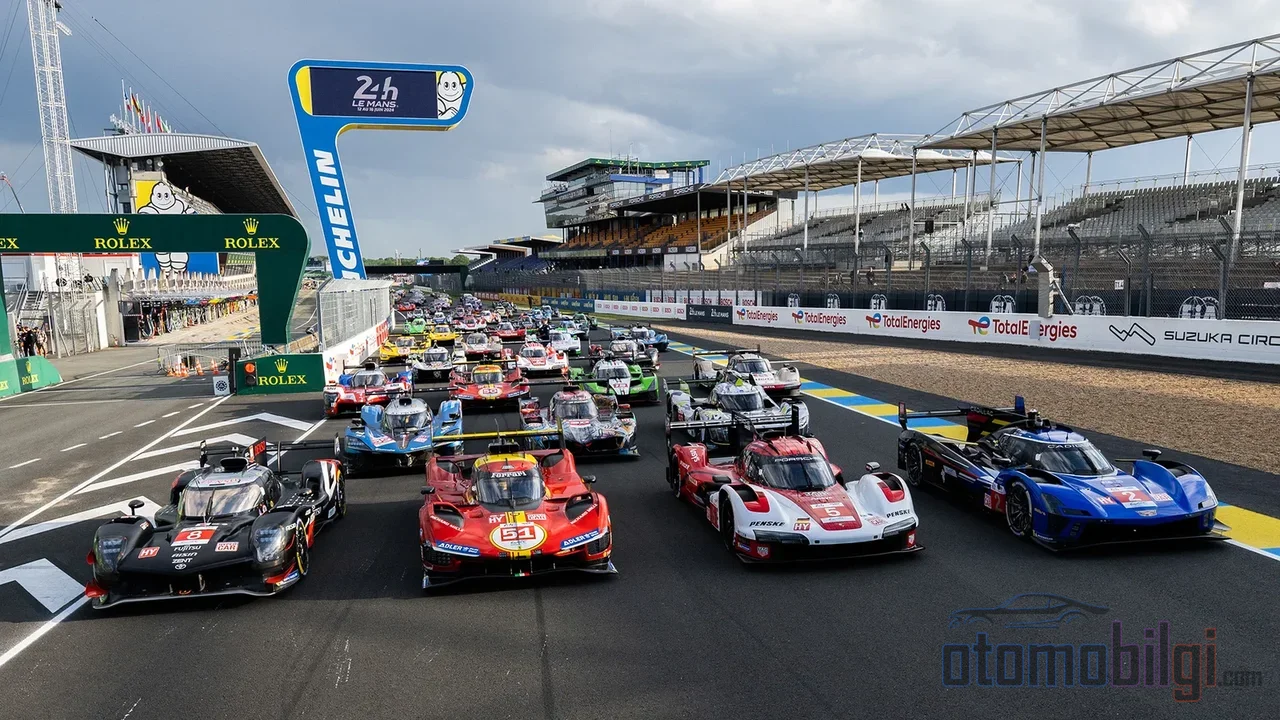
Just imagine: A massive 13.6-kilometer track, 62 cars, and only one hour of qualifying time. A GT car ahead of you is moving far slower than you on the Mulsanne Straight, and at that moment you are trying to set the fastest lap in the world. Welcome to the nightmare of Le Mans qualifying! But here is the good news: the organizers knew this problem very well, and the answer they rolled out in 2020 was called Hyperpole. So how does this system work, why does it not resemble the qualifying format of any other race, and does winning pole position really help you win the 24-hour marathon? Let's break it down step by step.
Why Is Le Mans Qualifying So Hard?
First, let's understand the problem, because to understand Hyperpole we need to see the problem that created it. Circuit de la Sarthe is approximately 13.626 kilometers long and has 38 corners; moreover, it is a combination of race track sections and public roads. Even completing a single lap on this track takes time, and on top of that, all 62 cars are qualifying at the same time. So finding a clean lap is like trying to get to work in a crowded city: no matter which lane you move to, there is someone in front of you.
Yellow flags and slow zones make it even worse. When one car gets stuck in a corner of the track, everyone's lap in that section is ruined. That's why, at Le Mans, qualifying was less a test of speed and more a test of traffic management. The fastest car could not always set the best lap; the lucky one did. The ACO, the organizer of the race, introduced Hyperpole in 2020 to solve this unfairness: a short and intense final session with only a small number of cars participating. The goal was simple: allowing teams to show their pure speed without traffic trouble.
Highlights
- Hyperpole was introduced by the ACO in 2020 and the two-stage format has been in effect since 2025.
- Qualifying is spread over two days: First qualifying (Q) on Wednesday, Hyperpole 1 and Hyperpole 2 on Thursday.
- New driver rule in 2026: The Q, H1 and H2 laps are driven by different drivers.
- Pole position is not a guarantee of Le Mans victory: The three winners of 2025 started from 13th, 21st and 11th places on the grid.
Current Format: How Is Qualifying Spread Over Two Days?
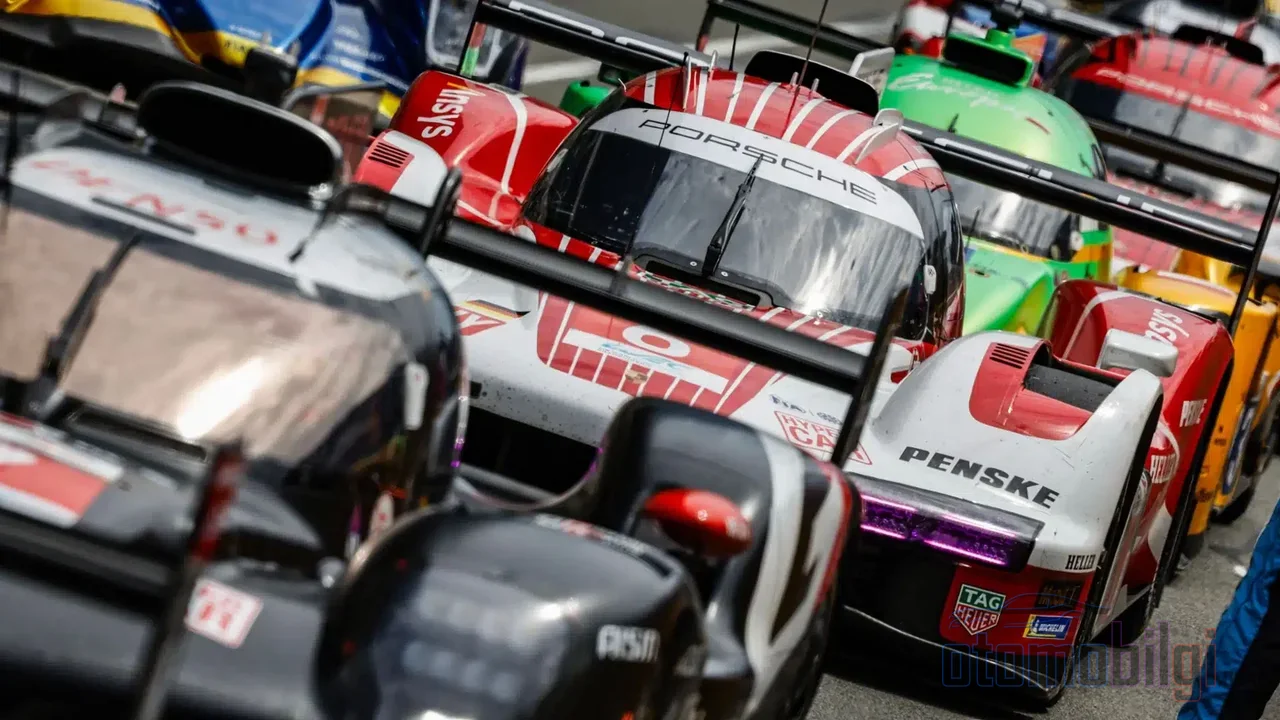
In 2025, Hyperpole became a two-stage format, and the structure remained the same in 2026. The system is actually a qualifying ladder: the number of cars decreases with each round, and the pressure increases for those left behind. Let's take a look step by step.
Wednesday: First Qualifying (Q)
On Wednesday evening of race week, a 30-minute first qualifying session is run for the LMP2 and LMGT3 classes. Here, the fastest 12 cars in each category advance to Hyperpole 1. On the Hypercar side, the format is a bit more generous: the fastest 15 cars grab a ticket to H1.
Thursday: Hyperpole 1 and Hyperpole 2
The real duel begins on Thursday. In Hyperpole 1, 24 LMP2/LMGT3 cars compete in a 20-minute session, and the top 8 cars from each category advance to the final, namely Hyperpole 2. In Hypercar, the top 10 of the 15 cars get a ticket to H2. In the final, there is one last 15-minute chance for pole position; first the LMP2/LMGT3 cars do fierce laps on track, then the Hypercars take to the track on their own. Yes, you read that right: In the final Hypercar session, the track is not shared with the GTs and prototypes.
The Star Rule of 2026: Three Drivers, Three Sessions
The most striking innovation arriving in 2026 concerns driver rotation. Under the new rule, the driver who runs the car in the Q session cannot take part in Hyperpole 1; and the drivers who run in Q and H1 cannot drive in Hyperpole 2 either. In short, if a car makes it to the final, all three of its drivers must be used across three different sessions. In 2025, a single driver could run in both Q and H1/H2; this change has turned qualifying into a team five-a-side match, where everyone has to touch the ball.
Not everyone is happy with this rule. Experienced names like Sebastien Buemi argue that preparing two drivers for a fast lap eats into free practice time, while the impact of grid position on the race result is very low. On the other side, there is the view that qualifying is a team sport and that including all three drivers makes sense. Kevin Estre also says that sacrificing free practice and race preparation for low-fuel, new-tire qualifying laps is debatable. There are interesting tactical details as well: since ballast is calculated based on the team's lightest driver, choosing a light driver for qualifying can mean the other driver carrying 10 extra kilos in the race.
LMGT3's Bronze Driver Exception
Things work a bit differently in the GT class. In LMGT3, only a Bronze-rated driver can run the car in the first qualifying session. The aim is clear: in this class, which is close to the amateur category, qualifying should involve drivers of every level in the process.
Hyperpole's Own Unique Rules
Hyperpole is not an ordinary short qualifying session, it is a mini race with its own rules. The basic conditions here are as follows:
- Ranking is based on each team's fastest lap.
- Returning to the pits and refueling during the session is forbidden; you go out with your car and keep doing laps.
- Tire choice is free, but there is a limit of 8 tires per session.
- A car that does not set any lap in Hyperpole lines up behind the other Hyperpole cars in its class, unless the race stewards grant an exception.
The combined effect of these rules is this: low fuel, new tires, few rivals, and a single goal. Estre sums up this feeling, saying that Hyperpole adds a sprint dimension to the 24-hour race. Kamui Kobayashi, meanwhile, notes that Hyperpole creates envy, and that every driver wants to be part of it. After all, it was Kobayashi who won the first Hyperpole of the Hypercar era in 2021 with Toyota's #7 car; with a lap of 3:23.900.
How Was Pole Position Determined in the Past?
Now let's take a little journey through time, because you only appreciate how innovative today's format is when you look back. From 1923 to 1962, grid order was determined, unbelievably, by engine displacement. So it wasn't the fastest, but the one with the biggest engine that started up front. From 1963 onward, pole position began to go to the driver who set the fastest qualifying lap; but with two striking exceptions.
In 1980, the grid was determined by the drivers' best average lap time; even the team holding the single-lap record could start from second place. In 1991, the front rows were reserved for 3.5-liter naturally aspirated prototypes complying with the new WSC regulations; the turbocharged Sauber-Mercedes that had set the fastest qualifying lap was forced down to sixth place. There is also the odd arrangement of 1996-1997: prototypes lined up on the left of the grid, GT cars on the right. Since 2020, qualifying has been done first by category, then by lap time: Hypercar, LMP2 and GT line up in that order.
How Is It Different From F1 Sprint Qualifying?
If you watch Formula 1, sprint qualifying will look familiar: three sessions called SQ1, SQ2 and SQ3 lasting 12, 10 and 8 minutes, plus a separate sprint race that sets the main race grid. Le Mans' system works on a completely different logic. Here qualifying is spread over two days, progresses by class, and from 2026 onward includes all three drivers in the process. While in F1 a single driver gives everything with a single car, at Le Mans qualifying is, quite literally, a team effort. Moreover, unlike F1, at Le Mans three different categories each have their own grid and their own pole position battle happening simultaneously within one race.
Does Pole Position Determine the 24-Hour Race?
Here's the key question, and perhaps the most surprising answer. Le Mans is a distance race: the car covering the most kilometers in 24 hours wins. In this format, starting from the front of the grid saves you from struggling in traffic all weekend, but it doesn't guarantee the trophy. The statistics are brutal. In 2021, none of the teams that won Hyperpole in the LMP2, LMGTE Pro and LMGTE Am classes won the race. 2025 sums the matter up in one stroke: the three winning teams had started from 13th, 21st and 11th on the grid, respectively. The road from pole position to victory is far from a straight line on paper.
Even so, teams fight fiercely for Hyperpole. Why? Prestige, ego, and a small but real clean-air advantage. As Estre also noted, the starting position doesn't determine the race, but trying to be up front is always important. Some drivers even say the qualifying laps don't matter, that despite taking pole position last year they weren't ahead even after the first lap. The 2026 pole position duel also showed just how seriously the format is taken: the fastest qualifying lap of the Hypercar era to that date was set, and post-session lap deletion decisions caused serious reshuffling of the grid.
Summary: The Hyperpole System in One Sentence
So, how does Hyperpole work in Le Mans qualifying? The short answer is this: All cars start on Wednesday with hourly qualifying sessions, the fastest in each class advance to the two-stage Hyperpole on Thursday, with driver changes at each stage during qualifying; the car with the fastest lap takes the first spot on the grid, that is, pole position. But remember: this is a 24-hour endurance test and pole position here is prestige, not a guarantee. That's exactly what makes the race so beautiful, isn't it?
Sources
- 24 Hours of Le Mans - Hyperpole explained
- Le Mans 24 Hours qualifying format change explained
- The new, improved 24 Hours of Le Mans Hyperpole
- 2026 24 Hours of Le Mans - Wednesday 10/06 Programme
- 24 Hours of Le Mans - Wikipedia
- Circuit de la Sarthe (Le Mans) - RaceSchool
- Cadillac Powers to First 24 Hours of Le Mans Pole - IMSA
- Drivers have their say on the impact of qualifying at Le Mans
- How Does Le Mans Qualifying Work? - DailySportscar