Le Mans Is Ready for a Hydrogen and Electric Future
Share This Page
You expect a race car to last 24 hours - but what if that same circuit hosts prototypes emitting nothing but water vapor from their exhausts in 2030? That exact scene is being prepared at Circuit de la Sarthe. In June 2026, a liquid hydrogen prototype completed laps on this legendary circuit for the first time, and the ACO opened the door to an official top category for hydrogen vehicles. So how is Le Mans preparing for the hydrogen and electric era? The answer lies in over a century of technological heritage from the race.
Why Has Le Mans Always Been a Laboratory?
Since the first race in 1923, when 33 cars from 18 different brands took part, Le Mans has operated like a proving ground. Here's the difference: on other circuits you get rewarded for speed, but here you get rewarded for survival. Technology that endures the midday heat, the night rain and thousands of gear changes is carried over to road cars the next morning. So winning at Sarthe means not just a trophy, but an engineering benchmark.
History offers plenty of examples of this. In 1952, the direct-injection engine arrived, and in 1953 the disc brake era began; Jaguar managed to win that year by equipping its C-Types with disc brakes, and repeated the feat with the D-Type. Efficiency and durability mattered more than braking power, and the disc brake solved exactly that. Then came the hybrid era: modern Le Mans cars harvest energy during braking and reuse it. Think of the energy you lose at every stop-and-go in traffic accumulating in a battery and then going back to the wheels - this idea made its way to production cars from here. From aerodynamics to injection, from diesel to front-wheel drive, the traces of many road-car technologies can be followed on this circuit.
Highlights
- June 11, 2026: A liquid hydrogen prototype completed laps on the circuit for the first time in Le Mans history.
- The ACO, FIA and IMSA announced the rules for the top prototype class starting in 2030; hydrogen vehicles are included in this category.
- The target for hydrogen refueling is 1-2 minutes; a five-minute stop is unacceptable.
- Both fuel cells and hydrogen combustion engines are permitted in the 2030 rule set.
- A minimum weight of 1200 kg has been set for hydrogen vehicles.
MissionH24: The Hydrogen Plan Started in 2018
This effort began not with a morning meeting, but with a long-term vision. In 2018, the ACO launched a plan to create a dedicated hydrogen category in line with its zero-CO₂ goal for racing. The implementation arm of this plan became MissionH24: the program, run in collaboration between the ACO and H24Project's GreenGT, aims to present hydrogen as an alternative fuel in motorsport and to establish a framework for its use in endurance racing.
The beauty of it is that the program advances not in small steps, but with tangible prototypes. The H24EVO, unveiled at Le Mans in 2024, appeared on the scene as a hydrogen-electric prototype and became the latest link in the development chain. So hydrogen is not waiting on a drawing board; there are concrete machines being tested on the track and revised again and again. This shows that the 2030 goal is not a dream, but a project with a schedule.
June 11, 2026: The First Lap on Liquid Hydrogen
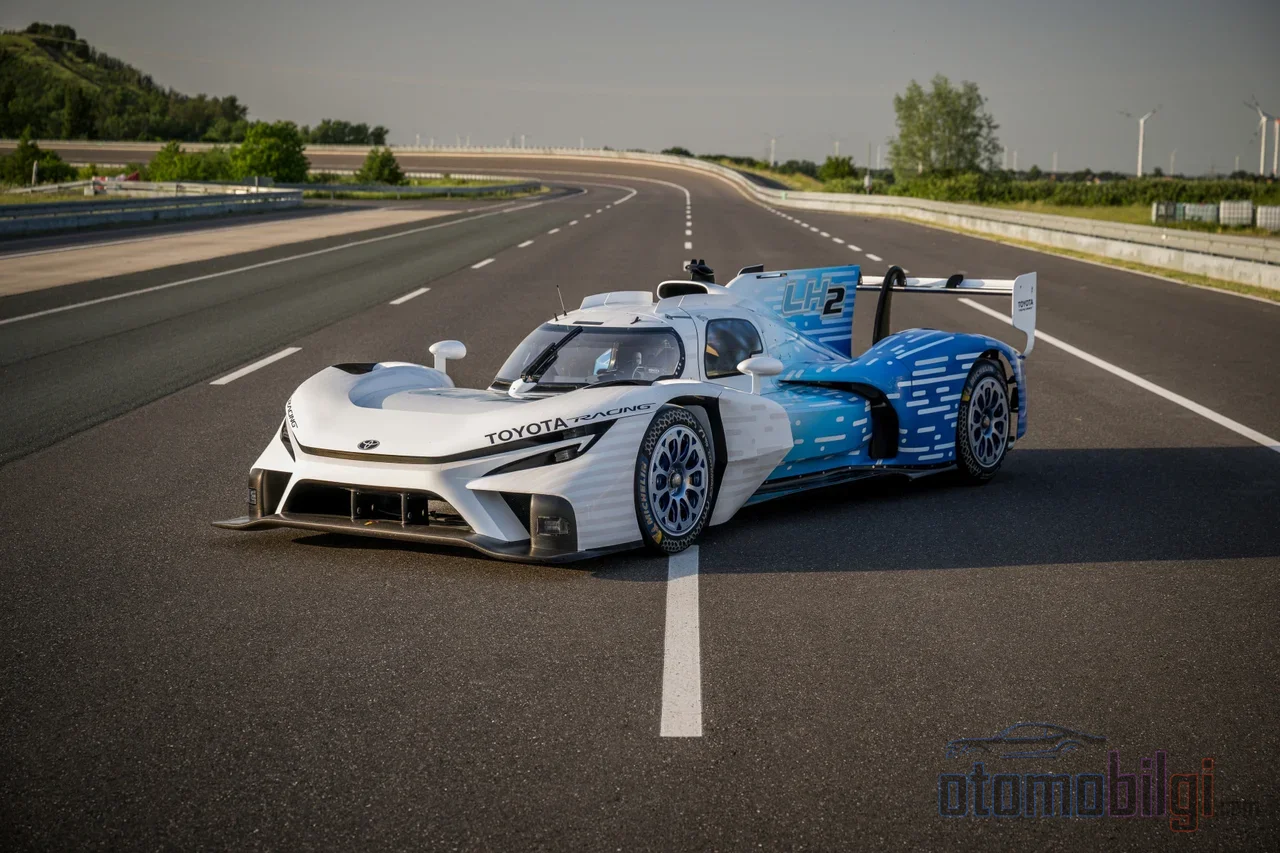
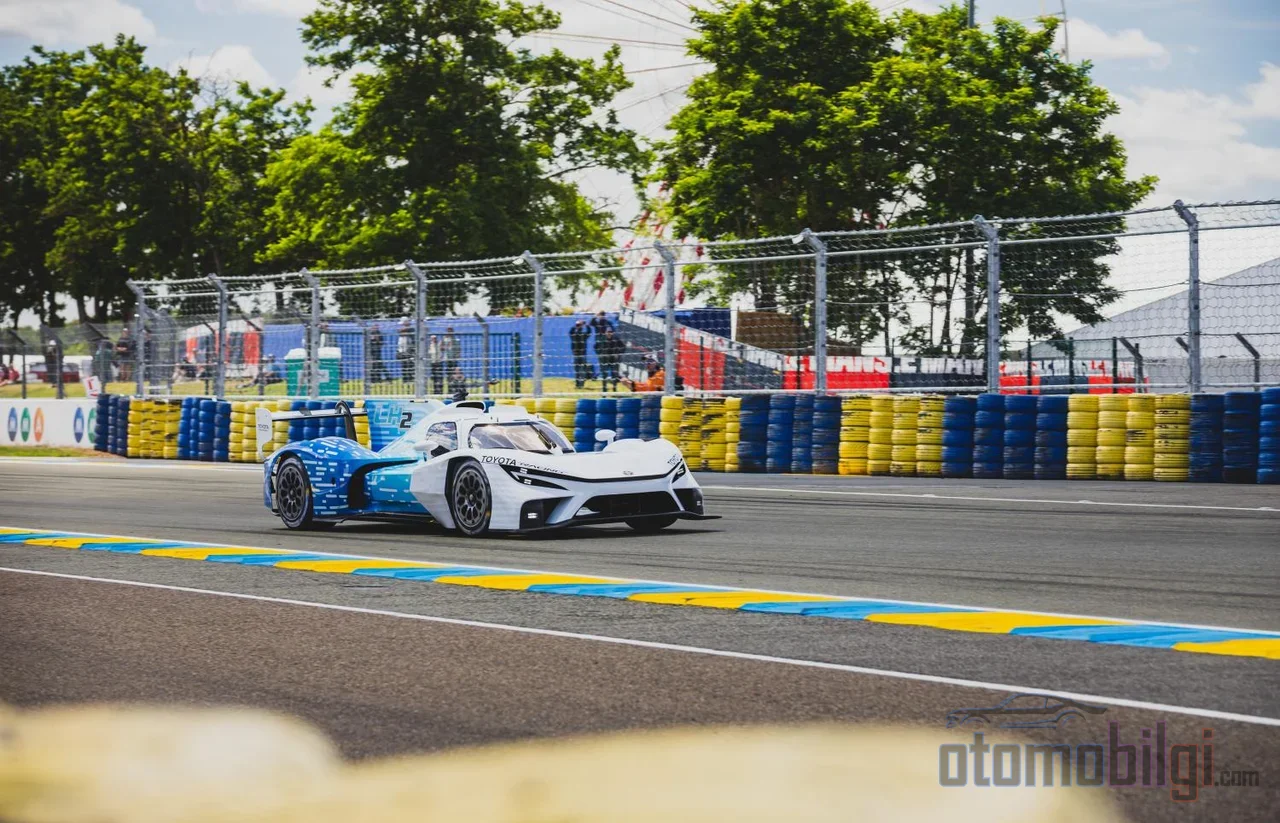
Here is that moment: The Toyota TR LH2 Racing Prototype became the first prototype to complete a lap of Le Mans on liquid hydrogen. Kazuki Nakajima was at the wheel. The car runs on a hydrogen combustion engine and is based on the same chassis as the brand's TR010 HYBRID Hypercar - meaning the platform of the fastest class at the legendary circuit now has a zero-carbon heart. The demonstration laps held on June 11 and 13 allowed spectators to see this future with their own eyes.
Toyota is not alone either. Alpine Alpenglow is also among the hydrogen concepts, planning a circuit record attempt exceeding 313 kilometers per hour on June 13. The picture on the Toyota front is even broader: Two TR010 HYBRID Hypercars took to the track in the 2026 race, and the team turned its logistics to hydrogen as well, with hydrogen fuel-cell buses and Hilux prototypes. The line extending from the GR H2 Racing Concept, presented statically in 2023, to the liquid-hydrogen and hybrid GR LH2 Racing Concept exhibited in 2025 shows just how seriously the brand has committed to this path.
The 2030 Rule Set: Hydrogen Is Now on the Calendar
On the eve of the 2026 race, the ACO, FIA and IMSA came together to outline the regulations of the top prototype class starting in 2030, and hydrogen vehicles were included in this new category. There had been talk of a delay for a while; a "2027" timeline had first been weighed for the hydrogen class, then the goal became clear and was tied to the 2030 top category. Now, according to the picture attributed to ACO's chief hydrogen consultant Bernard Niclot, the 2030 target stands - in fact, the work could be nearly finished even earlier.
The technical framework is also taking shape: for hydrogen vehicles, a minimum weight of 1200 kg, special tires, and an equivalence system that prevents differences in technology from creating a performance gap are foreseen. Simulations have also shown that overall victory for a hydrogen car is physically possible. In short, the rules are designed for hydrogen not as a "showcase class" but as a competitor that can win. This is the latest link in a tradition established when the disc brake appeared on the winning car in 1953.
Fuel Cell or Hydrogen Combustion Engine?
There are two different hearts in the hydrogen world, and both are permitted under the 2030 rule set. The fuel cell converts hydrogen into electricity and moves the car with an electric motor; the combustion engine runs the engine logic we know on hydrogen. The pros and cons of both are clearly debated, and the liquid hydrogen tank is designed so it can feed both.
| Feature | Hydrogen Combustion Engine | Fuel Cell |
|---|---|---|
| Weight / volume | Advantageous | More critical |
| Cooling | Expels 2/3 of exhaust heat, making it easier | Critical; a larger radiator is required |
| Emissions | NOx present but at a manageable level | Water vapor on site |
| Supply pressure | Requires a larger volume | Lower pressure is sufficient |
| Horizon | Easy to adapt from existing engines | Promising if designed for motorsport from the ground up |
There are interesting details on the combustion side: hydrogen runs at high lambda, i.e. in a lean mixture regime, so it requires a larger displacement than a standard gasoline engine; turbo and e-turbo options are also on the table. On the storage side, there is good news: the FIA has settled on liquid hydrogen storage, and thanks to new insulation materials, the tanks are thought to be lighter than expected. Since tank volume is limited, the cars will seek efficiency through low drag and hybridization - which is also the essence of the connection with road cars. Since we pay for every gram of fuel burned on the asphalt, a rule set chasing efficiency on the track concerns us all.
Pit Strategy Is Changing: The Matter of Hydrogen Refueling and Electric Charging
One of the things that makes Le Mans Le Mans is pit strategy; it is a game where fuel, tires and driver changes determine the seconds. For hydrogen refueling, the target is between 1-2 minutes; a five-minute stop is not acceptable. In liquid hydrogen transfer, the pipe needs to be cooled first, and this problem had already been seen in the Super Taikyu car at Fuji. There is also the participant dimension: while at least 2, probably 4, cars are considered reasonable for the refueling system, more than six could create problems for the system. Hyundai's interest with Genesis LMDh is also mentioned among potential names.
So where are fully electric vehicles? They are not yet at Le Mans, and the reason is simple: to race for 24 hours, a very high-power charging infrastructure at the 2-4 MW level is needed, and range and stint strategy are a separate equation. Still, the electric front is not empty: InMotion, an initiative made up of students, aims to one day enter Le Mans with an ultra-fast battery that can be charged in two minutes. So the electric future is also on this track's calendar, just standing a bit further back.
Is Le Mans Really Ready for a Hydrogen and Electric Future?
The short answer to the question is this: preparation has long since begun and the first steps have been taken. The liquid hydrogen prototype has completed its laps on the track, the rules for the 2030 top class have been announced, a 1-2 minute target has been set for hydrogen refueling, and simulations show that an overall win is feasible. The remaining work is to build the refueling infrastructure, find the balance between tank volume and drag, and stick to the schedule. History seems to be repeating itself: just as a disc-braked car won in 1953, a hydrogen-powered car winning in 2030 will add a new page to this track's technology heritage. I am eagerly awaiting it, what do you think - let's meet in the comments.
Sources
- A first for liquid hydrogen at Le Mans!
- 24 Hours of Le Mans - Great innovations (1951-1967)
- How the adoption of hydrogen at Le Mans is shaping up
- ACO, FIA and IMSA reveal ruleset for 2030 top-class prototypes
- MissionH24 and TOYOTA RACING accelerate hydrogen partnership
- Hydrogen at Le Mans in 2030 - MissionH24
- Le Mans 2026 - Toyota Racing
- Le Mans 24 Hours: Activities - Toyota newsroom
- History - ACO
- Le Mans Is Also 24 Hours of R&D
- Nine ways Le Mans racing tech has filtered into road cars
- Hybrid system LMDh - Bosch Motorsport
- Why no Full Electric Car Races at Le Mans?
- An ultra-rapid battery for the 24 Hours of Le Mans
- Le Mans - Racing Circuits
- 2026 24 Hours of Le Mans: ACO Press Conference