How Weather Can Win and Lose Races at Le Mans
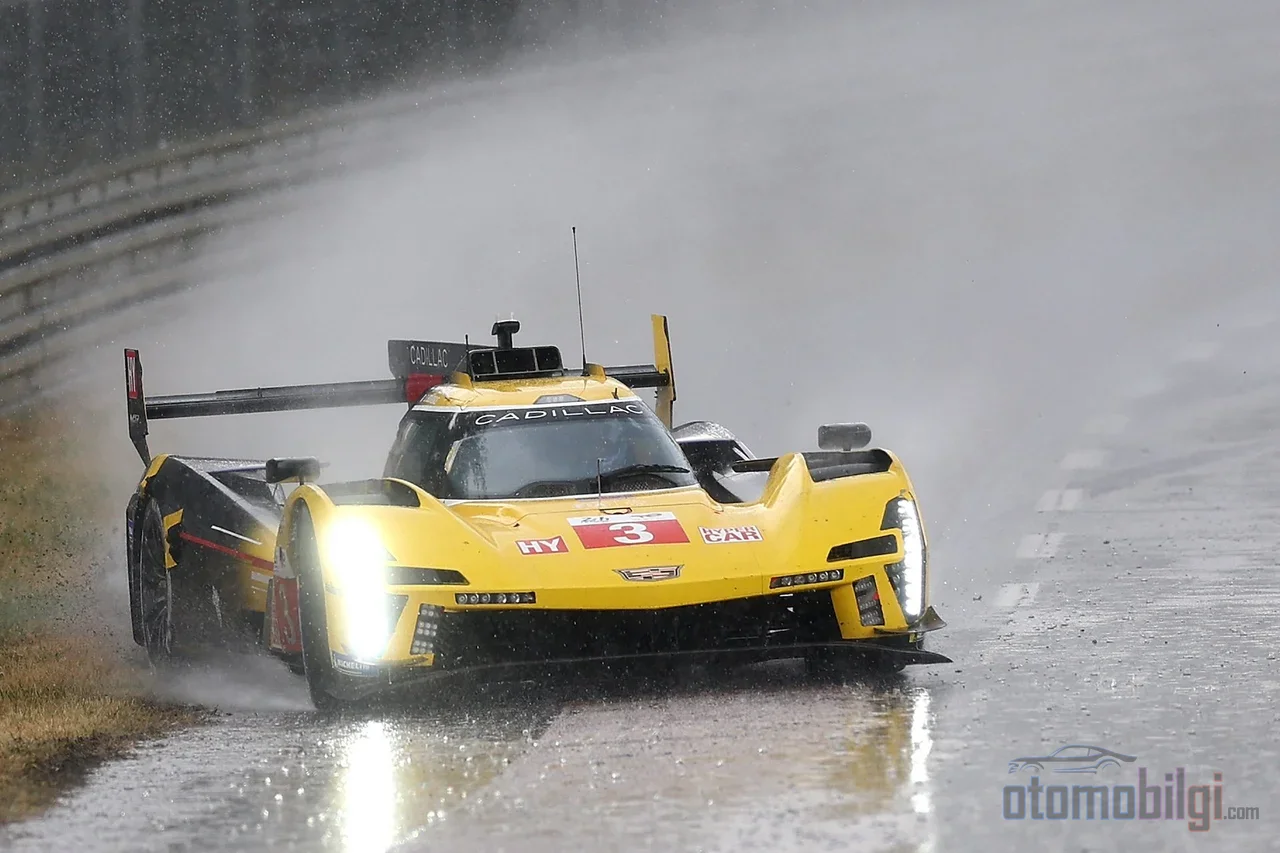
Share This Page
At the 24 Hours of Le Mans, the weather is a silent opponent that can beat even the fastest car on the track; rain, temperature and puddles have directly determined race results since 1923. So how does a raindrop turn an endurance race on its head? Here is the story of the moments when the weather wrote victories and dramatic losses at La Sarthe.
Highlights
- The first race 26-27 May 1923 was run in the rain; the winner was Chenard-Walcker Sport .
- Of the 90 editions run to date, in 37 there was some rain during the race.
- When the air temperature 32 °C is exceeded, officials can tighten driving-and-rest rules.
- On the Mulsanne Straight, cars 366 km/h can reach speeds of; puddles create a deadly risk here.
- The race is run in mid-June, near the shortest night of the year - meaning at the hottest time.
A Legend Born in the Rain: How Did It All Begin in 1923?
Just think: the world's oldest active endurance race showed the weather's hand on its very first day. The first 24 Hours of Le Mans, run on 26-27 May 1923, began on what was practically a track drowned in water. Period records describe that weekend as a thunderstorm, heavy rain and windy conditions. Since the Circuit de la Sarthe consists of closed public roads, drainage was designed to ordinary road standards rather than those of a race track - meaning wet surfaces became part of the race's DNA from day one.
Even so, the race was breathtaking. Chenard-Walcker Sport driven by André Lagache and René Léonard reached victory having completed 128 laps; behind them were Bentleys and a 2-litre Bignan . Here is the interesting part: after the race ended, the weather cleared and the drivers sped up and set international road records. So we had learned Le Mans' first lesson back in 1923 - on this track, weather conditions are a factor that directly limits the car's speed potential.
A statistic shared around the centenary makes it quite clear how often rain has been a guest: of the 90 editions run to date, 37 saw some rain during the race. In other words, more than one in every three races met a wet surface at least once. In 19 to 23 of them the rain was short-lived - but even those brief moments are enough to turn strategies upside down.
Aquaplaning on the Mulsanne Straight: Why Is a Wet Le Mans a Different Sport?
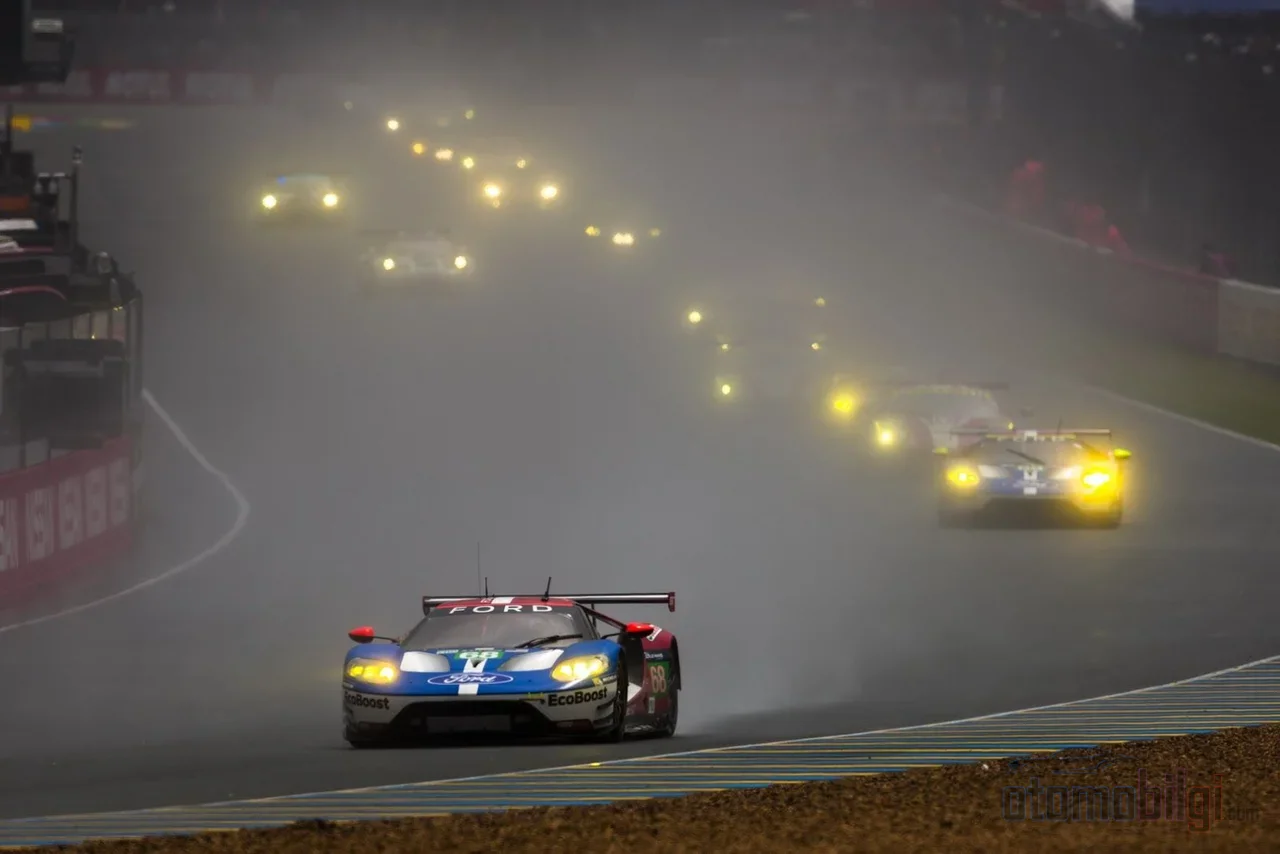
On many tracks rain is difficult but manageable. At Le Mans, however, rain merges with the track itself and turns into a completely different beast. Because on the Circuit de la Sarthe's famous Mulsanne Straight, cars reach speeds of 366 km/h at full throttle. At that speed, the moment water gets under the tire, aquaplaning - sliding on water - begins; it is as if the car floats along instead of its tires. You turn the wheel, but if the wheels have lost contact with the road, the command you input has no effect on the road.
Track history also shows the scale of the danger. In 1988, Roger Dorchy, WM P88 on the main straight, reached 407 km/h reached - as a result of these record speeds, two chicanes were added to the straight in 1990. In fact, there was another reason for dividing the straight into three: since the FIA does not approve straights longer than 2 km, the 6 km Mulsanne had to be split. But before the chicanes, tire and engine failures were an ordinary occurrence on the old straight, where speeds above 400 km/h were driven; period reports even tell of drivers explaining that if there was a problem with a tire, they could not notice it until it burst.
For today's drivers, the straight is still demanding. Louis Delétraz, who drives the classic LMP2 car ORECA 07-Gibson, points out that the asphalt on the Mulsanne Straight is not smooth - in wet weather, these imperfections are among the details that hold water and increase the risk of sliding. So the equation of high speed + rough asphalt + standing water makes Le Mans far more dangerous in wet weather than its other circuits.
What Changes at the Pit Wall the Moment Rain Starts?
The heavy rain that began immediately after the start of the 2023 race was a live lesson in this: within minutes the track became chaotic and slippery, and numerous cars from different categories went into aquaplaning. Visual recordings show the moments when cars spun off one by one. At such a moment, teams have two critical decisions at their disposal, and both depend on the weather report:
- Tire choice: Will you trust the dry or the rain? At Le Mans, the wrong compound choice loses time on every lap. That is why the color markings on the tires allow both teams and spectators to distinguish the tire type at a glance. Under current regulations, LMGT3 cars use a proven medium compound, while a rain tire specially designed for wet surfaces stands ready.
- Braking points: Braking distances lengthen on wet asphalt; if you brake at the normal point while approaching at 300 km/h, you will meet what lies beyond your hood. Drivers recalculate their braking points on every lap - this becomes not a strategy but a calculated risk.
The interesting part is this: at Le Mans, stint lengths are actually limited by fuel, not tires. Therefore, in hot weather, the strategy is built on striking a fine balance between extending stints to reduce pit stops and performance. When rain sets in, however, you have to rebuild that balance according to the weather window. The team that chooses the right compound at the right moment can turn the race around with a single move.
| Year | Weather condition | Effect on the race |
|---|---|---|
| 1923 | Hail, heavy rain, wind | The first race was run on a wet track; Chenard-Walcker won |
| 1988 | Dry, extreme speed conditions | The 407 km/h record ignited the chicane debate afterward |
| 2011 | Harsh hot summer conditions | The top two cars were tied over 355 laps, the winner decided by a 13-second margin |
| 2023 | Heavy rain after the start | Many cars went into aquaplaning, strategies were turned upside down |
| 2024 | High temperature pressure | Both of Alpine's new A424s retired with engine failures |
Heat Waves: The 32 °C Rule and the Summer Days That Cook the Engine
Rain is only half the story. Le Mans is deliberately run in mid-June, close to the summer solstice - meaning on one of the year's shortest nights and hottest days. Since closed-cockpit cars have weak ventilation, cockpit interior temperature can reach a level that is not merely uncomfortable for drivers but a genuine danger; there have been periods during race week when temperatures climbed into the 35-40 °C range.
The ACO has even signed a rule on this matter: when the air temperature reaches at least 32 °C officials can impose, when necessary, an 80-minute consecutive driving limit and a mandatory 30-minute minimum rest. This rule was added in 2017 - meaning the organization officially acknowledges temperature's effect on both humans and machines. It is also known that the hottest races in endurance racing push equipment to its limits; there have been cases where drivers' cooling vests proved insufficient at times.
How Does Heat Kill a Car's Reliability?
When outside temperature rises, engine water and oil temperatures climb along with it. Some cooling problems can be managed with solutions like a radiator cap, but excessive heat is among the hardest problems to solve. And Le Mans' rules force you to solve this between your own arms: the engine must be kept off during refueling and no work may be done on the car; replenishing oil or coolant is also forbidden within the first hour. In other words, you have no luxury of cooling your car in the pits - whatever you are thinking, you must have thought of it at the design stage.
The results have gone down in history. In 2024, Alpine arrived with its new A424 but both cars were knocked out of the race due to engine failures - the team calling this result "brutal" is no coincidence. Further back, in 2011, AMR-ONE was forced to withdraw from the race because of engine problems. When heat and mechanical stress combine, even the strongest budgets collapse to their knees.
Are Weather Decisions the Line Between Victory and Defeat?
I think yes - and the most beautiful proof of this is that the race itself secretly laughs at this question. Even the organization's own website tells how the race prepares surprises for its competitors, and this has become a kind of inside joke around it. Over 24 hours the weather changes, tire windows close and open, and a decision that looked right one lap becomes a disaster the next. Just like in 2011, when the first two cars reached the same lap count and the winner was declared by only 13 seconds - this shows how much small advantages grow in this race - and the team that reads the weather window well is exactly the team that creates that difference.
The tire front is rewritten every year too. The 2026 Hypercar prototypes used a tire with approximately 50% of its content being recycled or renewable material - this is a real turning point in tire design, well ahead of even the 32% rate in consumer tires. So components battling the weather conditions also pave the way for your own car's tires. A nice feeling, isn't it?
Final Word: Can You Make Pit Strategy Without Looking at the Sky?
Next time you watch Le Mans, try looking at the sky instead of the telemetry. When dark clouds gather, everyone on the pit wall turns their phone to a weather app; because the next rain band can rewrite the outcome of the 24 hours from the start. The only thing that has not changed since 1923 is this: at La Sarthe, the fastest car does not win - the car that negotiates best with the weather wins. Do you think the weather will spring another surprise this year?
Sources
- 24 Hours of Le Mans - Wikipedia
- Mulsanne Straight - Wikipedia
- 1923 24 Hours of Le Mans - Wikipedia
- 100 fascinating facts from a Centenary of Le Mans action - FIA WEC
- The iconic Mulsanne Straight pushes drivers to their limit - 24h-lemans.com
- Seven fun facts about the 24 Hours of Le Mans rules - 24h-lemans.com
- Does the 24 Hours of Le Mans choose its winner? - 24h-lemans.com
- Le Mans 2017: Hot weather, tough strategy - Racecar Engineering
- Alpine Laments "Cruel" Double DNF - Sportscar365
- Michelin at the 24 Hours of Le Mans - Michelin
- Goodyear Racing Notes - WEC 24 Hours of Le Mans
- Why the 2026 Le Mans race matters more than ever for Michelin - Racer
- Surviving the Heat at Le Mans - Beermountain
- Drivers Hail End of Perilous Straight - LA Times
- Le Mans 24 Hours 1923 - RacingSportscars