24 Hours at Le Mans: How Is Driver Fatigue Managed?
Share This Page
At the 24 Hours of Le Mans, driver fatigue is a factor that determines the race's fate just as much as the car: every car must have at least three drivers, no one may be behind the wheel for more than four hours within a six-hour window, and the total limit is 14 hours. In other words, nobody wins this race alone these days; instead of winning, the team that splits the driving, sleep, fluids, and concentration correctly wins. So in this article, I will tell the story not of the track, but of the human in the cockpit.
Highlights
- Every vehicle at least three, at most three drivers is mandatory; since 1985 every winning car has won with a three-driver crew.
- A driver may drive at most 4 hours within a six-hour period, and a total of 14 hours over the 24 hours.
- Cockpit temperature typically rises above 50°C. takes place.
- The first race 26-27 May 1923 was held; some teams tried to run the race alone back then.
- Porsche with 19 overall victories is the race's most successful manufacturer.
How Is Driver Fatigue Managed? The Framework Drawn by the Rules
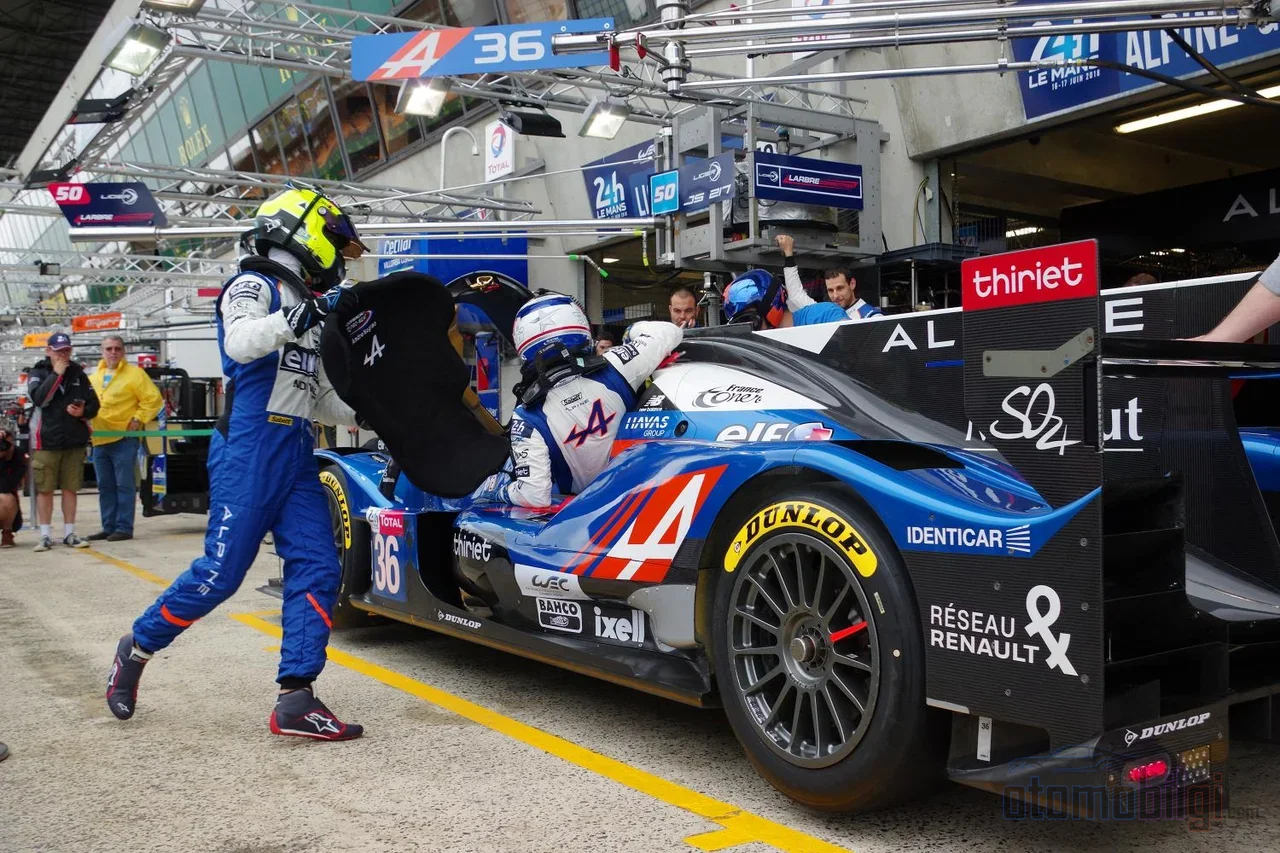
Let's start with clear numbers, because the first tool of fatigue management is the rules. Each car can have a minimum and maximum of three drivers. No pilot may drive more than four hours (i.e., 240 minutes) within a six-hour period. Over the total of 24 hours, a driver must drive at most 14 hours and at least 6 hours. Stints, meaning consecutive driving blocks, vary from 45 minutes to 4 hours depending on team strategy. In other words, team engineers calculate not only tires and fuel, but also the human limit of endurance.
| Rule | Limit |
|---|---|
| Number of drivers per car | Minimum and maximum 3 |
| Maximum driving within a six-hour window | 4 hours (240 min) |
| Maximum driving over the race | 14 hours |
| Minimum driving over the race | 6 hours |
| Stint length | Approximately 45 min - 4 hours |
Let me add this: in the 2026 race, 62 cars and approximately 186 drivers took the start across three categories: Hypercar, LMP2, and LMGT3. So this rule system applies not to a single car, but to a massive human logistics operation. Every pit stop is, in fact, a shift change.
From 1923 to Today: From Solo Duty to Three-Driver Shifts
The first race was held on 26-27 May 1923 on the public roads of Le Mans; 33 cars and 66 drivers participated, and André Lagache and René Léonard won with the Chenard-Walcker Sport (128 laps). In the early years almost every team used two drivers, but some crews tried leaving the pilot alone to save pit time. Now hold on, consider this too: drivers used to run to start the race, to cars parked on the opposite side of the track. Even before there was such a concept as fatigue management, this race tired people out from the very beginning.
Over time the balance changed. In 1952, one driver attempted to complete the 24 hours alone; he entered the final hour with a 4-lap lead, but an engine failure shattered the dream. The turning point came in 1977: the Porsche 936, with a crew of Jacky Ickx, Hurley Haywood, and Jürgen Barth, achieved the first overall victory won by three drivers. And here is a striking statistic: Since 1985, every winning car has had a three-driver crew. This is less a rule than a lesson the race itself teaches.
Sleeping in the Cockpit: The Art of Microsleep
So do drivers actually sleep? Yes, but the kind of sleep they learn is a bit different. The most popular method is microsleep: 5 to 20 minute naps. Paul-Loup Chatin says that theoretically he could sleep five hours over the course of the race, but he once spent a year with just two 15-20 minute naps in total. These people plan even while daydreaming.
It helps me manage the adrenaline.
Giovinazzi started microsleep training weeks before winning with the Ferrari 499P in 2023, and was even listening to Tibetan flute music. Felipe Drugovich (Cadillac, 2025) sleeps 1-2 hours in his accommodation near the paddock between stints, but he admits it himself: it is never enough. Maceo Capietto, on the other hand, keeps earplugs at the head of his bed and tries to bank sleep throughout the week before the race. Chatin's tactic is more emotional: if he cannot fall asleep, he puts on a movie he has watched before, because a film with a known ending is an invitation to sleep for the brain.
The Darkest Hours of the Morning: Night Stints
Not every stint is equally exhausting. Nicolas Lapierre openly describes the 02:30-03:00 shift as "awful" and tries to stay awake with light therapy and exercise. Mark Webber, in 2016 from the Porsche LMP1 seat, described the 04:00-08:00 slot as the most demanding stretch due to poor-quality sleep and speeds exceeding 200 mph (322 km/h) per hour. Eliot Challifour, former head of the Porsche Human Performance Centre, was part of the system that kept drivers sharp with hand-eye coordination tests. So fatigue is not just something felt; it is measured data.
A 50-Degree Cockpit: Heat, Fluids and Stomach-Friendly Nutrition
Now let's turn to the hottest part of the job, quite literally. Cockpit temperatures typically exceed 50°C; imagine driving inside a sauna. Under these conditions, dehydration strikes on two fronts: it increases the physiological load of heat stress and, on its own, degrades driving performance. That is why drivers are given cold, even icy fluids, and hydration starts long before the race. Whatever you believe, one driver fainted from dehydration the moment he saw the checkered flag and went to the medical center instead of the podium. Even the victory photo can matter as much as drinking water.
Nutrition is held to the same standard. The menu is deliberately simple: chicken for protein, pasta for carbohydrates. Meals are timed to coincide with post-stint periods, because eating a heavy meal right before driving brings the risk of the infamous "food coma". James Calado uses energy bars and gels; Giovinazzi is known to consume seven snacks in addition to dinner and breakfast. When it comes to caffeine, the picture is interesting: although widely consumed, professional performance teams prefer to restrict coffee due to caffeine's diuretic effect. The recommended beverage in Strakka Racing's nutrition plan is coconut water, with its high mineral and electrolyte content. Coconut water instead of coffee - in a 50-degree cockpit, there is no joke.
The Number One Athlete: Performance Teams and Training
The modern endurance driver works like an endurance athlete. Their training programs include numerous 60-90 minute high-intensity interval sessions per week, supplemented with heat acclimatization work. Some plans recommend a cardio base at triathlete level: 3-4 sessions per week, plus neck strengthening with resistance bands. Why the neck? Because in corners, the helmet sits on it like a debt on your shoulders.
And there is the pit side. In factory teams, not only the drivers but also the mechanics on the pit crew do physical and movement precision training. At Ferrari, every driver's bed is in the team motorhome just a few meters from the pit box. Sleep, fluids, nutrition, and physical preparation are all part of a single ecosystem. That is why the victory of the #83 Ferrari 499P crew that won the race (Robert Kubica, Ye Yifei, Philip Hanson) was not just a victory of speed, but a victory of human management.
Legendary Moments, Through Tired Eyes: Ford, Mazda and Porsche
1966: The Price of the Ford-Ferrari War
You know that in 1966 Ford broke Ferrari's winning streak and set speed records. But on the driver's side, the story hurts: at the finish, Ford asked Ken Miles to slow down by two laps so that both of its cars could finish together for that famous "dead heat" photo, and Miles lost the victory. The debate continues. If you consider that Miles kept his exhausted body at the wheel for 24 hours, the question of who made the final decision weighs even heavier. Not the one who won the race, but the calculation at the table won - at least that day.
1991: A Japanese Victory at Mulsanne
June 23, 1991, at 16:00. Johnny Herbert learned of the victory on the Mulsanne straight. The number 55 Mazda 787B - weighing just 830 kg, with its four-rotor R26B engine - won the race's first Japanese victory after 362 laps and 28 pit stops. Alongside Herbert in the crew were Volker Weidler and Bertrand Gachot. This is the story of the rotary engine and lightness; but it is also a victory because three drivers knew how to tactically divide the fatigue. It was the reward of splitting the race's day-night cycle across the human body.
The Man of Records
On the Porsche side, the picture is clear: the most successful manufacturer with 19 overall victories, the first win coming in 1970 with the Herrmann/Attwood duo's 917 KH. The driver record belongs to Tom Kristensen: 9 victories. That many wins, that many night stints, that many fluids - as the numbers grow, it gets hard to stay cool.
The Hypercar Era: No More Sprint, No More Comfort
Nicolas Lapierre's claim is staggering: over the last 10 years, the race has become far more physically and mentally demanding. While in 2007 it was enough to keep the pace, now you have to attack from the very first minute - because the reliability of modern LMP2 cars allows it. So this race, historically one for the patient, has turned into a sprint in the hypercar era. 18 hypercars, 8 manufacturers, three drivers per car and a 14-hour maximum limit per driver - everything is faster, tougher, more intense.
What about the simulator? Drivers learning the track at home is of course important these days, but let me be frank: the information I have revolves mostly around F1's 2026 regulations; current simulator preparation data specific to Le Mans is a separate topic for this article. Instead, what stands solid with me is this: endurance teams use human performance centers, hand-eye coordination tests, and measurable fatigue management. Technology is advancing both in simulators and in measurements, but at Le Mans the real simulator is still the human body itself.
Which Do You Think Is Harder? A Responsible Closing
From the drivers who ran and jumped into their cars in 1923, to the hypercar athletes micro-sleeping a few meters from the pit box in 2026, the story rests on the same four words: shifts, sleep, fluids, concentration. Only the cars and the rules have changed; the human is still the most expensive component of 24 hours. In my view, the boldest question is this: which was crazier - the 1952 driver trying to finish 24 hours alone, or the modern athlete taking corners at the limit at 3 a.m. in a 50-degree cockpit? Which side are you on? Let's talk in the comments - I love those who even get through hour 3 with a planned sleep schedule.
Sources
- 24 Hours of Le Mans - How do drivers cope with tiredness?
- How does the 24 Hours of Le Mans work? A beginner's guide
- Driver secrets from Le Mans: sleep, food and exercise
- Le Manzzz: How Do Endurance Drivers Sleep?
- When the 24 Hours of Le Mans turns into a sprint for drivers
- Heat: another thing for drivers to deal with
- The role of hydration in motorsport performance
- The Nutrition Position at Le Mans with Strakka Racing
- Le Mans 2026: How Works Drivers Train for the 24 Hours
- Athletes of the pit crew!
- 24 Hours of Le Mans Centenary - An unforgettable starting style
- May 27, 1923 - The winner of the first 24 Hours of Le Mans
- 24 Hours of Le Mans - Wikipedia
- Le Mans '66: what really happened?
- How Mazda won 24 Hours of Le Mans
- Mazda 787B - Wikipedia
- Reliability In The 24 Hours Of Le Mans - Quorum