Can Private Teams Win Le Mans? The Battle Against Factory Teams
Share This Page
Yes, private teams can win Le Mans, and they have won it many times throughout history: the list runs from Ecurie Ecosse in 1957 and Joest in 1985 and 1997 to AF Corse in 2025 in the Hypercar era, and it includes very special teams that won the overall classification despite their budget disadvantage. But this is neither the exception nor the rule: the lion's share still belongs to the factory teams.
Highlights
- Porsche, with 19 wins, is Le Mans' most successful manufacturer; Joest Racing, with 15 victories, is the most successful team.
- Mazda on June 23, 1991 remains the only Japanese manufacturer to have won Le Mans.
- In 2025, a private entry Ferrari 499P (AF Corse) won the overall classification; it was Ferrari's third consecutive victory.
- In 2026, victory returned to the factory: Toyota won, 10.9 seconds ahead of BMW.
- The 2025 race 332,000 spectators watched on site.
Now let's be honest: racing for 24 hours on the 13.626-kilometer Circuit de la Sarthe, a tapestry of closed public roads and permanent track sections, is more about endurance and management than speed. The winner is the car that covers the greatest distance in 24 hours. Even this definition is remarkably democratic: in theory, it's not the fastest that wins, but the one that survives. So does the one who prints the money always win? This is exactly where things get complicated. Let's break it down together.
What Exactly Is the Difference Between a Factory Team and a Private Team?
First, let's clarify the terms, then the conversation can heat up. A "private team" or, in motorsport parlance, a "privateer" is an independent professional team that races outside a manufacturer's own racing department. At the top there are fully supported factory teams, at the bottom amateur-spirited teams, with a wide spectrum in between. A private team doesn't fly with the manufacturer's money and engineering staff stuck to its back; it races within its own organization, renting the engine, equipment, and usually technical knowledge from the manufacturer.
Let's think of it with an analogy from everyday life: a factory team is like a chef with a professional kitchen and equipment at home; a private team is someone cooking the same recipe in a rented kitchen with their own skills. Even if the result is the same, the tools at hand are completely different. In endurance racing, this difference is felt terribly, because a single mechanical failure can end the whole dream of the entire distance you've covered up to the end of the 24 hours. Winning requires flawlessly managing strategy, traffic, fuel, tire and brake consumption for hours on end. Private teams have to do this with smaller crews and less testing.
So how big is the budget difference? Exact figures are of course behind closed doors, but in the debate that is the subject of this article, it is often said that factory budgets are many times larger than those of private teams. Presenting this as a precise number would be misleading; but everyone knows that even experienced teams cannot keep up with the manufacturer giants in spending on data analysis, simulation, and development. The budget difference undoubtedly exists; the real question is when this gap can be closed.
What Has History Said About Private Teams? The Independents That Won the Overall Classification
The beautiful part is this: in Le Mans' history dating back to 1923, overall victories by privateer teams are almost like collector's items of the sport. Let me list a few examples for you:
- 1957: Ecurie Ecosse, a small Scottish team operating out of a back-street garage in Edinburgh, beat Ferrari and all the factories with the British car from a year earlier. A true underdog epic.
- 1975: John Wyer's Mirage won the overall classification.
- 1980: Jean Rondeau reached victory with a chassis bearing his own name. Winning Le Mans with a car bearing your own name... I don't know if anyone else could do that.
- 1985: Joest, with an old Porsche 956B overtook the factory's new 962C. Beating the new factory car with an old machine is an unbelievable feat.
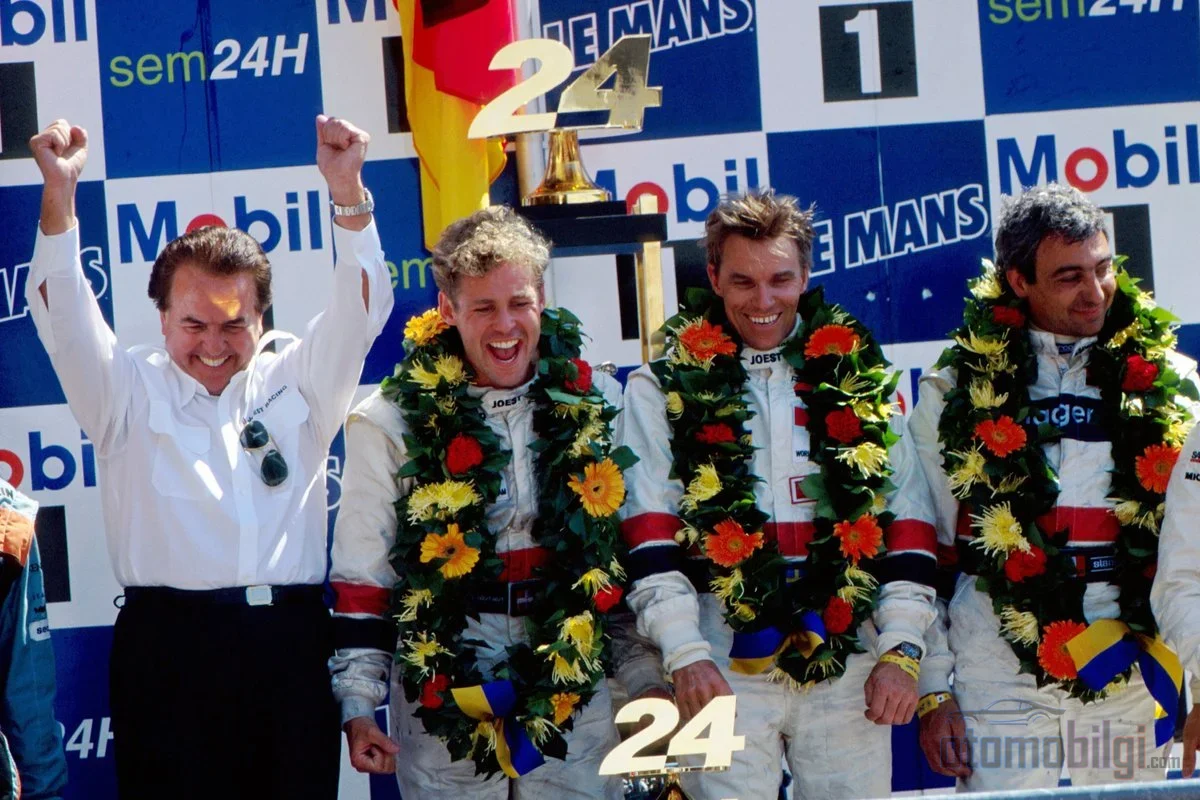
- 1997: Joest won once again in the battle against the GT1s; this time, it marked the year "when Porsche privateers beat your factory."
Technology is part of the story too: in 1978, a turbocharged engine won at Le Mans for the first time with the Renault Alpine A443; the Group C formula adopted after the 1970s oil crisis focused on fuel economy, and hybrid systems led the LMP category in the 2000s. In other words, the track is not just a laboratory of speed but also of efficiency and reliability; a small but clever team with the right technology can catch the big fish.
There is also an example showing the opposite: in 2003, the factory Bentley Speed 8 s beat the privateer Audis. So alongside the golden ages of privateer teams, the years when factory dominance returned also stand clearly on the pages of history. In fact, in 1970 the Porsche Salzburg 917 overtook the famous Gulf factory team; the privateer-factory boundary can sometimes even run within a manufacturer itself. Ferrari's last Le Mans victory before its hiatus from the sport also came thanks to Luigi Chinetti's NART privateer effort, with the now-considered-outdated 250 LM .
Mazda 1991: The Most Colorful Link in the Privateer Victory
But were privateer victories always about a "small team surprising everyone on a small budget"? No, sometimes clever use of the rules can also be decisive. On June 23, 1991, the number 55 Mazda 787B, with Johnny Herbert, Volker Weidler and Bertrand Gachot, completed 362 laps and, after 28 pit stops, won the overall classification. Mazda remains the only Japanese manufacturer to win Le Mans. Just imagine the excitement of that day: a rotary-engine car climbing to the top at the queen of endurance racing...
There are controversies behind the scenes of the victory too: the displacement advantage gained by the Wankel (rotary) 26B engine under the classification rules played a significant role; the regulation negotiation that allowed the 787B to race with less weight (ballast) thanks to Jackie Ickx is still talked about. These are opinions circulating on forums, so read them with caution; but what is clear is this: the result was decisive and historic in the overall classification. Mazda's victory was etched into memory as an example showing how the rules can be played.
The Ford-Ferrari War: What Happens to Privateer Fortune When the Factories Fight?
When factories lock horns, doors can open for privateer teams. Ferrari won Le Mans six times in a row between 1960 and 1965; then Ford, with the GT40 in 1966, achieved a historic 1-2-3 victory and became the first American manufacturer to do so. It won four years in a row from 1966 to 1969; moreover, at the 1966 finish, due to the "greatest distance" rule, Bruce McLaren/Ken Miles came down to a photo finish in which McLaren won - the margin was just 8 meters. In other words, factory teams squeeze each other so tightly that when a clever privateer team manages to slip into the gap, things can turn around. History is full of such examples: even dominant factory eras do not produce one-sided results.
What Changed in the Hypercar Era? The Entry System and the 2025-2026 Table
Now let's look at the current picture. The Hypercar class was introduced in 2021, establishing a three-class structure (Hypercar, LMP2, LMGT3). Current regulations require three drivers per car; there is a maximum of 4 hours of driving in any 6-hour period and a total limit of 14 hours. To be classified, a car must complete at least 70% of the distance covered by the overall winner. Within this framework, the entry system in the Hypercar era is a critical door for privateer teams: independent teams that want to compete at Hypercar level are trying to find a place on the grid alongside the manufacturers.
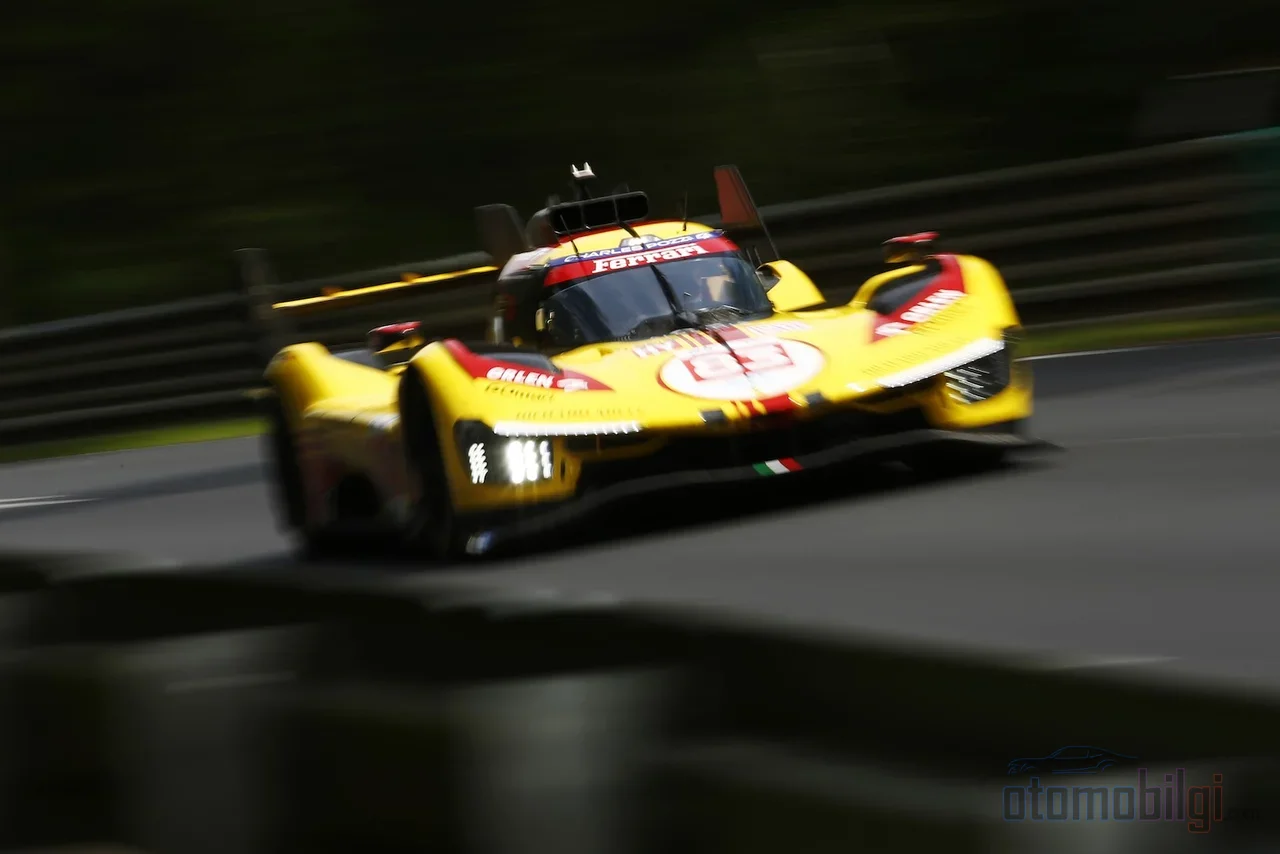
The 2025 race is practically a textbook example of this: AF Corse, running the Ferrari 499P entered privately with number 83, won with Robert Kubica, Yifei Ye and Phil Hanson; it was Ferrari's third consecutive victory. That same year, AF Corse also became FIA World Cup for Hypercar Teams champion. So even in the Hypercar era, privateer teams can reach the top.
2026, on the other hand, was the year of the factories' return. In the 94th running held on June 13-14, 18 Hypercar teams battled for overall victory; three Ferrari 499Ps, the Aston Martin THOR Team (007 and 009), Toyota Racing (7 and 8), Cadillac Hertz Team JOTA, Cadillac WTR, BMW M Team WRT and, seen for the first time, Genesis Magma Racing (GMR-001) were on the grid. The result: Toyota Racing WEC won in Hypercar after a fierce duel with BMW and Cadillac, finishing just 10.9 seconds ahead of BMW's number 20 car. This margin is a direct answer to the criticism that "Toyota only beat privateer teams": the competition was genuinely close.
| Year | Winner | Team Type | Note |
|---|---|---|---|
| 1957 | Ecurie Ecosse | Privateer team | Beat Ferrari from a small Scottish garage |
| 1980 | Jean Rondeau | Privateer team | Victory with a chassis bearing his own name |
| 1985 | Joest | Privateer team | An old Porsche 956B overtook the factory's 962C |
| 1991 | Mazda 787B | Manufacturer (the only Japanese victory) | 362 laps, 28 pit stops |
| 2003 | Bentley Speed 8 | Factory | Beat the privateer Audis |
| 2025 | Ferrari 499P | Privateer team (AF Corse) | Ferrari's third consecutive victory |
| 2026 | Toyota Racing WEC | Factory | A 10.9-second margin over BMW |
There's also a separate discussion on the 2026 Porsche front: posts are circulating that privateer 963s beat Penske's factory team at Le Mans. Since this is a claim from a single source, I don't want to present it as certain information; but it's an interesting note in terms of showing how fine the lines are on which the privateer-factory relationship balances.
How Does the Privateer Team Close the Gap? Endurance and Strategy Weapons
So how does a small-budget team survive? The first weapon is the nature of endurance: any mechanical failure can end a team's race, and sometimes the lower classes showing better reliability opens the door to surprise victories in the overall classification. The second weapon is strategy: managing traffic over 24 hours, planning fuel, tire and brake consumption; setting up stint planning and driver rotation. Rules such as the three drivers not exceeding 14 hours in total require the team to maintain its rhythm throughout the entire day.
We see a similar structure in MotoGP as well; in series without a cost cap, factory teams can spend far more than independents. A different series, but the same logic: if there's no spending limit, the corporate giant can devour itself with its own power. At Le Mans, however, the endurance factor acts as a buffer that softens this asymmetry: even the most expensive car can break down, and even the humblest setup can survive.
Conclusion: Should the Factory Go, or the Privateer Team Win?
In my view, both actually win. Factory teams raise the standard with their budget and engineering depth; privateer teams close this gap with endurance, strategy, and sometimes by cleverly reading the rules. The list of victories stretching from Ecurie Ecosse to AF Corse is proof of this; the 2003 Bentley and 2026 Toyota are proof of when the factory returns. If it were you, which side would you take; the multimillion-dollar factory simulation, or the small team's bold move? Let's meet in the comments, I'm curious.
Sources
- 24 Hours of Le Mans
- 2025 24 Hours of Le Mans
- 2026 24 Hours of Le Mans
- Mazda 787B
- When Porsche privateers beat the factory at Le Mans
- Privateer Ferrari wins Le Mans 24 Hours for historic three-peat
- 24 Hours of Le Mans 2025 - FIAWEC
- Final entry list published for 94th 24 Hours of Le Mans
- 24 Hours of Le Mans – The 2026 Hypercar class preview
- How Mazda won 24 Hours of Le Mans
- Which Car Beat Ferrari at Le Mans in 1966?
- What is a "privateer" race car team?
- AF Corse wins FIA World Cup for Hypercar Teams