How Many Liters of Fuel Does It Take to Win Le Mans?
Share This Page
As a rule, a car at Le Mans burns thousands of liters of fuel over 24 hours: since the distance exceeds 5,000 kilometers, total consumption per vehicle has repeatedly exceeded 2,000 liters throughout the race's history. Moreover, fuel here is not just a liquid sitting in a tank; it is the real strategic weapon that determines the winner of the race. So how does a tank of fuel determine the war between two legendary brands? Let's take a look.
Highlights
- A Hypercar takes on fuel approximately 30 times during the race.
- In the Group C era, cars were allocated 2,600 liters of fuel per race.
- Record distance set in 2010: 5,410 km - roughly 18 times the distance of a Formula 1 race.
- Since 2012, hybrid systems have been favorable for winning; the first hybrid victory came that same year.
- Since 2022, all cars have been using 100% renewable fuel.
How Many Liters of Fuel Does a Race Car Consume in 24 Hours?
Let's be honest: I cannot hold up a single official total liter figure for today's Hypercars, because that number is not written in the rulebook. But we can piece together the parts we have. The winning car covers more than 5,000 kilometers in 24 hours. Historical data shows that this distance can be covered with thousands of liters per race. So the answer to the question can be thought of not as a gas station receipt, but as a tanker truck receipt.
How does it work? Think about it: in your own car, you can probably go 600-700 kilometers on one tank of fuel. At Le Mans, however, the tank empties every few laps and the car heads into the pit lane. Hypercars are refueled approximately 30 times during the race. That means running 30 little calculations at the same time: when do we stop, how much do we take, do we change tires?
For comparison: the Le Mans-specific tank capacity of the prototypes in the LMP2 class is 75 liters. That is not all that different from a regular family car's tank. The difference lies in how much more efficiently and much more quickly those 75 liters are spent.
The ACO's Fuel Limits: A Race on Consumption, Not Speed
The organization that runs Le Mans did something very interesting at certain points in history: it limited not how fast the cars went, but how much fuel they consumed. The analogy is this: two friends go shopping with the same allowance; the winner is not the one with more money, but the one who knows how to spend it well.
1975: The Oil Crisis Reflected on the Pit Wallpaper
The oil crisis of 1973 changed everything. In 1975, the ACO restricted the fuel allowance: only cars consuming a maximum of 44 liters per 100 kilometers could win. What is the interesting part? Jacky Ickx and Derek Bell reached victory with the Gulf-Mirage under exactly this rule. The rules were relaxed a bit in 1976, but the message was very clear: Le Mans was now a race of fuel management.
Group C: A Math Lesson in 2,600 Liters
The Group C era, which began in 1982, is the most famous scene of fuel limits. Each car was allocated 2,600 liters for the race, a maximum of 25 refueling operations were allowed, and tanks were limited to 100 liters. The result? The Porsche 956 covered 4,899 kilometers on those 2,600 liters - roughly 53 liters per 100 kilometers. The same Ickx and Bell duo won again, this time with Porsche.
The following years got even tougher: In 1985, the allocation was cut by 15% down to 2,210 liters. The winning Porsche 956 finished 5,088 km this time at 43 liters per 100 km - meaning the car had learned to run more efficiently. But the restrictions were so demanding that the ACO returned to the 1982 allocations to preserve the race's entertainment value. In 1989, Sauber Mercedes pushed it to 49 liters per 100 km. As you can see, the debate continues: are energy limits a tool that balances competition, or a deterrent that kills the show?
| Year | Fuel Allocation | Consumption (l/100 km) | Winning Car |
|---|---|---|---|
| 1975 | 44 liters per 100 km limit | - | Gulf-Mirage |
| 1982 | 2,600 liters | 53 | Porsche 956 |
| 1985 | 2,210 liters | 43 | Porsche 956 |
| 1989 | 2,600 liters (brought back) | 49 | Sauber Mercedes |
Pit Cycle: How to Plan Fuel Load and Pit Strategy
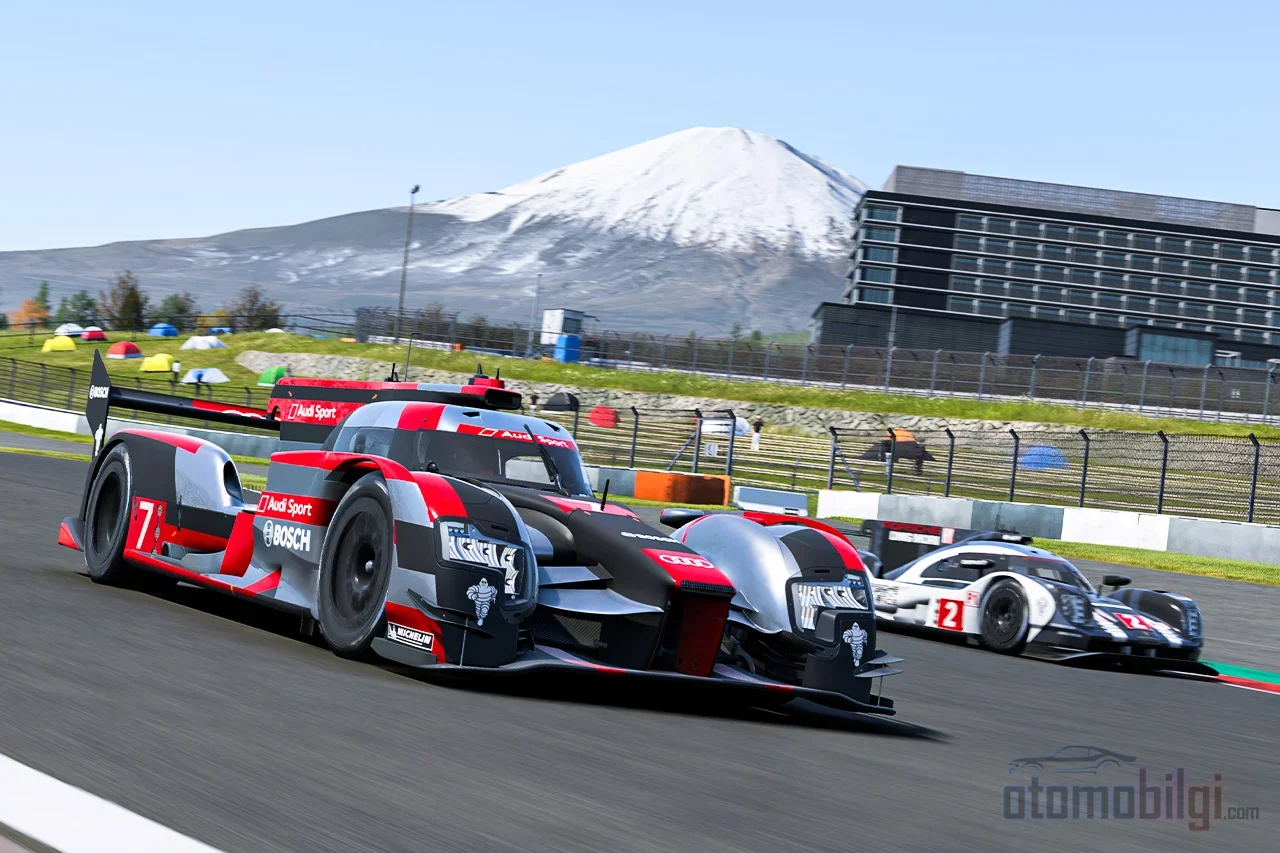
Entering the pit lane is easy; deciding on it is hard. Around 30 refuelings are made during the race, and each extra stop means more than a minute lost. If you look at the race's total running time, you understand how heavy those minutes are: one minute can change the fate of a battle lasting hours.
The strategy works like this: fuel and time spent in the pits are interlinked. If you take on more fuel, you stay longer in the pits but can run longer on track. If you take less, you're faster in the pits but have to come in more often. Toyota tried exactly the opposite in the pre-2012 era: it used an aggressive early strategy, refueling earlier than its rivals to gain time on a clean track. So sometimes stopping together when everyone else does provides an advantage.
Service times are also part of the tactic: a two-tire change takes about 5 seconds, four tires about 12 seconds. So the question "should we change the tires while refueling" is actually a math problem.
Hybrid Systems and Energy Recovery: The Victory Key of the New Era
The 2012 rulebook opened the door to hybrid cars, and the result came immediately: Audi's R18 e-tron quattro became the first car to win with hybrid technology that same year. This car had a flywheel-type energy recovery system; battery solutions could be set up more easily in the LMP1 cars of Toyota, Porsche and Audi. Simply put: the energy normally lost as heat when braking is stored in a reservoir (flywheel or battery) and converted back into power on the track's long straights.
Under today's Hypercar rules, the combustion engine and electric hybrid system combined can produce a maximum of 785 hp (585 kW). So fuel saving is no longer just about "using less gasoline"; using stored electricity at the right place and the right time is also a fuel strategy.
This story has an older chapter too: In 2006, the Audi R10 TDI became the first diesel prototype to win Le Mans. In 2009, Peugeot won with its diesel particulate filter-equipped car, and the two brands raced with V12 TDI engines for five years. What they all have in common is this: Le Mans continues to be a testing ground for engine technology - many innovations, from direct gasoline injection to hybrid, are rehearsed here first and then carried over to road cars.
The Ford-Ferrari War and Legends Through the Fuel Strategy Window
The 1966 Le Mans is known as the race where Ford's GT40 Mark II beat Ferrari - the 2019 film "Ford v Ferrari" also tells this story. Although fuel strategy does not stand out as the deciding factor of that race in the records, in an endurance race, speed is not the only way to win; the fuel, the tires, the drivers, and the plan all have to endure for 24 hours. Ford's victory is legendary precisely because of this: Breaking the Italian rival's long uninterrupted dominance with a more durable machine.
The overall picture of the manufacturers is also intertwined with fuel and technology strategy: Porsche is the most successful manufacturer with 19 total wins (the first with the 917 KH in 1970, the last with the 919 Hybrid in 2017). Audi ranks second with 12 wins; its direct gasoline injection system contributed to this success by optimizing the race car's fuel consumption and throttle response. So behind every legendary brand, a fuel engineer sits next to the engine.
Renewable Fuel and Hydrogen: Le Mans's Green Experiment
Since 2022, all vehicles at Le Mans have been using a 100% renewable fuel produced from grape waste. This fuel's life cycle achieves at least a 65% CO2 reduction. So on one hand there is a race consuming thousands of liters of fuel over 24 hours, and on the other hand this consumption is being redesigned to harm the environment as little as possible - in my opinion, this irony is one of the most interesting aspects of the race.
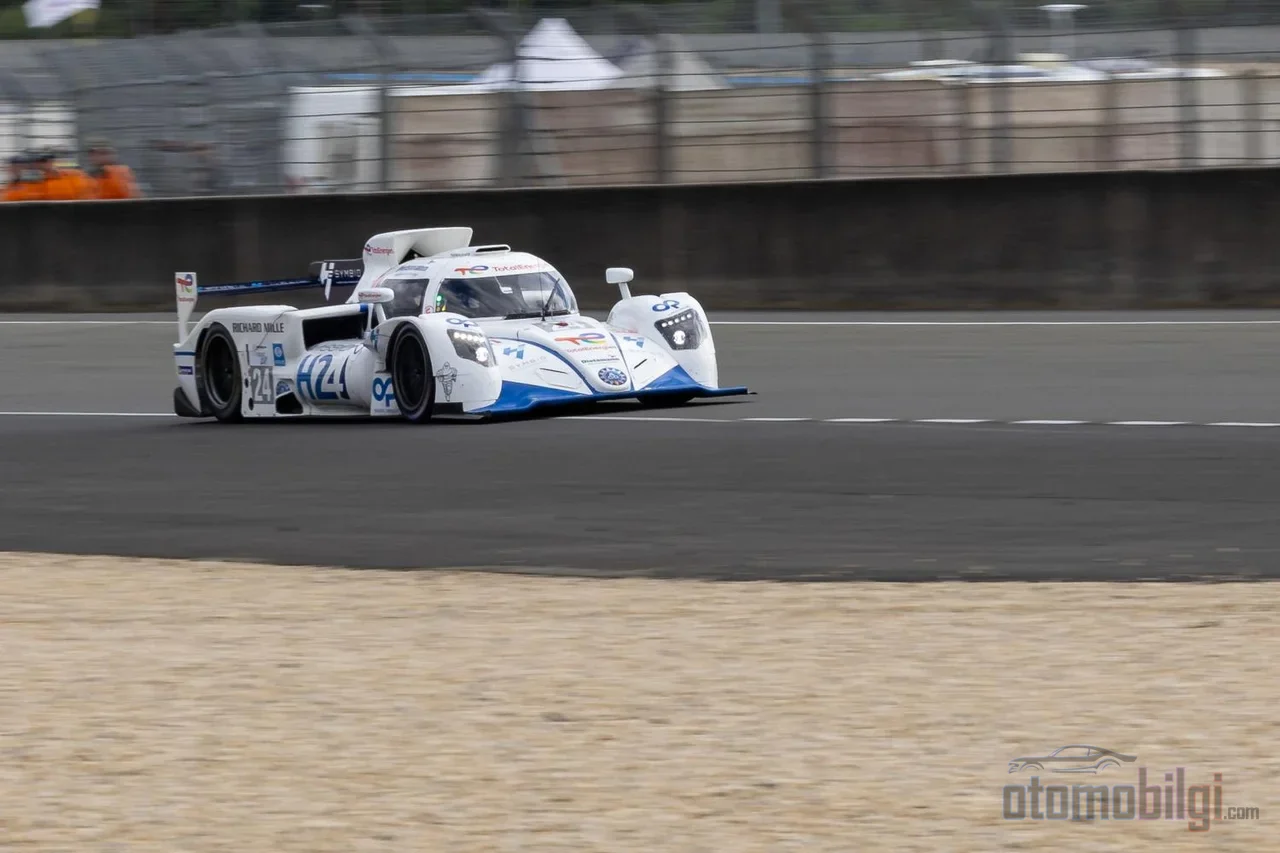
There is a step further ahead: hydrogen. There is a hydrogen partnership between the ACO and energy companies, and the Mission H24 prototype is regularly tested on the track. In fact, the fact that hydrogen refueling can be done at 700 bar pressure in a time similar to conventional refueling is a serious advantage for long endurance races. For a team that does not want to lose minutes while stopping in the pits, this could be a game changer.
The spectator side has also become more transparent: The "Virtual Energy Tank" feature offered by the FIA WEC from June 2026 onwards shows the real-time fuel and allocated energy levels of every Hypercar and LMGT3 car. So while you are sitting on your couch, you can see how many liters remain in the tank of the car on the screen - race strategy has now left the paddock gossip and landed in the spectator's palm.
Does Fuel Saving Win Races?
Short answer: it can win - and sometimes it actually does. Racers use a technique called "lift-and-coast": lifting off the throttle early at the end of a straight and slowing with engine braking until braking begins. This makes a stint last longer, and some pit stops can be skipped entirely. Remember, every skipped stop means more than a minute of time gained on track.
If you ask me, this is the real story of Le Mans: it's not the fastest car that wins, but the one that uses its fuel most intelligently. From the 44-liter limits of 1975 to today's hybrid and hydrogen experiments, the common denominator of more than a century of history has always remained the same. Do you think that ten years from now the winning car will still burn gasoline, or will it enter the pit lane with a completely different kind of energy?
Sources
- Pit stop tactics: a major factor at the 24 Hours of Le Mans
- The 24 Hours of Le Mans with an eye to the environment
- Refuelling on LM P2 prototypes
- 24 Hours of Le Mans - Wikipedia
- Le Mans Hypercar - Wikipedia
- How does the 24 Hours of Le Mans work? A beginner's guide
- 24 Hours of Le Mans Race Cars to Use 100% Renewable Fuel
- Dive into the heart of Le Mans strategy with new FIAWEC+ features
- 2020 Le Mans Prototype Hypercar Technical Regulations
- Le Mans victory for TOYOTA RACING
- Le Mans (Audi)
- 24 hours of Le Mans: everything you need to know
- How Ford Beat Ferrari at the 1966 24 Hours Of Le Mans
- Mastering Lift and Coast