Why Is Aerodynamics More Important Than Speed at Le Mans?
Share This Page
Aerodynamics matters more than top speed at Le Mans because the track, with straight-line speeds exceeding 322 km/h, demands from a car that must shuttle between tight corners a single balance achieving both: minimizing drag on the straights while providing usable grip in the corners. In short, the Circuit de la Sarthe presents engineers with the cruelest trade-off, and the winner is always the master of this balance.
Highlights
- On the Mulsanne Straight, cars 322 km/h reach speeds above and must slow down to about 100 km/h for the sharp corner at the village.
- Underneath the Chaparral 2J were two 45 hp fans spun by a small motor producing 17 inches in diameter.
- Aerodynamic forces increase with the square of speed: when speed doubles, downforce and drag increase roughly fourfold .
- Porsche 956, with its underbody design that provided strong downforce without needing wings, was a pioneer of its era.
- In the 2026 race, hypercar top speeds 340 km/h were measured at around.
Downforce and Drag: Two Sides of the Same Coin
Let me explain simply first. Downforce is the force that pushes the car down onto the road; the more of it there is, the better the tires grip, the faster you corner, and the more stable you stay under braking. Drag is the air resistance pushing you backward; it eats into your top speed and efficiency. If it were up to you, which would you choose? That is exactly where the challenge begins, because you do not have the luxury of choosing.
Almost every component that generates downforce - rear wing, front splitter, diffuser - also generates drag at the same time. This is the classic engineering downforce-drag trade-off and efficiency is measured by the lift-to-drag ratio, that is, the ratio of downforce to drag. Then there is the physics side of things, which makes the job genuinely harder: aerodynamic forces increase with the square of speed. When speed doubles, both downforce and drag jump roughly fourfold. That is why this game only really 100 km/h and above where it really kicks in.
Where you get the downforce from matters too. Wings do the job, but as their price they bring an extra load called induced drag. Ground effect - accelerating the air under the car and lowering its pressure so the car sticks to the ground - is the most efficient method: lots of downforce with little drag. If you keep the wing angle shallow, downforce drops but top speed rises - teams play with this setting for every track. At Le Mans, this setting becomes a far harsher exam than anywhere else in the world.
The Mulsanne Tribute: Braking from 322 to 100 km/h
Think about the track: long, endless straights and the tight corners waiting for you at the end of them. The character of the Circuit de la Sarthe lies exactly in this gulf. The car sees 322 km/h plus on the Mulsanne Straight, then slows almost to a stop for the sharp corner at the Mulsanne village and has to drop to around 100 km/h . From an engineering standpoint, that is a brutal demand.
Why? Because a high-downforce car shines in corners, but on the straights the drag created by its wings takes a heavy toll. A low-downforce car, meanwhile, flies like an arrow on the straights but loses grip in the corners. Every lap on the track, every fuel load, every braking zone is a decision about where to stand between these two extremes. This is exactly where the indispensability of a low-drag setup comes from: you have to fit straight-line efficiency and high-speed stability into the same package. This balance isn't only about top speed either; simulation setup guides say it too - what really matters is not absolute top speed, but how quickly you reach that speed coming out of a corner.
There's even an interesting comparison: the late-era GTP prototypes of their day could theoretically produce tremendous downforce at 200 mph, but the drag that came with that downforce dragged the car down to an effectively lower speed regime. A single peak downforce figure is misleading; what really matters is how much pressing force the car offers across which speed ranges along the track. Le Mans is the circuit that lays this picture bare most honestly.
Chaparral's Crazy Experiments: Wings and the Sucker Car
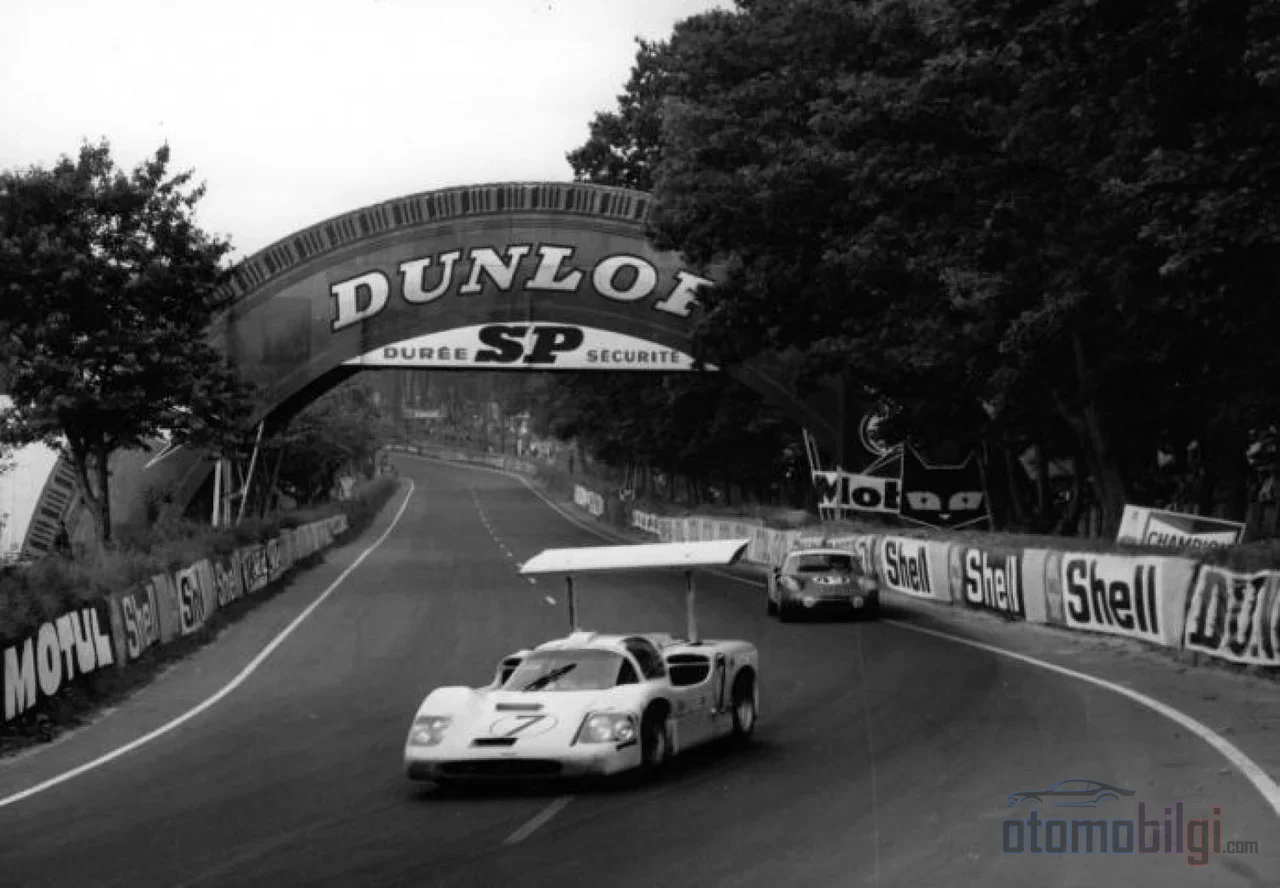
One of the first to question this balance was the American engineer Jim Hall. The Chaparral 2F, when it appeared at Le Mans in 1967, carried a very high, movable wing mounted on two struts - an unthinkable thing for that era. Even relocating the radiator was an aerodynamic move. Although it didn't bring a victory that year, the 2F became a pioneer of advanced aerodynamics and permanently changed race car design.
Then came the Chaparral 2J and things got truly crazy. At the rear, two 17-inch fans were powered by a small motor producing 45 hp, sucking air from beneath the car and gluing it to the ground. Its name was the "Sucker Car" - and that's no exaggeration, because it really did suck. This was one of the first teams to use ground effect, and it was a solution that gained downforce without paying the penalty of wing drag. Of course, it didn't come free: FIA banned the concept on the grounds of movable aerodynamic devices. But the door it opened never closed.
Another quiet revolution took place in this era: 1963 was the first year Le Mans was won by a mid-engined car, proving the importance of engine placement to the whole world. Aerodynamics and chassis philosophy were now two concepts advancing hand in hand.
Porsche 956: The Art of Downforce Without Wings
Porsche's Le Mans journey stepped into its golden age with its first overall victory in 1970, and the 917's flowing contours were among the first examples of a design guided by aerodynamics. But the real turning point was the 956 that came after it. This car, featuring Porsche's first aluminum monocoque chassis, also comes with a striking statistic: since its first victory in 1970, Porsche stands as the most successful manufacturer with 19 wins ; Audi 13 and Ferrari 12 follow it. It's no coincidence that the brand that has passed a circuit's aerodynamic exam so many times grasped the power of underfloor airflow early.
Where Does the Balance Stand in the Hypercar Era?
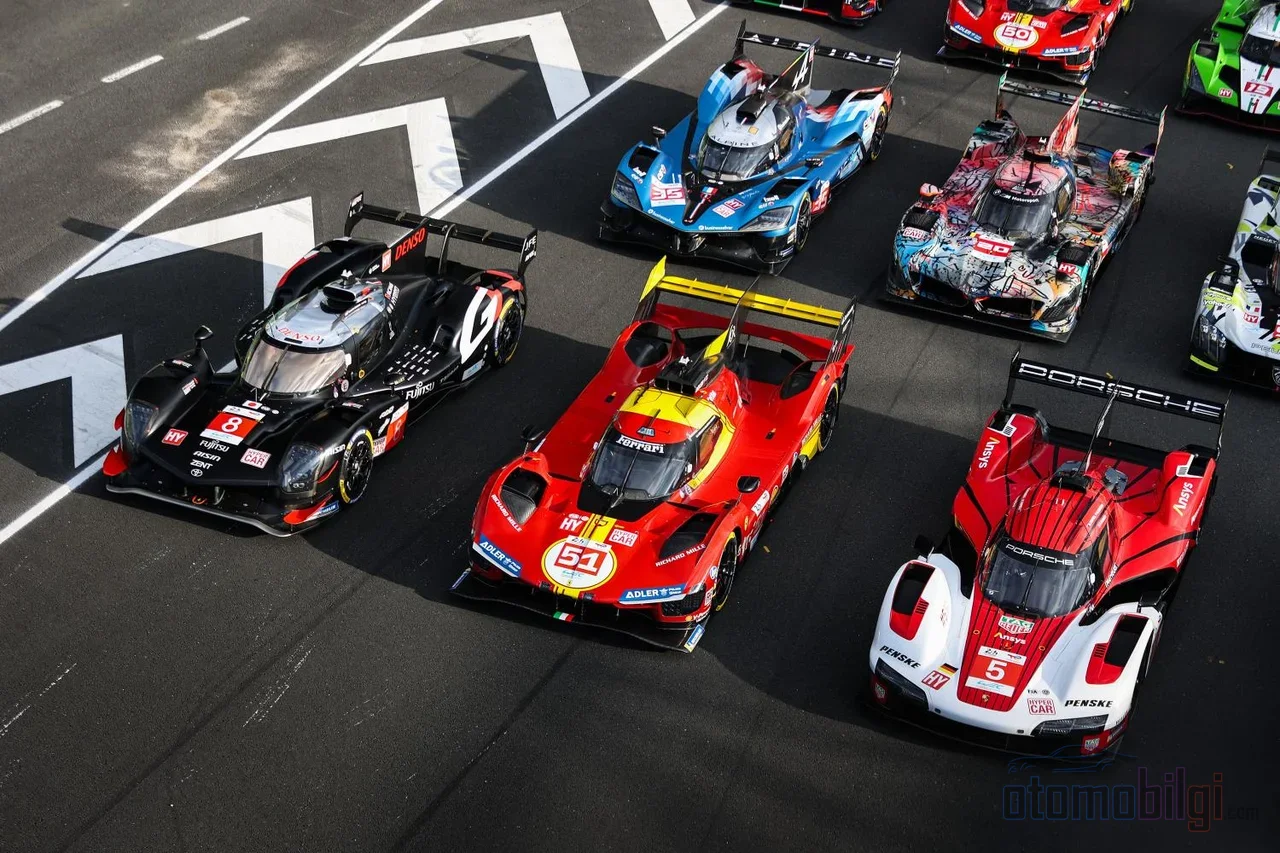
So how does all this work today? The aerodynamic philosophy of modern hypercars is completely different from that of single-purpose sprint machines. While F1 cars chase maximum downforce with minimum drag, Le Mans hypercars strike a calculated balance between straight-line efficiency and high-speed stability for endurance. That's why the wings sit flatter at Le Mans; the long straights practically make a low-drag setup mandatory.
On qualifying day in 2026, one of the strongest names in the hypercar field recorded a top speed of around 340 km/h in its telemetry - meaning the straights still allow blistering speeds. But as the official race source also emphasized, while a low-downforce car is fast on the straights, it loses grip in the corners; Porsche Curves to get through fast corners like these, the wing angle must not be kept too flat. The price of this low-downforce, low-drag setup is that the driver must constantly manage the car not only on the straights but also in high-speed corners. While some classes grip as if they are glued to the track, the drivers of the top-class cars are working their fingers to the bone in the seat.
On the braking side, slow corners are genuinely demanding especially in the heavier GT cars; a slightly softer-suspended, balanced setup is the key to tolerating this gap. So that compromise from the 1960s never disappeared - it is just managed in a far more sophisticated way.
From Track to Road: Aerodynamics Seeping into the Streets
Until now we have only talked about racing, but the most beautiful thing about Le Mans is that its engineering doesn't end there. Throughout its history, the track has become a giant testing platform for road-going vehicles; alongside aerodynamics, disc brakes, direct injection and hybrid technologies also moved from this laboratory to the street. The most visible aerodynamic element to pass from race cars to road cars is undoubtedly spoilers and rear wings - today you can see a small spoiler on the back of even the Hot Hatch pulling out of the garage door, and you have the race track to thank for it.
But on the road side, the philosophy reverses: while race cars chase downforce with aggressive aero, production vehicles focus on reducing drag for fuel efficiency and most generate almost no downforce at all. Here's an analogy for you: the race car is a wasteful champion, the road car a thrifty family man. Interestingly, active aerodynamics - the idea of flattening the wing when needed to reduce drag - still holds serious potential at the intersection of both the ban on moving aero on the track and current road car debates. What Chaparral dreamed of years ago is gradually becoming reality in cars hitting the street today.
Conclusion: Speed Is a Number, Balance Is an Art
At Le Mans, the real hero is not top speed, but how you reach that top speed and how you enter the next corner after it. The gap between Mulsanne's three-hundred-kilometer straight and the braking of a village corner has kept engineers up at night for half a century. The story stretching from Chaparral to the Porsche 956 and from there to today's hypercars can be summarized in a single sentence: the winning car is not the fastest one, but the balanced one. If it were you, would you have set the wing upright, or would you have trusted the straights? I'm curious to hear your thoughts in the comments!
Sources
- Le Mans 1967: Chaparral 2F, driving innovation!
- 24 Hours of Le Mans Test Day: 6 numbers for 2026
- Circuit de la Sarthe
- Downforce vs Drag Explained
- Mulsanne's Corner: Race Car Aerodynamics Database
- Porsche achieved the first overall victory at Le Mans 50 years ago
- From circuit to street: the testbed of Le Mans and beyond
- Chaparral 2F
- 24 Hours of Le Mans 2026 - FIAWEC
- Nine ways Le Mans racing tech has filtered into road cars
- How Does Downforce Make You Faster AND Slower?
- Le Mans Circuit Guide