From the Mulsanne Straight to the Ford Chicanes: The Story of La Sarthe
Share This Page
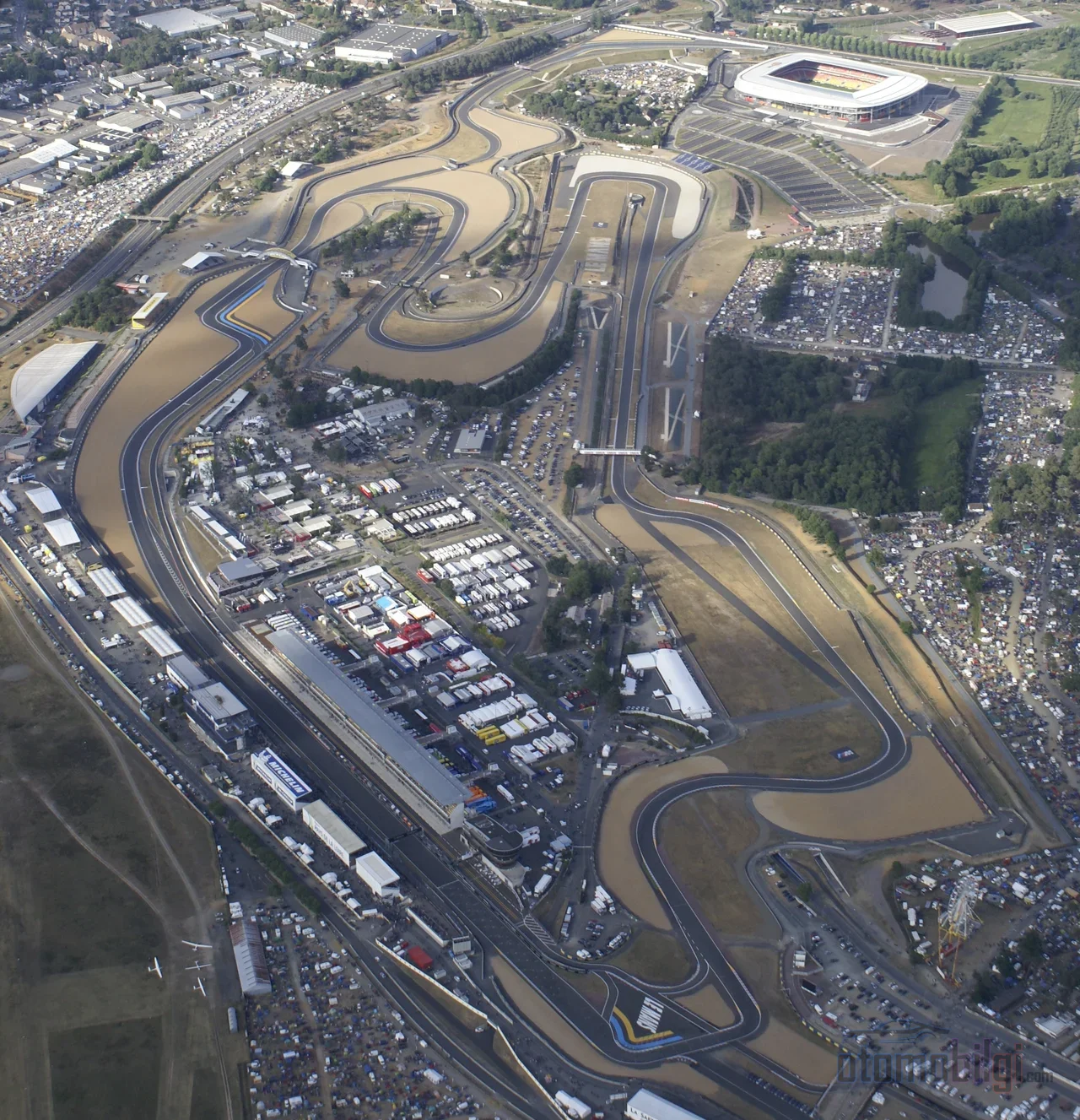
The Circuit de la Sarthe that winds around Le Mans, one of the longest circuits in the world at 13.626 kilometers with 38 corners, is a combination of a permanent racing circuit and public roads that are open to the public during the rest of the year. This page describes the circuit itself: the speed records broken on the Mulsanne Straight, the two chicanes made mandatory in 1990, and the character of the iconic corners stretching from Tertre Rouge to Arnage.
Highlights
- Circuit 13.626 km in length, with 38 corners (18 left, 20 right).
- In 1988, Roger Dorchy was measured at 407 km/h by radar on the Mulsanne - the announced figure was 405.
- The Mulsanne Straight was approximately 6 km long; two chicanes were added in 1990.
- Up to 85 percent of the lap is spent at full throttle.
- Circuit record: 3:17.297 (Mike Conway, Toyota TS050 Hybrid, 2019).
Not a Circuit, but a Road Network: How Did the Circuit de la Sarthe Come About?
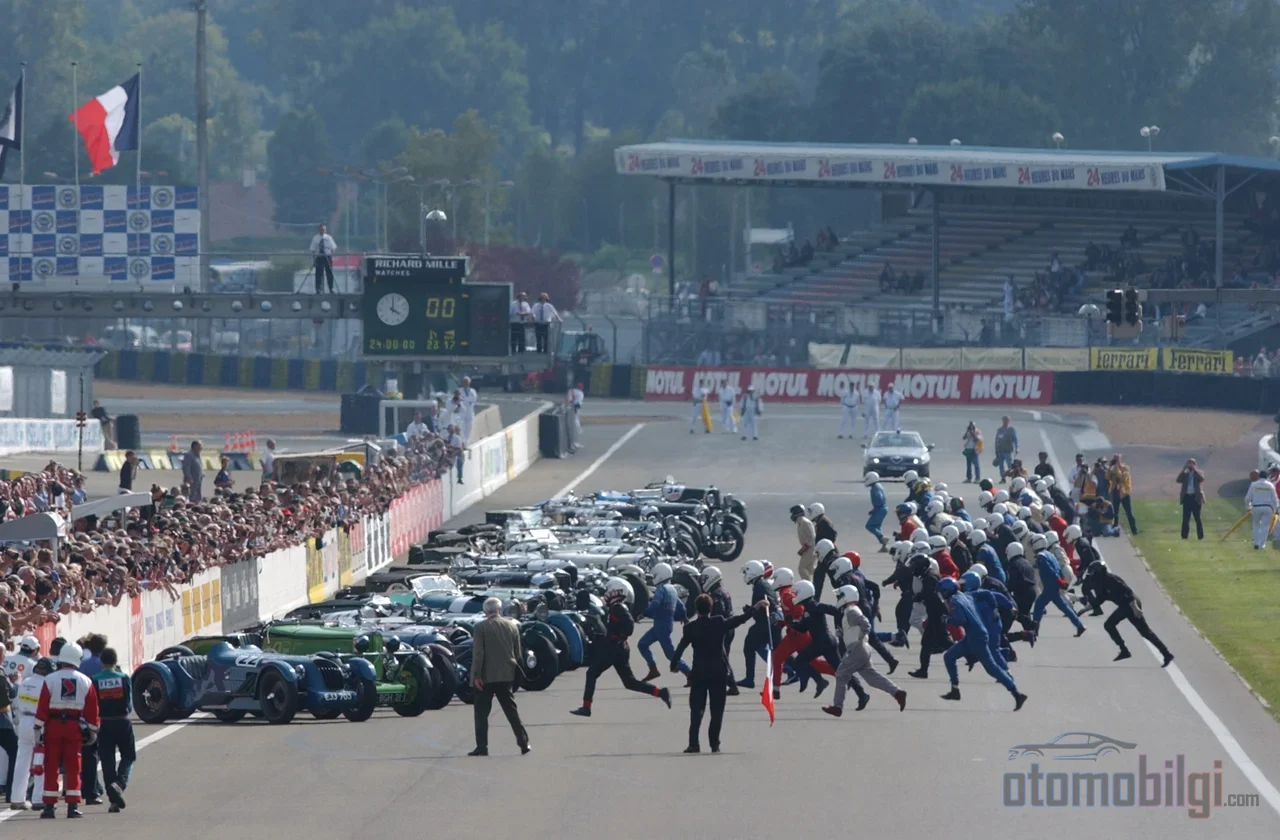
Picture an ordinary racing circuit: a neat ring surrounded by fences. Now erase that and put this in its place: public roads outside the city of Le Mans, used during the rest of the year by normal cars, maybe even by your neighbor's commercial vehicle. That is the magical side of La Sarthe. That is precisely what distinguishes the race - as the Automobile Club de l'Ouest (ACO) emphasizes, the cars run on local roads that are open to the public during the rest of the year. The pit area and some sections are permanent, while the rest is street. It has worked this way since 1923, in other words since the very first race.
But the circuit was not in its present form from the start. The original layout reached 17.262 km and the cars passed through the city of Le Mans. In 1929 the hairpin at the Pontlieue bridge was removed, and in 1932 the city was bypassed entirely: a new section was added connecting to Tertre Rouge via the Dunlop Bridge and the Esses. That classic layout - 13.492 km - remained almost unchanged even after the 1955 disaster. You will no longer be surprised to hear that the pit straight was only 3.7 meters wide back then.
| Period | Length | What changed? |
|---|---|---|
| 1923-1928 | 17.262 km | Original layout with 16 corners, passing through the city |
| 1929-1931 | 16.340 km | City bypass |
| 1932-1971 | 13.492 km | Classic layout: Dunlop Bridge, Esses, Tertre Rouge |
| 1972 | - | Maison Blanche was bypassed, the Porsche Curves were introduced |
| 2018-present | 13.626 km | The current 38-corner "Circuit N°15" |
Over time, significant additions were also made around the circuit. In 1965, the 4.185 km permanent Bugatti Circuit, named after Ettore Bugatti, opened - sharing the pit facilities and the Dunlop bridge with the main circuit - and today it hosts the MotoGP French Grand Prix. And a note on circuit records: the fastest race lap is 3:17.297 by Mike Conway (Toyota TS050 Hybrid, 2019); the best qualifying lap is 3:15.267 by Kamui Kobayashi in the same car in 2020.
The Mulsanne Straight: The Fastest 6 Kilometers in the World
The official name of the Mulsanne Straight is Ligne Droite des Hunaudières - D338, that is, the old Route Nationale N138. The name "Mulsanne" comes from the Mulsanne village it leads to; in reality, the road actually called "Route du Mulsanne" is a different road that goes to Arnage. A detail, but a cool detail, right? Its length is about 6 kilometers. Imagine crossing the red line on a highway - but for 24 hours, day and night.
Coming out of Tertre Rouge, cars spent almost half the lap at full throttle, then braked from over 322 km/h down to 100 km/h for the sharp corner in the village of Mulsanne. This put an incredible load on the engine and drivetrain. At the end of the 1970s, an engineering idea was born exactly from this: the "long tail" concept, with a drag coefficient of around 0.36, was developed specifically to break through air resistance on this straight. During the 1978 Le Mans practice sessions, a car reached 365 km/h on the Mulsanne - Road & Track writes that the long tail was born from this very straight.
405 or 407? The Strange Story of the Speed Record
1988. The Welter Racing team, with the WM P87/P88 "Project 400" car, was playing for a single goal: breaking the 400 km/h barrier. And with Roger Dorchy at the wheel, the radar cleanly measured 407 km/h (253 mph) So why do we read 405 km/h everywhere? Because Peugeot was launching its new 405 model around that time, and the team announced the record as "405" so it wouldn't clash with the campaign. So the number shown by the radar and the number announced were different - a victory not of mathematics but of marketing. The car's fate was also interesting: it retired from the race on lap 59 with an overheated engine. Let me try to describe it: climbing to 400 km/h twice and blowing up your engine is a heroism that fits perfectly with the spirit of Le Mans. The Porsche 917 long tail (1969-71 era) did 362 km/h, the 1978 Porsche 935 did 367 km/h; by the end of the 1980s, Group C prototypes had exceeded 400 km/h.
The 1990 Chicanes: Le Mans's Most Controversial Change
Since the straight is so legendary, why did they break it up? There are two reasons. The first is the human side: the combination of high speed and high downforce was causing tire and engine failures; the fatal high-speed crashes of Jean-Louis Lafosse (1981) and Jo Gartner (1986) grew the concerns. The second is bureaucratic: the FIA announced it would no longer approve circuits with straights longer than 2 km - Mulsanne was over 5 km. For comparison, even the Döttinger Höhe on the legendary Nürburgring Nordschleife is "only" around 2 km. The result: before the 1990 race, two chicanes were added to the straight at roughly equal intervals.
Now for the interesting part: the impact turned out to be far more limited than expected. In 1992, the average speed of the fastest qualifying lap dropped only from 249.8 to 243.3 km/h. Moreover, the chicanes didn't do that much - when you exit them, you floor the throttle again and the speed climbs back into the 320-340 km/h band. The chicanes are referred to as Le Mans' "most controversial change"; fans still debate "would the race improve if one were removed?" But let's be honest: the Mulsanne still isn't exactly slow, as the major accidents have painfully demonstrated. Meanwhile, this wasn't the only chicane added to the track: in 1968 the Ford Chicane was added before the pits (the Bugatti Circuit shares this chicane with the big track), in 1987 a chicane arrived at the Dunlop Curve and cars began passing under the bridge at 180 km/h instead of 290 km/h.
Tertre Rouge, Arnage and Porsche Curves: The Character of the Corners
It's impossible not to describe the corners as much as the track as a whole. Each one has its own character:
- Tertre Rouge: Fast and critical. The entry onto the first segment of the Mulsanne begins here; you need to make the first throttle application point early. Its profile changed twice: in 1979 it became a fast double-apex corner, and in 2013, after Allan Simonsen's fatal accident, it was brought in by about 200 meters.
- Arnage: The slowest corner on the track - but don't assume it's "easy." A tight, demanding hairpin that comes after the speed of Indianapolis; one of the most challenging corners on the circuit. While it looks like you're slowing down, it's actually the place that demands the most attention.
- Porsche Curves: Actually consists of five linked corners. Super fast and it puts a big premium on downforce; it's the section of the lap where the car can most easily become unbalanced. It was added in the major 1972 revision worth 300 million francs, replacing the "Maison Blanche" bend that claimed many lives.
- Indianapolis: The other legend among the 38 corners. The origin of its name isn't entirely clear; one interesting guess is that the section between Mulsanne and Arnage was built in 1921 for that year's French GP, which is why it may be brick-paved.
A note for those hung up on the corner count: 38 is the official figure. Don't be surprised if you count apparently fewer "named" corners on the track - the official count is the number you should go by.
When the Track Changed, the Cars Changed Too
The evolution of the track isn't just asphalt work; it directly shaped car design too. In the era of the Porsche 917, which reached 362 km/h in 1971, the classic layout was used for the last time; with the 1972 revision, when the Porsche Curves arrived, the corner count went from 19 to 26, and today it stands at 38. In other words, it's no longer just "straight and fast" - it's a track where you have to count corners too, which made downforce, the aerodynamic force pressing the car to the ground at speed, more critical than ever. Long tail bodies were born for the straights, while sections like the Porsche Curves shaped the design of modern prototypes that favor high downforce. Legendary eras like the Ford-Ferrari war or Audi's dominance form the backdrop of this very evolution; as the track changed, so did the formulas for victory. Remember that prototypes' average lap speeds can exceed 240 km/h - you're going at highway speed even in the corners, just imagine.
One final up-to-date note: the "Circuit N°15" layout used since 2018 is still valid today, and the 2026 race is again listed as 13.626 km / 38 corners. There is only one small aesthetic change: the branding of the Dunlop Bridge passed to Goodyear as of 2026. And for transparency about the latest modification: the grass edges in the Mulsanne section have recently been converted to asphalt. Next up is the 95th race - on June 9-13, 2027.
A Brief Closing: Why Is This Track Still Legendary?
What makes La Sarthe special is both the speed and the corners - but the real point is this: it's not just a ring, it's a place. A track living on top of public roads, carrying a story, a crash, a record with every change. Chicanes have come, corners have shifted, bridges have been rebranded, but at Mulsanne the throttle is still opened all the way. If it were you, would you remove one of the chicanes? I'm curious about your answer.
Sources
- Circuit de la Sarthe
- Mulsanne Straight
- The Mulsanne Straight, a stage for speed records
- Explore the 24 Hours of Le Mans circuit, turn by turn
- Why is the 24 Hours of Le Mans run on public roads?
- 24 Hours of Le Mans - The legendary spots on the Circuit de la Sarthe
- 24 Hours of Le Mans 2026 - FIA WEC
- Porsche Curves at Le Mans
- Longtails: How the Mulsanne Straight Inspired... - Road & Track
- Archive: When Le Mans made its most controversial change