Why Was the Le Mans Running Start, Where Drivers Sprinted to Their Cars, Banned?
Share This Page
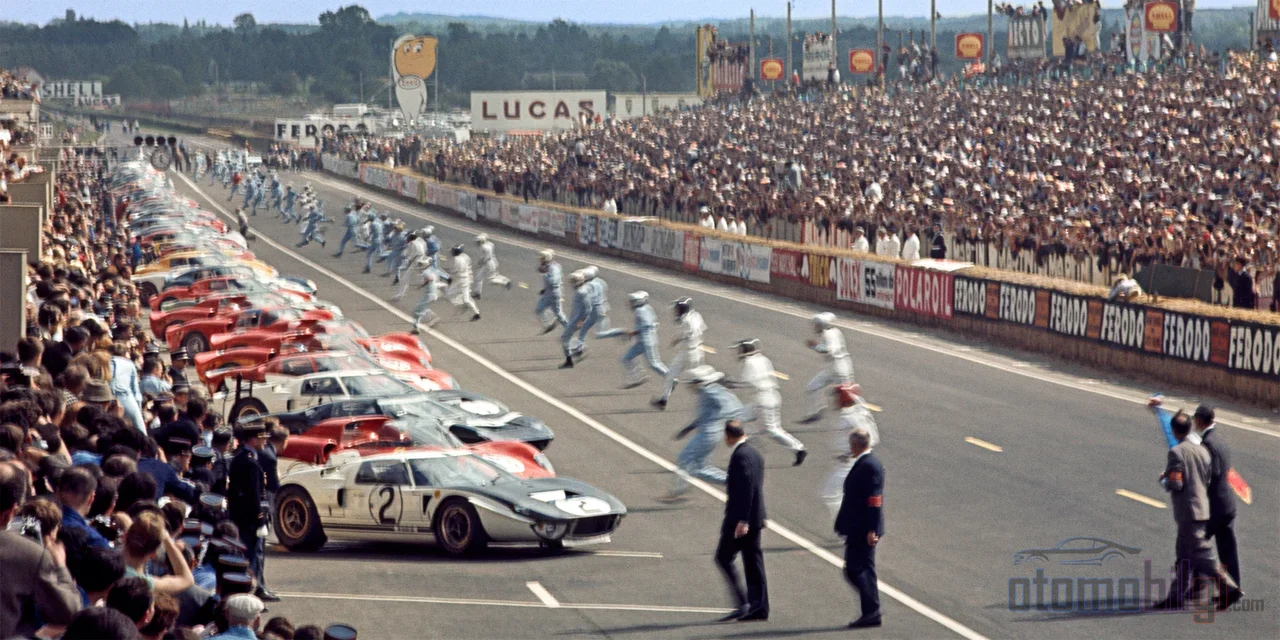
The Le Mans start is the starting ritual used in the 24-hour race from 1925 until 1969, where drivers waited on the opposite side of their cars and ran to their vehicles when the flag dropped. Sounds amazing, right? But it was precisely that dash, the hastily fastened seat belts, and those chaotic first laps that got the start banned. So how did a starting procedure become this legendary, this dangerous? Let me tell you.
Highlights
- Le Mans-style start From 1925 to 1969 used for 45 years
- Jacky Ickx, in 1969, walked instead of running to protest the start - and won the race
- After it was banned, from 1971 onwards a rolling start was used
- Porsche's ignition key is on the left; the reason is precisely this start
How the Le Mans Start Was Born: Everything Begins When the Flag Drops
The 24 Hours race was run for the first time on May 26-27, 1923, on public roads around Le Mans. For the first two years, the start was the conventional standing start we know: drivers sat in their cars and stepped on the gas when the flag dropped. But in 1925 things changed and the famous running start ritual was born.
The funny part: the reason this format was chosen was not a technical excel, but a rent issue! In 1923-24, when the owner of the "Raineries" land where the start area was located tripled the rent, the organizers, ACO, found the solution in using the middle of the Mulsanne straight. In other words, one of the most iconic images in motorsport history came out of a rent negotiation of an organization struggling with a limited budget.
So how did this start work? The cars lined up along the pits; in fact, until 1962 the grid order was determined by engine displacement - from 1963 onwards qualifying sessions were adopted. The drivers, meanwhile, stood on the opposite side of the front straight. As soon as the French flag dropped, everyone would dash off: run across, get into the car without outside assistance, start the engine, and set off. Think of it like jumping into your car and driving off at the finish line of a sprint race. The first 10 seconds of a 24-hour endurance race turned into a 100-meter sprint.
Why Was It So Dangerous? Setting Off Without Fastening Your Seat Belt
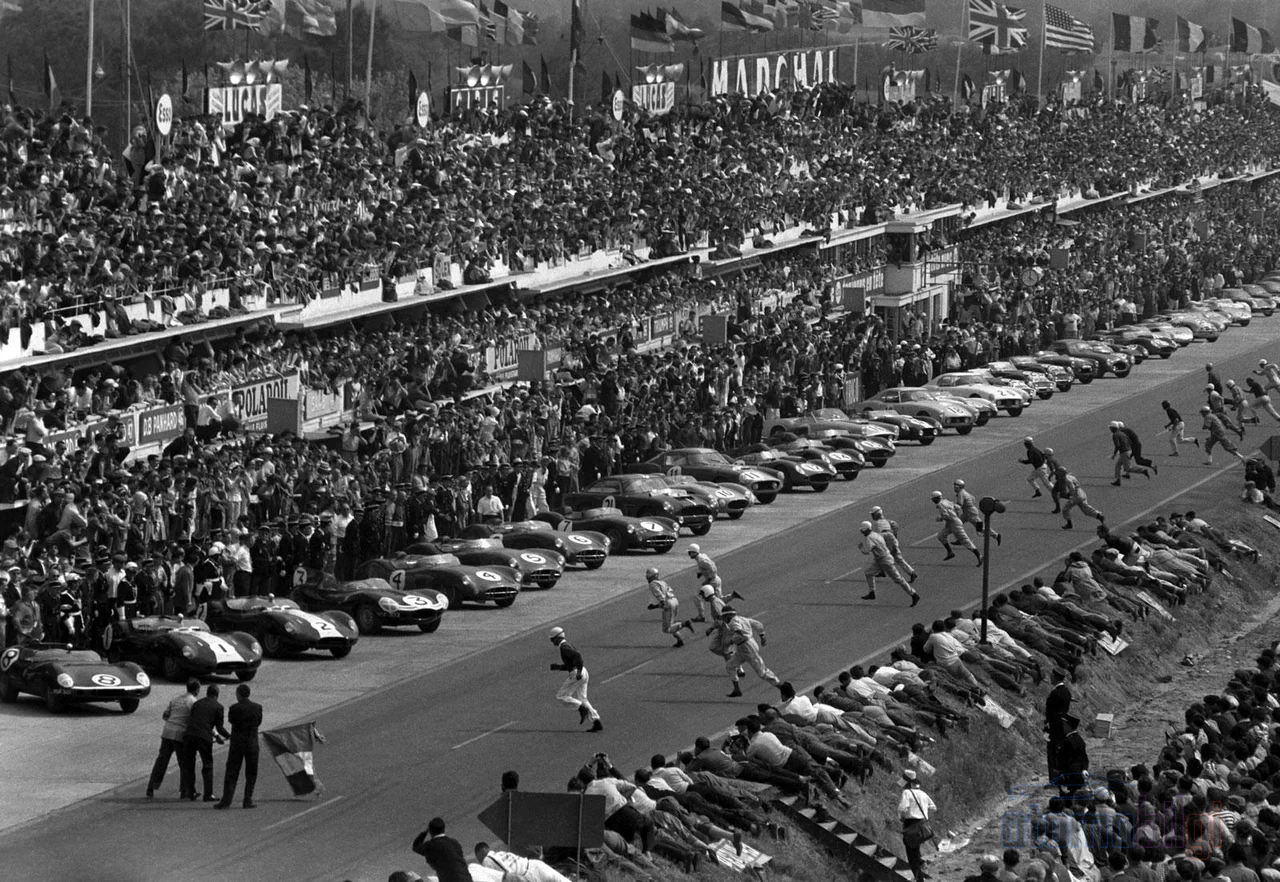
Now let's come to the critical question: why was this start banned? The answer in one word: haste. Seat belts were a new invention that had only recently been introduced to automobiles, and drivers, caught up in the excitement of arriving on the run, did not take the time to fasten their belts. They either drove off without fastening them at all, or tried to fasten them inside the car, or worse, under the load of the first laps. Take a second to think: would you set off today without fastening your child's seat belt in the back seat? They were doing full throttle in a race.
The result was naturally disastrous. In the cramped starting area, accidents claimed lives, and every year hearts were in mouths when the flag dropped. For the brands, it was a sacred competition: finishing the start ahead in the first laps carried enormous promotional value and brought bonuses to the drivers. So everyone kept running, even flying. Drivers of open-cockpit cars would practically fly over the hood and doors to jump into their cars to save time!
Chocks were used to keep the cars from sliding on the sloped starting area; the ACO gave the drivers blue-and-yellow chocks. Even within such a detailed organization, that first sprint was always a gamble.
Little Stories That Make the Start Unforgettable
Around this ritual there are scenes still told today. Stirling Moss would leave the car in 1st gear and, leaping into the seat, crank the starter without pressing the clutch; the car lurched forward, and a few seconds later, when he pressed the clutch, the engine started. Like an unanswered exam question, but it worked!
Another legendary detail still shows up on the streets today: Have you ever wondered why Porsche's ignition key is on the left? The answer is the Le Mans start. It was designed so the engine could be started with the left hand while shifting gears immediately with the right, and this setup gained the driver a few tenths of a second. I was quite surprised to learn that this tradition continues even in today's Porsche road cars.
And of course there were funny sides too: Jean-Manuel Fangio once missed the entire start because he had hastily jammed the gear lever into his trousers. In 1966, an Ecuadorian team forced the paddock gate, causing the start to be taken with 56 cars instead of 55. Imagine joining a race by breaking down the door!
1968: The First Lap That Changed Willy Mairesse's Fate
The chain of events that led to the end of the start began in 1968. Belgian driver Willy Mairesse suffered a heavy crash at the end of the Mulsanne straight on the first lap, likely due to a poorly closed door of his Ford GT40. That race was run in September, and the start had been given at 15:00.
The outcome of the crash was heartbreaking: Mairesse suffered severe head trauma, remained unconscious for two weeks, and never fully recovered. He never raced again and took his own life in September 1969. The details of why the door opened are still disputed today - whether the door came open or the door latch failed - but no debate, whether of the dead or the living, diminishes the risk this start carried.
This crash planted a question in the minds of everyone at the track: Is this start worth it?
1969: Jacky Ickx's History-Making Walk
Here is one of the most powerful protests in motorsport history. In 1969, when the flag dropped, all the drivers sprinted to their cars at a tear-inducing pace, while the young Belgian Jacky Ickx calmly walked. He fastened his seatbelt carefully, while seated. As he kept walking, he was nearly hit by a fast rival car - the more real the danger, the more meaningful the protest. By walking, Ickx had almost missed the race from the starting line itself: Rolf Stommelen's pole-sitting Porsche 917 was already approaching the Tertre Rouge corner.
So did the protest work? The answer: more than words can tell. Ickx won the race in the final lap, just barely ahead of Hans Herrmann's Porsche 908. The man who didn't run won. The race's official website describes this act as a protest that "made him a legend and changed the face of the race."
A protest that made him a legend and changed the face of the race.
But the story of 1969 also ends on a bitter note. On the first lap of that same race, privateer driver John Woolfe lost his life in a crash. When Ickx's walk, Woolfe's death, and Mairesse's head injury from a year earlier are all put together, everyone finally understood the same thing: this ritual was not romantic, it was deadly.
The Banning of the Running Start: How 1970 and Beyond Changed
The traditional Le Mans start was changed for 1970. The cars remained lined up at the pit wall, but this time the drivers were inside the vehicles with their seatbelts fastened. When the flag dropped, they started their engines and set off. So there was still a run, but no longer was anyone jumping into a 400-horsepower machine without fastening their seatbelt. In official terms: instead of running, the drivers started the race seated in their cars. Sensible, right?
The real transformation came in 1971: the rolling start. This is exactly the format we know today, and it is also referred to as the Indianapolis-style start. How does it work? The cars line up in pairs according to their qualifying times, set off behind the official car about 7.5 minutes before the race hour, and complete a warm-up lap. The pace car leaves the track before the start line, and the final 200 meters are set by the pole-sitting car. In more recent practice, with a green flag the cars set off one by one and complete a formation lap behind the safety car; when the pace car returns to the pits, the French flag starts the race. So even today at Le Mans there is a flag to be dropped - a French one - only nobody runs anymore.
With the rolling start, a technical rule also changed: the winner was no longer the one who had traveled the farthest, but the car that had completed the most laps relative to the start/finish line by the completion of the final lap. In other words, the race truly became a "24 hours, most laps" race.
It is useful to see the start formats over the years side by side:
| Period | Start Format | How Did It Work? |
|---|---|---|
| 1923-1924 | Standing start | Drivers seated in their cars, departing with a flag |
| 1925-1969 | Le Mans-style start | Running across to get in, seatbelts mostly not fastened |
| 1970 | Seated in the car, standing start | Belted drivers lined up at the pit wall |
| From 1971 to today | Rolling start | Start with the flag after the warm-up/formation lap |
What Does Today's Hybrid Start Tell Us?
So far I've explained how the classic start died, but the really interesting part is this: Le Mans never completely broke from its roots. Before today's rolling start, drivers still sit on the far side of their cars with their belts fastened. In other words, that famous "far side" ritual lives on as a heritage - only the running part was removed. This is practically a tribute paid to history: "Don't run, but don't forget where you came from."
Just think: the world's oldest active endurance race has been run since 1923, and the track - the 13.626 km Circuit de la Sarthe, a combination of public roads closed off permanently - takes the stage again every June. The Mulsanne straight gained two chicanes after the FIA banned straights longer than 2 km in 1990, following the 407 km/h peak reached by Roger Dorchy's WM P88 in 1988; today's speed record is 366 km/h. Race safety has evolved in every area, but that first far-side stance is still there.
Conclusion: The Run Is Over, the Lesson Remains
The Le Mans start taught us one of motorsport's harshest lessons: No matter how spectacular the spectacle, human life is not negotiable. This 45-year ritual, born out of a rent negotiation, claiming lives through the rush to skip seat belts, and finally ending with one driver's walk, is still talked about today because it is human in every way - with its heroics, mistakes, comical moments, and tragedies.
If it were you, would you have run in that starting line in 1969, or would you have walked like Ickx? As you think about the answer, you once again realize what a precious history lesson the events that unfolded when that flag dropped really are.
Sources
- 24 Hours of Le Mans Centenary - An unforgettable starting style
- 24 Hours of Le Mans - Wikipedia
- 1969 24 Hours of Le Mans - Wikipedia
- Jacky Ickx interview series (2) - 1969 and the walk to victory
- Willy Mairesse - F1 Forgotten Drivers
- John Woolfe - Motorsport Memorial
- Step into the history of Le Mans - Louwman Museum
- The Le Mans Start - GT Motorsports