Most Successful Brands and Drivers at the 24 Hours of Le Mans
Share This Page
Porsche, with 19 wins, is the most successful manufacturer in the history of the 24 Hours of Le Mans; Tom Kristensen, with nine victories, is the undisputed peak among drivers. Nearly a century of winners from 1923 to the present day, broken down by manufacturer, driver, and country, takes shape like this in numbers. Run every June for over a century in the town of Le Mans, France, this race is a laboratory that tests both the speed and the endurance of automobiles simultaneously. So who has risen to the top in this long history? Let's open up the numbers together, because the table is far more interesting than you might expect.
Highlights
- Porsche with 19 victories most winning manufacturer; 7 consecutive wins between 1981-1987 is also a record.
- Tom Kristensen with 9 wins holder of the driver record; his nickname is "Mr Le Mans".
- Joest Racing with 15 victories most successful team; most winning car has 5 victories, Audi R8.
- Toyota, winner of 2026, took its 6th victory and equaled Bentley.
- From 1923 to today 153 winning drivers, 24 countries and 25 winning manufacturers exist.
How did the 24 Hours of Le Mans begin, and what does the winners table measure?
The race was first run in 1923 under the name "Grand Prix of Endurance and Efficiency". Its founders were automotive journalist Charles Faroux, Automobile Club de l'Ouest secretary general Georges Durand, and industrialist Emile Coquile. The goal was clear from the start: to give automobile manufacturers the opportunity to test their vehicles' durability, equipment, and reliability on a real stage. In other words, Le Mans has been more than a speed race since its birth; it also works like a certificate of guarantee. Whichever manufacturer wins sends the message to the world that "the car is truly solid."
The first victory was taken by André Lagache and René Léonard, with the Chenard-Walcker Sport ; the duo went down in history by completing 128 laps. Since that day, the race has been run on the Circuit de la Sarthe, organized by the ACO. This massive circuit, made up of a mix of permanent track and public roads, is 13.626 km long in its current 24-hour configuration and is one of the longest circuits in the world. Full throttle on the Mulsanne straight, heavy braking at the Mulsanne corner; cars live this cycle hundreds of times in a single night. That's exactly why every victory is not just a mark in the statistics table, but real proof of engineering.
Most winning manufacturers: why is Porsche still at the top?
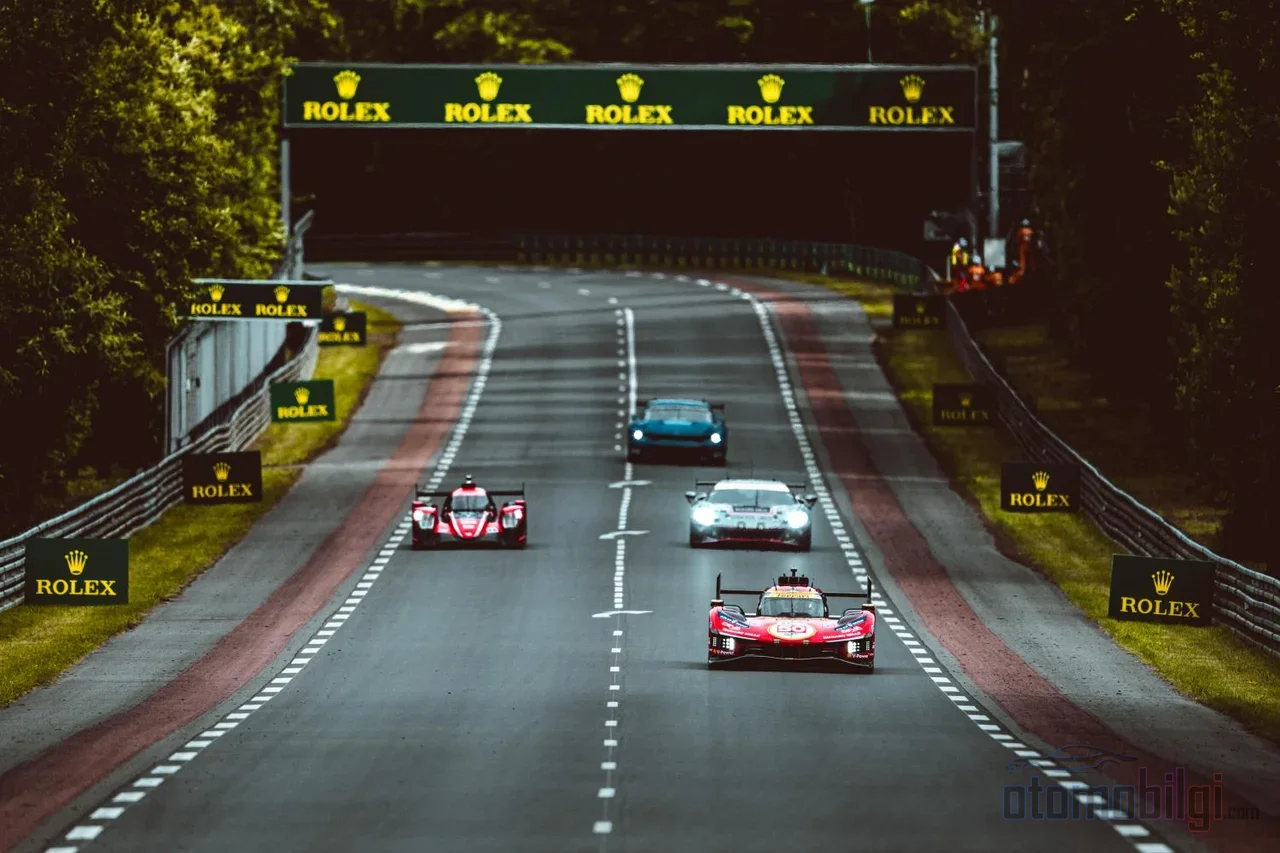
Looking at the manufacturer standings, the gap is immediately visible. Porsche leads by a wide margin with 19 victories, and the record is not just about the number: the 7 consecutive wins between 1981 and 1987, the longest streak record in race history, also belongs to the German manufacturer. Its first victory came in 1970. Audi ranks second with 13 wins; moreover, it achieved this in the 2000-2014 period, with two separate consecutive win streaks. Ferrari is third with 12. The Italians had a golden age of nine victories between 1949 and 1965; then, after a long hiatus, they made a big comeback in the hypercar era with three consecutive wins in 2023, 2024, and 2025.
| Manufacturer | Number of Victories | Notable Note |
|---|---|---|
| Porsche | 19 | 7 consecutive wins between 1981-1987 |
| Audi | 13 | Two separate winning streaks between 2000 and 2014 |
| Ferrari | 12 | Nine wins between 1949 and 1965; 2023-2025 streak |
| Jaguar | 7 | Wins between 1951 and 1990 |
| Bentley | 6 | A span stretching from 1924 to 2003 |
| Toyota | 6 | Five consecutive wins from 2018 to 2022; the sixth in 2026 |
| Ford | 4 | Four wins between 1966 and 1969 |
| Alfa Romeo | 4 | Four wins between 1931 and 1934 |
The one-win club is also worth a look: the first winner in 1923, Chenard-Walcker, the Mercedes-Benz of 1952, the Aston Martin of 1959, the Sauber-Mercedes of 1989, the Mazda of 1995, the McLaren and the BMW of 1999 are all on this list. Matra-Simca and Peugeot collected three wins each, while Lorraine-Dietrich and Bugatti took two apiece. On the team front, the table has a single name at the top: Joest Racing, with 15 wins, is the most successful team. The winningest car is the Audi R8 with 5 wins. So it is not just brands - specific chassis and team combinations have also left their mark on the era. What do you think it means for a single car to win the world's most grueling race five times? Think of the fuel; if you did that to a human body, you would not believe it.
The brands' victory map: which country won how many times?
Looking at countries by manufacturer, Germany's strength is clear: with a total of 34 wins from 4 different brands, it holds the record. Porsche, Audi, the various eras of Mercedes-Benz, and even those few wins carry Germany to the top. The United Kingdom is second with 17 wins from 6 brands; the contribution of Jaguar, Bentley, and Aston Martin is enormous here. France is third with 15 wins from 9 different brands; the host country has a legacy spread across multiple makes in the race. Italy puts on a strong showing thanks to Ferrari and Alfa Romeo, while Japan wrote its name into history with the era-specific wins of Mazda, Toyota, and Honda.
The interesting part is this: Germany's record comes from many wins with few brands, while France's comes from small wins across many brands. So when you look at the table from different angles, the story changes completely. You can think of it like a student's grade average preparing for an exam; it is not just the average - how much you studied for which subjects matters too.
The winningest drivers: what kind of a record is Tom Kristensen's 9 wins?
On the driver side, there is one name: Tom Kristensen. The Danish driver is not letting go of the record with 9 overall victories, and he took 6 of them consecutively between 2000 and 2005. His nickname says it all: "Mr Le Mans". Kristensen first won in 1997 and took his final win in 2014; in this career spanning 17 years, he made 18 starts, took 9 overall victories and a full 14 podium finishes. He announced his retirement at the end of the 2014 season, bringing his active career to a close. That means nearly a win every other year over a full 18 years; I will not make a current comparison, but even buying a new phone every two years is an ambitious pace for most people.
After him comes the legendary Jacky Ickx with 6 wins, in second place; the record used to belong to him. Third place belongs to three names: Derek Bell, Frank Biela, and Emanuele Pirro each have 5 wins. third place finisher. Most of Biela and Pirro's victories came with Audi, while Bell shone during Porsche's golden era. It is also a remarkable detail that Kristensen's wins were achieved with 11 different co-drivers; this shows not just one person's performance but also team harmony and the ability to adapt to different eras. Hurley Haywood, meanwhile, holds the record for the longest wait between his first victory (1977) and his last (1994) 17 years and 5 days apart. Alexander Wurz waited roughly 13 years between his first win in 1996 and his second in 2009.
| Driver | Wins | Extra Detail |
|---|---|---|
| Tom Kristensen | 9 | 6 consecutive wins between 2000-2005 |
| Jacky Ickx | 6 | Former record holder |
| Derek Bell | 5 | Star of the Porsche era |
| Frank Biela | 5 | Wins with Audi |
| Emanuele Pirro | 5 | Wins with Audi |
Who are the youngest and oldest winners?
Records are not just about win counts. The youngest winner is Alexander Wurz; he claimed his 1996 victory at 22 years, 4 months and 1 day of age. The oldest winner is Luigi Chinetti; he reached the top in 1949 at 47 years, 11 months and 9 days of age. So age is never a limit at Le Mans; what matters is being able to stay at the wheel for 24 hours straight. When you consider that the race Chinetti won at nearly 48 years old is called the "24 Hours," it is truly a mind-boggling example of endurance.
How do legendary moments look in numbers?
Some of the numbers in the table stand at the end of stories that lose their meaning when viewed on their own. The 1966 Ford-Ferrari war tops the list: Ford, with the GT40 Mk II defeated Ferrari and ended the Italians' then-dominant 6-year winning streak. That year three GT40s made the podium; Ford also overtook Ferrari in the Manufacturers' Championship. However, the duo declared as winners was Amon/McLaren, because they had started 20 meters back from the starting line and the finish decision was made with special planning. That is exactly why Ken Miles' name is still debated. So the table says "Ford 4," but a controversy stands behind it.
Another legendary moment: 1991. When Mazda won with the 787B (No. 55), both the first Japanese manufacturer victory was recorded and the only rotary-engine victory in the race's history took place. Not an eight-rotor, but a four-rotor engine; it battled with a body weighing around 830 kg. Toyota's 5 consecutive wins between 2018-2022 are also a separate milestone: it placed the Japanese brand on the same tier as giants like Porsche, Ferrari and Audi. In 2010, the trio of Bernhard, Dumas and Rockenfeller covered in the Audi R15 TDI plus a distance of 5,410.713 km setting a record of 397 laps; the shortest distance record belongs to 1924, when the Clement/Duff duo covered 2,077.34 km in 120 laps with a Bentley 3 Litre. Looking from 1924 to 2010, the numbers alone tell how much cars have changed.
What did the 2026 race add to the table?
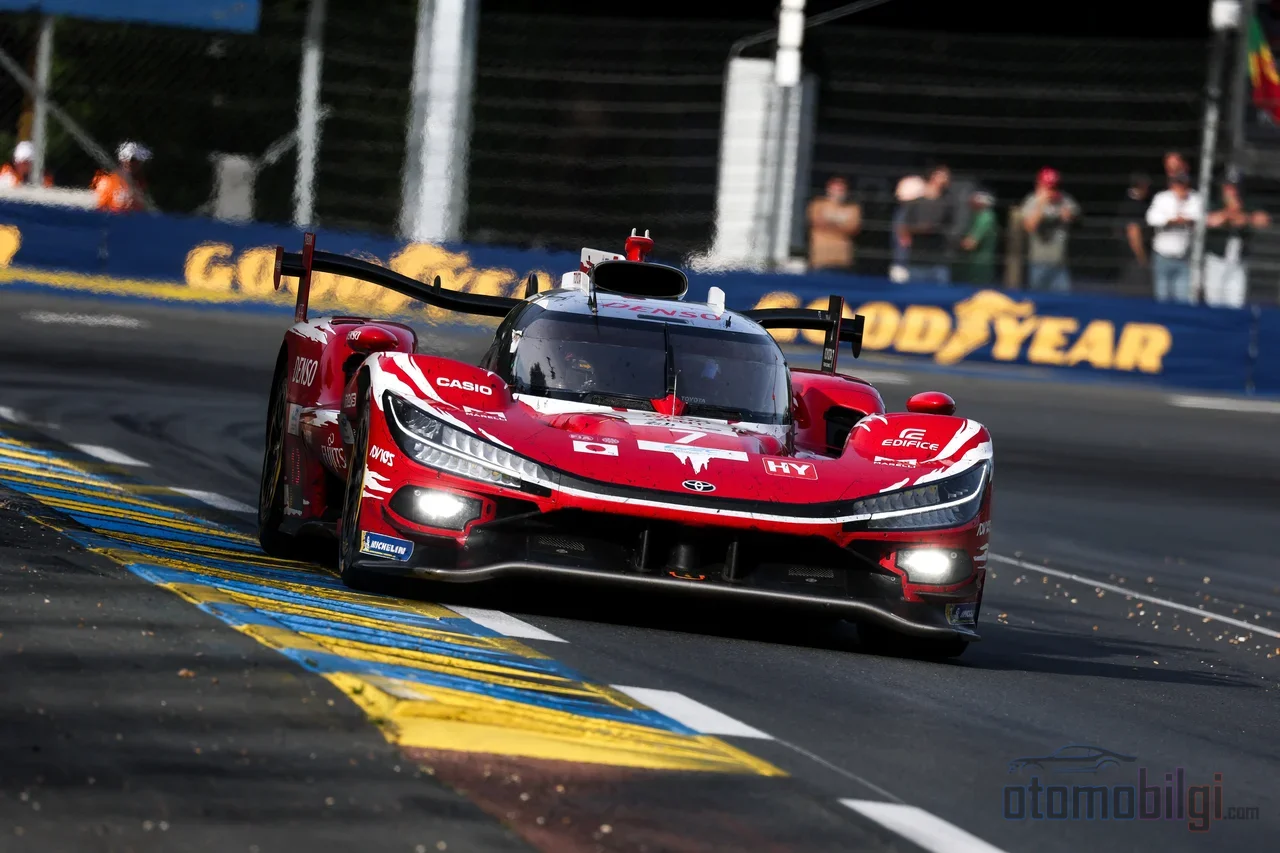
The 94th 24 Hours of Le Mans #7 Toyota GR010 Hybrid won; Mike Conway, Kamui Kobayashi and Nyck de Vries were at the wheel. The Japanese team completed 381 laps and finished 10.913 seconds ahead of second place; second on the podium was the #20 BMW of BMW M Team WRT, and third was the other Toyota. This victory ended Ferrari's three-year run from 2023 to 2025 and, as Toyota's 6th victory, tied the marque with Bentley; it was also their first win since 2022. The GT3 class was won by the Corvette Z06 GT3.R. wins.
The numbers are impressive too: 350,105 spectators filled the grandstands, and during the race there were 48 lead changes, while the winning car covered 5,190 km. That distance is almost like the journey from Le Mans to Istanbul; in one go, without stopping. With this victory, Nyck de Vries became the most recent first-time winner in history. On the tire side, Michelin reached its 35th victory. So 2026 is not just a result; it is proof that the statistics table is still alive and breathing.
Drivers on the country map: 153 names, 24 flags
From 1923 to today 153 different drivers have won Le Mans; these names came from 24 different countries, and 25 different brands achieved victory. In terms of driver wins, the picture is as follows: the United Kingdom leads with 47 wins and 35 drivers; France is second with 42 wins and 28 drivers. Germany follows with 31/18, Italy 21/14, and the USA 18/12. Belgium 13/5, Denmark 11/3, Japan 8/5, Switzerland 8/3, and New Zealand 7/4 also appear on the list. It is not three but four single-driver countries: Canada, China, Mexico, Monaco, and Poland are in this exclusive club.
The fact that Denmark's 11 wins were achieved by only 3 drivers is particularly striking; Tom Kristensen alone accounts for 9 of them. It is hard to find another example where a single name has shaped an entire country's motorsport history so distinctly. In country comparisons, the same truth always emerges: although Le Mans may look like a European race, the victories come from all corners of the world.
The numbers tell the story: why is Le Mans still special?
Looking at the overall picture spanning more than a century, a pattern emerges: no brand can stay on top forever. Porsche leads with 19 wins, but Ferrari returned in 2023–2025, Toyota claimed its sixth, and nearly all of Audi's 13 wins came in the 21st century. Among drivers, Kristensen's 9, Ickx's 6, and three people's 5 wins each tell us something: speed is not enough to win Le Mans; the car, strategy, team, and luck must all align for 24 hours. Which record will be broken next? We will all see together when the next June arrives.