How Was the Ford GT40 Born to Beat Ferrari?
Share This Page
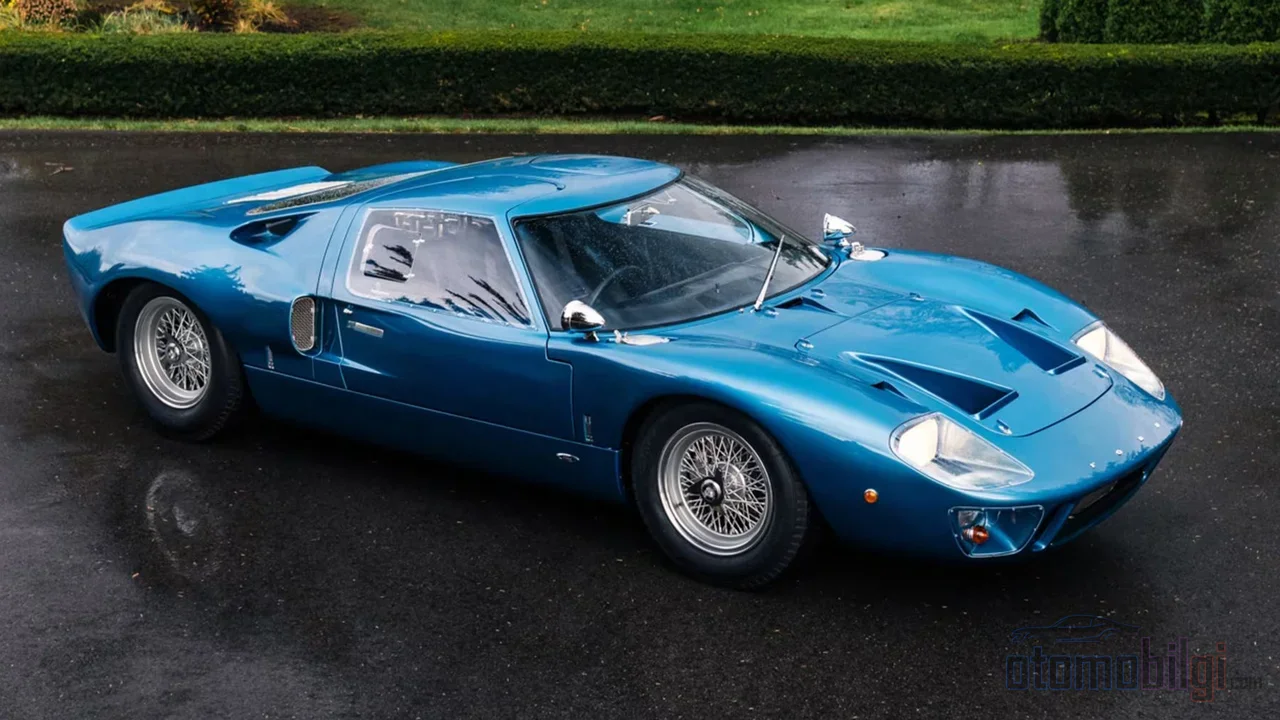
The Ford GT40 was a revenge project deliberately created after Enzo Ferrari rejected Henry Ford II's purchase offer at the last minute in 1963, built specifically to beat the brand at Le Mans. After two failed seasons, it was transformed under Carroll Shelby and Bruce McLaren, and in 1966 it swept the podium, ending Ferrari's dominance.
Highlights
- The Ferrari deal that was ready for signature in 1963 collapsed at the last minute over a dispute about racing autonomy.
- The name "GT40" comes from the 40-inch height rule.
- Ford invested approximately 10 million dollars in its revenge program.
- 1966 Le Mans: Ford GT40s swept the podium 1-2-3 .
- Ford, between 1966 and 1969 won Le Mans four years in a row.
It All Began With a Rejected Deal: Why Did Ford Want to Buy Ferrari?
In the 1960s, Henry Ford II had a big idea in mind: to conquer Le Mans, the most prestigious stage of motorsport. But this required experience, and Ford had none. The solution? Buy Ferrari. The deal progressed so far that it was almost done; the final text was ready, Enzo Ferrari had approved it, and both sides were set to sign. Then the Italian side hung up the phone.
"We had an agreement, there was a final contract, Enzo approved it, we got as far as signing, and at the last moment he backed out."
So why? According to Franco Gozzi, Ferrari's personal secretary, a clause requiring Ford's approval for racing expenditures above a certain budget halted the 22 days of negotiations. Enzo Ferrari rejected the clause because it "seriously jeopardized all the freedom promised to me as the racing team boss." Having someone else approve your racing strategy at Maranello? No way.
There is also a more cunning reading behind the story: according to some, this negotiation was a tactic to force the Italian giant Fiat to take a stake in Ferrari - which Fiat later actually did, acquiring majority ownership. Which version is true is unknown, but the outcome is the same in both stories: Henry Ford II got angry and went into retaliation mode.
The Birth of the GT40: Breeding a Racing Giant From Scratch
In 1963, Ford had zero experience at Le Mans; apart from NASCAR, it did not even have a real racing unit. This massive gap placed the project on Roy Lunn's shoulders. Lunn came with Aston Martin experience and the 1962 Mustang I concept, and he made a bold proposal: a mid-engine prototype. In those years, this layout was hardly ever used in road cars - he was among the first to champion the engine placement that is the standard of today's supercars on the racetrack.
From the Lola GT to the Mk I: A Program Built With British Help
When no facility could be found in North America to produce the body, Ford's journey turned toward England. The address: Lola Cars. Lola's chief Eric Broadley had signed his name to a highly capable machine, the Lola GT fitted with a Ford V-8. For program leadership, John Wyer was transferred from Aston Martin. So the GT40 was not the product of a single mind; it was a blend of American money, British craftsmanship, and the racing knowledge of two countries.
So where does the name "GT40" come from? "GT" stands for Grand Touring, and "40" comes from the 40-inch rule referring to the vehicle's height at windshield level in wind tunnel measurements. In other words, even the name comes straight out of the rulebook - proof that they designed the car with a goal written to beat their rival.
On the technical side, the Mk I was developed based on the Lola GT: monocoque construction, a steel body instead of aluminum or fiberglass (durability was prioritized over lightness), 21-gallon fuel cells in the door sills, double-wishbone front suspension, and rack-and-pinion steering. Taking advantage of early computer-aided design, the brakes were constantly revised, ventilation was added for driver comfort, and the roof was raised for taller drivers. Sounds logical, right? But it still wasn't winning.
The Early Years Were a Nightmare: What Happened in 1964 and 1965?
In 1964, the GT40 competed at Le Mans for the first time and failed. 1965 was even worse: none of the four cars Ford entered finished the race. Meanwhile, Ferrari was continuing its winning streak that had been going since 1960. Just imagine - one of the world's largest car manufacturers had achieved zero results over two seasons with a project that poured 10 million dollars into its coffers. Henry Ford II's patience was hanging by a thread.
The Carroll Shelby and Bruce McLaren Era: Transformation into the Mk II
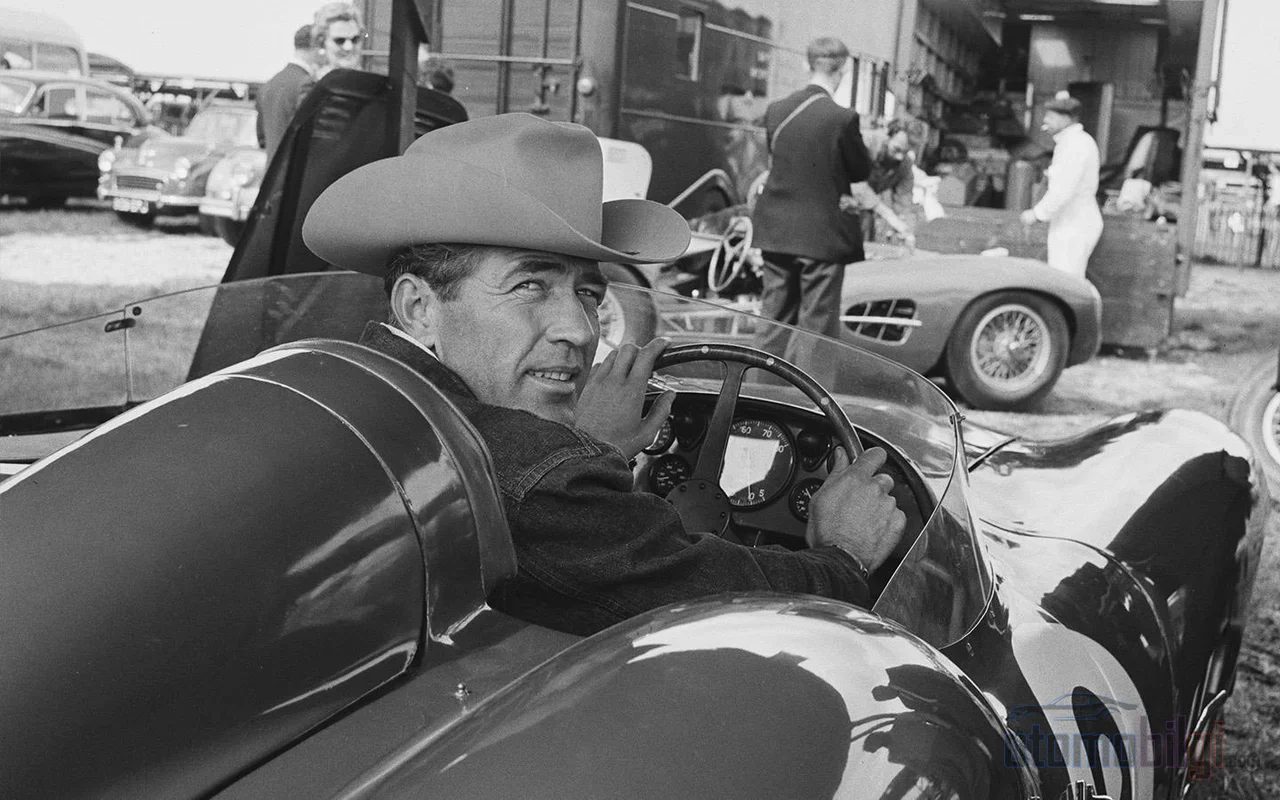
The turning point was Carroll Shelby getting involved. The Mk II, developed under Shelby's management, changed the car's character with transmission improvements and reliability increases. It was no longer just fast; it was also durable - and that is the real prize at Le Mans. Shelby's close collaborators like Ken Miles also joined the team, and they would race as Ford drivers in 1966.
Bruce McLaren was another key figure of this new era. The New Zealand driver, together with Chris Amon in 1966, was set to drive the car that would change Ford's fate. So as 1966 approached, Ford no longer had a team but an army in hand: eight cars and three separate teams - Shelby American, Holman-Moody and Alan Mann Racing.
The 1966 Le Mans Finish: Three Fords, One Winner and a Big Controversy
Ferrari came into 1966 as the favorite; it had won all five previous endurance races. But it entered with only two official cars, and neither finished the race. Against Ford's eight cars, this trump card can only be explained by the brutal mathematics of endurance racing: if you finish, you win; if you don't finish, you are nothing.
When the final pit stops came, the top three positions belonged to Ford: Miles/Hulme first, McLaren/Amon second, and Bucknum/Hutcherson third, 12 laps behind. Then race director Leo Beebe conceived one of history's most curious ideas: a side-by-side, simultaneous finish for the three Fords. A "dead heat," a perfect tie. Although the race stewards said this was not possible due to the staggered start, Beebe implemented it.
The result? The McLaren/Amon team was declared the winner. The justification: since they had started further back on the grid, they had covered a greater distance. The winning car covered 3,009.3 miles at an average speed of 125.38 mph - some sources cite this average as approximately 130 mph, the difference likely stemming from measurement definitions. Miles/Hulme, despite technically finishing ahead, were relegated to second place.
"I called Ken Miles and slowed him down because I was afraid the drivers would take each other out. With a single bad crash, you lose your entire investment."
What Do We Really Know About Ken Miles?
The records offer no clear answer as to whether Miles actually slowed down. There are claims that Bruce McLaren floored it on the final straight, saying "I didn't come here for a tie"; official Le Mans sources, however, state that a photo finish was practically impossible due to the staggered start. Let us also note that the stories circulating on social media, such as "Enzo Ferrari didn't say a word that day," are low-reliability, overly dramatized versions. The most painful truth is this: Miles lost his life two months after the 1966 Le Mans, while testing a new GT40 at Riverside. Even in the happiest chapter of the revenge story, there was a tragedy.
The historical weight of this victory is no small matter either: the 1966 win was the first outright victory by an American manufacturer in a major European race since Jimmy Murphy in 1921.
Ferrari's Answer: The 330 P4 and the 1967 Daytona Scene
Ferrari, of course, did not stay silent. The P series (1963-1973) consisted of V12, rear-mid-engine Group 6 sports prototypes, and the star of this series 330 P4 was. The car, 58 kg lighter than the P3, weighed only 792 kg and produced approximately 450 hp @ 8000 rpm from its 4.0-liter V12 engine. Sounds intimidating, doesn't it?
An interesting detail: the GT40 and the 330 P4 faced off directly in 1967 both at Le Mans and Sebring, and Ford won both races. But Ferrari's revenge came at Daytona: at the 1967 Daytona 24 Hours, two 330 P4s and one 412 P took the top three spots. It was a symbolic yet striking response to Ford's dominance - Maranello had not given up.
| Year | Winning Ford Model | Featured Note |
|---|---|---|
| 1966 | GT40 Mk II | 1-2-3 podium sweep; controversial dead-heat finish |
| 1967 | GT40 Mk IV | Beat the 330 P4 at Le Mans and Sebring |
| 1968 | GT40 Mk I | Chassis #1075 took its first victory |
| 1969 | GT40 Mk I | The same chassis #1075 won a second time |
Chassis #1075 is the legendary car displayed at The Henry Ford museum - one of the few automobiles to win Le Mans twice. So a car made history twice and still stands in a museum. Even imagining such an achievement is difficult.
60th Anniversary in 2026: Why Is This Story Still So Compelling?
2026 marks the 60th anniversary of the 1966 victory, and the Hagerty Drivers Foundation is commemorating this milestone. The 2019 film Ford v Ferrari still a popular reference point; it is streaming on Netflix and introducing the story to new generations. Platforms like MotorTrend and Biography.com have also published recent retrospectives in recent months. So even after 60 years, this battle continues to be told as one of the best scenarios ever lived out on the racetracks.
What makes the story powerful, in my opinion? The fact that it is a pure human story. One man is rejected, the other gets angry, millions are spent, and after two years of failure two names - Shelby and McLaren - turn everything around. And a controversial finish line leaves behind a victory that even the winner cannot fully celebrate. Keep this in mind next time you watch Le Mans: behind every finish line lie 60 years of calculations.
Sources
- The True Story of 'Ford v Ferrari,' Carroll Shelby, and Ken Miles
- How the Ford GT40 Took Down Ferrari
- 1966 24 Hours of Le Mans
- Ford GT40
- Le Mans '66: The Story of Ford's Legendary Triumph
- The REAL Story of the Twisted "Ford v. Ferrari" Finish at Le Mans in 1966
- Brief History of the Ford GT40 at Le Mans
- Legendary Finish: Ferrari History
- P-car Perfection: Ferrari 330 P4 Appraisal
- 1967 Ferrari 330 P4 Specs
- GT40 #1075 – A Two-Time Le Mans Champion
- Le Mans '66: What Really Happened?
- Bruce McLaren at Le Mans
- Ferrari P
- Lola Mk6 GT Guide