How Le Mans Began in 1923 and Why 24 Hours?
Share This Page
The 24 Hours of Le Mans, first run on 26-27 May 1923 by the Automobile Club de l'Ouest near the city of Le Mans in France and still held today, is the world's oldest endurance race. The reason the race lasts 24 hours was that, unlike the Grand Prix, they wanted to find not the fastest car, but the most reliable car that could keep going for a full day. So how was this idea born, what was the Rudge-Whitworth Cup, and how did the race go from the Bentley and Bugatti era to the war, and from the war to the 1949 comeback? I'll tell you everything, buckle up!
Highlights
- The first race 26-27 May 1923 was run under its official name, the 24 Hours Grand Prix of Endurance.
- At the start there were 33 cars almost all of them French, with only one English Bentley and one Belgian Excelsior as outliers.
- The first prize, the Rudge-Whitworth Triennial Cup, in 1925 was awarded to Chenard & Walcker.
- Bentley, 1927-1930 won four years in a row.
- The race 1940-1948 was not held between and in 1949 returned with Ferrari's first victory.
How Did Le Mans Begin in 1923?
In 1920s Europe, motorsport meant Grand Prix: closed circuits, lap after lap, speed feasts lasting a few hours. The Automobile Club de l'Ouest, or ACO for short, wanted to try something different at exactly this point. To show the power of the French automotive industry to the world, it decided to organize a completely different race sponsored by Rudge-Whitworth.
The aim was simple but bold: A car can be fast for a few hours, but can it last an entire day? In other words, the test was the manufacturers' ability to build not only sporting but also reliable cars. Just think: even today a phone struggles to last a day, while in 1923 a car ran on the road nonstop for 24 hours. That's why Le Mans went down in history as a true proving ground for the automotive industry.
The first race was run near Le Mans on 26-27 May 1923. Its official name was the 24 Hours Grand Prix of Endurance, and even the name described what they were doing: the great prize for endurance. The rule was also the ancestor of today's: after 24 hours, the car that had covered the longest distance wins. In other words, every minute you spent in the pits was a minute lost on the road. This logic shaped the soul of the race from the very beginning.
Why Exactly 24 Hours?
Here is the question that may make you wonder too: why a full day? The answer lies in the race's founding idea. The ACO wanted to measure manufacturers not in a short sprint, but in a test as close to real life as possible. The car sets off in the morning, drives through the darkness of evening, and enters the next morning; night driving, fatigue, mechanical wear... everything was in the equation. This was a kind of real-world reliability test for the era.
Let me make an analogy: it's like the difference between a 100-meter sprint and a marathon. In the 100 meters, explosive power matters; in the marathon, it's a survival strategy. Le Mans was precisely the marathon of motorsport, and even more: you run a human marathon, while your car runs continuously for a full day at the same time. This format also triggered innovation in producing durable and fuel-efficient vehicles; manufacturers had to build tougher, more efficient machines to win the race. If it were you, would you choose a show lasting a few hours, or a real test lasting more than a day?
The Rudge-Whitworth Cup: The Trophy That Shaped the Race's Identity
The race's first prize bore the name of Rudge-Whitworth, a British brand known for its large wheel production. And the cup, as its name suggests, was not a classic single-race trophy: the Rudge-Whitworth Triennial Cup, that is, a three-year cup, would be awarded to the car covering the greatest total distance across three consecutive 24-hour races. In other words, to win, you had to be durable every year for three years. This quite literally crowned the structure that put durability at the center in the race's early years.
Why was the three-year idea abandoned?
The Triennial Cup idea was contested only 1923-1925 that is, for a single period; the original intention was to continue with new three-year periods, but this idea was abandoned in 1928. Instead came the system we know today: each year, the car covering the greatest distance after 24 hours is declared the overall winner. The cup was later renamed the Rudge-Whitworth Biennial Cup.
So who got the first cup? Based on the results of the first three Le Mans races, the prize was awarded to the French manufacturer Chenard & Walcker. This cup is the first cup in Le Mans history and is displayed in the race's museum. In fact, during Le Mans's centenary celebrations, the original cup awarded to the winning duo was brought back into the spotlight. Chenard & Walcker had also won the inaugural race on Michelin tires; so the early years were truly a French celebration.
What Was the Scene Like at the First Start?
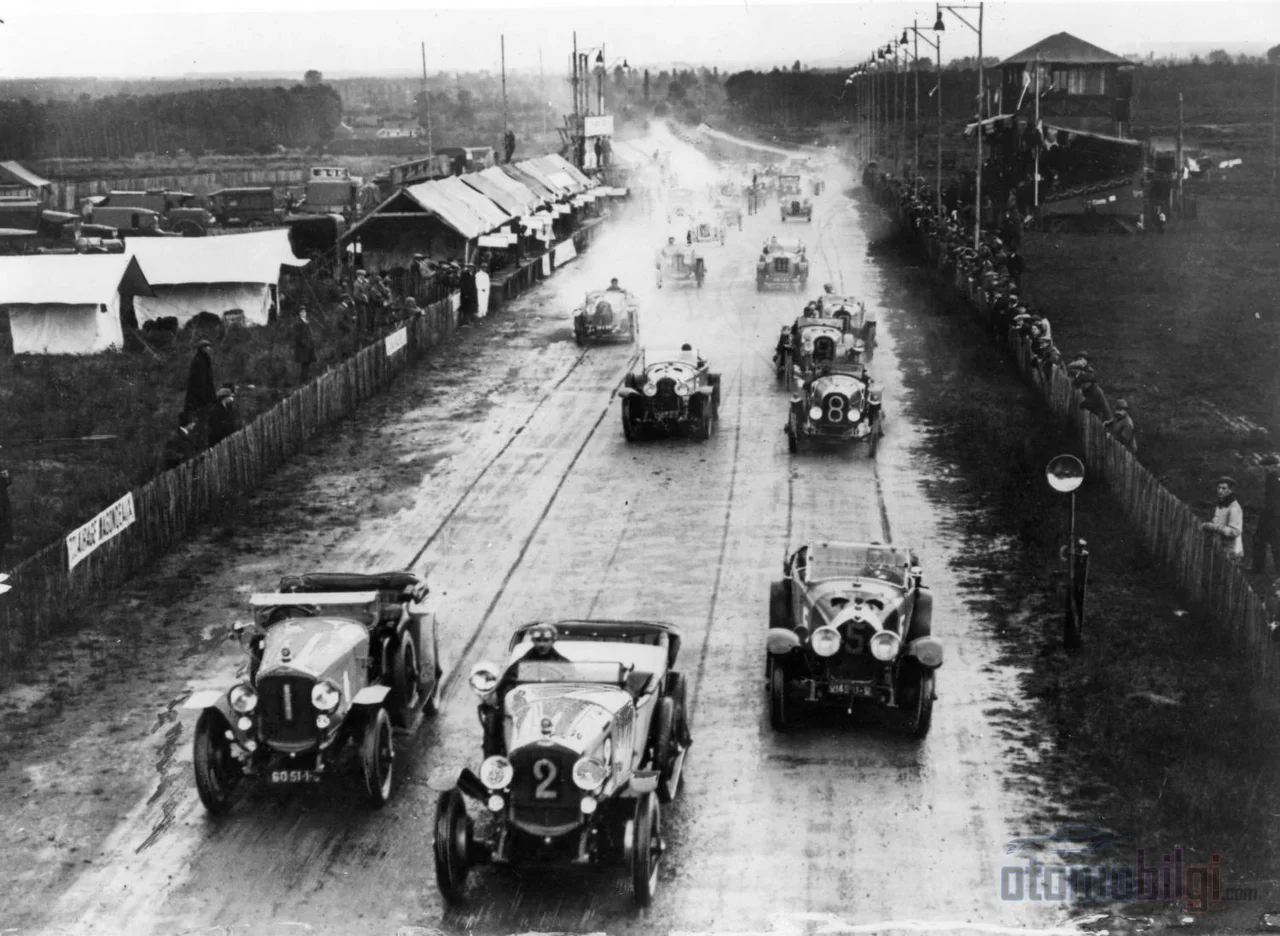
The field of the first race was quite domestic. The records show 35 entries, and all but three of them were French. On the morning of May 26, 33 cars took the start; in the entry list, French names like Lorraine-Dietrich and Chenard & Walcker stood out. The foreigners were just two names: a Belgian Excelsior Albert 1er and a private British Bentley.
This picture nicely summarizes the race's founding identity: the ACO had set up a showcase for French manufacturing. But look at the irony: in the race's later years, one of the names that carried it onto the world stage was precisely that lone British Bentley. The race was run on the Circuit de la Sarthe, made up of permanent track sections and temporarily closed public roads; the track has undergone extensive changes, largely for safety reasons since 1923, and today it is 13.626 km in length.
The Bentley and Bugatti Era: The Royalty of the Early Years
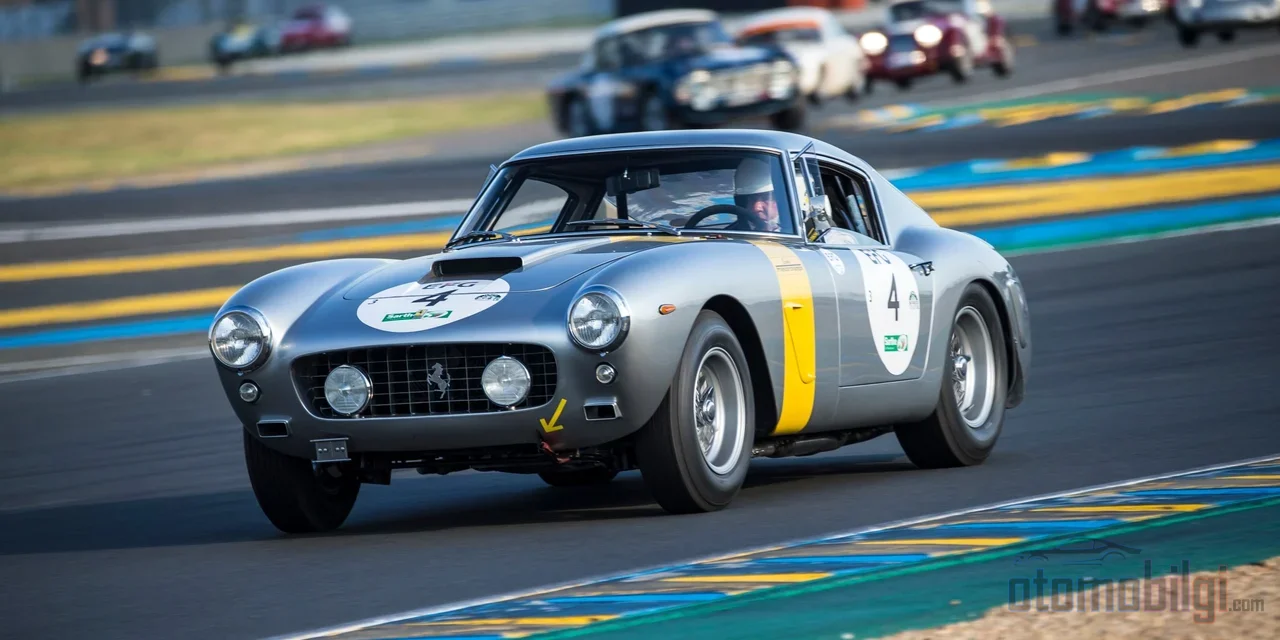
In the early years, the rankings changed hands among French, British and Italian drivers, teams and cars; the standout brands were Bugatti, Bentley and Alfa Romeo. Bentley took its first victory in 1924, and this heralded the real explosion: from 1927 to 1930, Bentley won four races in a row. This period is called the golden age of the Bentley Boys, and in one year they swept the entire top four. Five victories in total between 1924 and 1930 count among the milestones of the brand's history; the supercharged 4.5-liter Blower Bentley of 1929 is also one of the legends of this era.
What were the so-called Bentley Boys? In short, in today's language, a group of passionate, well-living British pilots who brought the brand to life. This team's victories made the Bentley name synonymous with Le Mans and showed the world that the race was no longer just a French showcase.
The 1930s: Aerodynamics Comes into Play
By the end of the decade, things moved on the technology front. Bugatti and Alfa Romeo used cars with highly aerodynamic bodies to go faster on the track's famous long straight. In other words, within its very first decade, Le Mans had already begun to turn into a laboratory that pushed vehicle design. This aligns perfectly with the race's original idea: being a testing ground meant pushing the limits not only in durability but also in the field of design.
The Wartime Break and the Great Comeback of 1949
Just as every great feast has an intermission, Le Mans also had years when it was suspended. The race in 1936 was canceled due to the general strikes in France during the Great Depression era. Then in 1939, World War II broke out, leading to a full ten-year hiatus: the race from 1940 to 1948 was not run at all. Imagine, a race staying silent for an entire decade; the track facilities had also suffered their share of the war.
But the story does not end here; on the contrary, it begins anew. After the track facilities were rebuilt, the race in 1949 returned and was met with renewed interest from major automobile manufacturers. And the year of its return is also remembered for a first: Ferrari won precisely its first Le Mans victory in this year. Luigi Chinetti and Peter Mitchell-Thomson reached victory with the Ferrari 166MM. So when the curtain rose after the war, there was a new Italian giant on stage; the decades ahead of the race would become the story of Ferrari and many more legends.
In short: Why Is Le Mans Still Special?
When 33 cars set out on an endurance test lasting a whole day in 1923, no one predicted this race would last more than a century. Even though the Rudge-Whitworth Cup's three-year endurance idea fell by the wayside, the essence remained the same: not the fastest, but the most durable wins. Bentley's golden age, Bugatti's aerodynamic experiments, the war's decade of silence and the Ferrari return in 1949... all revolve around this single idea. I think the most beautiful aspect of the race is this: the question asked at that first morning start in 1923 is still the same question today.
Sources
- The ACO's 120th anniversary – How the 24 Hours of Le Mans came into being
- 24 Hours of Le Mans - Wikipedia
- A century of racing: the 24 Hours of Le Mans is 100 years old!
- The first trophy in the history of Le Mans on display at the Musée des 24 Heures
- 1923 – The first edition (Radio Le Mans)
- Rudge-Whitworth - Wikipedia
- Rudge-Whitworth Cup concludes Le Mans centenary celebrations at Goodwood
- Circuit de la Sarthe - Wikipedia