Legendary Rivalries That Shook Le Mans
Share This Page
At the 24 Hours of Le Mans, some rivalries were not just races but changed the course of motorsport history: between 1966 and 69 Ford GT40, Ford toppled Ferrari; in the 2000s R8 and Audi, which cemented its place at the top with a diesel engine, and in 1991 Mazda 787B , Mazda delivered the first victory to a Japanese brand - these duels lead the list. These three battles turned the Circuit de la Sarthe into the most dramatic stage in racing history.
Highlights
- Ford GT40 Mk II in 1966 ended Ferrari's six-year Le Mans streak with a 1-2-3 finish.
- Audi R8 between 2000 and 2005 won five of six races ; it achieved a total of 63 wins out of 80 races.
- Audi R10 TDI in 2006 became the first diesel vehicle to win Le Mans.
- Mazda 787B in 1991 delivered both the first Japanese victory and the only win for a rotary engine.
- At the top of the brand rankings stands Porsche: 19 victories, followed by Audi with 13 and Ferrari with 12 .
Which rivalries made Le Mans legendary?
It has probably crossed your mind at times: while even watching a two-hour race is hard, why is a race lasting 24 hours so addictive? The answer is simple: at Le Mans, being fast alone is not enough to win. The car must be solid, the strategy must hold, and most importantly... there must be a real story between you and your rival. First run in 1923 and born from the idea of an "open-air testing laboratory for automobiles," this race saw brands wage not engineering battles but wars of pride.
That is why Le Mans history takes shape around a few great rivalries. The Ford-Ferrari feud was the fiercest fight of the '60s. Audi's R8 and diesel dominance defined the 2000s. Mazda's 1991 victory was the first time a continent (Asia) reached this summit. Let me tell you about each one, because each is like its own film.
The Ford-Ferrari war: how did the GT40 topple Ferrari in 1966?
The beginning of this story is not a race but a deal gone sour. Henry Ford II wanted to buy Ferrari; Enzo Ferrari rejected the offer. This personal enmity between two proud men gave birth to the greatest revenge project in automotive history: the Ford GT40. Think about it: an automotive giant builds a racing team just to tell one man "you rejected me." Even Hollywood would struggle to write such a script (and the 2016 film "Ford v Ferrari / Le Mans '66" tells exactly this story).
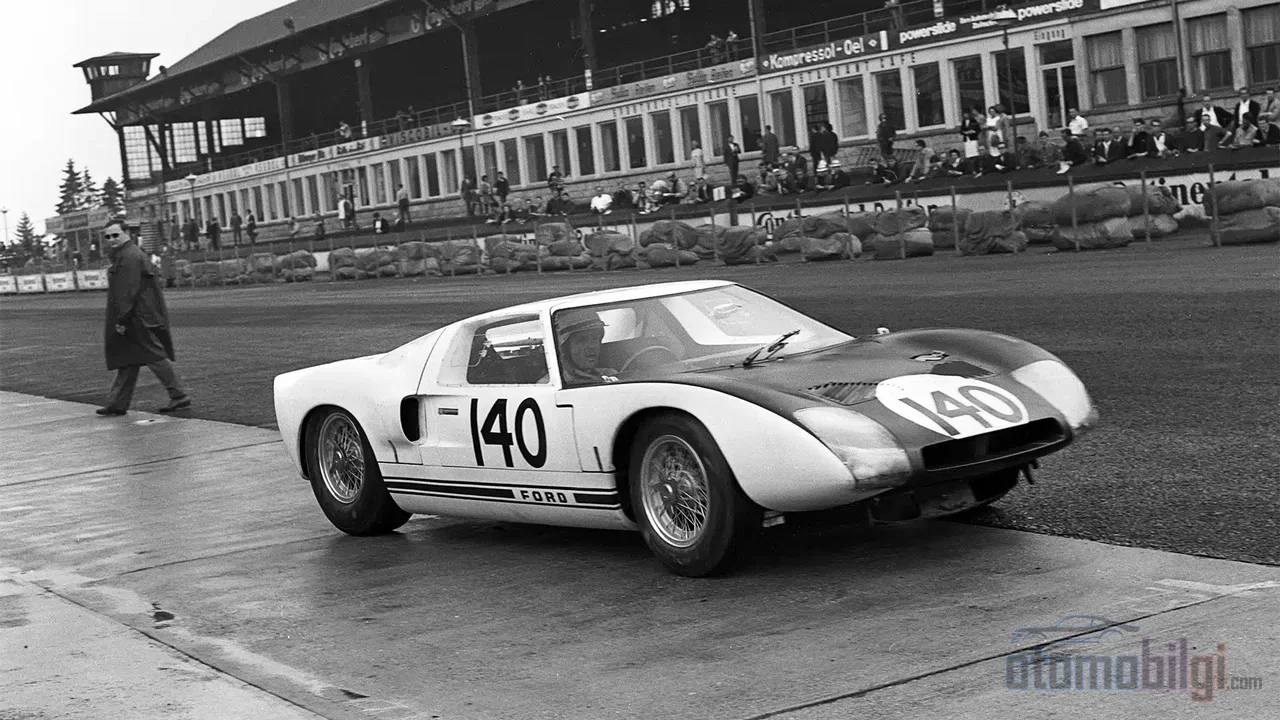
The start was far from brilliant: the GT40 failed to even finish the race in 1964 and 1965, while Ferrari kept collecting victories in those years. But Ford did not give up, and for 1966 a special monster was prepared: the GT40 Mk II. It housed a massive 7-liter, NASCAR-inspired engine; although the real power was around 550 hp , it was declared as "only" 485 hp due to the rev limit lowered for racing (a bit of fake modesty is always present in racing). Ferrari's answer was the fuel-injected, 420 hp 4-liter 330 P3. Ford was so serious that it submitted 15 Mk II entries , of which 8 were accepted; Ferrari had come with only two cars. Ford's Holman & Moody team, moreover, brought clever details such as a brake pad system that could be swapped in seconds.
A 1-2-3 sweep of the podium and Ken Miles' heartbreak
In the race run on June 18-19, 1966, Ferrari's six-year winning streak at Le Mans was broken and Ford swept the podium with a 1-2-3. It was the first victory by an American manufacturer in a major European race since 1921. But there was also a touch of sadness to the story. Ford's executives had planned a PR masterstroke of the three cars "finishing in a dead heat," and Ken Miles and Bruce McLaren were told to slow down. According to photographs and official track data, McLaren's #2 car was about 6 meters ahead at the line; moreover, since it had started further back on the grid, it had also covered more distance. By the rules, McLaren was declared the winner, and Ken Miles never won Le Mans.
This is actually a very bitter detail, because Miles had also won the 24 Hours of Daytona and the 12 Hours of Sebring that same year. The "they finished at the same moment" scene in the movie is a nice story, but the facts, per official data, favor McLaren. Ford continued the streak until 1969; this rivalry was etched into Le Mans history as the most "revenge-flavored" victory ever.
Audi's R8 era: How was dominance established in the 2000s?
Let's fast-forward to the 2000s. This time the war was not a blood feud, but a lesson in engineering discipline. Audi, R8 took to the stage with a prototype called, and guess what happened: it won Le Mans in 2000, 2001, 2002, 2004 and 2005 . Five out of six races! The only exception was 2003. The R8, not just at Le Mans but throughout its career, won 63 out of the 80 sports car races it entered. That ratio is like a team with the "win button pressed."
The 2000 victory was also the first of 13 Le Mans triumphs Audi would go on to collect after that year; with that number, Audi became the second most successful marque after Porsche's 19 victories. The R8 raced so dominantly that the real legacy of that era was not the question "who won?" but "how big a gap did Audi open up this time?"
The diesel revolution: the R10 TDI and the feud with Peugeot
The R8's story continues from an even more interesting point: in 2006, Audi R10 TDI took to the stage with. This car, powered by a 5.5-liter twin-turbo V12 diesel engine, became the first diesel vehicle to win Le Mans. Diesel? There were plenty whose stomachs turned at the idea of a diesel race car, but the R10 TDI silenced everyone with both its quietness and its massive torque. It went unbeaten at Le Mans from 2006 to 2008, taking three victories; in 2009 it handed its place to the R15 TDI. As if Audi had said "it's my turn," the seat was passed on to the next project.
At the end of the 2000s, a real challenge to this dominance arrived: Peugeot. The Audi-Peugeot feud is remembered as the rivalry that defined that generation. In 2010, Audi was in the "underdog" position against Peugeot; yet the #9 Audi finished that year's race covering 397 laps . In front of the leading Peugeot, an Audi held an advantage of up to 8 seconds, lap after lap even the moments it achieved were lived. So on those dates there was no such thing as "Audi always wins"; but there was "Audi always fights."
Mazda 787B: Who claimed the first Japanese victory in 1991?
Now I've come to the most romantic part. On Sunday, June 23, 1991, at 4:00 PM, Johnny Herbert was making history as he sped along the Mulsanne Straight: the #55 Mazda 787B had won the overall classification. This was the first Le Mans victory for a Japanese manufacturer. Moreover, the 787B went down in history as the only car to win the race with a rotary (Wankel) engine. Piston engines had ruled racing for 100 years; Mazda came along with a four-rotor rotary engine and said "count me in." Technically, this was pure madness (in the best sense).
The 787B weighed only 830 kg and is still remembered with admiration for its character, sound, and smell. The seats shared by Johnny Herbert, Volker Weidler, and Bertrand Gachot were crowned by Mazda taking 1st and 6th place that year. The Japanese victory gave Le Mans not just a winner, but an entirely different engineering philosophy. You ask if it was ever repeated: no, winning with a rotary engine remained a one-time magic. Perhaps that's exactly why it's so special.
What role did the famous sections of the Circuit de la Sarthe play in these duels?
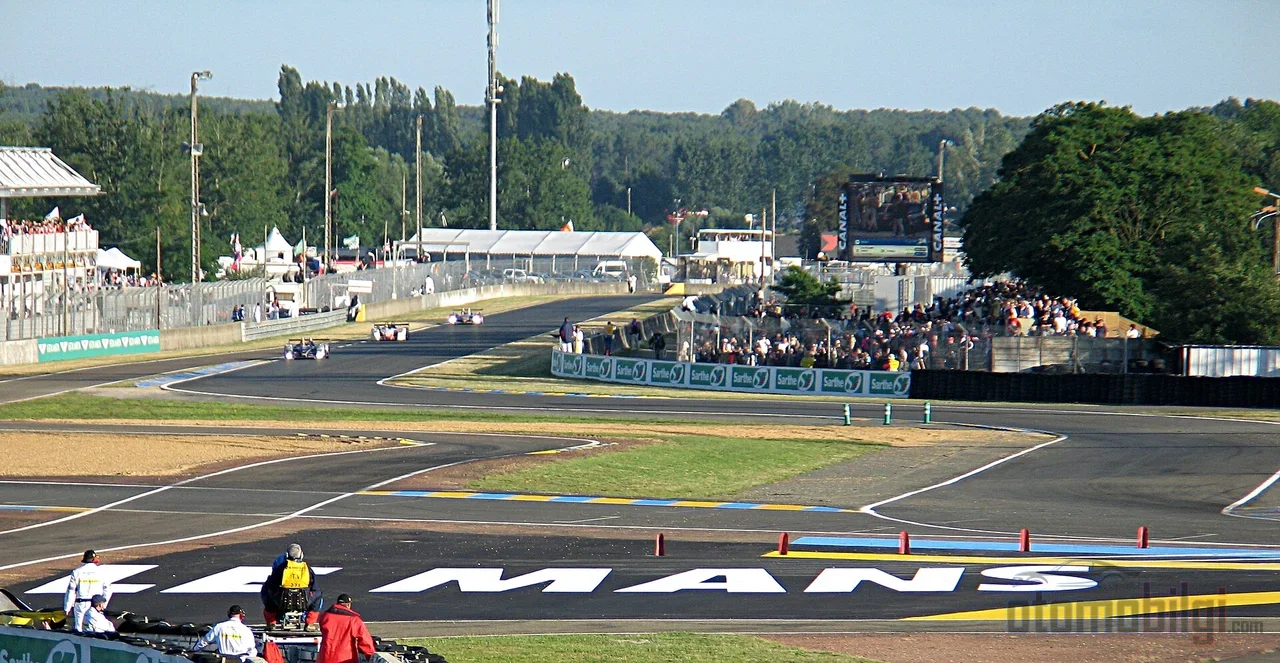
All these rivalries played out on the same stage: 13.626 km long, with 38 corners, the Circuit de la Sarthe. This track is not an ordinary race circuit; it is a massive loop made up of public roads. And some of its sections are iconic enough to single-handedly determine the fate of a rivalry:
- Mulsanne Straight (locally known as Ligne Droite des Hunaudières): approximately 5.5 km long; cars reach their top speeds here. It's no coincidence that Herbert sealed the victory here in 1991; this straight is the most brutal section testing a car's endurance and engine.
- Porsche Curves: shaped by the 1972 modifications and described by many drivers as their favorite section; a fast corner combination where aerodynamics and courage are trusted at high speed.
- Tertre Rouge, Arnage, and Indianapolis: the other stops that shape the track's character; each one a different engineering test.
The track also has a sorrowful past: the 1955 Le Mans disaster, the deadliest event in motorsport history, happened here. So Sarthe is the place not only of victories but also of losses.
Le Mans by the numbers: which brand has won the most?
After all these duels, here is the picture:
| Rivalry | Period | Result |
|---|---|---|
| Ford GT40 vs Ferrari | 1966-69 | Ford broke Ferrari's streak with a 1-2-3 in 1966 |
| Audi R8 era | 2000-2005 | Five wins in six races |
| Audi R10 TDI diesel era | 2006-2008 | First diesel victory, three consecutive wins |
| Mazda 787B | 1991 | First Japanese victory and the only rotary-engined win |
By brand, the rankings of most wins are as follows: Porsche leads with 19 wins (since 1970), Audi is second with 13 , Ferrari 12 and third. Even Ford's mere four-year battle shows, looking at this list, how much intense energy it spent.
What did these rivalries leave to road cars?
The coolest part of the story is this: these wars didn't just hand out trophies; they also shaped the car you get into today. Disc brakes were first seen in 1953 at Le Mans with the Jaguar C-Type. Technologies like direct-injection engines and halogen headlights were also applied early in this race. Today, hybrid systems that harvest energy during braking are in the spotlight; the hypercar brake discs in the 2025 race were carbon discs with a 380 mm diameter, designed for use over 5000 km distance. So every technology tested at Le Mans can show up in your street car a few years later. Competition is engineering's fuel, after all.
In 2026 the race enters its 103rd year. Despite all these years, Ford's revenge, Audi's diesel revolution, and Mazda's rotary-engine dream are still talked about. So which one is your favorite? The Ford-Ferrari drama, Audi's cool-headed engineering, or the lingering sound of the 787B? I'd say think about it a bit, but if I were you, I'd go with the 787B. Wish you had been there to hear that sound...
Sources
- 1966 24 Hours of Le Mans
- Audi R8 (LMP)
- Audi R10 TDI
- Mazda 787B
- List of 24 Hours of Le Mans winners
- Circuit de la Sarthe
- Le Mans - Audi
- LE MANS VICTORY COMMEMORATIVE SITE - Mazda
- How Mazda won 24 Hours of Le Mans - Mazda Stories
- Peugeot and Audi: the rivalry that defined a generation
- The legendary spots on the Circuit de la Sarthe
- 24 Hours of Le Mans - the race to innovate
- Ford v Ferrari: the real story of Le Mans '66 & Ken Miles
- The True Story of 'Ford v Ferrari'
- The real story behind the Le Mans-winning Ford GT40
- 30 Years Ago, Mazda Conquered Le Mans
- Audi R10 TDI: First diesel winner
- 7 curiosities about the 24 Hours of Le Mans
- Which Car Beat Ferrari at Le Mans in 1966?