Le Mans Technologies That Went From the Track to the Road
Share This Page
The 24 Hours of Le Mans, run since 1923, is more than the world's oldest endurance race: it is a massive testing laboratory for automotive technology. Countless solutions we use in our everyday cars today - including disc brakes, turbochargers, direct injection and hybrid systems - were first proven here, pushed relentlessly for 24 hours straight, and only then moved into mass production.
Highlights
- The first race was run in 1923; the race is still held on the 13.626 km Circuit de la Sarthe.
- Jaguar's disc brake passed the test at Le Mans in 1953, and Porsche's intercooled turbo in 1974. when it passed its test at Le Mans.
- The first diesel to win Le Mans was the Audi R10 TDI in 2006.
- The Porsche 919 Hybrid's 800-volt system was later used in a production electric vehicle.
- The record for most wins by a manufacturer belongs to Porsche: exactly 19 times.
Why Exactly 24 Hours? Because It Works Like a Lab Experiment
Think of it this way: you push a phone for a whole day to see whether it heats up, glitches, or whether its battery lasts. Le Mans does the same for cars, but under far more brutal conditions. The winner is the car that covers the greatest distance within 24 hours. Modern racers cover more than 5,000 km; the record was set in 2010 with 5,410 km. That means driving your car on an epic journey without ever stopping again. Every loose bolt and every weak point inevitably comes to light.
The track itself is one of the lead actors: Circuit de la Sarthe consists of closed public roads combined with permanent circuit sections. The Dunlop Curve, Tertre Rouge, the famous Mulsanne Straight and, as the final corner, the Ford Chicane, whose name is woven into the race's most legendary rivalry... Drivers can spend up to 85% of a lap at full throttle. When 407 km/h was measured on the Mulsanne Straight in 1988, officials added chicanes to curb the speed. So the track pushes cars to their limits not only in speed but also in braking and durability. Technology is born precisely here, at the limit.
1953: Jaguar's "Secret Weapon" and the Braking Revolution
Disc brakes are in all of our cars; they have become so commonplace that we don't even think about them. But if we go back to 1953, the Jaguar C-Type that showed up at Le Mans that year had disc brakes, and it was a landmark race. Jaguar had worked in two areas: aerodynamics and disc brakes. Although the new body caused serious overheating problems, the advantage in braking was so great that everything else was overshadowed. While drum brakes struggled with high heat, the disc brakes did their job with deep composure - much like someone who never loses their energy during a long study session.
From here we take a step further: Ford. In the GT40's Le Mans story, brakes were one of the biggest engineering headaches, because this track demanded more from braking systems than any other circuit. The Mk II's increased weight and speed made the job even harder; trial and error brought gradual improvement. The GT40 carried the super-technologies of its era: disc brakes on all four wheels, a five-speed gearbox and independent suspension. The result? In 1966, three 7.0-liter With the Mk II, Ferrari's winning streak was broken and Ford took its first victory. (That famous 8-meter photo finish and the Ken Miles story are the subject of a separate article; by rule, the car that started at the back of the grid won.) The beautiful part is this: the Ford-Ferrari war seriously accelerated the spread of braking technology, and that rivalry is seen as the driving force behind the wave of innovation that transformed cars into today's machines.
Porsche's Turbo Era: The Short Road from Track to Street
The turbo story at Le Mans is more than a race: it's practically a development chain. Porsche's turbo roots go back to the 917/10 in Can-Am; its exhaust-side wastegate control system enabled a smaller turbo and much better throttle response. In 1974 at Le Mans, the first Porsche race car to use a turbo, 911 Carrera RSR Turbo 2.1, produced roughly 500 HP and finished second overall. Moreover, it had an intercooler - and this intercooler idea in 1977 was carried over to the production 911 Turbo. A solution tested for a season on the track, and that same year in a street car. It's hard to find a better example of technology transfer.
What followed was a cascade of victories: in 1976 the first Le Mans turbo win with the 936/76, and victory again the following year. In 1979 Kremer's 935 - that is, the racing version of the 911 Turbo - won overall. The 935/78 "Moby Dick" of 1978, meanwhile, produced 833 HP with its water-cooled multi-valve cylinder head. Rivals could only stop Porsche through a regulation change, but no one could stop the spread of turbo technology.
956/962: The Birth of Ground Effect, Motronic and PDK
Porsche's true imperial era came with the 956/962 C : these cars won seven times between 1982 and 1994. Why? Because they carried three innovations that flowed directly into production: a ground effect underbody, the Bosch Motronic providing fully electronic engine management, and the PDK dual-clutch transmission. PDK was first trialed in 1984 , became reliable from 1987 onward, and eventually spread to millions of cars in the VW Group under the name DSG. Yes, the great-great-grandmother of the automatic transmission in your or your neighbor's car lives at Le Mans.
The story in 1998 turns one more lap: the 911 GT1's technology entered production in 1997 with the 996-generation 911, and the first fully water-cooled road Porsche 911 was born. The GT1-98 won the race that same year too. Here, the race car and the road car practically shake hands.
1991: Mazda 787B and the Rotary Engine's Only Victory
Now come to the most romantic chapter of the legend. In 1991, the Mazda 787B, with its Wankel rotary engine, took both history's first rotary overall victory and the first Le Mans win by a Japanese car. The R26B four-rotor engine, with three power strokes per revolution per rotor, revs to ~9,000 rpm and in race trim was approaching ~700 HP. The car covered 4,003 km in 362 laps. The bittersweet part: the rotary in 1992 because it would be banned, 1991 was the last chance - and Mazda went down in history as the only manufacturer to win with the rotary. They say that once you hear the engine's roar, you never forget it.
2006: The Day of Diesel and Direct Injection
Until 2006, a "diesel race car"? Nobody took it seriously. Then the Audi R10 TDI, with its 5.5-liter twin-turbo V12 TDI engine - over 650 HP of power and immense torque - became the first diesel vehicle to win Le Mans. Since it was the first year a diesel was used at La Sarthe, its impact was doubled. Being the first Audi diesel engine to use an aluminum block was proof of just how appealing this technology was for series production.
But here is the deeper layer: Audi was the manufacturer that developed direct injection for road cars and had demonstrated it with a five-cylinder TDI engine producing 120 hp. According to the company, fuel consumption in TDI units dropped by more than 20%, and direct technology transfer was achieved between motorsport and series products. So the efficiency debate triggered by the oil crisis after 1973 shows up here as well: the fuel formula of the Group C era made efficiency innovation mandatory; the rules were later abandoned, but fuel economy never lost its importance.
The Hybrid Era: From the 919 Hybrid to Hypercar
In the 2000s, hybrid systems with flywheels, supercapacitors, and batteries were encouraged by the rules in the LMP1 category. The idea was simple and clever: collect energy during braking, give it back when needed. It's like getting a bit of energy for free at every corner exit - who would say no?
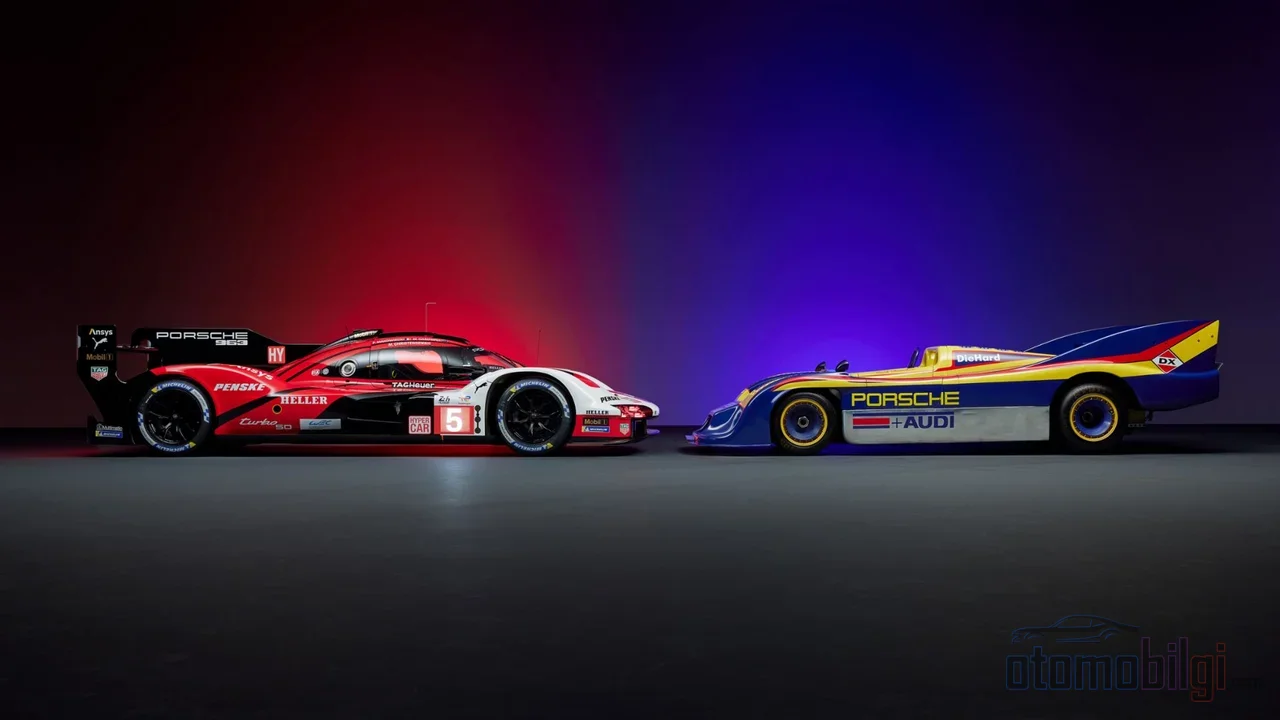
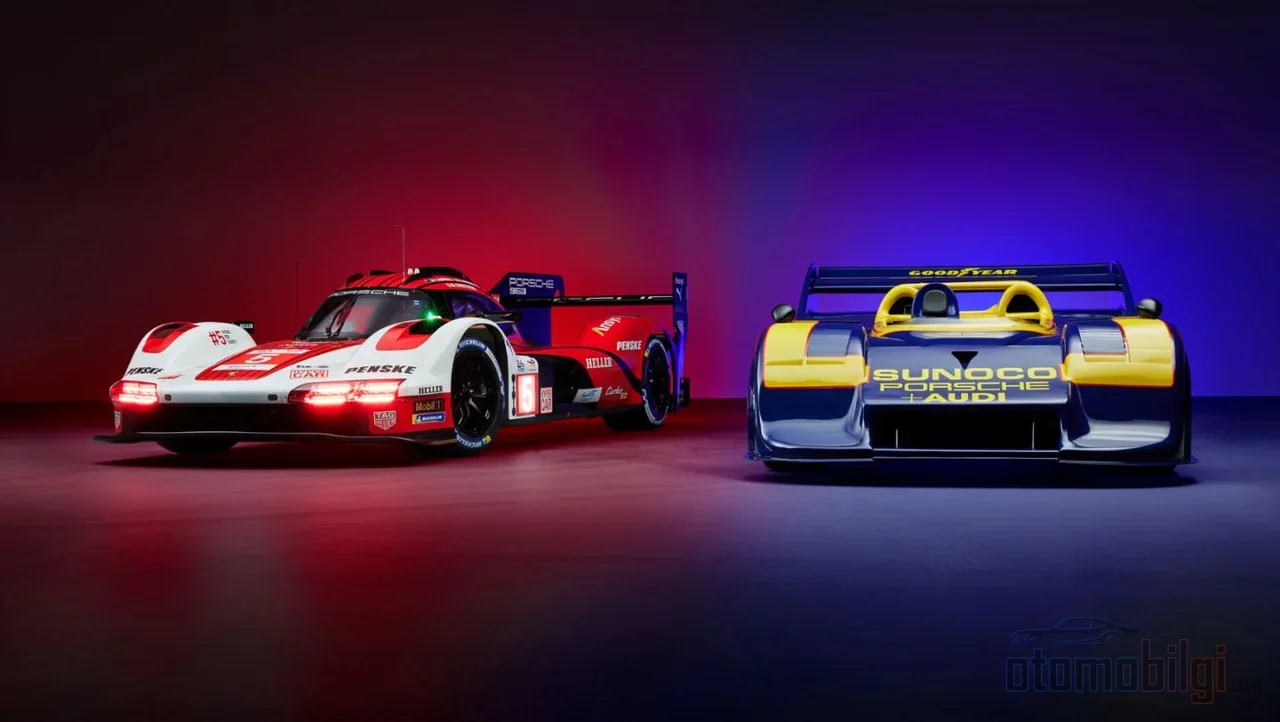
The most brilliant example of this idea was the Porsche 919 Hybrid : Between 2015 and 2017 it won three Le Mans victories. Its 2.0-liter V4 turbo gasoline engine (~493 HP) plus an electric motor on the front axle (~394 HP); a second turbo with variable turbine geometry in the bulky exhaust flow fed the generator. And here is the transfer itself: the system developed from scratch, with 800 volts, was used for the first time in 2019 in a series-production electric sports car. On the Toyota front, the TS050 fought for the top with a hybrid electric powertrain of around 1000 hp. Meanwhile, a small honesty note: how many components the hybrid racing system shares with a road car is a matter of debate - some attempts to apply certain technologies to series production also came to nothing. Transfer is not always a straight line.
Why Are the Hypercar Rules Tied to Series Production?
Hypercar (LMH/LMDh) took the place of LMP1 in 2021, and the rulebook was deliberately designed to be close to road cars. Since a production requirement also entered the picture, the category has practically become a showcase for manufacturers:
| Rule / Vehicle | Detail |
|---|---|
| Maximum power | 671 bhp |
| Minimum weight | 1,030 kg |
| Aerodynamics | Moving elements banned; "performance window" design freedom |
| LMH entry requirement | Production of 20 road-legal cars (Article 19.1) |
| Porsche 963 (LMDh) | 4.6 L V8 + twin turbo + hybrid, ~690 HP |
| Toyota 2026 | TR010 HYBRID and the fundamentally hydrogen development car sharing the same chassis |
So now you really have to produce a genuine road car to enter the category; the rules pull you toward a common line between laboratory and showroom. Porsche engineers openly say that when they combined the turbo with the T-hybrid system for the first time in the recent 911 Carrera GTS, they drew on their motorsport knowledge. Additionally, experimental technologies can enter the race through "Garage 56" entries - the program started in 2012. The rule set has also been extended to 2032, meaning this laboratory will stay open for a long time.
The Laboratory Isn't Closing
The race's power is still evident: in 2025, 332,000 spectators watched with rapt attention, and the 94th race was run on June 13-14, 2026. The brand record still belongs to Porsche (19 wins), while among drivers Tom Kristensen's nine wins are talked about. But the real point isn't the numbers: for over 100 years, every disc brake, every turbo output, every hybrid system has first been tested here, under the most demanding conditions. If there's a technology in our next car that seems strange to us, chances are it first proved itself on the Mulsanne straight for 24 hours. What do you think is next - hydrogen, or something else?
Sources
- 24 Hours of Le Mans - Wikipedia
- Wins at Le Mans are a win for Porsche's production models - Porsche Newsroom
- The 1950s – The C-type, Le Mans and Disc Brakes - Jaguar
- Jaguar "brakes" with the drum tradition to usher in the disc era - 24h-lemans.com
- Ford GT40 - Wikipedia
- The Ford GT40 Race Car - Part 2 - Auto Heritage Foundation
- Audi R10 TDI - Wikipedia
- Le Mans - Audi
- Audi R10 TDI - Racecar Engineering
- Audi at Le Mans: engine technology - Audi Motorsport Blog
- Le Mans Victory Commemorative Site - Mazda
- Mazda 787B - Wikipedia
- 30th Anniversary of Mazda's 1991 win - Inside Mazda
- Le Mans Hypercar - Wikipedia
- What is a Le Mans Hypercar? - Motor Sport Magazine
- Le Mans Hypercar: LMH and LMDh 2026 guide - a-e.li
- Le Mans 2026 - Toyota Racing
- CAR DETAILS 2018-2019 WEC - Toyota Gazoo Racing
- 2018 LMP1 Toyota TS050 - Racecar Engineering
- Le Mans - Racing Circuits Info
- Circuit de la Sarthe - RaceSchool
- 24 Hours of Le Mans - the race to innovate - 24h-lemans.com
- The legendary duel in "Le Mans '66" - 24h-lemans.com
- Everything You Need to Know about the 24 Hours of Le Mans - Car and Driver
- Le Mans Circuit Guide - Hertz