The Diesel Era of Le Mans: Peugeot Against Audi
Share This Page
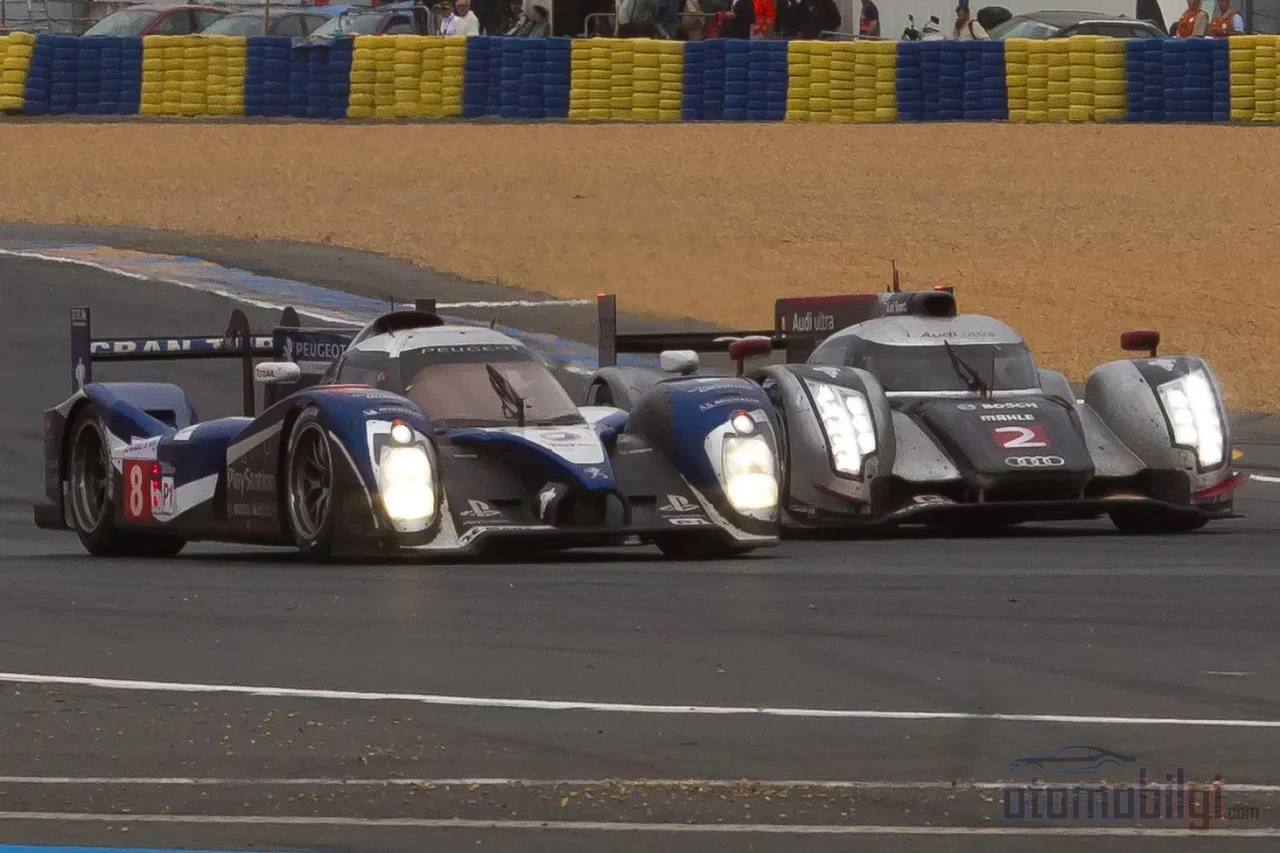
The battle that dominated the 24 Hours of Le Mans between 2006 and 2011 is the story of the diesel revolution Audi started with the R10 TDI and Peugeot's response with the 908 HDi FAP : Peugeot, stronger on paper, was always one step behind Audi's fuel efficiency and pit strategy. This era came to an end with the hybrid regulations approved in 2010.
Highlights
- 2006: The first diesel car to win Le Mans was the Audi R10 powered by the 5.5-liter V12 TDI engine.
- The R10 produced torque exceeding 1,100 Nm; the Peugeot 908 responded with 700 bhp of power and over 1,200 Nm of torque.
- 2008: Peugeot was fastest in qualifying, but Audi's pit operation decided the race.
- 2009: Peugeot finally beat Audi at Le Mans.
- 2012: Under the hybrid regulations, the Audi R18 e-tron quattro became the first hybrid car to win Le Mans.
Diesel's Entry into Le Mans: Why Did Audi Make the R10 a Diesel?
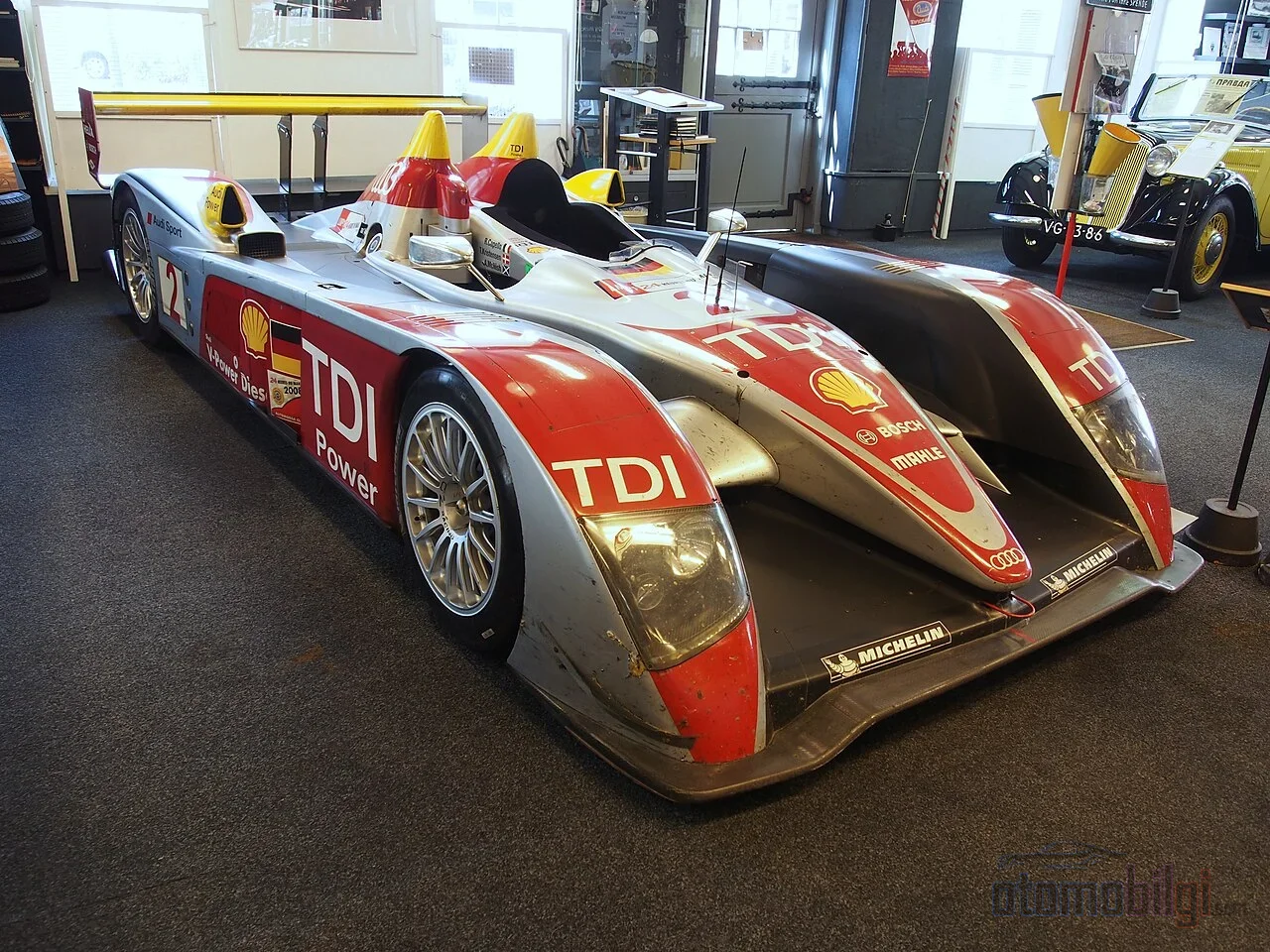
Diesel is actually nothing new at Le Mans; the first diesel entrant was Delettrez back in 1949 . But from then until 2006, no diesel car ever won the overall classification. This is exactly where Audi stepped onto the scene and filled the gap: The R10 TDI went down in history as the first diesel sports car to win the 24 Hours of Le Mans. So why diesel? Because Le Mans' real test is not speed but efficiency and durability. A diesel engine burns fuel more efficiently, meaning you get longer range with the same fuel tank and make fewer pit stops.
The numbers confirm this. With its 90-liter fuel tank, the R10 offered 27.3 km more range than the previous generation supercharged petrol Audi R8. At the 2006 Le Mans, the car consumed 41.05 liters per 100 km, and in 2008 that figure rose to 45.56 liters - as performance increased, efficiency took a bit of a hit, but it was still enough to make fewer pit stops than petrol rivals. At Le Mans, cars refuel roughly 30 times over 24 hours; so skipping every fuel stop gives the team a serious tactical advantage. Think of it like skipping an entire gas station stop on a long road trip. Imagine saving hours of time.
The Technical Recipe of the V12 TDI
At the heart of the R10 lay a 5.5-liter (5,499 cc), 90-degree V-angle, twin-turbo V12 diesel. Audi quoted over 650 hp of power and over 1,100 Nm of torque - and that torque was available almost from idle, with a usable power band between 3,000 and 5,000 rpm. It was Audi's first diesel with an aluminum crankcase; it was equipped with four valves per cylinder, double overhead camshafts, and Common Rail injection. Injection pressure exceeded that of production cars, above 1,600 bar. Pretty cool, right?
And of course there are the rumors whispered in the paddock. Henri Pescarolo, a legendary name who raced sports cars, claimed the real power of the 2006 version was around 700 hp argued. Manufacturers' official figures are generally conservative, so it's not surprising that there was a gap between the announced 650 hp and the actual power on the track.
Peugeot 908 HDi FAP: The French Diesel Answer
Of course, it wasn't Peugeot's place to just watch Audi's revolution. In 2007 the French brand took the stage with the 908 HDi FAP ; this was Peugeot's first diesel LMP1 car and, as the second diesel sports car from a major manufacturer, it stood directly opposite the R10. On paper the figures favored Peugeot: the engine was a 100-degree V12 HDi diesel at the maximum 5.5 liters allowed by the rules, producing over 700 bhp of power and over 1,200 Nm of torque. Even the gearbox developed by Ricardo was designed to carry this 1,200 Nm of torque. So Peugeot was ahead in the torque war, while Audi responded with efficiency where it lost power.
In 2008 Peugeot entered with three 908s and made its mark as the fastest team in qualifying. But when race day came, the picture changed - and this is exactly where Le Mans' real lesson emerges: the fastest car doesn't always win.
| Spec | Audi R10 TDI | Peugeot 908 HDi FAP |
|---|---|---|
| Engine | 5.5 L V12, 90-degree, twin-turbo diesel | 5.5 L V12, 100-degree, twin-turbo diesel |
| Power | 650+ hp | 700+ bhp |
| Torque | Over 1,100 Nm | Over 1,200 Nm |
| First Le Mans win | 2006 | 2009 |
| Power band | 3,000-5,000 rpm | - |
The 2007-2008 Duel: Why Was Peugeot One Step Behind?
For two years this duel was Le Mans' main topic, and the results were often separated by fine margins. In 2007, the #8 Peugeot finished second right behind the winning R10. 2008 was the pivotal year of the story: Peugeot was faster on paper and ahead in qualifying; but throughout the race Audi Sport's pit operation was so clean that the new 908s couldn't avoid losing to a three-year-old R10. As a result of 2008, the #2 R10 won the overall classification, with two more Audis filling the lower steps of the podium ahead of Peugeot - meaning Audi left with a one-two victory.
There is no single reason for Peugeot falling behind; several reasons stacked on top of each other:
- Pit operation: When Audi's fuel and tire strategy combined with the weather conditions in 2008, it overtook Peugeot with less fuel.
- Efficiency philosophy: Audi used diesel not as a weapon of speed but as a weapon of efficiency; Peugeot hadn't compromised on power.
- Track character: The R10 was described as noticeably fast on the straights and much more stable in the corners.
Meanwhile, in 2009 Audi's new R15 TDI came into play. The rules had reduced the fuel tank capacity by 10% and lowered the turbo boost pressure by about 7%; Audi responded with a new car powered by a 5.5-liter V10 TDI engine, with ~592 hp and ~1,000 Nm of torque. And finally, in 2009, against this slightly weakened Audi, Peugeot ended its long wait: the 908 beat Audi at Le Mans for the first time. Four years of patience found its reward right here!
Pit Strategy: The War Won by Fuel Calculations
At Le Mans, a pit stop isn't just about changing tires - it's genuinely a chess game. Reducing the number of fuel stops cuts both the seconds spent in the pit lane and the interruptions that disrupt the ideal lap rhythm. Audi's entire diesel philosophy was built on this calculation: a more efficient engine, fewer stops, longer stints. The fact that the R10 would need fewer fuel stops than its gasoline rivals was one of the most emphasized points in the reports of the era.
What makes 2008 interesting is this: that year's race was shaped partly by weather conditions, but the result came from the same mechanics once again. Audi neutralized Peugeot's power through fuel range and pit window calculations. In a 24-hour race, every interruption is a risk; Audi was the team that kept the risk to a minimum. The pit stop calculators used even in today's race simulations are actually the descendants of this real-world fuel and stint planning logic.
Not Just Racing: Diesel Technology That Seeped Into the Streets
The impact of this battle wasn't limited to the track. Audi's diesel expertise was transferred directly to road cars: derived from the R10, the Q7 V12 TDI, with its 6.0-liter engine, produced 1,000 Nm of torque and completed 0-100 km/h in 5.5 seconds . This diesel SUV, derived from a racing prototype, was one of the flashy end products of the diesel era. It's no coincidence that Le Mans has historically been the proving ground for innovations such as disc brakes, direct injection, and hybrid technology; since 1923, the track has been the most merciless test bed for road technologies.
The R10's record on the track is also worth evaluating: Audi won with the gasoline R8 in 2000-2002, 2004, and 2005, then celebrated with diesel three years in a row between 2006-2008. In 2007, although the other two R10s failed to finish the race, the #1 car managed to win. Diesel didn't just sustain Audi's Le Mans dominance; it gave it a new technical signature. In 2009-2010, the R10s, which fell outside the official program, ran only with the private Colin Kolles team; in 2009 they finished 7th and 9th, while in 2010 neither car completed the race.
The End of the Diesel Era: How Hybrid Rules Changed Everything?
Every era has an end date, and the diesel era's was sealed on June 10, 2010: that day, the ACO approved hybrid prototypes for the 2011 Le Mans. The new rules invalidated the first-generation 908; Peugeot began developing a new prototype at the end of 2009 and raced in 2011 with the new 908, dropping the HDi FAP name, powered by a V8 diesel engine. Facing them was Audi's closed-cockpit, 540 hp powered R18 TDi- the restrictions imposed by the rules sapped power from both teams' pockets, with an approximate loss of 150 hp/efficiency in 2011.
The real breakthrough came in 2012: R18 e-tron quattro, sitting on a Dallara-built carbon monocoque, with a 3.7-liter single-turbo V6 diesel and with its flywheel-based hybrid system developed with F1 technology, it became the first hybrid car to win Le Mans. It is also noted as the first Le Mans winner to send power to all four wheels thanks to its dual-drive layout. That year, the non-hybrid R18 Ultras also raced, but the future was already clear: racing was turning from a competition of efficiency into a competition of energy recovery. With Audi and Porsche's withdrawal from the WEC, Toyota remained on the scene as the last LMP1 hybrid contender. Looking back from 2026, the diesel era's six-year adventure stands as one of the most colorful technology chapters in Le Mans history.
Final Word: The Fastest Winner or the Smartest Winner?
The diesel era showed us once again the essence of Le Mans: this race does not reward power, it rewards those who use power in the right place at the right time. Peugeot built a car that was more powerful, had more torque and was often faster; Audi managed every liter of fuel and every pit stop second as if it were gold. The defeat in 2008, the victory in 2009 and the corporate rebirth in 2011... The hero of this story is not actually the engine, but strategy. Which do you find more impressive: the giant numbers on paper, or the flawless calculations made in the pit window?
Sources
- Peugeot and Audi: the rivalry that defined a generation
- Audi R10 TDI – Wikipedia
- Peugeot 908 HDi FAP – Wikipedia
- Developing the gearbox for the Peugeot 908 HDi FAP – Ricardo
- Age of the diesel sports car is fuelled by Audi – OneShift
- Audi R18 Ultra / e-tron quattro – Racecar Engineering
- 2012 Audi R18 e-tron quattro – Road & Track
- Pit stop tactics: a major factor at the 24 Hours of Le Mans
- Audi Le Mans (official)
- Audi R10 TDI results – lemans24h.com