Why Couldn't Toyota Win Le Mans for Years?
Share This Page
Toyota couldn't win Le Mans from 1985, when it first tried, all the way to 2018 - that is, it failed for 33 years - even though it proved for most of that period that it was one of the fastest, if not the fastest, car on the grid. So the answer isn't 'slowness'; gearboxes breaking in the final hour, a hose connector coming loose on the final straight, punctured tires, and pure, plain bad luck. The 24 Hours of Le Mans is a race of endurance and fortune just as much as speed: over 24 hours, even a single screw can betray you. This is the story of Toyota's decades-long patience in that ruthless exam.
Highlights
- Toyota made its first Le Mans entry in 1985 with the TOM'S 85C, and took its first victory in 2018, on its 20th attempt.
- TS010 and GT-One never won, but both set race lap records.
- In 2016, Toyota #5 stopped on the final straight while leading with minutes left in the race; victory was snatched away by a tiny fault in a turbo connector.
- In 2018, a 1-2 finish with the #8 and #7 cars brought the historic first victory; four consecutive wins followed.
- At Le Mans, cars can reach up to 366 km/h; when 407 km/h was seen on the straight in 1988, chicanes had to be added.
Why Couldn't Toyota Win Le Mans for a Full 33 Years?
To put it briefly: something else broke every single time. Technical issues in the final hour in 1994, a gearbox failure in 1998, a double accident and a punctured tire in 1999, the teething troubles of the hybrid era between 2012 and 2014, and in 2016, quite literally a connector. Do you notice a pattern? In none of Toyota's lost races can we say the rivals were 'faster'; the cars either retired while leading or while close enough to reach the podium. Think of it like your phone not charging because of that tiny bit of looseness in the charging port: in a massive machine, a mistake as small as a blessing can end the dream you've carried to the end of 24 hours.
First Steps: The Warm-Up Lap from 1985 to 1990
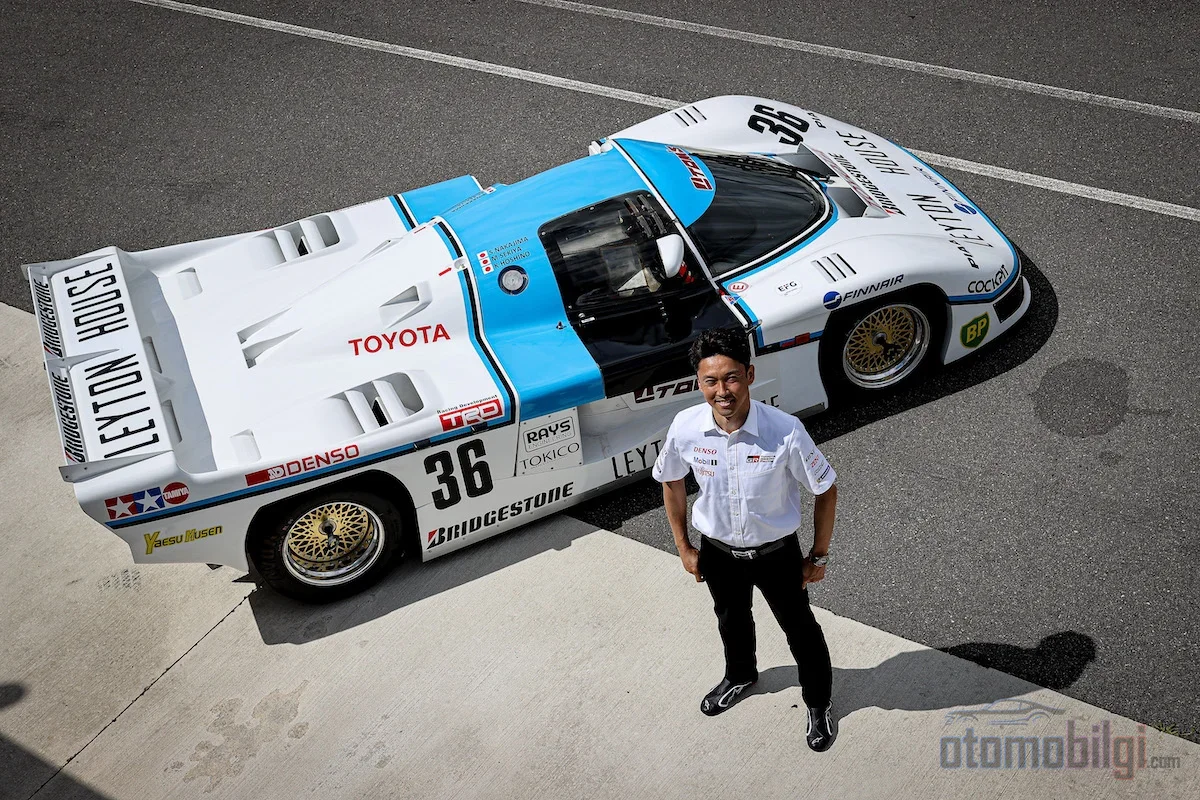
Toyota's Le Mans adventure began in 1985 with the TOM'S 85C. With its 2,090 cc turbo engine, the #36 car reached 290 km/h on the straights, finished the race 12th, and delivered Toyota's first 'race finish' achievement. You know how even passing your first exam is a big deal - well, it was exactly like that. But here's an interesting detail: Toyota's first contact with the Le Mans circuit actually goes back a decade earlier, to the Sigma MC75 project.
Then came two painful years. In 1986 and 1987, the Dome-built 86C and 87C were both eliminated early due to reliability problems; the 87C had managed only 19 laps on the track. 19 laps in a 24-hour race... it almost felt like the race was over before it began. But there was no giving up: in 1988, the 88C showed perseverance, scoring 12th and 15th place finishes, and in 1990, the 90C-V achieved the best result to that date, a 6th place finish. These were the rungs of the ladder to the summit - imagine that.
The TS010 Era: The Record-Breaking Monster That Never Brought Victory
In 1992, Toyota entered the World Sportscar Championship with the V10-powered TS010, opening the season with a win at Monza. That same year at Le Mans, the best of the three TS010s finished 2nd, driven by Masanori Sekiya - Toyota's first podium at Le Mans. The rival? The Peugeot 905. So much so that, apart from the 905, nothing on track was faster than the TS010.
In 1993 they returned with three cars on all four wheels, but the best result this time was 4th place. Strange, isn't it? That's Le Mans' cruel math: being among the fastest every year yet never quite reaching the podium step. The TS010 bid farewell to its career without a single Le Mans victory, but it set the race lap record in 1992 and 1993. So it went down in the history pages not as 'the one that couldn't win' but as 'the record-breaker' - which to me is not consolation but a true legacy.
94C-V and GT-One: Two Races That Came Back a Step Short
In 1994, the 94C-V led most of the race. The final hours... and problems in the last hour cut off the hand reaching for victory: 2nd place. As for the Supra-based Supra LM project, it finished 14th in 1995 and was eliminated in 1996 by a crash that came before 8:00 in the morning. Yes, a Supra adapted from a road car racing at Le Mans has always seemed romantic to me - but romance isn't enough here.
The real heartbreak came in 1998-99. The GT-One (TS020) qualified 2nd on the grid in its first race; it did; in the race, the #28 led until the final hour... 2. held on, then a transmission failure pulled it aside. The following year Toyota scored a 1-2-3 sweep in the rankings - use a little imagination, you know what that means: the #3 driven by Martin Brundle took the lead while setting a lap record, but a punctured tire in the late stages turned into a crash, and the result was again 2nd place. The GT-One raced only in the 1998-99 Le Mans and the 1999 Fuji 1000 km - a short but unforgettable life. The #3 driven by Martin Brundle took the lead with a lap record, but a blown tire late on turned into a crash moment, and the result was 2nd again. The GT-One only raced in the 1998-99 Le Mans and the 1999 Fuji 1000 km - a short but unforgettable life.
| What Happened? | 1992 | TS010 |
|---|---|---|
| 1992 | TS010 | 94C-V |
| 1994 | 1998 | Entered the race in the lead, final-hour troubles, 2nd place |
| 1998 | 1999 | Started 2nd on the grid, retired with a gearbox failure |
| 1999 | 2016 | 1-2-3 in qualifying, double crash and blown tire in the race, 2nd place |
| 2016 | TS050 Hybrid | TS050 Hybrid |
| 2017 | TS050 Hybrid | The Car That Stopped on the Final Lap |
The Hybrid Era and the 2016 Tragedy: Toyota didn't give up and threw itself wholeheartedly into the hybrid era.
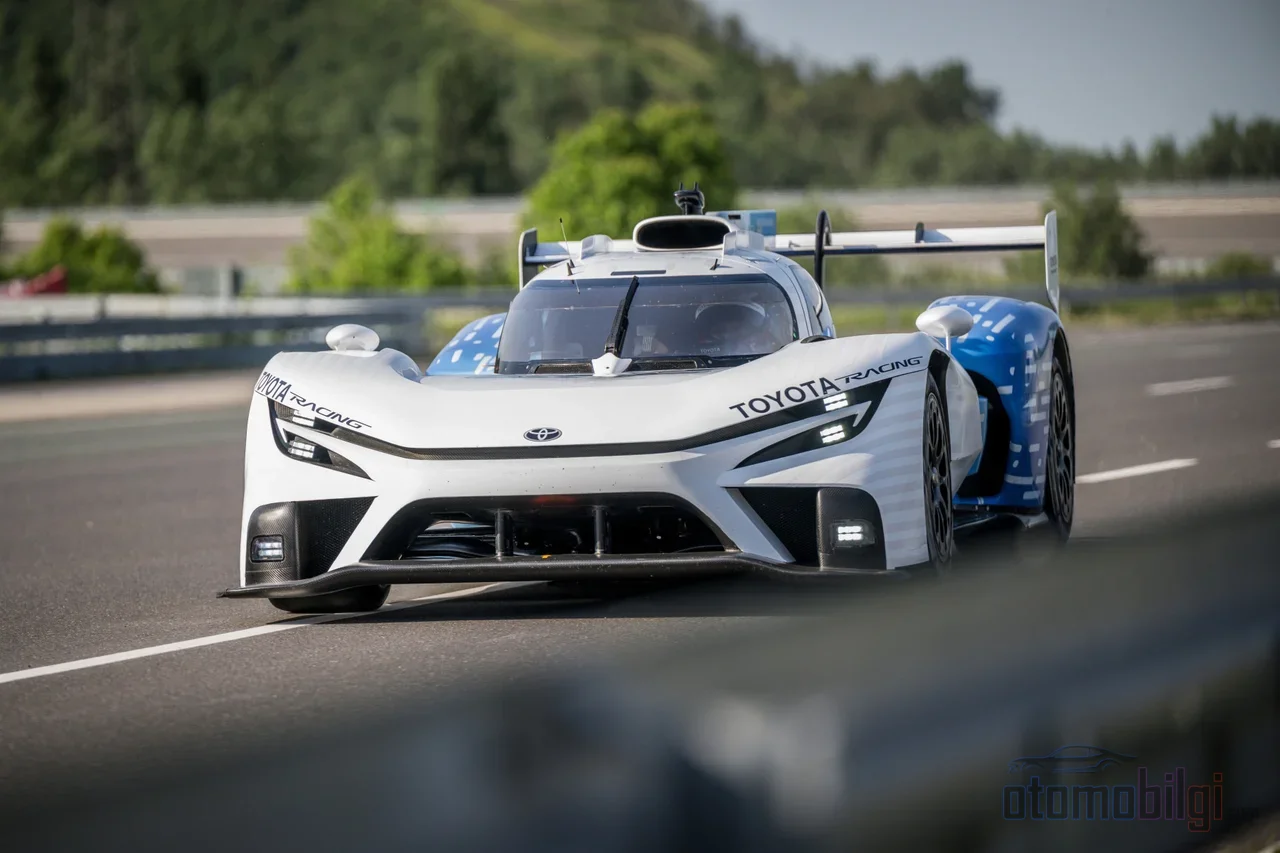
Toyota didn't give up and wholeheartedly entered the hybrid era. In 2012, the TS030 Hybrid was one of the first hybrid systems seen at Le Mans; that year one car crashed out, the other retired with a technical issue, and in 2013 it was 2nd. and 4th. came. Then the TS040 Hybrid took the stage: Over 1,000 horsepower of power, four-wheel drive, pole position in 2014 and long spells in the lead... until a wiring issue ended the race. The sister car finished 3rd. managed to. In 2015 the results were 6th and 8th. was recorded.
2016: The Most Painful Final Straight in Automotive History
Now here's the scene I really want to tell you about. The new TS050 Hybrid arrived with a twin-turbo V6 and the 8 MJ lithium-ion hybrid system. In the 21st hour, Toyota #5, Toyota #6 and a Porsche were all on the same lap. With one hour left, #5 was 30 seconds ahead of the Porsche, and with 3 laps to go the Porsche had to pit. So whether you did the math or not, victory was in Toyota's pocket.
With 5 minutes left in the race, #5 slowed down. On the final straight... it stopped. Imagine: leading for hours, millions of people watching on screen, you're about to win - and the car abandons you right before the final corner. The fault was later officially announced: a technical defect in the air line connector between the turbo and the intercooler had caused the loss of turbo control. A connector. It sounds funny, but I think Le Mans' entire philosophy is hidden in that sentence. Porsche won; Toyota #6 finished 2nd. became. Even more painful: #5 didn't even make it into the classification because it failed to complete the final lap in 6 minutes. It was officially counted as 'did not race.'
In 2017, the TS050 set the fastest Le Mans lap of all time: 3:14.79. But both cars failed to finish, and the remaining car finished 9th. and later rose to 8th through subsequent disqualifications. later rising to 8th through subsequent disqualifications. A speed record but no victory.
2018: 2018: Historic Victory on the 20th Attempt, and What Followed
In 2018, the 86th At the 24 Hours of Le Mans, on Toyota's 20th attempt, it finally happened: a 1-2 finish with the #8 and #7 cars and the historic first victory. Names like Sébastien Buemi and Kazuki Nakajima were in the driver's seat - considering Nakajima's father's connection to this story with the 85C in 1985, even the story's ending has a special charm. So what changed? Every component on the TS050 was reviewed, with the biggest change being the weight reduction of the battery and cooling system. An 'improved reliability' target for the 1,000-horsepower hybrid powertrain... The victory brought what followed with it:
The victory also brought what followed with it: In 2019, it was 1-2 again - but there was again a heart-racing moment; a blown tire about to carry the #7 to victory in the final hour, and #8 and #7 swapped places (Let me tell it all: luck was finally on Toyota's side this time.) In 2020, the #8 (Buemi/Nakajima/Hartley) won for the third consecutive time, and in 2021, at the start of the Hypercar era, Kamui Kobayashi took the first pole and Toyota's fifth consecutive pole with the GR010 Hybrid while the team celebrated its fourth consecutive victory. In 2026, the 94th edition, Toyota reached its sixth Le Mans victory with a 'textbook' strategy - its first since 2022.
Is Le Mans Really This Difficult?
In short: yes, and the reason isn't just the distance. The circuit is about 13.6 km long and the race is held in June - meaning you go through daytime heat, night coolness, rain, traffic, pit stops, and driver changes. Cars can reach up to 366 km/h on the straights; in 1988, when a car hit 407 km/h on the straight, the organization had to add chicanes for safety. Surviving 24 hours at these speeds is not a simple 'wait' like leaving your phone on the charger; the engine, gearbox, tires, and even the tiniest hose connector can become the hero or the killer of the scenario.
In the Hypercar era, Balance of Performance rules came into play: top speed is now regulated, lap times are about 10 seconds slower than the old LMP1. That's why Toyota also shifted its focus from pure power to reliability and drivability. So now everyone is playing not a 'sprint race' but a test of patience.
What Does Toyota's Story Teach Us?
I think this: speed opens the door, but what you need to hold on to until you get inside is endurance, and a bit of luck. The TS010 set records but didn't win, the GT-One swept qualifying but didn't win, the TS050 did everything in 2016 and still didn't win - then the same car, in 2018, became champion with reliability work. With four consecutive victories and six total wins, today's Toyota gives the most beautiful answer to the question 'why couldn't it win for years?': because it never gave up. Do you think such a long wait was worth it? In Toyota's garage, the answer is clearly 'yes'.
Sources
- History of Toyota's Le Mans race cars
- The History of TOYOTA at Le Mans
- Finally Victory in the 20th Attempt
- Toyota at Le Mans - ECURIE
- The #5 Toyota's breakdown in the last lap explained
- 2016 24 Hours of Le Mans - Wikipedia
- 2018 LMP1 Toyota TS050 - RaceCar Engineering
- Toyota takes its sixth victory at Le Mans
- 24 Hours of Le Mans - Wikipedia