How Is Balance of Performance Determined at Le Mans?
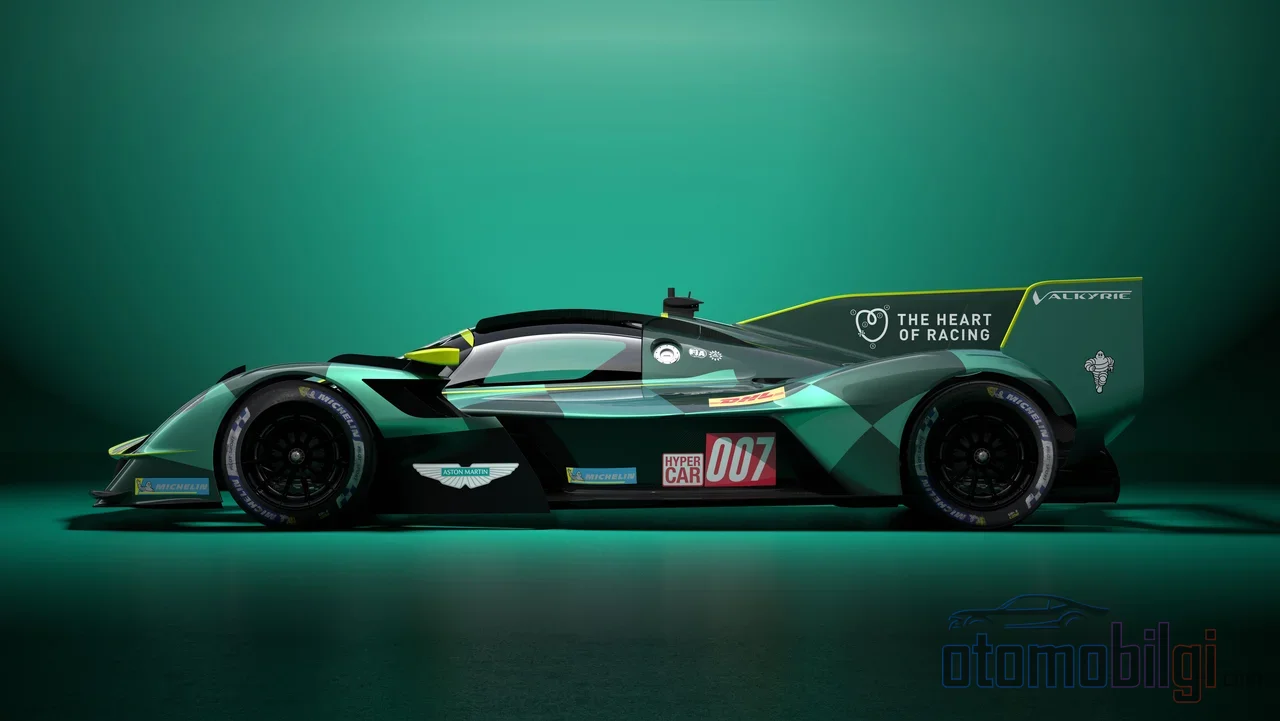
Think about it for a moment: Ferrari's engine is completely different, Toyota's is built on another architecture, while Porsche's and Cadillac's cars are produced to a common set of rules. They all share the same goal, yet their approaches are wildly different. So if all of these can race neck and neck in a single grid, how does the magic happen? The answer to that question lies in a three-letter formula: BoP, or Balance of Performance. In the hypercar era of the 24 Hours of Le Mans, almost nothing would happen without this system - yet most new viewers don't know exactly what it does. Let's break it down together, and I bet you'll find it far more interesting than you expect.
What Exactly Is Balance of Performance?
BoP is a balancing mechanism determined jointly by the FIA and the ACO. Its basic logic is this: to bring vehicles with different designs and architectures closer together through technical adjustments to weight and power. Think of it, in a way, as putting Ferrari's 499P, Toyota's hypercar and the Cadillac V-Series.R on the same scale and trimming a little here, adding a little there until the scale balances. If your classmates prepared for the exam with different curricula, set the exam questions so that everyone has an equal chance.
This system plays a key role in the Hypercar and LMGT3 regulations, and the results are tangible. Once a similar level of performance is achieved across all cars, manufacturers' development costs drop significantly - which keeps the grid full. In 2024 there were 14 manufacturers on the grid; a number that would have been unimaginable in a prototype class without cost control.
But be careful: Just as important as what BoP is, is what it is not. The system; was not designed to erase the differences between two cars from the same manufacturer, to cover up a competitor running excessively slowly, or to substitute for operational factors such as tire management, driver skill or pit time. In short, it aims to balance performance potential on the assumption that every car is used to its maximum; the rest is the job itself, out on the track.
Highlights
- Under the Hypercar rules, maximum power is held at 671 hp, with minimum weight at 1030 kg.
- BoP works in three stages: homologation parameters, platform equivalence and manufacturer compensation.
- Le Mans' BoP is based on the previous year's Le Mans data; it doesn't have to be identical to the Spa BoP.
- From the 2026 season onwards, all BoP data began to be kept secret.
- Power modulation above 250 km/s is a balancing tool unique to Le Mans.
How Does the Hypercar BoP Work in Three Stages?
It isn't possible to explain the system in a single move, because the FIA and the ACO's process has three layers. Each layer solves a different problem and comes into play in sequence. Let's go step by step:
- Homologation parameters: The cars are examined, measured and put through the wind tunnel during homologation. The FIA and the ACO start by balancing these technical specifications. In fact, Hypercar homologation is carried out within a very narrow aerodynamic performance window; meaning the cars are very close to each other before the balancing process has even begun.
- Platform equivalence: There are two different rule sets in the Hypercar class. One is LMDh, based on common parts, and the other is LMH, which gives manufacturers more design freedom. Platform equivalence is applied to all cars of the same type, taking into account the performances of the best LMDh and the best LMH-type cars. That is the bridge between two different worlds.
- Manufacturer compensation: Using data collected during the race, each manufacturer's individual performance is taken into account. These compensations are deliberately applied with caution and only come into play when the data is considered solid enough. That's why it can sometimes take several races.
The raw material of all this is data: homologation files and performance information recorded on track in the WEC with various sensors and gauges. So BoP is not an instant decision; it is a living system built on a continuously flowing stream of data. And precisely for that reason, let's say right away that it is not a perfect science - measuring cars of different concepts with the same ruler is genuinely difficult.
Why Is Le Mans' BoP Different From Other Races?
This is where the details get interesting. The Le Mans Hypercar BoP is based on data taken from the previous year's Le Mans race. So it does not have to be directly linked to the BoP from the 6 Hours of Spa. They approach the 24 Hours' unique track with its own data - makes sense, right? Moreover, in 2024, thanks to the analyses and the restrictive nature of the technical regulations, the BoP was kept to a minimum: only homologation parameters were corrected, and no platform or manufacturer compensation was applied at all.
One technical move introduced that year was also noteworthy: differentiated power at low and high speeds. In short, they balance top speeds by modulating the power delivered above 250 km/h; without the need for excessive weight or power adjustments. You can think of it as adjusting throttle response according to driving character. Rather than pushing a car too far ahead in the very fast sections of the track, it equalizes the field by intelligently reducing power in the full-speed zone.
Technical Limits: Power, Weight and the Aerodynamic Window
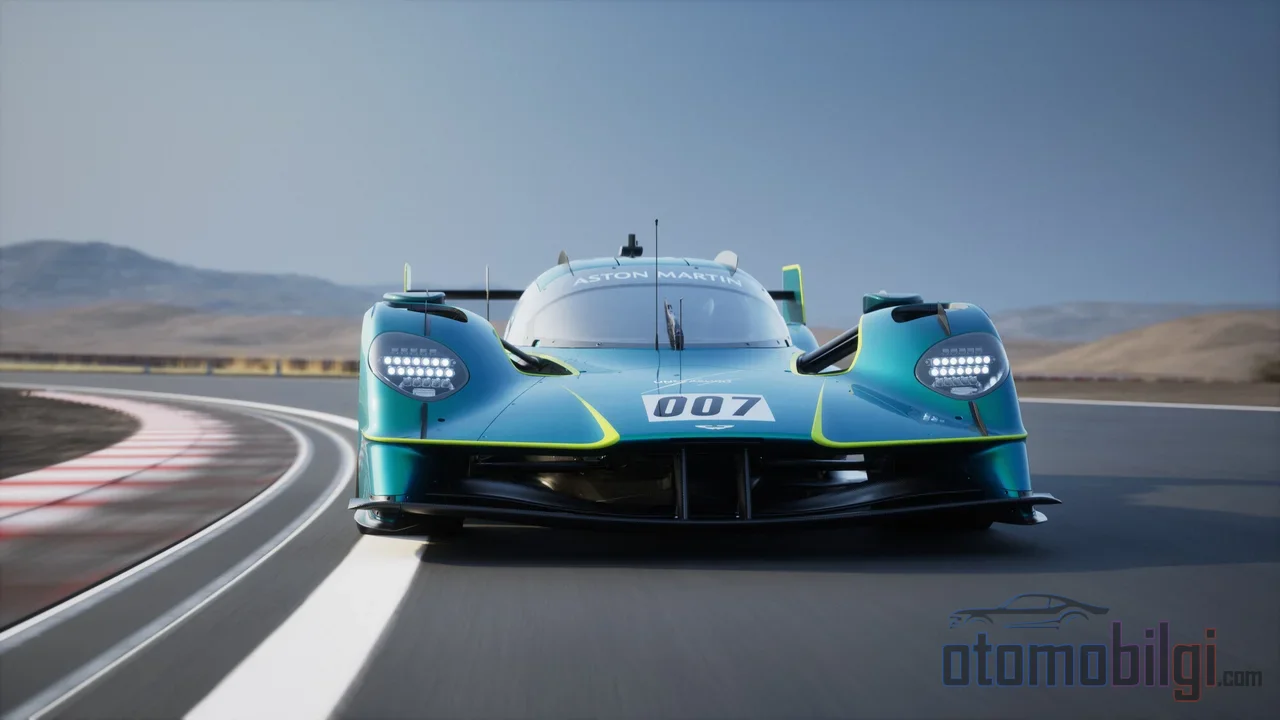
The area in which the BoP can play is not empty either; the rules have long since drawn the frame. According to the current Hypercar technical regulation, maximum power is 671 hp and minimum weight is 1030 kg. For comparison: Under the 2021 rules, the minimum weight was 1041 kg and power was limited to 500 kW; at the time, that limit had been raised by 7 kW (about 9 hp). So the framework has evolved over the years with small touches, but has always remained narrow.
On the aerodynamic side, the situation is as follows: teams are given design freedom within a "performance window," but the boundaries are sharp. Only a single adjustable aerodynamic device (such as a wing or flap) is allowed. The reason moving aerodynamic solutions are so restricted is also clear: cost concerns. If you consider that the purpose of BoP is to limit the development race, it is no surprise to see the same philosophy continues in aerodynamics.
| Parameter | Current Value | 2021 Rules |
|---|---|---|
| Maximum power | 671 hp | 500 kW limit, raised by 7 kW |
| Minimum weight | 1030 kg | 1041 kg |
| Adjustable aerodynamic device | Only 1 | Only 1 |
| Power modulation above 250 km/h | Available (from 2024) | None |
How Do Different Concepts on the Grid Race Under One Roof?
Ferrari, Toyota, Porsche, Cadillac... Each has a different approach, and BoP is exactly what makes this diversity possible. Concrete examples clearly show how the system works: In one BoP revision, Toyota's and Ferrari's LMH cars received weight increases of 37 kg and 24 kg respectively, while 11 kg was added to the Cadillac V-Series.R. In another example, Ferrari lost 9 kW of maximum power below 250 km/h while Cadillac's power increased. There are also differences in energy allocation: Toyota received 4 MJ of extra energy, while Ferrari earned 2 MJ and Cadillac 1 MJ of additional entitlement.
Let us also add a small warning: some of the kg, kW and MJ values of this kind are based on reports from expert circles rather than official announcements; therefore it is best to read them not with millimetric precision, but as examples illustrating the logic of the system. Still, the table is there for all to see: on one hand weight is added, on the other power or energy is given. The officials are also cautious not to upset the balance - WEC openly announced that BoP changes for cars slower than the average would be made more slowly; no change can be expected in favor of a struggling manufacturer. In addition, on the LMGT3 side a weight handicap based on championship standings is added to the process - except for the 24 Hours of Le Mans.
BoP Criticisms: Does the System Really Work?
Now let us enter the debate, because there is not a day when BoP is not talked about. The most common criticism is this: the system cannot eliminate the habit of deliberately appearing slow in a hypercar, known as "sandbagging". What we call sandbagging is teams trying to gain an advantage in BoP by hiding their true potential. Some also think it does not encourage development, and the old days when innovation was rewarded are missed. These are fair questions; since the process cannot rely entirely on accurate data, every decision contains an interpretation.
But on the other hand, there is another side to the coin: when BoP works acceptably, it has been shown that 7 different cars can be balanced against each other. Moreover, Ferrari announced it was surprised that rivals rejected the proposal to remove BoP entirely - so we see that even removing the system is not something everyone wants. In the 2025 season, one of the loudest critics came from Toyota's technical side; meaning that sometimes winners and sometimes losers alike can complain about the system. It is precisely for this reason that BoP is both a necessary and a controversial tool: no one can guarantee perfect balance, but without it there would be no balance at all.
2026 Season: Secret BoP and the Current Picture
So what is the situation right now? For the 2026 season, the FIA and ACO made a radical decision: all BoP data is being kept secret. Plans for a simplified single Hypercar ruleset and a new BoP collection method, tied to the revised BoP system that caused frustrations in the top category, gained momentum. The aim is to reduce BoP debates from dominating the race agenda - the governing body believes too much time is being spent on this topic. So it is now almost impossible to know in advance how much weight each car is carrying; the lap time table is the only source of truth.
The picture ahead of the 2026 Le Mans was interesting too: Toyota's LMH as well as BMW's, Cadillac's V-Series.R and Alpine's LMDh cars had gone through aerodynamic updates, and seven cars were thought to make the race one of the hardest to predict in recent years. The result, however, turned expectations upside down: Ferrari's Le Mans winning streak came to an end in this race, and Ferrari stated from the very first day of the race that the field was unbalanced. This further fueled the BoP debate. Perhaps that is why a major change is being discussed behind the scenes: Accelerated by the revised BoP system that caused disappointments in the top category, plans for a simplified single Hypercar rule set and a new BoP collection method are gaining momentum.
Conclusion: The Short Answer on the BoP System at Le Mans
Let's summarize. Balance of Performance is a three-stage balancing system in which the FIA and ACO adjust the power, weight and aerodynamic restrictions of hypercars based on homologation data and sensor data collected from the track: first homologation parameters, then platform equivalence between LMDh and LMH, and finally data-based manufacturer compensation. As a Le Mans-specific rule, the previous year's race data is used, and power modulation above 250 km/s balances top speeds. It is not perfect; its controversial aspects led to the data being kept completely secret in 2026 and to single ruleset plans. But this is also true: thanks to this system, completely different concepts like Ferrari, Toyota, Porsche and Cadillac can race head to head on a single grid. In my opinion, this trade-off is worth it - what do you think?
Sources
- What is "Balance of Performance"?
- How does the Balance of Performance (BoP) work?
- Balance of performance
- Le Mans Hypercar
- Le Mans Hypercar explained
- Power Gain Added in Le Mans Hypercar BoP
- WEC Outlines Revised Hypercar BoP Process
- Ferrari "Surprised" Rivals Rejected Proposal to Scrap BoP
- Even by Le Mans standards, this year's event will be one for the books
- Plans for a streamlined single Hypercar ruleset and tweaked BoP gaining momentum
- Why the 2026 Le Mans 24 Hours looks like the hardest race to call
- Ferrari says Hypercar field was "unbalanced" from Day 1 at Le Mans
- Le Mans' BoP secrecy
- Le Mans Hypercar rules and specs