How Does the WEC Hypercar Carry on the Legacy of Group C?
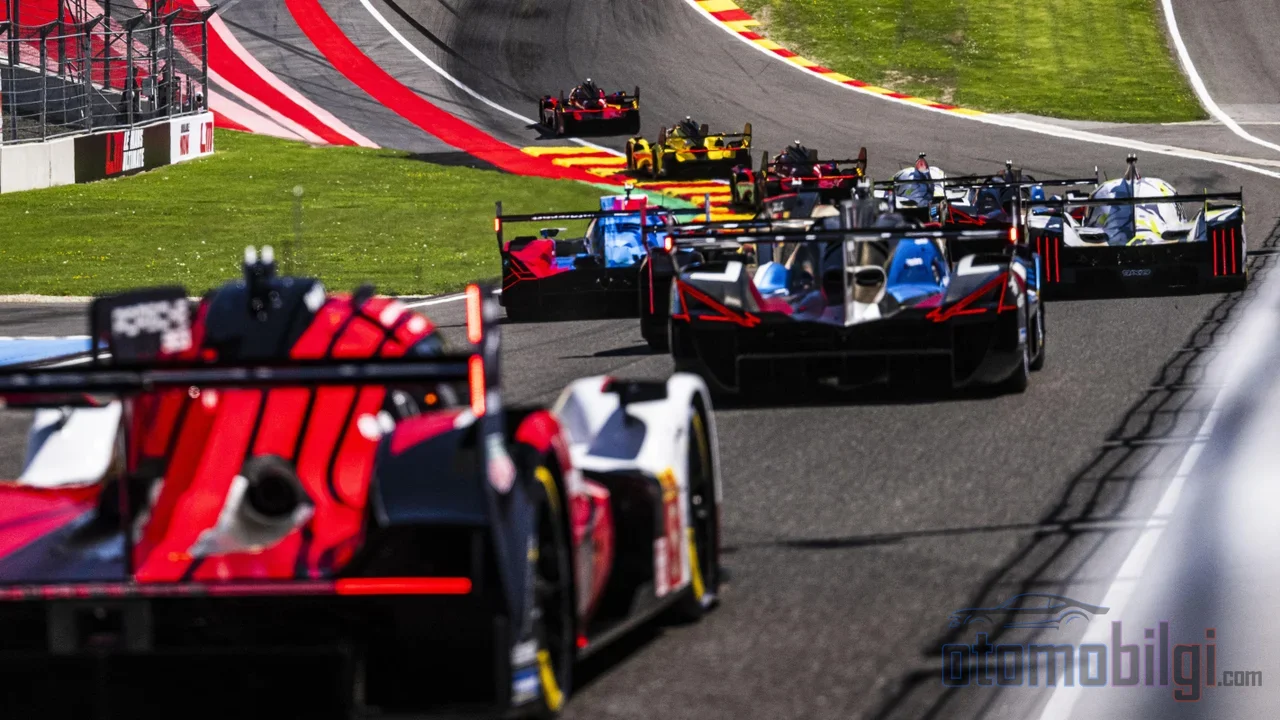
In the mid-1980s, during the night hours at Le Mans, as a Porsche 962 tore down the Mulsanne straight at speeds exceeding 350 km/h, the only thing on the pilot's mind wasn't the throttle, but the fuel gauge. Those cars didn't decide on their own how fast to go; how far they could travel on a given amount of fuel was written into the rulebook. Forty years later, the pilots in the 2026 season's Hypercars are doing a similar calculation. A coincidence? Absolutely not. Today's WEC Hypercar class, when you look at its philosophy rather than its rule lines, is the direct descendant of the 1980s Group C prototypes.
But where exactly does that connection lie? On this page, we will build that bridge step by step: first Group C's formula of efficiency, then how the category collapsed, followed by the path leading from the LMP1 era to the Hypercar switch in 2021. We will also treat machines like the Ferrari 499P, Toyota GR010 and Porsche 963 as present-day evidence of this story.
What Is Group C: The Category That Limited Power Through Fuel
Group C was born in 1982 from an agreement between FISA, the FIA's race governing arm of the time, and the ACO, the organizer of Le Mans, and the idea remains surprisingly modern even today: instead of limiting the car's power piece by piece, limit the amount of fuel it can use over the race. In other words, no matter how powerful the engine, its "allowance" was fixed. Power was, in theory, constrained by the fuel the car could use in an endurance race.
Another clever aspect of the formula was that it opened its doors to everyone. The new class was for pure, closed sports prototypes; you didn't need to build a road-going car to compete. Turbocharged, supercharged, naturally aspirated, free-block or bespoke racing-unit engines were all allowed under the rules. At the end of the 1970s, sports car racing was in a serious slump (manufacturer interest was nearly zero even with two separate world championships in 1976-77), but this formula launched a new golden age.
What Was Inside the 1982 Rules?
Looking at the numbers, it's clear how strict an engineering discipline Group C demanded:
- Minimum weight: 800 kg (without fuel, without driver)
- Maximum fuel capacity: 100 liters
- Fuel allocation: effectively 600 liters per 1000 km
- Maximum length 480 cm, width 200 cm, height 100-110 cm
- The fuel tank had to be inside the chassis, within 65 cm of the longitudinal axis
In the years that followed, the rules kept evolving: In 1983, the smaller C Junior (later C2) class arrived with 700 kg / 55-liter parameters; In 1985, the fuel allocation for C1 dropped to 510 liters per 1000 km, and to 330 liters for C2; In 1987, exotic fuel blends like toluene were banned. The rulemakers' target was always the same: to turn a race of speed into a race of efficiency.
Highlights
- Group C was born in 1982: it was an efficiency formula where power was limited by fuel allocation
- The category closed in 1994; a long gap began in top-level prototype racing
- The Hypercar (LMH) class replaced LMP1 in 2021 and targeted a reduction in costs of approximately 80%
- Current Hypercar regulations: maximum power 500 kW, minimum weight 1030 kg
- The rule set was extended through the end of 2032
Ground Effect, Customer Cars and the Golden Age of the Category
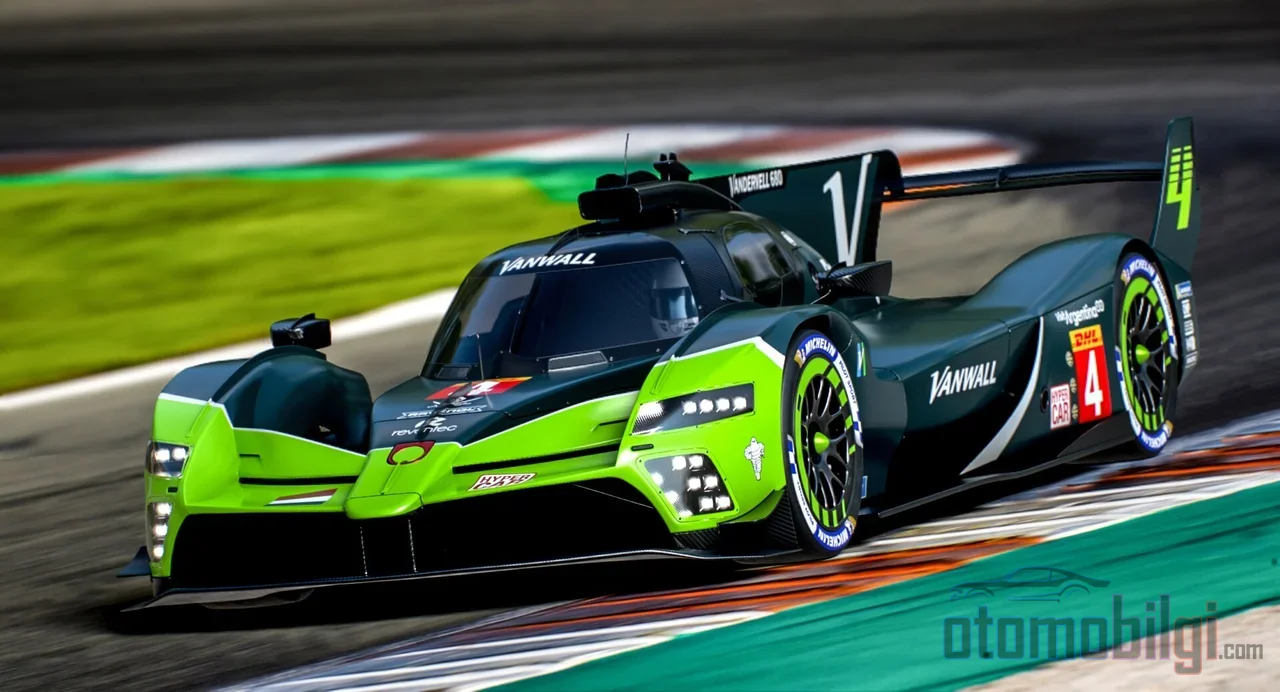
Group C's technical heart was ground effect. Air passing underneath through Venturi tunnels pressed the car to the ground as if screwed down. The rules strictly defined the maximum height of the tunnels and body dimensions; the 100x80 cm flat reference plate placed behind the front axle existed so that the aerodynamic profile could be inspected. The Porsche 956 and its long-wheelbase version, the 962, became the most famous representatives of this philosophy: a 3.0-liter fully water-cooled flat-six twin-turbo engine, up to 700 PS of power, and overall Le Mans victories in 1986 and 1987. The story of those cars was the union of aerodynamic efficiency and mechanical durability in a single package.
The commercial genius of the formula was also fascinating: Porsche sold its top-level prototype to customers. This is how Joest Racing found its 1984-85 Le Mans victories, and teams like Brun Motorsport and Richard Lloyd Racing found the chance to race alongside the factory squads. The Jaguar XJR series brought the championship in 1987 and, in 1988, the first Le Mans victory since 1957; Mercedes-Sauber's participation made the grid even stronger. In short, the fuel restriction had grown both engineering and competition.
This brilliant era also had a dark side worth recording: Manfred Winkelhock, 1984 world champion Stefan Bellof and Jo Gartner lost their lives in crashes in their Porsches within a period of roughly 10 months. Those years were both fascinating and merciless.
The Collapse: The 3.5-Liter Rules and the Book Closed in 1994
So how did a category that looked so healthy die? The short answer: the rules abandoned the formula itself. The switch to the 3.5-liter engine formula that began in 1990 and became dominant in 1991 cost the manufacturers, starting with Porsche, their support. According to many observers, this transition was made with the intention of attracting more manufacturers to Formula 1; in the end the grids melted away and the World Sportscar Championship came to an end at the close of 1992. An ironic footnote: the final cars of the closing category, the XJR-14 and Peugeot 905, occasionally approached Formula 1 lap times and entered among history's most striking prototypes.
Group C was officially closed in the history books in 1994, and that year's Le Mans became an example of the uncertainty of prototype racing: the old Group C cars were either worn out or relegated to museums. Yet the category left behind a farewell gift. The Dauer 962, based on the Porsche 962, earned the right to race in the GT class through homologation and won the 1994 Le Mans, delivering Porsche its 13th victory. This final victory by a Group C prototype in the closing year was proof of how alive the legacy remained.
The Gap, LMP1 and the New Door Opened in 2021
After 1994, top-level prototype racing entered a gap spread over roughly four decades; The LMP1 era was the most serious attempt to fill this gap, but its philosophy was different. In LMP1, engine performance was essentially limited by the fuel flow cap: 80 kg per second for hybrid machines, 108 kg for non-hybrids. So efficiency was still being talked about, but the giant-budget factory projects had turned into a technology race.
In early 2021, the Le Mans Hypercar (LMH) class replaced LMP1, aiming to cut costs by roughly 80% and attract a wide range of manufacturers. On May 11, 2020, the FIA lowered the maximum power to 500 kW (approximately 670 hp); the current regulations specify 500 kW of power and a minimum weight of 1030 kg for all Hypercar prototypes. From 2025 onward, manufacturers were required to enter at least two cars. And most importantly: these rules were extended until the end of 2032, meaning they come with a promise of long-term stability that manufacturers have not seen in thirty years.
Virtual Energy Tank: The Modern Version of Fuel Allocation
Here is the most beautiful stone of the bridge: In Hypercar, one of the tools balancing performance is the "virtual energy tank" mechanism. Although the detailed technical workings of the system are defined in the regulation texts, the basic idea is simple: each car is assigned an energy budget it can use throughout the race, and fuel flow restrictions are monitored in a way that rewards teams for efficiency. Does that sound familiar? Yes, this is the digital and hybrid-era adaptation of the 1982 logic of "this much fuel for 1000 km." The one that doesn't break and uses energy most intelligently wins; just like thirty-forty years ago.
Where Do Today's Hypercars Carry This Legacy?
Looking at the 2026 season, the picture is striking: While Hypercar drivers are awarded the FIA World Championship title, brands like Ferrari, Cadillac, Alpine and Aston Martin are present both in the WEC and in Formula 1. The Ferrari 499P is a prototype Scuderia developed for the Hypercar class, with a 3.0-liter twin-turbo V6 hybrid engine; in 2026 the Maranello team is defending both the manufacturers' and drivers' world championships, and the car's new-season livery version has already been unveiled. On the Porsche front, the Porsche 963, developed together with Multimatic with 4.6-liter twin-turbo V8 hybrid power, is in action. The Toyota GR010 is also in this group, and moreover, the fastest time at the 2025 Le Mans test day was set by Toyota.
What these machines have in common is that none of them is the "fastest single lap" car. The old truth of endurance racing still holds today: the winners are not the absolute fastest in their class, but those who don't break. It's true that the Hypercar being slower than LMP1 bothers some enthusiasts. But the same rules created an explosion of manufacturer participation after 2021; and the new regulations announced in June 2026 foresee the essential unification of LMH and LMDh and guarantee that all cars will have hybrid power.
So Does the Grandchild Resemble Its Ancestor? A Clear Answer
The question deserves a clear answer: Does the WEC Hypercar carry the legacy of Group C? It carries. Because what connects the two classes is neither body shape nor engine type, but the same philosophy: instead of restricting performance directly, it rewards efficiency through an energy budget. Group C asks the same question with a fuel allocation per 1000 km, while Hypercar does so with a 500 kW power cap, a 1030 kg minimum weight, and the virtual energy tank mechanism: how far can you go with the energy you are given?
There are differences too, and honesty compels us to say so: While Group C's technical regulations defined everything down to the micro level, from body dimensions to wheel width (maximum 16 inches), the LMH philosophy allows greater design diversity. In fact, this is exactly what prepared Group C's collapse: when manufacturers strayed from the formula, they left. Hypercar seems to have learned that lesson; the rules are fixed until 2032, costs are under control, and the grid is crowded.
Comparison of the Two Eras
| Feature | Group C (1982-1994) | Hypercar / LMH (2021-) |
|---|---|---|
| Performance limiter | Fuel allocation (1000 km / liters) | 500 kW power, virtual energy tank |
| Minimum weight | 800 kg (later 900 kg) | 1030 kg |
| Engine diversity | Turbo, supercharged, naturally aspirated, free | Evolving toward mandatory hybrid |
| Participation logic | No road car requirement, customer cars | No road car requirement, two cars mandatory |
| Rule stability | Changed frequently, strayed from the formula | Extended until the end of 2032 |
If something is missing, it is not speed itself, but its price: While Group C approached F1 lap times in the late 1980s, today's Hypercars are deliberately kept in a more balanced speed window. This is not a regression, but the result of a choice. Shrinking budgets were traded for a growing grid.
So the next time you see a Ferrari 499P passing the pit wall in the night section with fuel-strategy calculations, know this: the roots of the numbers on that screen reach back to the 1982 rulebook, and even further to a Porsche 962 pilot watching the fuel gauge on the Mulsanne straight. Despite the forty-year gap, the philosophy never died; it merely changed vehicles.
Sources
- Group C: Sportscar Racing's 1980s Boom And Bust
- Group C
- 1994 24 Hours of Le Mans
- Le Mans Hypercar Explained - FIA WEC
- WEC Regulations - TotalEnergies
- WEC | 2020-2021 Regulations - Racecar Engineering
- What do the new Hypercar regulations mean for the future of sportscar racing - Racer
- Ferrari 499P Le Mans Hypercar - Ferrari.com
- Porsche 963: Revolutionising Endurance Racing - Porsche Racing
- FIA WEC confirms 2026 calendar - 24h-lemans.com