Why Is It So Hard for a New Hypercar Manufacturer to Join WEC?
Share This Page
Joining the WEC Hypercar class is hard, because as a new manufacturer; you have to manage homologation processes, the technical regulation differences between LMH and LMDh, the development advantage of rivals that started years earlier, and the Balance of Performance system that rebalances the car from the very first metric - all at once; even the target budget for a two-car season is around 20 million Euros per season. So this is not a matter of walking in the door and saying "let's race"; it is a marathon of engineering, logistics and finance that will last years.
Highlights
- The target budget for a two-car Hypercar season is 20 million Euros per season - roughly 80% cheaper than the LMP1 era.
- The LMDh chassis is limited to only four suppliers: Dallara, Ligier, Multimatic and Oreca.
- On the LMH route, producing 20 road-legal cars is mandatory for entry.
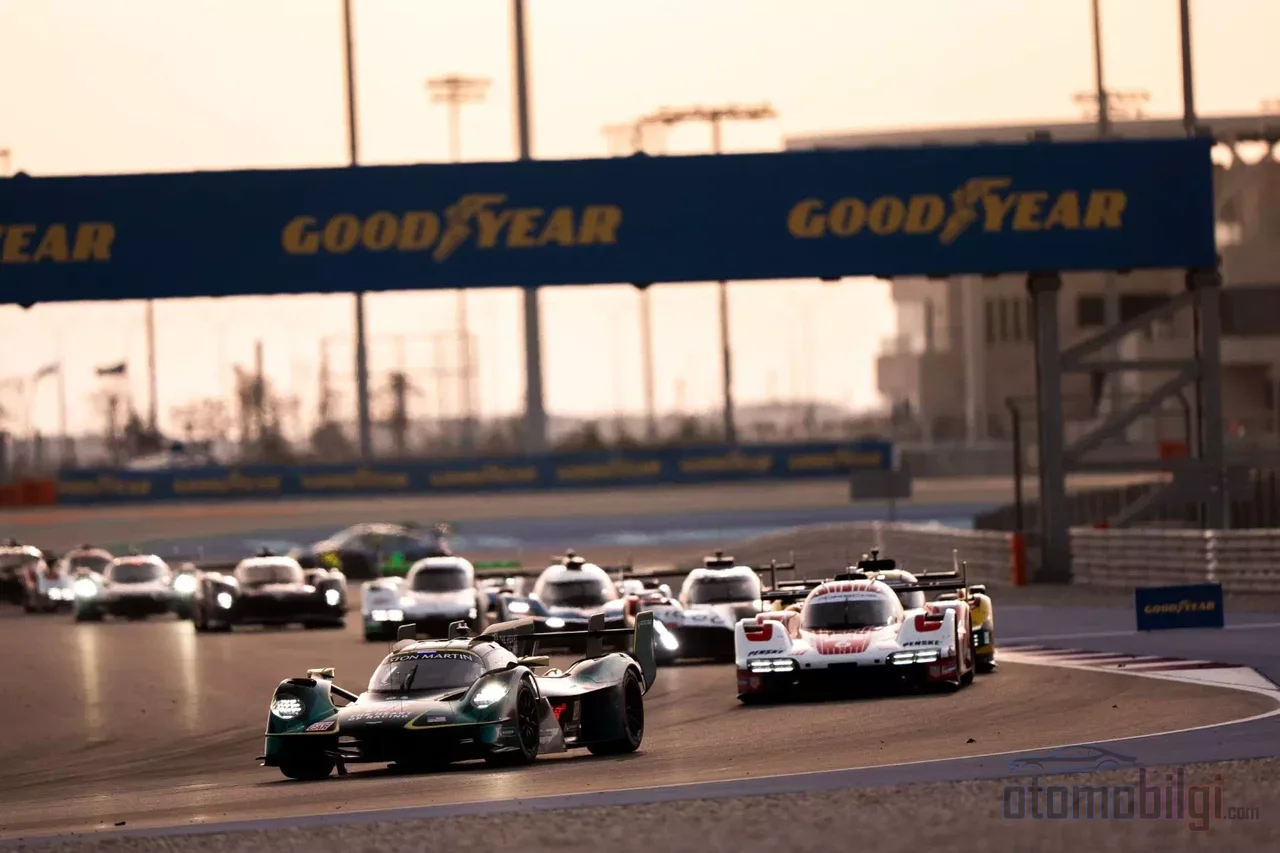
- In the 2026 season there are 14 manufacturers in Hypercar; Genesis Magma Racing made its race debut at Imola.
- Minimum weight in both classes is 1,030 kg, with a combined power limit of approximately 500 kW / 671 hp.
How does a manufacturer enter WEC Hypercar, and what is the real challenge?
Let me first explain the rule simply. There are two separate regulation doors in the Hypercar class. One is LMH, Le Mans Hypercar: valid only in the WEC and at Le Mans, far more flexible in terms of architecture. The other is LMDh, Le Mans Daytona h: a "convergent" platform jointly developed by the ACO and IMSA, capable of racing both in the WEC and in America's GTP class. LMDh was announced at Daytona on January 24, 2020, and it was born precisely because of this double-door idea - manufacturers wanted to invest money in one car and be able to race in two championships.
The real challenge is this: no matter which door you enter through, the system waiting inside pulls you toward "being the same as everyone else" from day one. Competition is not won only on the track; it can already be lost while you are designing the car, running it through the wind tunnel and defending your budget. So what exactly do these three paths - regulation, homologation and BoP - challenge newcomers with? Let's go through them all one by one.
LMH or LMDh? The real differences between the two regulations
The two are often confused, but their characters are very different. Think of it this way: they are two athletes competing in the same weight class. One (LMH) says "work however you like, but fit within this framework"; the other (LMDh) says "assemble from ready-made parts, but at least race on two continents". Here are the differences in a table:
| Feature | LMH | LMDh |
|---|---|---|
| Where it races | WEC and Le Mans only | WEC and IMSA GTP |
| Minimum weight | 1,030 kg | 1,030 kg |
| Power limit | ~500 kW / 671 hp | ~500 kW / 671 hp |
| Hybrid system | Not mandatory; up to 200 kW front or rear, 4WD possible | Spec hybrid; 50 kW on the rear axle only |
| Chassis | Flexible, may be derived from a road car | Choice from Dallara, Ligier, Multimatic, Oreca |
| Additional requirement | Regulation 19.1: production of 20 road-legal cars | Spec components (Xtrac, Bosch, Williams battery) |
Let's digest a few details. On the LMDh side, the hybrid system is entirely spec: Engine generator unit from Bosch, battery from Williams Advanced Engineering, gearbox from Xtrac. It sends 50 kW (67 hp) to the rear and kicks in above 120 kph. In LMH, there may be no hybrid at all; if there is, up to 200 kW of power can be used on the front or rear axle, meaning even an all-wheel-drive design is possible. Moreover, the LMH platform can be derived from a road-legal hypercar, or conversely you can derive the road car from the race car - of course, if you agree to build 20 road-legal cars under Article 19.1.
There are constraints in aerodynamics too: the downforce/drag ratio is limited to 4:1. Peugeot learned the hard way what this means; the striking wingless design of the 9X8 didn't work out in 2023 and the Italian team had to return to a more conventional design. So even on the LMH path that seems "free," there is a ceiling on creativity. In LMDh, with four chassis suppliers, examples are ready-made: Porsche chose Multimatic, Cadillac and BMW chose Dallara, and Alpine, Lamborghini and Genesis chose Oreca. Let me add a note for the record: when LMH was first announced, McLaren, Ford and Porsche stayed away from this path citing costs, and instead advocated bringing DPi into the WEC, i.e. convergence. Looking at where we are today, one could say the costs they feared have partially proven justified.
Homologation: The paperwork that goes through the wind tunnel
The word "homologation" sounds bureaucratic, but think of it as the car's identity check. To homologate the car, the FIA and ACO measure it in the wind tunnel, scan its body, and verify the engine performance. The aim is to prove that the car complies with the technical regulations, that the safety features are in place, and that the body can be checked with the measurement methods. In other words, they know the car not on paper, but to the millimeter.
And the annoying part: this is not just a one-time exam. According to the LMDh technical regulations, new manufacturers wishing to homologate a car in the 2022-2029 period must submit preliminary information to the ACO and IMSA from the very start. A prototype homologation is valid for at least five years; the Hypercar homologation cycle has also been extended to 2029. Additionally, with a rule change, one car of each homologated model is required to take part in an official WEC test. So you can't just say "we built the car, see you on track" - you have to declare in advance what you have done, what you will do, and who will see it on test days.
The price of this transparency is strategic: after you submit the preliminary information, rivals and the governing body know what you are preparing. It's like there's no turning back. Once you enter this path, you get approval from the budget committee and sign a five-year commitment.
Balance of Performance: Why is the newcomer balanced from the start?
BoP, or Balance of Performance, is a series of adjustments applied in Hypercar and LMGT3 that mainly affect weight and power. It exists so that cars with different designs can race equally. Sounds fair, doesn't it? But for a machine engineer, this means "here's a car carefully calibrated for you: put weight here, take power from there, to keep it in line with the others." The speed threshold that triggers all-wheel drive, minimum weight, maximum power - all of it can be adjusted via BoP. Even the lower speed limit of the LMH hybrid.
Here's the painful part of this system for a newcomer manufacturer: BoP is based on performance analysis from past races. While your car has never raced yet, you're placed "on a guess" alongside Ferraris, Toyotas and Porsches that have been collecting data for two years. To make the process more transparent, the WEC announced a revised Hypercar BoP process in February 2024, including track testing - but manufacturers' dissatisfaction with the system didn't end, and it was said that some brands were even considering withdrawal. And here's the absurd but true part: A decision was made to keep the BoP tables secret for the 2026 championship. So now you don't even know exactly how heavy and powerful your rival is running. Being the new student in a class where homework is hidden… that would be tough, in my opinion - what do you think?
It's possible to see just how subtle a weapon BoP is by looking at Toyota's GR010: Despite being 17% heavier and 32% less powerful than the 2019 TS050 Hybrid from the LMP1 era, the lap gap at a short circuit like Spa remained under 2 seconds. BoP really pulls the class into a deadly monotony - which is both an advantage and a curse.
Budget: How "cheap" is 20 million euros, really?
Now comes the part where hearts race out of control. The FIA and ACO set the revised budget target for a two-car season at 20 million euros per season. The figures previously discussed ranged between 28.7 and 34.4 million dollars; so the target has genuinely been brought down. According to the ACO's comparison, running two hypercars is 80% cheaper than LMP1. On the LMDh side, there's a figure of around 349,750 euros for the car itself - but careful, that's a price excluding the internal combustion engine. No official budget limit has been announced for LMH; the price of flexibility is uncertainty, of course.
To put these figures into perspective: 20 million euros means the salaries of dozens of engineers, worldwide transport logistics, a testing program and development rounds. And that's the "discounted" price. If we remember that in the LMP1 era a single season's operating costs ran to far higher figures, the rule writers have achieved something - but it's still a massive factory budget. Moreover, the biggest financial advantage of the current manufacturers isn't the budget, it's accumulation: When Ferrari won the 2023 Le Mans with a historic victory over Toyota, they had years of development data behind them. A newcomer doesn't have the same data accumulation on the day it joins the race.
Alpine, Cadillac, Genesis: Lessons for the newcomers
Let's leave theory aside and look at practice. Cadillac entered WEC Hypercar in 2023 with the Dallara-chassied V-Series.R and immediately showed how serious the class is, taking a third-place finish in its first season and a second place in 2024. It is ambitious enough to bring three cars to Le Mans in 2026. Alpine, meanwhile, is on stage with two cars, its A424 prototypes powered by a 3.4-liter Mecachrome engine; since it too is an LMDh user, it took its chassis from Oreca. You see, the question of "which chassis, which of the four suppliers" is not asked in vain.
The freshest example is Genesis Magma Racing. The Korean brand's GMR-001 is based on an Oreca chassis and made its WEC debut in 2026 at the 6 Hours of Imola. Its team includes French engineers with Oreca chassis development know-how; in other words, they have brought people who know the job into the organization. The No.17 car is driven by names like André Lotterer, Pipo Derani and Mathys Jaubert. But what is interesting is their goal: for their first season, they want to "build a strong foundation"; their Hyperpole appearances, lead-lap finishes and pace-based top-five battles are being talked about as the targets. In other words, they are not even talking about the championship - which is the very essence of a realistic roadmap for a new manufacturer. It is known that they found the first race weekend encouraging, and they emphasized that the Hypercar class is incredibly competitive and the cars are very close.
The overall picture is much the same: With Genesis joining, the Hypercar class has reached about 20 factory cars, and there is talk of the grid growing to as many as 42 cars. Porsche pulling out of its WEC program with Penske in 2026 shows the class's turnover - entries and exits are constant. Ford and McLaren are joining Hypercar in 2027; remember, McLaren was once one of the biggest opponents of the very idea. When the irons truly cool down, everyone comes to the table.
Before 2030: What will the single-platform era change?
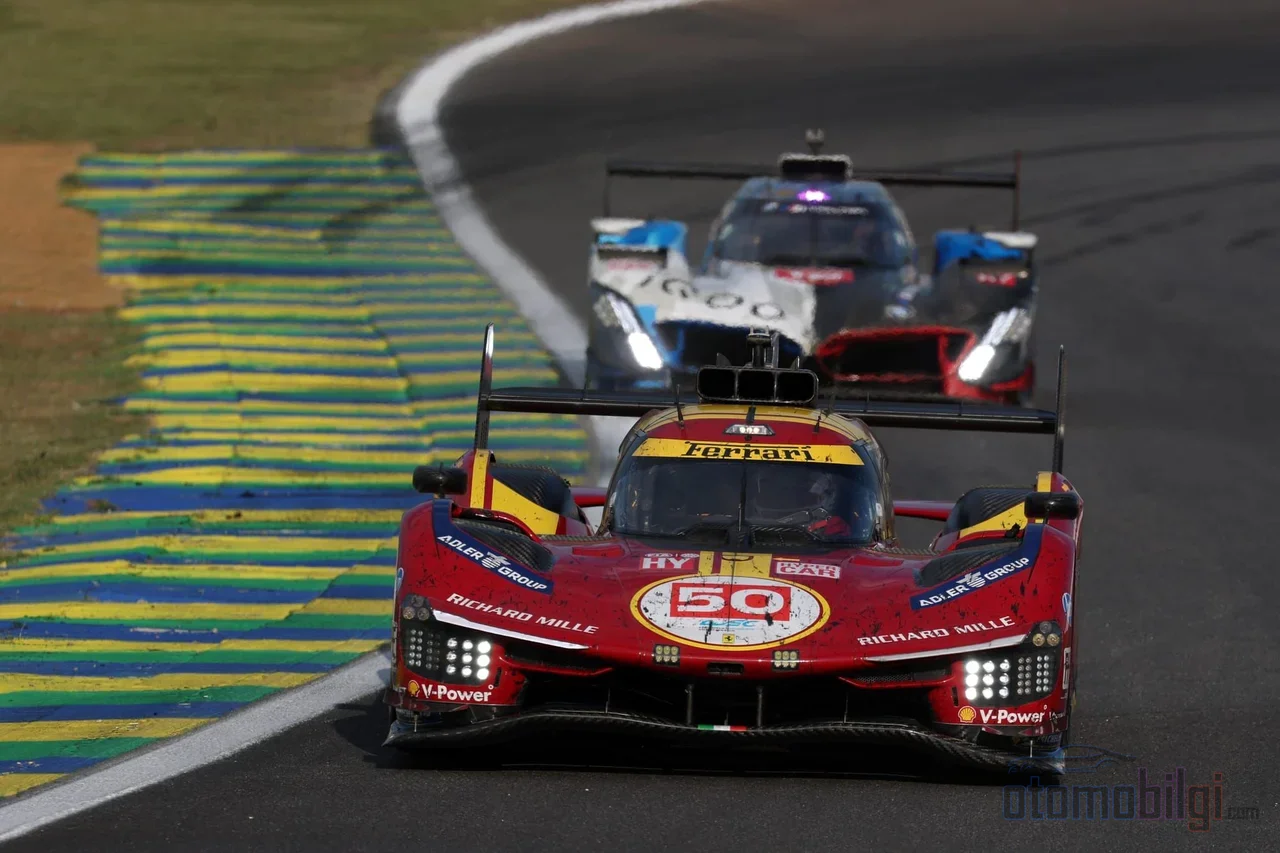
FIA WEC has announced a single technical platform for the Hypercar class from 2030 onward. The aim is to offer a stable environment to current, future and potential manufacturers. So one day the "LMH or LMDh" question may fade into history, and the barrier to entry may fall in terms of rule complexity. But every innovation raises new questions: How manufacturers that have carried a hybrid approach since the class's very beginning, like Toyota, will adapt to this single platform is being debated. Toyota has already come with a 3.5-liter V6 twin-turbo TR010 HYBRID for 2026, and the late-race retirement of the #7 car in Texas opened up the championship battle in favor of the #50 Ferrari 499P - meaning that even under the current rules, every race is a showdown.
My read is this: The 2030 platform will widen the door for new manufacturers, but that does not mean it will "make things easy." A single platform squeezes competition even further into BoP precision and attention to detail. Entering the class may technically become easier; winning will not get any easier at all.
So, is there a formula for winning this game?
Let me summarize: Entering WEC Hypercar means choosing the right regulatory door (LMDh if you want to race in two championships, LMH if you want architectural freedom), managing homologation early and correctly, accepting how BoP balances newcomers from the start, and being able to talk about a budget at the level of 20 million Euros for at least two cars. Genesis's first-season goals, in my opinion, are honest enough to be a lesson for every new manufacturer: first exist, then be strong, then win.
That's actually my favorite part. In endurance racing, victory is not won on race day as it appears; your car has already been won while it was still on the drawing board, in the hundredth configuration your rival ran through the wind tunnel. Don't you think this is an even more ruthless game than F1?
Sources
- Le Mans Hypercar: LMH and LMDh 2026 guide
- LMDh - Wikipedia
- Le Mans Hypercar Explained - FIA WEC
- What's new for WEC Season 10? - FIA WEC
- LMDh Technical Regulations - IMSA
- Hypercar Homologation Cycle Extended to 2029 - Sportscar365
- What is "Balance of Performance"? - 24h-lemans.com
- WEC Outlines Revised Hypercar BoP Process - Sportscar365
- 2026 FIA World Endurance Championship - Wikipedia
- Target budget for WEC hypercar rules slashed - Motorsport.com
- Genesis Magma Racing Reveals GMR-001 - Genesis Newsroom
- Genesis Magma Racing after FIA WEC debut - Hyundai Motorsport
- Genesis Magma Racing confirms final 2026 Hypercar recruits - FIA WEC
- Cadillac V-Series.R - Wikipedia
- Cadillac returns to Le Mans - GM Newsroom
- Single technical platform announced for Hypercar class from 2030 - FIA WEC
- WEC - Toyota Racing
- Toyota's pain is Ferrari's gain in Texan thriller - FIA WEC
- Ferrari Beats Toyota to Historic 24H Le Mans Win - Sportscar365
- WEC Hints 42-Car Grid Possible Amid Manufacturer Influx - Sportscar365
- 14 Manufacturers - FIA WEC