How Do WEC Hypercars Use Hybrid Power?
Share This Page
In WEC Hypercars, the hybrid system consists of electric units that take over part of the power produced by the combustion engine and recover energy during braking. The goal is not to produce more power: since the total output 500 kW (671 hp) is limited, the electric motor replaces the internal combustion engine's torque, reduces fuel consumption and manages the energy budget efficiently. The Ferrari 499P, Toyota GR010 and Porsche 963 apply this philosophy in three different ways.
Highlights
- The total power limit for Hypercars is 500 kW; with BoP it can rise up to 520 kW.
- The Ferrari 499P's front electric motor only engages above 190 km/h .
- LMDh cars use a standard hybrid package: Bosch MGU, Xtrac gearbox, Williams battery.
- The 2026 24 Hours of Le Mans was won by the #7 Toyota, ending Ferrari's three-year run.
Two Different Rulebooks: LMH and LMDh
Two types of cars compete together in the Hypercar class, and their hybrid approaches are fundamentally different. In the LMH category, the manufacturer develops the car itself; the hybrid system is optional and there is freedom to choose the engine's location. The Toyota GR010 and Ferrari 499P are the stars of this group. On the LMDh side, things are far more standardized: the chassis comes from specific manufacturers and the hybrid system is mandatory. The Porsche 963 is the best-known name in this group.
In LMH, hybrid energy up to 200 kW can be deployed and the system is usually placed on the front axle, making the car all-wheel drive above a certain speed. But note: not all LMH cars are hybrid; some, like the Aston Martin Valkyrie, run entirely on an internal combustion engine. In LMDh, the picture is completely different: the standard MGU developed by Bosch works on the rear axle, continuously limited to 50 kW but capable of reaching 180 kW (241 hp) of power and regeneration capacity at peak. Williams Advanced Engineering supplies the battery, and Xtrac supplies the gearbox - so in LMDh, it's not the brand of the hybrid that makes the difference, but how you use it.
The most critical point here is this: the electric motor does not increase total power. Staying under the 671 hp ceiling, it stands in for the combustion engine's torque. To think about it, here's an analogy: while climbing with your backpack, someone comes along and takes half your load. You go at the same speed but get less tired. That's exactly what the MGU does.
Ferrari 499P: All-Wheel Drive That Engages at 190 Kilometers
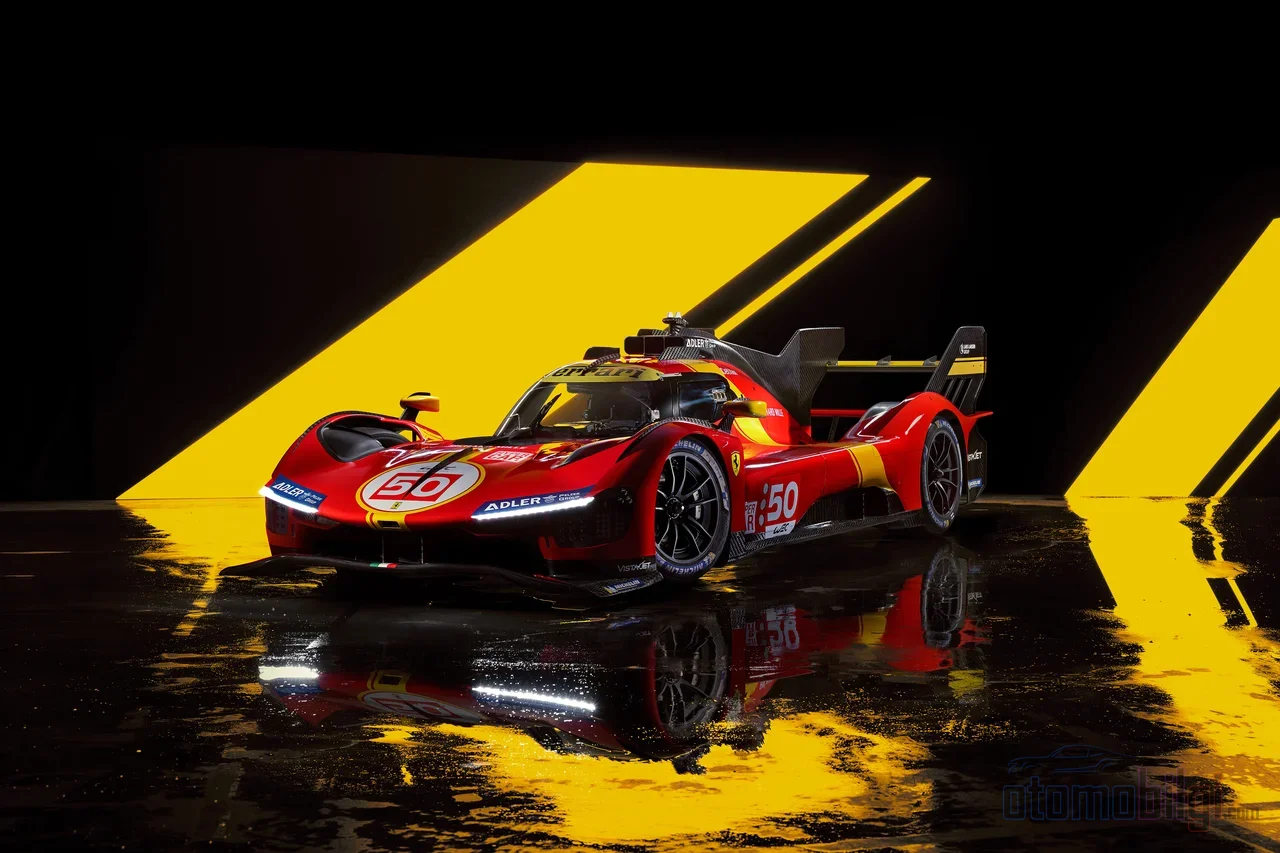
The Ferrari 499P's hybrid system is the most enjoyable to explain, because it's a textbook example of a design shaped by the rules. At the center is a twin-turbo V6, and on the front axle is an electric motor powered by a 900-volt battery, delivering 200 kW (268 hp) . This motor both drives the car and recovers energy at the same capacity during braking.
So why exactly 190 km/h? Because Ferrari's front MGU is required by the rules to operate on the front axle, and this speed is the deployment limit allowed for the 499P under the BoP system. Above this threshold, the car becomes part-time all-wheel drive. In other words, this hybrid doesn't work in corner exits - speeds are too low in corners. It only kicks in on long straights, and there it significantly reduces the load on the rear tires. The tires wear less, pit stops get longer, lap times are maintained. Clever, right?
On the technical side, there's also an inverter detail: Ferrari controls the front MGU with a six-phase inverter, and this control precision makes a difference both in efficiency and heat management. Six-phase control minimizes the heat generated in power electronics - in a car racing for 24 hours, heat is reliability's worst enemy.
Porsche 963: Standard System on the Rear Axle
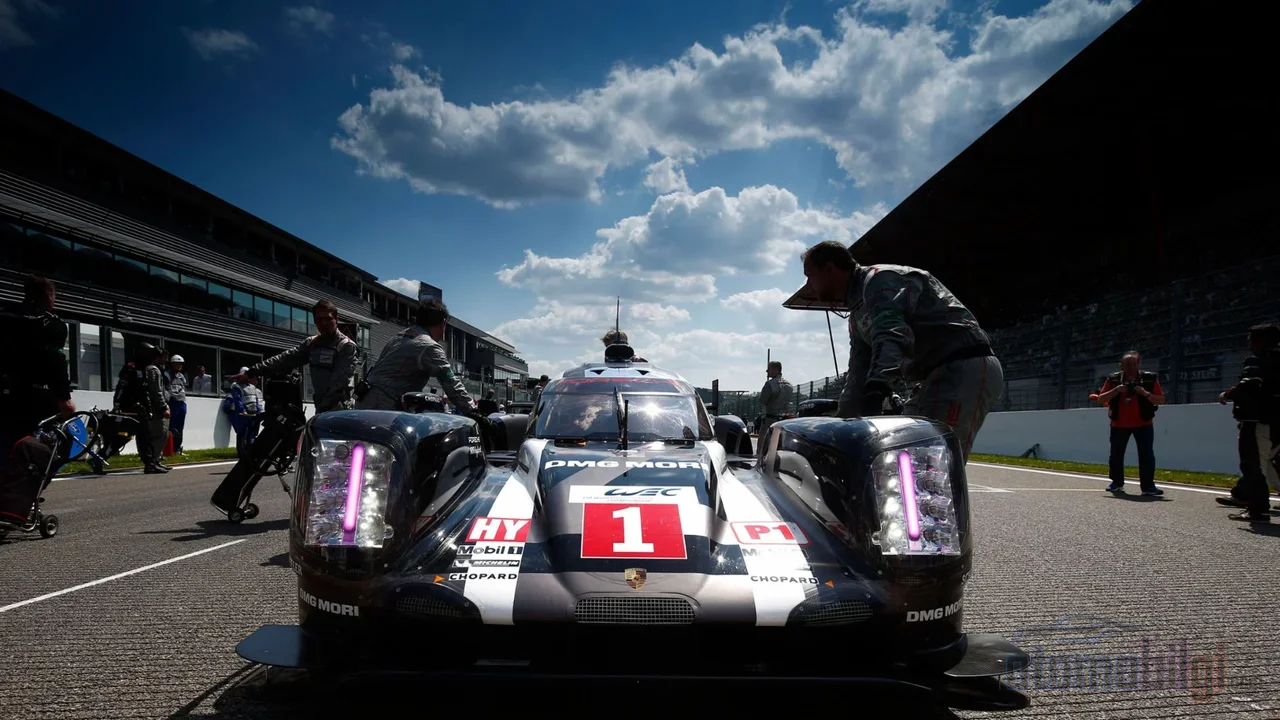
The Porsche 963 applies the LMDh category's rulebook to the letter: the MGU is on the rear axle, generating power during braking while also pumping energy back into the battery. The battery is a lithium-ion energy storage system. There's no electric motor on the front axle, so no all-wheel drive either - unlike Ferrari, this car can use its hybrid power from zero kilometers and sees it as a great tool especially for filling turbo lag.
The 963 has an interesting balance issue: the moment the MGU kicks in, the internal combustion engine's contribution is instantly reduced to respect the total power limit. In other words, the motors replace each other rather than adding up. Also, the battery's state of charge constantly changes throughout a lap - at one moment you're discharging, at another you're filling it back up with the brakes. This constant fluctuation is, from an engineering perspective, one huge management puzzle.
The historical context is also nice: Porsche's 919 Hybrid LMP1 car, by harvesting braking energy on the front axle and from exhaust gases, paved the way for the 800-volt architecture and lithium-ion battery, and this knowledge was later transferred to the road car side. The racetrack continues to be a laboratory for road car technology.
Toyota's Capacitor Legacy
Toyota is the name with the deepest experience in hybrid technology. The GR010 Hybrid was developed for the 2021 LMH rules, and the front MGU harvests energy during braking and reuses it for acceleration - an approach similar to Ferrari's. A classic detail makes the story even more interesting: Toyota used a capacitor instead of a battery in the first hybrid system it developed for racing. Capacitors discharge quickly and charge quickly but can't store much energy; this was a choice that fit perfectly with the energy profile endurance racing demands.
In 2026, Toyota is competing in the Hypercar class with the current car powered by a 3.5-liter V6 biturbo, and this car won the 24 Hours of Le Mans in June with the #7 car, ending Ferrari's three-year streak. The analysis of the race says a lot: the fastest car did not win. Toyota was unrivaled in high-downforce corners such as the Esses and Porsche Curves, and the overall lead changed 41 times; despite the pressure from the Ferrari 499P and Porsche 963, Toyota had the last laugh. The efficiency of the hybrid and chassis in the corners was more valuable than raw speed.
Energy Budget and BoP: Managing Efficiency, Not Speed
Here is the part most people miss: the hybrid exists not to accelerate the car, but to manage fuel economy. BoP tables include minimum weight, maximum power, and per-stint energy usage limits. In other words, there is a maximum allowed energy value per stint for the combined consumption of fuel and the hybrid; if you exceed this budget, you face a 100-second stop-and-go penalty. In a 24-hour race, that means turning a won victory into nothing.
Different manufacturers spend this budget differently: Ferrari devotes energy to all-wheel drive only on the straights, while LMDh cars use it to fill turbo lag and for extra push out of corners. The goal is the same: to set faster laps with the same energy budget.
| Feature | LMH (Ferrari 499P, Toyota) | LMDh (Porsche 963) |
|---|---|---|
| Hybrid requirement | Optional | Mandatory |
| MGU location | Front axle (by rule) | Rear axle |
| MGU source | Manufacturer's own design, up to 200 kW | Standard Bosch, 50 kW continuous / 180 kW peak |
| Battery | Manufacturer's choice (e.g. 900 V) | Lithium-ion, Williams |
| Total power limit | 500 kW (up to 520 kW with BoP) | |
| Role of the hybrid | All-wheel drive on straights, reducing tire load | Filling turbo lag, braking energy |
The Dark Side of the Hybrid: Reliability Risks
The hybrid system is not free. Every extra electronic component is a potential failure waiting to happen over 24 hours. Heat management is critical: even in Ferrari's inverter choice, the real issue is minimizing the heat generated by the power electronics and extending the system's lifespan. In addition, overly aggressive engine settings - such as high turbo pressure - increase the risk of engine failure. The essence of endurance racing is finding that fine line between speed and reliability. The test is not a single lap, but a journey of over 5,000 kilometers.
A change was announced in the 2026 Hypercar technical regulations that reopens the discussion of this balance: the possibility of ERS, that is, the energy recovery system, becoming optional has come to the agenda. This means manufacturers will have to make a fresh choice about whether to abandon the hybrid, and it has created debate in the paddock - some think it was done to please certain manufacturers. We will see how it turns out.
Frequently Asked Questions
At what speed does the front-wheel drive engage?
In the Ferrari 499P, the front electric motor is only above 190 km/h kicks in. In LMDh cars, there is no electric motor on the front axle at all; a standard MGU operates on the rear axle.
Does the hybrid make the car faster?
No. Since total power is limited to 500 kW, the MGU takes the place of the internal combustion engine's torque. The goal is to use less fuel with the same power and manage the energy budget intelligently.
What is the stint energy limit?
An upper limit is set for the combined fuel and hybrid consumption of each stint; this value is determined in megajoules via the BoP. Exceeding the limit brings a 100-second stop-and-go penalty.
Which approach do you think will win in the long run: a manufacturer-specific system like Ferrari's, or a standard hybrid like Porsche's? Let's meet in the comments!
Sources
- Ferrari 499P Le Mans Hypercar | Ferrari.com
- How to Get the Most Out of a Hypercar Hybrid System
- Hypercar Category (LMH & LMDh)
- Hybrid 101: Learn More about How LMDh Hybrid Power Works
- The technology of the new Porsche 963 hypercar/GTP
- RACING HYBRID [THS-R] HISTORY | WEC
- WEC - Toyota Racing
- Toyota GR010 Hybrid
- 2026 24 Hours of Le Mans
- 2026 Le Mans 24h analysis: The fastest car didn't win