How Does a Race Car Survive 24 Hours in the WEC?
Share This Page
A race car in WEC survives 24 hours with the lifespan of every part, from the power unit to the brakes, calculated from the very start, using components proven through fatigue testing and seasonal parts planning; in other words, what wins is not speed, but the car's durability engineering. In a sprint race the fastest wins, while in endurance the one that lasts longest wins, so engineers know months in advance how long each part of the car will last. So how is this calculation done? Let's take a look!
Highlights
- The 2026 WEC calendar has 8 races ; the distances range from 6 to 24 hours ranges
- On the grid, there are a total of 35 cars and 14 manufacturers in Hypercar and LMGT3
- In LMH cars, the regulation-limited maximum power of 500 kW can rise to 520 kW with BoP
- In 1999, a brake manufacturer completed the full 24-hour race for the first time without a brake change
- Hypercar budgets have fallen to roughly one third of the LMP1 era
24 Hours, One Car, and Thousands of Small Calculations
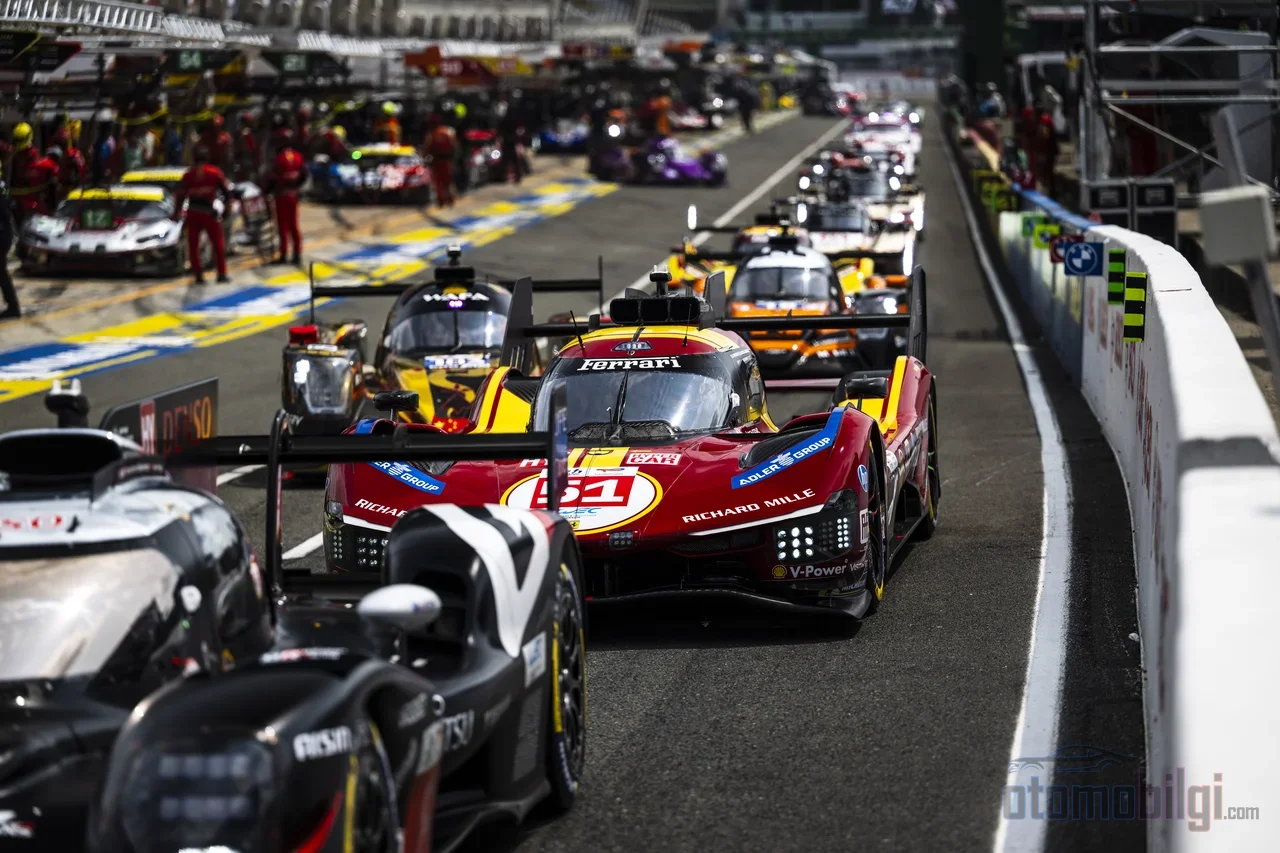
Let me set the scene first: the FIA World Endurance Championship, or WEC, is a world championship entering its 14th season in 2026. The eight-race calendar features 6, 8, 10 and 24-hour races, and the grid consists of two classes: Hypercar and LMGT3. Thirty-five cars from 14 manufacturers, including giants like Ferrari, Toyota and Porsche, battle on track for both speed and survival.
The beauty of the job here is this: a Formula 1 car can return to the garage and relax after 305 kilometers. In WEC, however, a Hypercar runs under load almost non-stop for 24 hours at Le Mans. Every vibration, every corner, every braking event on track strikes the drivetrain over and over again. Engineers test the parts in advance against these repetitive cyclic loads and measure what we call fatigue. How many cycles can the material withstand, how many laps can it complete without cracking? The car does not take to the track before the answer to this question is known. At the end of the race, the cars are covered in tire dust, brake dust and countless scratches - real battle damage - but they are mechanically sound, because everything was planned from the start.
Parts Fall Into Two Camps: Consumable or Durability Component?
The fundamental rule of parts management in endurance racing is very simple: not every part is of equal value. Short-lived items such as brakes and tires fall into the consumable category; these are parts already planned to be changed during the race. But durability components such as engine internals, the gearbox and the chassis are kept in a different category; these are expected to survive the entire race, even the entire season.
Let me give an everyday analogy: you change your phone's charging cable twice a year, but you use the phone itself for years. In a race car, the logic is exactly the same. The mechanics know when each component will be changed before the race; pit stops are strategic opportunities not only for tires and fuel, but also for these pre-calculated part changes. Under extended extreme conditions, however, any mechanical failure can end the team's entire race. That's why the car is kept alive and not deliberately worn out.
How Do Regulations Tie the Car's Hands? Homologation and Joker Cards
Here is one of WEC's least-known but most interesting restrictions: Hypercar cars are subject to homologation. In other words, you cannot touch the car without the governing body's prior approval. Making changes to the hardware is only possible by using a limited right called a joker card. You cannot look at it mid-race and say "this part is bad, let's design a new one"; every hardware change consumes an expensive and restricted resource.
But there is a magnificent flexibility here: the software can be developed throughout the car's lifetime. While the hardware stays fixed, software updates can make the engine, hybrid system and energy management more efficient. Think of it like the updates your phone receives; the box is the same but the inside is getting smarter. This rule pushes teams toward finding performance through smart software rather than taking mechanical risks.
LMH or LMDh? The Reliability Race of Two Philosophies
There are two different design paths in the Hypercar class, and this directly affects durability engineering. Manufacturers who choose the LMH, or Le Mans Hypercar, path design every component themselves; freedom is great but you have to prove everything yourself. LMDh was born for cost efficiency: one of four ready-made chassis suppliers (ORECA, Dallara, Multimatic, Ligier) is chosen, and the hybrid system comes from specific suppliers. Battery from Williams, motor-generator unit from Bosch, gearbox from Xtrac. Fewer part varieties, faster development, lower cost.
The differences between these two paths on the durability side are truly interesting. Let me summarize them in a table:
| Feature | LMH | LMDh |
|---|---|---|
| Design freedom | All components belong to the manufacturer | Spec chassis and hybrid suppliers |
| Hybrid power delivery | Can temporarily switch to all-wheel drive | Rear axle only |
| Hybrid motor speed | The front axle motor adapts to wheel speed (approximately 3,000 rpm) | The rear motor follows the main motor speed approximately 3 times faster |
| Development cost | Higher | Well below LMP1, budgets about one third of LMP1 |
| Hardware changes | With joker card rights, with approval | Spec components with limited flexibility |
These differences are no small detail. In LMH, the front axle motor runs at low rpm, so large and heavy reducers are required; in LMDh, the motor runs at a much higher rpm. The heat, weight and wear calculations of each approach are completely different. On the other hand, the regulation's absolute maximum power is 500 kW is limited; with the BoP, i.e. Balance of Performance system, this value 520 kW can be adjusted up to. There is also an ongoing debate about engine displacement; LMH cars with large-displacement engines are found to be advantageous in their own class under the current regulations, but the balance could shift against LMDh due to restrictions on hybrid usage.
Heat Management: A Battle for Lifespan in the Hybrid System
Now I am coming to the most technical but, in my opinion, the most exciting part of the topic: power electronics. In the hybrid system, the energy flowing from the battery to the motor is controlled by a component called the inverter, and this component generates heat while operating. Heat is the number one enemy that shortens the lifespan of electronic components. Ferrari has come up with a clever solution to this problem in its 499P: instead of the classic three-phase system, a six-phase inverter is used. Six-phase switching provides much more precise control and minimizes heat generation. More efficient control means less heat, lower component temperatures, and less load on the cooling system. In other words, the inverter lives longer and the car carries less risk.
Let me also add a practical warning: avoiding charging the hybrid system's battery to 100% is critical for preserving braking performance. When the battery is completely full, the energy recovery system cannot store energy and braking cannot be assisted. Race engineers plan energy distribution so that both the battery and the brakes operate within a safe range. It may seem like a small software detail, but these are exactly the things that make the difference at the end of 24 hours.
From Zero to the Track: The Birth Story of a Power Unit
To show you how much planning endurance engineering requires, let me give you a real example: the LMDh car of Genesis, which debuted in the WEC in 2026. Engine design started in June 2023, the first firing took place in February 2024 in Alzenau, and on July 9 it was mounted on an ORECA chassis at Le Castellet. In other words, years before hitting the track, the engine was on the desk and going through tests one by one.
This car's engine is a V8 twin-turbo based on the 1.6-liter four-cylinder turbo engine used in the WRC, and about 60% of its components are shared with that proven engine. Why? Because every part needs to be tested over many kilometers, and building on a previously proven foundation significantly reduces endurance risk. Once the design and manufacturing phase is complete, the truly critical phase begins: proving durability and performance under real-world conditions. In addition, every part on the cars is inspected with non-destructive testing methods for cracks; even if a part looks solid, it is ensured that no internal defect remains. This is a rigor similar to aircraft maintenance.
Brakes: Carbon Discs That Last 24 Hours
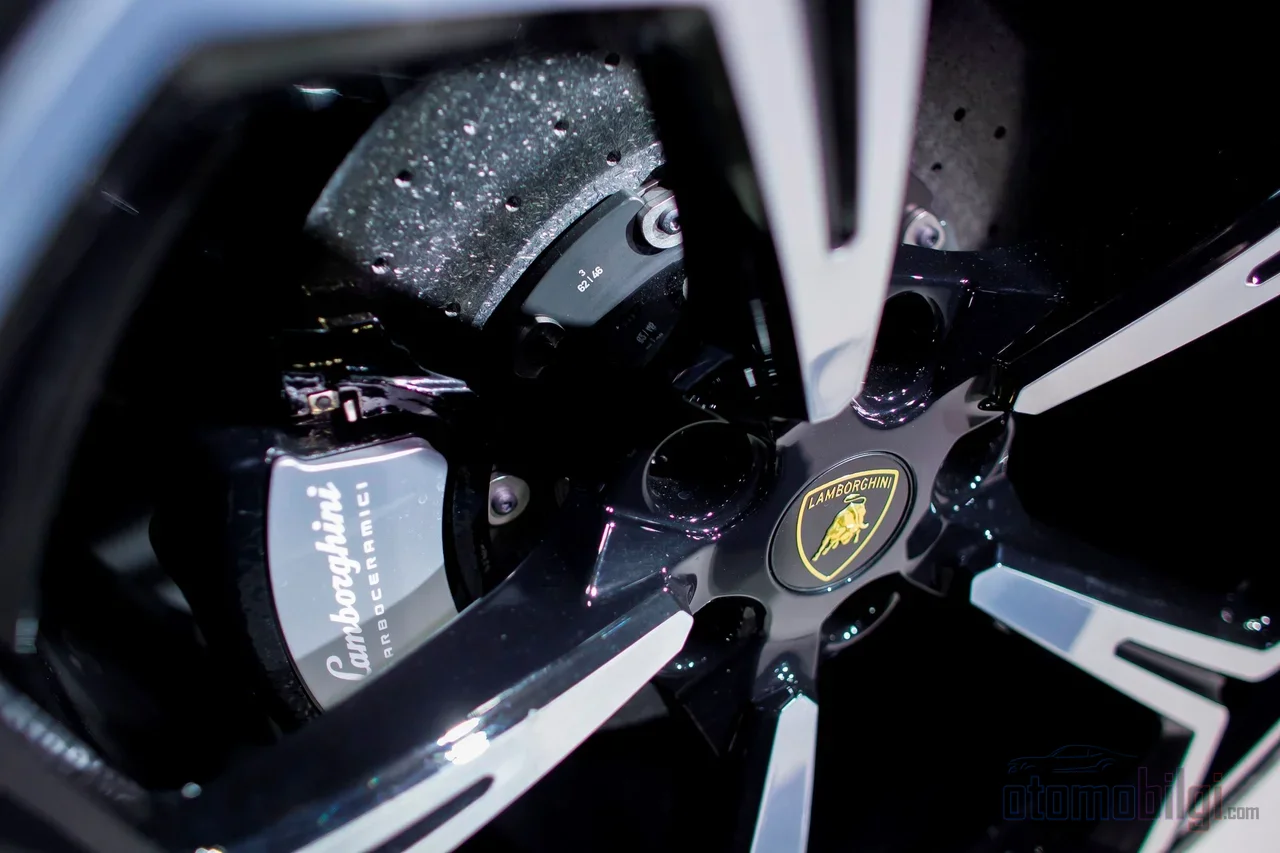
Brakes are one of the most unforgiving components of an endurance race. At circuits like Le Mans, the demands placed on the braking system are far more intense than in sprint races. That's why brake suppliers adapt their systems to Le Mans' specific needs; cooling ducts, disc thickness and pedal feel are all designed with the 24 hours in mind. What's more, there is a historic milestone in this field: in 1999, a brake manufacturer managed to complete a full 24-hour race for the first time in Le Mans history without any brake changes. Up until that day, this had been an almost impossible goal.
Brake wear is actually a science in its own right. Every braking event heats up and wears down the disc; the harder the driver brakes, the shorter its life. That's why teams don't leave brake management to the driver - they calculate it in advance. In LMGT3, things are a bit more humane: this class, based on the current FIA GT3 platform, replaced the long-standing LMGTE regulations in 2024, and only manufacturers with approved annual production are accepted. Production-based cars carry components more familiar to us compared to the exotic engineering achieved by the Hypercars, but the logic of endurance planning is the same.
How Is a Season's Parts Budget Planned?
Let's come to the final layer: season planning. Teams calculate part usage not for a single race, but for the entire eight-race season. Each endurance component has a life cycle, and the team knows in advance which engine will be used in which race and how many more hours the gearbox can last. There is a similar system in F1; if the allocation of a power unit or gearbox is exceeded, the first breach brings a 10-place grid penalty. Although this rule is not applied one-to-one in WEC, the concept of part allocation is the same: every component is a limited resource, and every race is a budget spent from that resource.
We saw the result of this planning clearly in the 2026 season. Toyota won its eighth world manufacturers' title with a 1-2 finish at the inaugural 6 Hours of Barcelona on October 18, becoming the most successful manufacturer in WEC history. The #8 Toyota completed 198 laps and won the race, while the #7 Toyota finished just 0.583 seconds behind. Results like these are no coincidence; they are the peak of part-life planning spread across a season and in-race reliability strategy. On the Hypercar side, competition has reached its peak on the grid, including Ferrari, Toyota, Porsche and newcomers; the wheel-to-wheel battles between Ferrari and Toyota throughout the season were a testament to this balance. In LMGT3, meanwhile, Manthey's #92 Porsche, champion of the last two seasons, is aiming for a third consecutive crown.
Speed or Survival?
In conclusion, reliability in the WEC is a performance metric as decisive as speed. Until the fastest car spends hours in the pit lane, the most consistent car stays ahead. Component lifespan calculations, joker card restrictions, heat management, fatigue testing, and seasonal budgets... they all form an invisible engineering layer that determines the winner. Next time you watch a 24-hour race, think about this: behind the speed you see on track, there are thousands of numbers calculated months in advance. Which do you find more impressive, the seconds or this planning intelligence? I love both!
Sources
- GENESIS POWERS INTO ENDURANCE RACING
- How to Get the Most Out of a Hypercar Hybrid System
- FIA WEC - Lone Star Le Mans
- 2026 FIA World Endurance Championship
- FIA WEC 2026 entry list revealed
- 24 Hours of Le Mans – The 2026 LMGT3 class preview
- Brembo's collaboration with 24 Hours of Le Mans teams
- Reliability In The 24 Hours Of Le Mans
- Endurance Racing Explained: Why the 24-Hour Format Is...
- How Material Testing Drives Success in Endurance Racing
- Make The Case: Tougher on Parts
- The beginner's guide to F1 power unit penalties
- WEC Regulations
- The LMGT3 Category