How Do Test Bans Work in WEC?
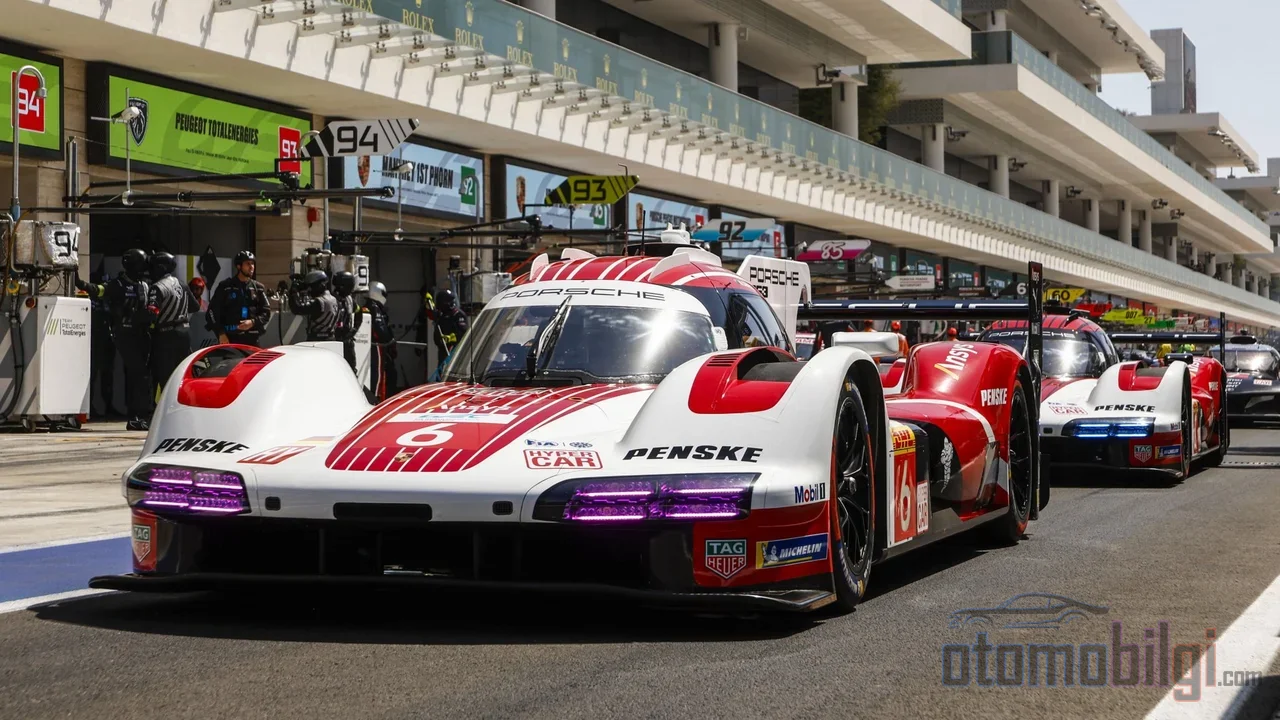
Say you have the world's fastest endurance car on hand: a Ferrari 499P or a Toyota Hypercar. Engine ready, team ready, drivers ready. So what's the most fundamental question? How much can you test this car before racing it? What do you think the answer is? As much as you want? Absolutely not. The WEC enforces strict testing bans that run throughout the season to prevent major manufacturers from pouring their wallet power onto the test track, and these rules are a mechanism that escapes most viewers' eyes but directly determines the fate of championships.
Isn't that interesting enough on its own? Behind the scenes of the 2026 rivalry between Ferrari and Toyota lie hours spent off the track just as much as those spent on it - hours whose exact timing and location are limited by rules. Let's take a step-by-step look at how this system works.
What Is Private Testing, and What Does Official Testing Cover?
In WEC language, what we call "private testing" covers all testing done outside the official pre-season joint practice days known as the Prologue. So if a team laps a track it has rented on its own, that is private testing. There's a critical detail here: racing in another championship doesn't count as private testing. Even if a team takes to the track in another series with its WEC car, this doesn't enter the testing quota as a separate category.
Private tests are divided into two. Open tests are organized by one competitor and keep the door open to other teams as well; WEC officials relay the information to all rivals, and participation cannot be blocked. In closed tests, on the other hand, the organizing team freely chooses whom to invite; a test day with only one team participating is generally considered closed.
Highlights
- The distinction between private and official testing: the Prologue and Le Mans Test Day do not count as private tests
- Season limit per competitor in the Hypercar era: 20 test days (10 per car)
- Track rule: Testing is banned at a track hosting a WEC race 30 days before the race
- One test day means 9 hours of driving during daytime hours
- New models living through their first season after homologation are exempt from the testing limit
The Ban on the Calendar: The 30-Day Rule and Exceptions
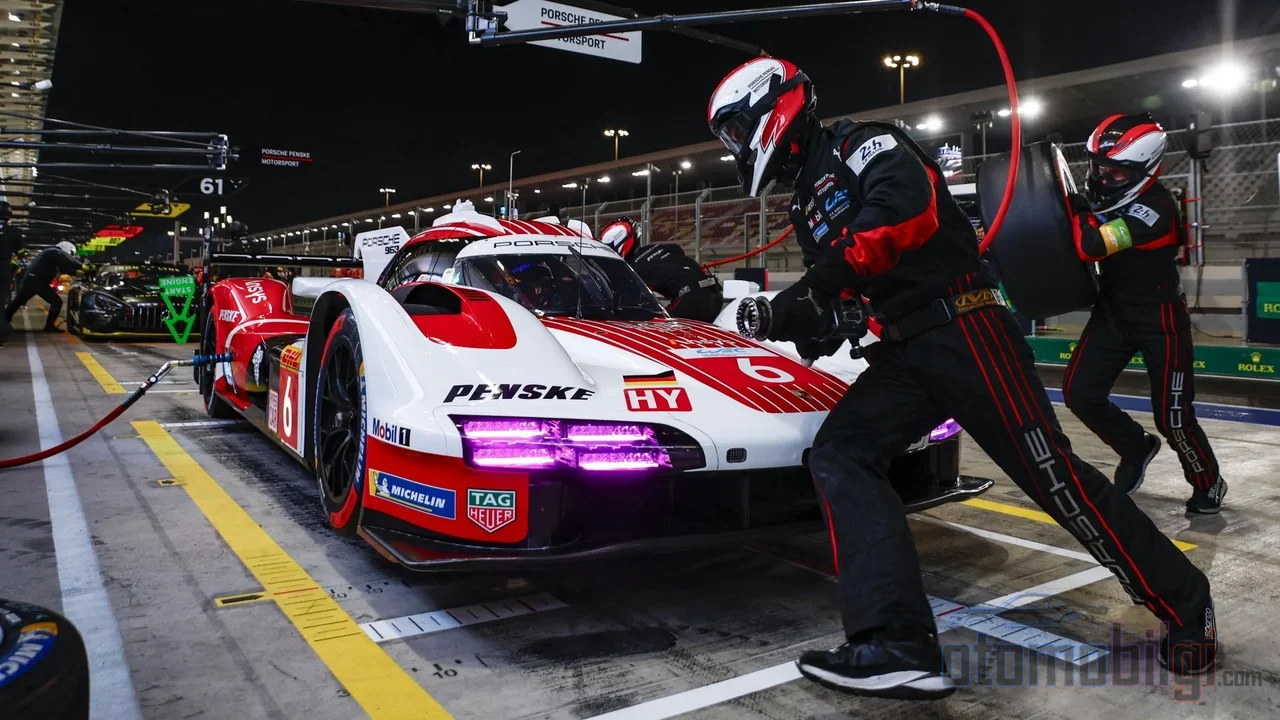
This is my favorite part of the system, because it stands in the way of anyone who tries to play with the calendar. No team can conduct private testing at a track, open or closed, 30 days before that track hosts a WEC race. The logic is simple: otherwise everyone would spend the weeks before the race at the race track, and the richest team would arrive having memorized every bump on the circuit. This rule closes that door.
A concrete example: Porsche was able to test at the Sakhir circuit in February because the Bahrain round is run in November. So even reading the calendar correctly is a strategic tool; teams do meticulous calculations at the start of the season about which track is free where.
Some exceptions are also recognized under strict conditions: activities such as setting up and debugging new cars, promotional films and media days do not count as private testing. The FIA also reserves the right to carry out surprise checks to verify compliance with the rules; in other words, they can show up at your door unannounced to see that the rule is not being violated.
Day Quotas Changed From Period to Period: From LMP1 to Hypercar
Now stop, because this is the most confusing part. Test quota figures vary depending on which period you look at, and reading the 2010s figures as today's rule would be a big mistake.
LMP1 Era: car/day Calculation
Under the 2015 rules, factory teams, i.e. LMP1 manufacturers, could use a maximum of 10 private closed test car/day. For newly entering manufacturers, this quota could be raised to up to 20; brands like Nissan, new to the series, benefited from this extra allowance. On the open test side there were again 10 car/day, provided at least 30 days' advance notice was given; if notice was given 90 days in advance, an additional 30 car/day was accepted.
Porsche summarized the 919 Hybrid era like this: a team can carry out a maximum of 10 days of fully private testing in total, and can also hold open tests for others on 10 days. And as the unit of measurement, 9 hours of driving with one car during daytime hours counts as one test day; only in endurance tests can a car be used for 24 hours non-stop.
Why Did Smaller Teams Test Less?
Here lies the key to the current balance. Private teams racing in LMP2 received significantly fewer days than factory squads: a maximum of 5 closed and 10 open test car/day with notification. The rationale was quite logical: LMP2 cars were ready-made vehicles, already extensively tried by the manufacturer. In other words, you are buying a product that has already been tested. In the LM GTE Pro and Am classes, a limit of 10 closed private test car/day applied.
In 2017, the FIA clarified the LMP2 rules, and it became clear that teams could use only 2 closed private test days and 8 open test days per car. These figures, reflecting the conditions of the time, are not today's rule set, but they show that the gap between small teams and big manufacturers is by no means a new thing.
Hypercar Era: The Limits of the New System
The Hypercar category, which began in 2022, also rewrote the testing limits. According to the sporting regulations:
- A maximum of 10 test days per car entering the championship (closed + open combined)
- A maximum of 20 test days per competitor (closed + open combined)
- Closed private testing limit each competitor can use: 4 days
- The number of dry-weather tires that can be used in tests is also limited
And the most interesting part: private testing limits do not apply to competitors racing with a car model living its first season after the homologation date. In other words, a brand newly entering the series is not put in the same basket as the established giants. As part of the cost-control spirit, the number of operational personnel per car for Hypercar rivals in the Rookie test is also limited to 20 (22 for homologated cars with ERS systems).
| Period / Category | Closed Test Limit | Open / Total Limit |
|---|---|---|
| 2015, LMP1 factory team | 10 cars/day (20 for a new manufacturer) | 10 cars/day + 30 cars/day with notification |
| 2015, LMP2 private team | 5 cars/day | 10 cars/day (with notification) |
| 2017 clarification, LMP2 | 2 days per car | 8 days |
| 2015, LM GTE Pro and Am | 10 cars/day | Open tests must be announced 30 days in advance |
| Hypercar era | 4 days per rival | 10 per car, 20 days per rival |
Prologue, Le Mans Test Day and Other Exemptions
So do teams never get together to train at all? They do, on days organized by the series itself. The Prologue consists of official joint testing sessions before the season and does not count as private testing. The Le Mans Test Day enjoys the same exemption; however, these days are deducted from the open private testing quota based on the number of cars used. So it is not free, it is just paid from a different budget.
Participation in the Le Mans Test Day is not mandatory for everyone. Only new cars (at least one vehicle per model), teams that have never raced at the 24 Hours of Le Mans before, and drivers who have not raced are required to attend this day. The Rookie test at the end of the season also falls within the same exempt groups.
In 2026, a small but meaningful change came: a Test Day can now be canceled up until noon local time on the previous day. The rules before that prohibited cancellation any later than an earlier time; meaning the organizers' planning flexibility has increased. On the 2026 calendar, the Prologue was run on March 22-23, and the series kept the same structure as previous seasons, aiming for stability. For 2027, an expanding nine-round calendar has been announced; the Prologue will be held in Qatar on March 21-22.
When the Limits Are Breached: Simulation and Accumulated Data
Okay, track days are rationed. So what do giants like Ferrari, Toyota, and Porsche do when they hit this wall? The answer: they go off-track. In modern endurance racing, most of the development process takes place in simulation. Since track days are precious, everything to be done there is rehearsed on computers in advance; time spent on the track is used for validation and fine-tuning.
The second big trump card is accumulated data. Established manufacturers hold telemetry archives spanning years, tire data, fuel consumption maps, and track characteristic information. Toyota's new TR010 Hybrid chassis and the 2026 program reshaped with revised aerodynamics is an example built on past accumulation. Ferrari also strengthened its presence in the top class by adding a third 499P Hypercar in 2026; this means more cars on the track, but it also means the opportunity to gather more real data during the season. The number 8 Toyota drivers won the drivers' championship and Toyota the manufacturers' championship in the 2026 season, contested in a field of 14 manufacturers.
How Do Testing Bans Shape the Balance of Power?
Now let's look at the big picture. Testing limits seem like a rule that equalizes everyone at first glance, but the true nature of the matter is more complex. While the quota is the same for everyone, the quality with which that quota is filled varies from team to team. A wealthy manufacturer can use the limited track days many times more efficiently with its simulation infrastructure, advanced measurement equipment, and experienced engineering staff. A small team, on the other hand, has to spend the same days with simpler tools.
This is exactly why the series does not leave the balance to testing rules alone. In the Hypercar category, the Balance of Performance, i.e. the BoP system, is applied; parity is created mainly through weight and power adjustments to enable cars with different design approaches to compete. Hypercars are regulated with a minimum weight of 1030 kg. On the budget side, the FIA and the series promoter agreed on a budget target of 20 million Euros (approximately 23 million dollars) per season for a two-car Hypercar program; however, it is debated whether a Formula 1-style cost cap can be directly transferred to the WEC due to the difference in the series' structure.
The first-season exemption granted to new entrant manufacturers is also an important part of the balance: a brand with zero on-track data is given a chance against the accumulated resources in the hands of the established giants. Porsche, for its part, once expressed concern that WEC rules would block the entry of other customer cars; track space limitations were a serious topic of debate.
How Does the Testing Limits System Work in Brief?
Let's summarize, because the question at the heart of this page deserves a clear answer: In the WEC, private testing throughout the season is tightly limited by day and track restrictions; in the Hypercar era, a total of 20 test days per competitor and 10 per car apply, testing at a track is banned within 30 days before a race, and only official days such as Prologue and the Le Mans Test Day are exempted from this quota. The purpose of the system is to prevent the wealthiest teams from buying memorization ability with unlimited testing; however, simulation power and accumulated data do not completely eliminate the advantage of large manufacturers. That is why the series is supported by additional balancing mechanisms such as BoP.
Next time you watch a race, think about this: How much of the winning car's speed was on the track that day, and how much was prepared months earlier on a computer and in limited test days? This is exactly where the WEC's invisible race is run. And with the expanding calendar of 2027, this invisible race will undoubtedly become even more critical.
Sources
- What's new for WEC Season 10?
- WEC - Rules for private test sessions
- The WEC regulations at a glance
- FIA Clarifies WEC Testing Rules
- What happens at the Le Mans Test Day and who is there?
- WEC rule changes, 2025 to 2026
- 2026 FIA WEC calendar builds on stability of recent seasons
- FIA WEC reveals nine-round 2027 calendar as series expands
- Ferrari's Dominance Faces Test in 2026 WEC Season
- Why WEC can't simply replace BoP with a Formula 1-style cost cap