Toyota GR010 Hybrid: The Secret Formula That Won Le Mans
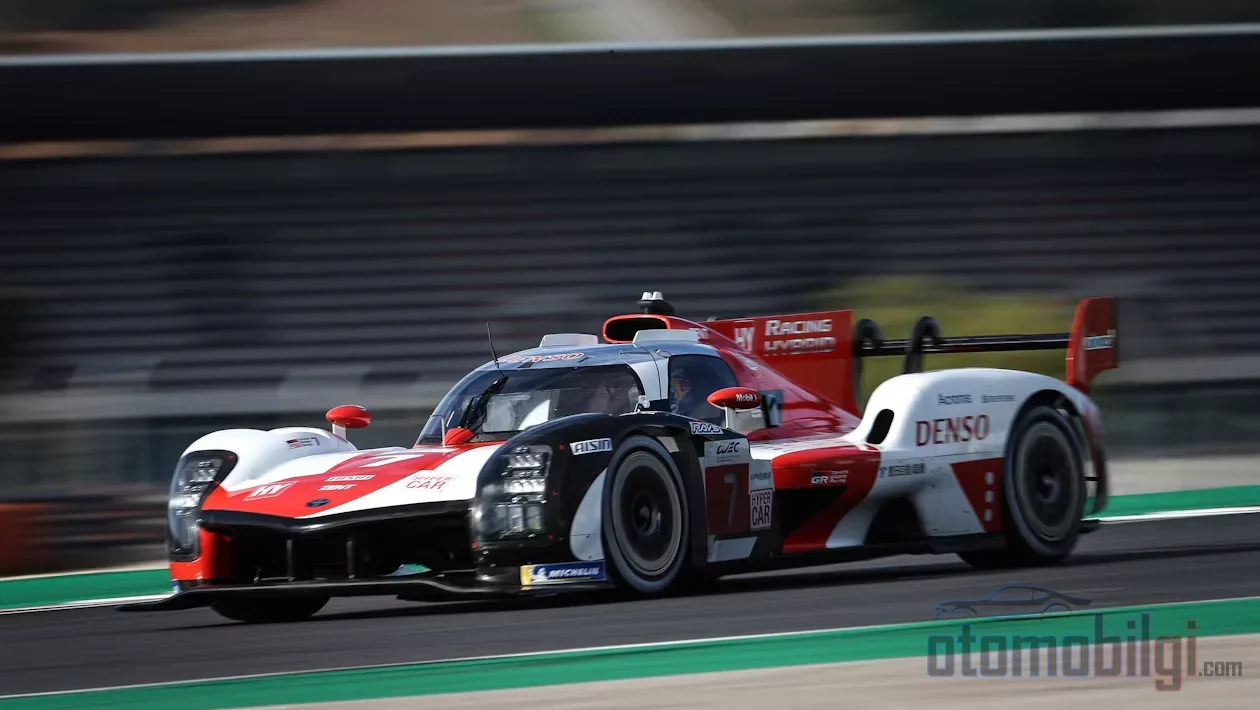
In the final hours of the 2026 24 Hours of Le Mans, here is how things stood: BMW was in front, Cadillac was clinging on tightly, and Toyota was reaching for its third overall victory in six years. In an era where Ferrari won three years in a row and Porsche attacked relentlessly, how is it that this still comes down to Toyota? Here's the answer, and it's not as simple as you think: because the story of the GR010 Hybrid is not the story of a single fast lap. This is the story of engineers who opened and closed cooling channels in seconds rather than minutes, a team that designed the hybrid system with endurance in mind, and a philosophy that sanctified finishing the race over winning it.
If you're ready, let's take this machine apart piece by piece. Because at Le Mans, what refuses to stop first runs out in your head, then on the track.
The Machine's Identity: What Is the GR010 Hybrid?
The Toyota GR010 Hybrid is a sports prototype developed by Toyota Gazoo Racing Europe for Le Mans Hypercar (LMH) rules. It was introduced on January 15, 2021, as the successor to the TS050 Hybrid; its first rollout took place at the Paul Ricard circuit in October 2020. At its heart is a 3.5-liter, 90-degree V-angle, twin-turbocharged - that is, force-inducted - V6: the Toyota H8909. This engine drives the rear, while the electric motor on the front axle kicks in above certain speeds to provide all-wheel drive. In other words, the car was designed to be not just fast, but smart.
On the power side, the figures vary by year, and the reason is not the Booster, but the Balance of Performance, or BoP balancing. In the introduction year, 680 PS from the internal combustion engine and 272 PS from the electric motor were reported; in the BoP era, the combustion engine produces 500 kW, about 671 hp, while the electric side produces 200 kW, or 268 hp. Total system power is kept within the limits drawn by the LMH rules. The same applies to torque: the declared value is 740 Nm at 6,000 rpm; different simulation and data sheets give figures around 670 Nm, because when the measurement point and definition change, the number changes too. As for the 0-100 km/h acceleration figure: it was not announced by the manufacturer, and we don't make up numbers.
| Feature | Value |
|---|---|
| Engine | Toyota H8909, 3.5 L V6 twin-turbo |
| Internal combustion power (BoP era) | 500 kW (~671 hp) |
| Electric motor power | 200 kW (268 hp) |
| Torque | 740 Nm @ 6,000 rpm |
| Weight | 1,040 kg |
| Transmission | 7-speed sequential semi-automatic |
| Length / Width / Height | 4,900 / 2,000 / 1,150 mm |
Highlights
- GR010 Hybrid career: 43 races, 24 wins, 46 podiums
- Le Mans victories in 2021 and 2022; a third in 2026 under the name TR010 Hybrid
- 4 Manufacturers' and 4 Drivers' championships (2021-2024, 2026)
- The hybrid drive engages all four wheels at speeds above 190 km/h
- At the 2025 Le Mans, it was one of the slowest in the speed trap at 342.3 km/h, yet it was compensated with strategy
Why It Doesn't Stop: Reliability-Focused Engineering
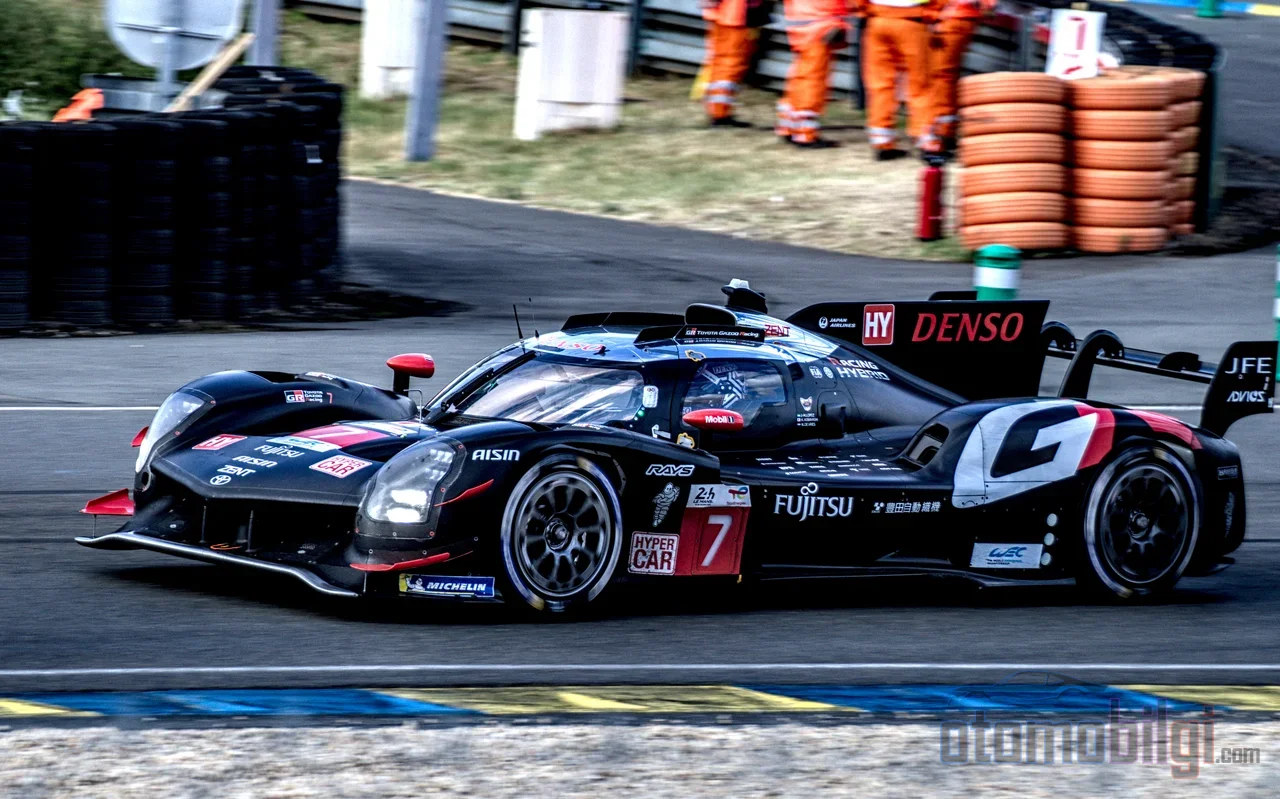
Think of it this way: a car running flat out for 24 hours, with three different drivers, in the heat of the day and the chill of the night, at speeds exceeding 300 km/h. This is not like using your phone without charging it for a day; it is like running the phone in wet sand, in the fridge, and in a sauna on the same day. That is exactly the logic with which Toyota's engineers developed the car.
Cooling: The Minutes That Seconds Win
The focus of the 2023 update was directly efficiency, reliability, and thermal cooling. New front and rear air intakes help with brake cooling, and the blanking parts in the cooling channels have become removable within seconds. When technical director Pascal Vasselon's team saw that this process took a long time in the previous two seasons and restricted strategic flexibility, they rebuilt the entire setup from scratch. The analogy goes like this: finding Velcro instead of a zipper to take off the top. When the same job is done within seconds, the team can make decisions much faster at the pit wall. Vasselon clearly states that in a balanced category, race strategy depends on the serviceability of the cars.
Hybrid System in Endurance Mode
The electric motor on the front axle is fed by a joint design from Denso and Aisin AW and a lithium-ion battery that Toyota calls THS-R. The critical point is this: Above the 190 km/h threshold set by the BoP, all-wheel drive kicks in. This gives extra confidence in long corners and on wet surfaces, but more importantly, it limits rear tire wear by shifting part of the load to the front axle. In a 24-hour race, being able to stretch a tire for one more lap means one extra move at the pit wall. Toyota's tire management has stood out for years as the team's strongest weapon; drivers describe it directly as the team's strength in the past.
What Makes the Difference Against Ferrari and Porsche?
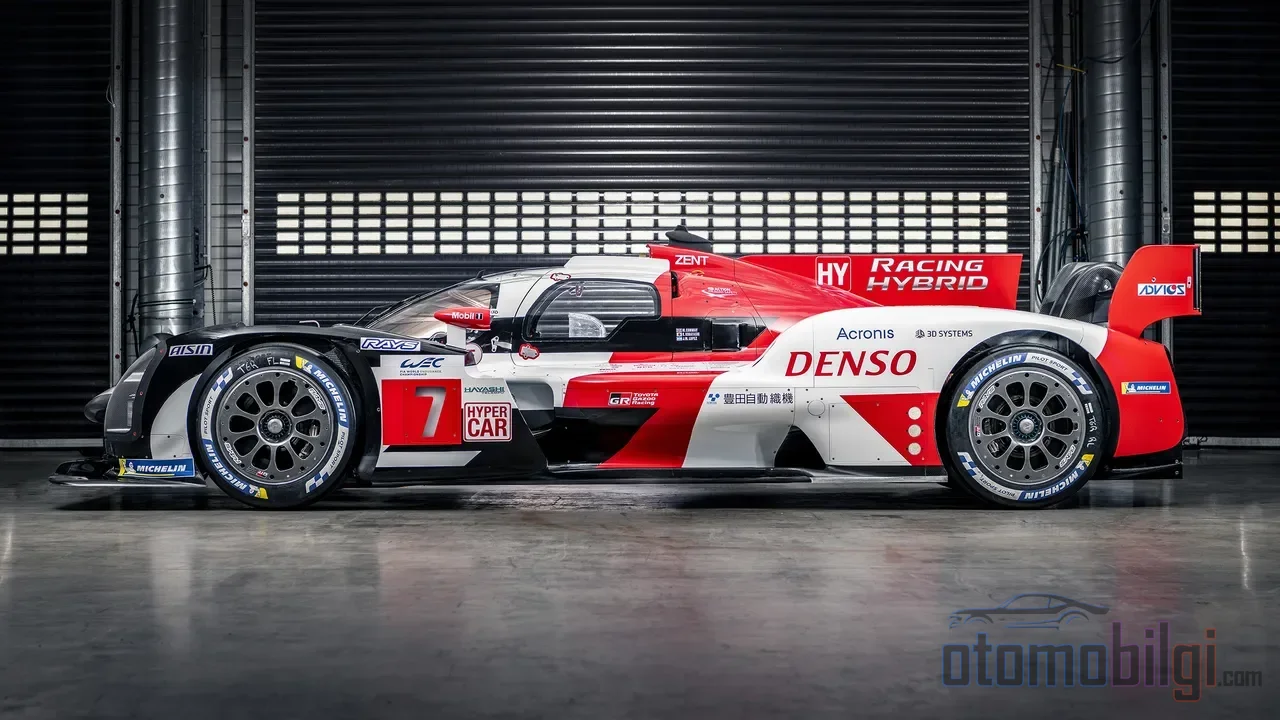
Let's actually start with this fact: The GR010 is no longer the fastest car on track. At the 2025 Le Mans, it was one of the slowest cars in the field with 342.3 km/h in the speed trap. The Ferrari 499P won Le Mans three times in a row in 2023, 2024, and 2025; Toyota finished second in two of those three. The Porsche 963, meanwhile, applies pressure in every race with an aggressive program. So on paper, Toyota's job is hard.
But here is the surprising part: Being behind on the speed charts does not prevent being ahead on the finish charts. We can examine the 2026 Le Mans like a textbook example of this. Ferrari's No. 50 499P, which was fighting for the lead, experienced a fire suppression system problem at hour 12 and dropped out of the race after the electronic failure at Tertre Rouge. Cadillac had to make an extra pit stop, which threw off its strategy. Toyota, on the other hand, dedicated both of its cars to the same alternative fuel and pit approach, did not split the strategy, and took the lead within the first hour. The result: A victory leaving BMW and Cadillac behind, and a 1-3 finish in Hypercar.
The difference here can be summarized as follows: some teams try to win the race by setting the fastest lap, while Toyota tries to win the race without ever stopping. The price of this approach is sometimes a winless first half of the season (exactly what happened in 2025), but the reward came in the form of a 1-2 comeback at Bahrain in 2026 and the drivers' championship at Monza at the end of the season.
A Development Philosophy Spread Across Years
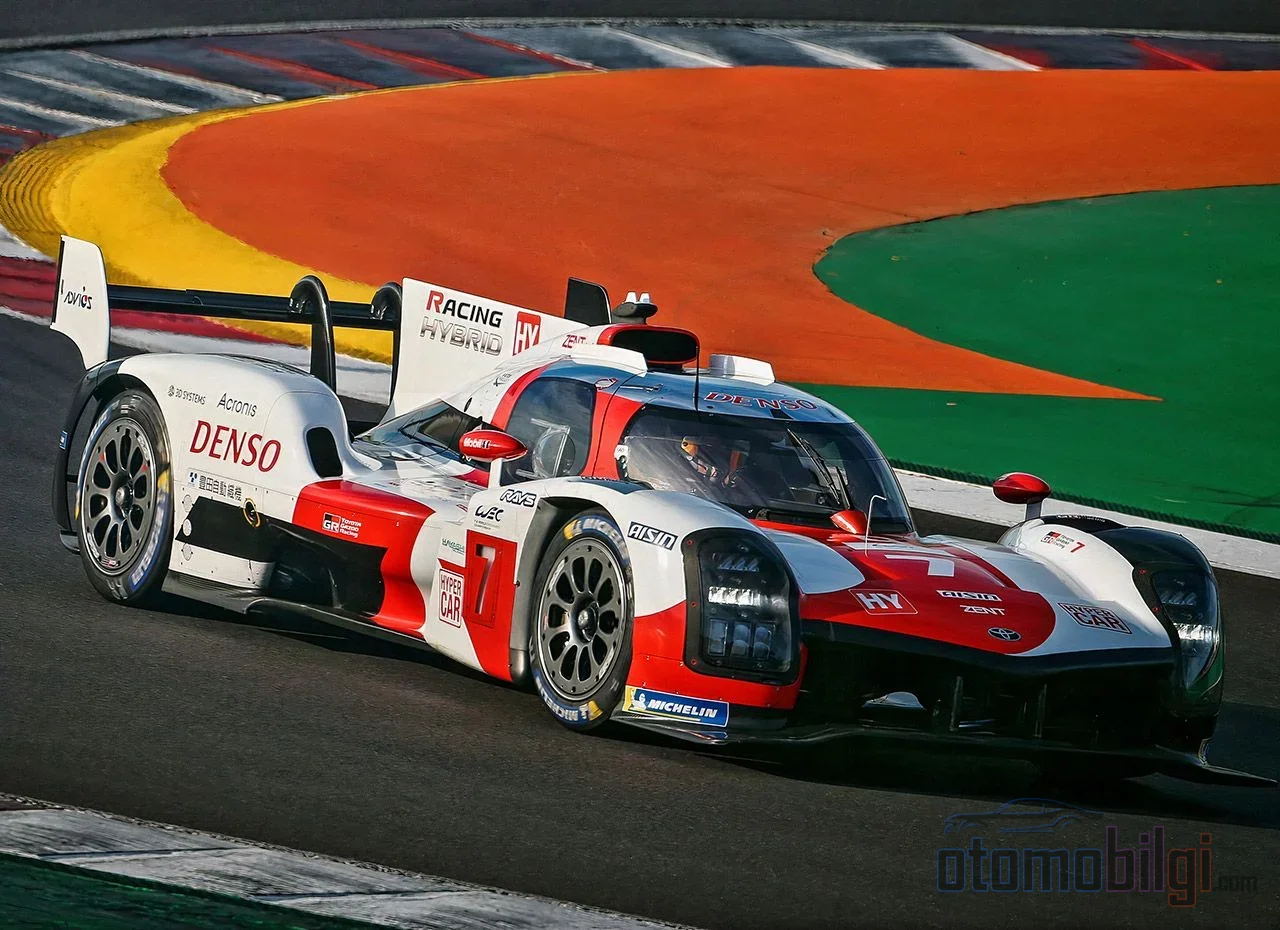
The GR010 is not a car born in a single season; it is Toyota's hybrid prototype heritage carried into the LMH era. The legacy of the winning streak that began with the TS050 in 2018 and lasted five years is woven into every centimeter of the car. Toyota's official approach is to mature the machine within the limited revision areas the rules allow: small but precise reliability-focused steps every year.
In 2023, an efficiency and cooling package arrived. Preparation for 2026 was even more ambitious: a comprehensive body update tested at Paul Ricard after Fuji 2025, originally planned for 2025 but postponed to 2026. This package, featuring a redesigned front end, new sidepods, and an updated rear spoiler, was named the TR010 Hybrid. The drivers' description was clear: better road holding and better top speed. This update carried the 2026 season: 1st place at the season opener in Imola and 3rd, with both the drivers' and manufacturers' championships at the end of the season.
What Happens When Mistakes Are Made?
Toyota is not flawless either, and it does not hide it. At the Lone Star Le Mans in Austin, the leading No. 7 car suffered a hydraulic failure; the car retired with 10 minutes remaining, and victory went to Ferrari's No. 50 car. At the 2025 Le Mans, operational errors occurred, such as the No. 7 car accidentally being fitted with dry (slick) tires on a wet track. Look at the team's 2026 response: after Austin, reliability updates were introduced to the Hypercar, and the season goal was announced as eliminating operational errors and reclaiming Le Mans. And it was reclaimed.
The BoP Debate: Who Does Victory Belong To?
Let's be honest, this heading cannot be written without BoP. In 2023, the advantage from the first three races of the season was reduced by a BoP revision that came two weeks before Le Mans. Some fans claim that Toyota won only thanks to the balancing advantage; the Toyota camp argues the opposite: technical director David Floury criticized the system in 2025, saying it had become too artificial, while the team emphasizes that the source of the advantage is tire management, brake cooling, and reliability. The evidence table favors Toyota: while BoP distributes the same items to everyone, it is the finishing rate and strategy execution that carry you to the podium. At Spa 2025, while the car was 11th-12th in raw pace, the race was still finished in 4th; as could be finished; this is the result of a column not shown in the table - the quality of implementation.
Short Answer: Why Doesn't the GR010 Ever Stop?
Let's give the clear answer we promised: The Toyota GR010 Hybrid never stops at Le Mans because the car was designed for consistency more than raw speed: cooling that can be adjusted within seconds, hybrid drive that protects the tires, reliability-focused development spread across years, and a unified team strategy focused on guaranteeing a race finish close the speed gap. Ferrari and Porsche may pull ahead in single-lap pace; but at the end of 24 hours, the team that first crosses the line without stopping takes the points.
In the next season, the GR010 Hybrid will continue to defend this philosophy. Being the fastest on track feels good at the end of the day; but at Le Mans, what is remembered is the finished race. Toyota has been proving this for six years.
Sources
- The Toyota GR010 Hybrid under the microscope: a Hypercar born to win Le Mans
- Toyota GR010 Hybrid - Wikipedia
- TOYOTA GAZOO Racing introduces GR010 HYBRID Hypercar
- Le Mans 24 Hours: Race (Toyota Newsroom)
- CAR DETAILS | 2025 | WEC | GAZOO Racing
- Le Mans 2026: a result that goes beyond fifth place (Ferrari.com)
- Toyota turns bold strategy into first-hour Le Mans lead (Pit Debrief)
- Toyota reveals updated GR010 Hybrid for 2023 WEC season (Autosport)
- How Toyota is revamping its GR010 Le Mans Hypercar for WEC 2026
- Toyota introduces reliability updates to WEC Hypercar following Austin heartbreak (Autosport)