How Does Hypercar Technology Flow Into Road Cars?
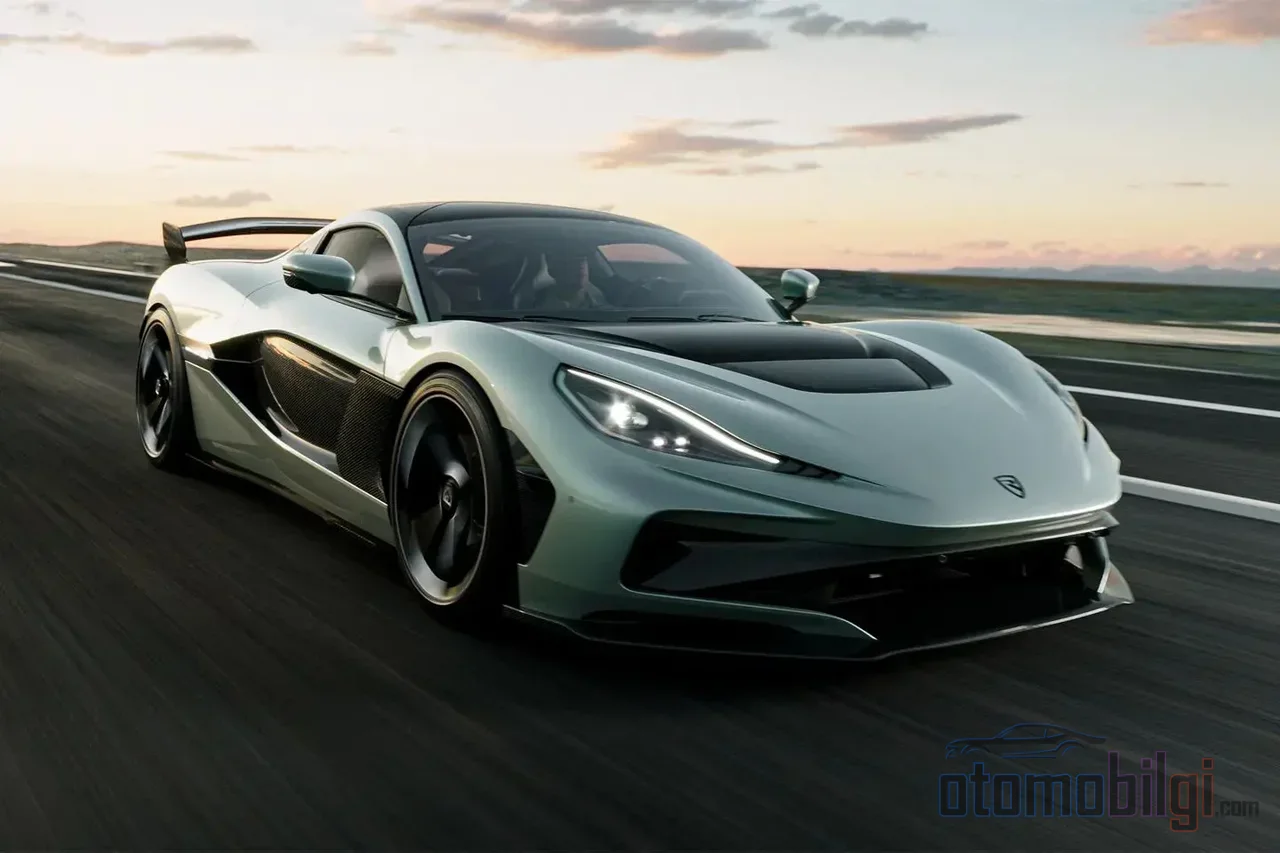
Think about a race car: For 24 hours non-stop, day and night, rain or scorching heat, it keeps circling the track. Now let me ask you this - could what's learned in that machine show up in an ordinary road car? The answer: yes, and in a far more concrete way than you'd think. The WEC's Hypercar class has become a massive laboratory where manufacturers stress-test technical solutions for their own road cars under punishing conditions. Ferrari, Toyota and Porsche are carrying the lessons from this laboratory straight into their road projects. So what exactly flows across, and how?
On this page we'll examine one by one how Hypercar technology trickles down to road cars: hybrid systems, energy recovery, carbon-neutral fuels, and the reliability data that 24 hours of endurance delivers to series production. If you're ready, let's get started - because this is the story of a loop that stretches from the garage to the track and back.
What Kind of Laboratory Is the Hypercar Class, Really?
First, let me set the scene. The FIA WEC is the pinnacle of endurance racing: An eight-race calendar including the 24 Hours of Le Mans, races lasting at least six hours, and two or three drivers sharing the wheel in shifts in every car. The series began in 2012, but its roots run far deeper; the sports car world championship dates back to 1953, and Le Mans to 1923. In short, the game isn't new, and the rules are constantly being rewritten.
The Hypercar class is the most intriguing part of these rules. We're talking about a closed-cockpit prototype: a maximum length of 5,000 mm, width of 2,000 mm, minimum height of 1,150 mm and a base weight of around 1,030 kg. There's no restriction on engine type - both turbocharged V6s and atmospheric V8s are allowed - and hybrid systems are free. What's more, the class has two different philosophies: the LMH side gives manufacturers a more flexible space on design matters, while LMDh standardizes certain components. This philosophical difference directly reflects into the approach to hybrid technology as well; we'll get there shortly.
There's also a catch: Balance of Performance, or BoP. All cars' weight and power are adjusted before every race, and aerodynamic gains are restricted up to a defined point. Why? Because the series doesn't want to test which side of engineering is fastest, but which side can be most efficient. If power is already pinned to a ceiling, engineering ingenuity starts to shine elsewhere - and the findings there are exactly the kind road cars need.
Highlights
- The Hypercar class races with a 1,030 kg base weight and an engine+hybrid power ceiling of 520 kW; hybrid systems are free.
- Toyota has raced at Le Mans with a hybrid powertrain exclusively since 2012 and won six times - most recently in 2026.
- The fuel used in the WEC is 100% renewable; at least a 65% CO2 reduction across the lifecycle is targeted.
- Porsche unveiled the one-off 963 RSP, the road-going version of the championship-winning 963 prototype, in June 2025.
- Ferrari 499P's electric motor operates with unconventional six-phase control - for efficiency and heat management.
Hybrid Systems: Technology Tested on the Track, Returning to the Road
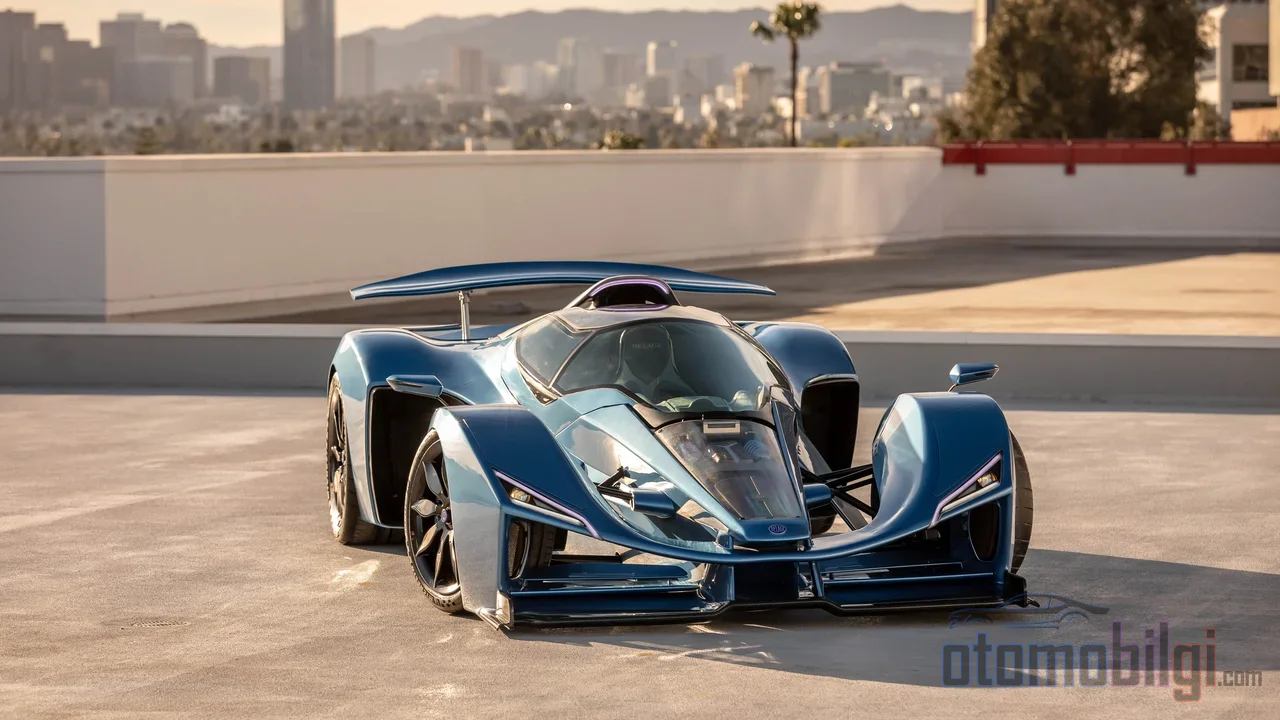
The heart of the Hypercar is the hybrid system, and that is precisely why this class does not put up a thin wall between itself and road cars. Let's take Toyota as an example: The GR010 HYBRID was the first Hypercar introduced under the new regulations in 2021 and was developed together with a road car; the road version was even planned from the start. A 3.5-liter twin-turbo V6 sits at the rear, while at the front there is a motor-generator that recovers braking energy. In other words, Toyota's racing hybrid is an extreme version of the kinetic energy recovery philosophy found in everyday hybrid cars - much like storing energy on a downhill while pedaling a bicycle and spending it uphill, but at far more dramatic speeds.
The family tree of this technology is also instructive. Toyota's THS-R racing hybrid system spoke with 1,000 horsepower of total output and 20% lower fuel consumption in the TS040 HYBRID back in 2014; with the TS050, a switch was made from supercapacitor to lithium-ion battery. Today the hybrid powertrain is designed and produced at the Higashi-Fuji Technical Center, while chassis engineering is done in Cologne. And here is the critical sentence: Toyota has been racing at Le Mans exclusively with a hybrid powertrain since 2012. It is hard to think of another organization that has tested hybrid technology at this scale and over this period.
Ferrari's Six-Phase Answer
Ferrari's 499P responds to the same question with a completely different approach: A 3.0-liter twin-turbo V6 is accompanied by a 200 kW electric motor on the front axle. The interesting part is not the power, but the control. Unlike common three-phase solutions, Ferrari manages the electric motor with a six-phase inverter. Let's think of it with a simple analogy: if a three-phase system is three lamps in a room, a six-phase system is six independent lamps in the same room - you can fine-tune the light much more precisely. More efficient control means less heat; less heat means a reduced cooling load on the power electronics. This is exactly what the team of Ferdinando Cannizzo, Ferrari's head of endurance racing cars, focuses on: efficiency in the motor-inverter pairing. Since BoP limits power at 500 kW, the gain comes not from maximum performance but from efficiency - which is precisely the problem road cars face: range and heat management, not raw power.
| Feature | Toyota GR010 / TR010 HYBRID | Ferrari 499P |
|---|---|---|
| Combustion engine | 3.5L twin-turbo V6 | 3.0L twin-turbo V6 |
| Electric motor | Front axle, ~270 hp | Front axle, 200 kW |
| Approach | KERS + brake-by-wire front axle | Six-phase inverter, F1-derived 900V battery |
| Road connection | Developed together with a road car | Powertrain shares DNA with road cars |
Carbon-Neutral Fuel: The Racetrack Became Fuel's Proving Ground
We all know the hybrid side more or less, but the quiet hero of the story is the fuel. A 100% renewable fuel is now being used at Le Mans and in the WEC, and this fuel is targeted to deliver at least a 65% CO2 reduction over its life cycle. The beauty here is this: you don't have anything done to the car. Same engine, same injection logic, but the fuel cycle has been redesigned. For areas where a full transition to an electric future is difficult, this could be a very serious shortcut.
Porsche is extremely outspoken on this subject: the company is positioning its LMDh hybrid prototypes, starting from 2023, as rolling development laboratories for environmentally friendly fuels. Additionally, Toyota GAZOO Racing and the Automobile Club de l'Ouest are jointly putting hydrogen racing on the agenda as another path to decarbonization. Is everything rosy? No - there are also criticisms of carbon-neutral fuels: it is said that production is not yet proven and expensive, and that it could be seen as a distraction rather than the most effective path to decarbonizing road transport. But this is exactly what matters: the debate is being conducted on the track with real data. Racing is where ideas are tested not on the couch but in 24 hours of hard work.
What Does Enduring 24 Hours Mean? The Tough Test of Reliability
On average, how many hours does a road car spend on the road over a lifetime? Thousands of hours, but only a small fraction of that at full power. A Hypercar, on the other hand, has to endure nearly uninterrupted full load for 24 hours at Le Mans - much like asking a pot to cook at the highest heat and without interruption. This is a scenario that tests every decision, from material selection to cooling architecture.
That is exactly why manufacturers see the Hypercar program as a reliability data mine. High-temperature endurance, component lifespan, and the long-term behavior of the braking and energy systems: these are data collected in their heaviest form on the track, and the same engineering culture is carried into series production. It is also worth adding this: the fact that all cars use Michelin tires means tire development also creates a common and intense testing ground. Four cars from three manufacturers finishing within 32 seconds of each other at the 2026 Le Mans is a striking example of how much this competition has tightened. When rivals are this close, every reliability detail makes a difference - and these details are being noted.
From Track to Road: The 963 RSP and Beyond
So does all this technology concretely show up in a road car? The most striking example came from Porsche: in June 2025, the company unveiled the one-off 963 RSP, the road-going version of the 963 LMDh prototype that won championships in the WEC and IMSA. As part of the 50th anniversary celebrations, they turned a racing prototype into a genuinely road-legal car. The idea Porsche conveyed with this is also exquisite: everyone talks about motorsport technology being added to their road cars; With the 963 RSP, they did the opposite - they turned the racing prototype into a road car.
On the Toyota front, too, a road pathway has been established: It was developed alongside the GR010 road car, and a road-going hypercar named the GR Supersport was announced. On the Ferrari side, it is emphasized that the 499P's powertrain shares DNA with the brand's road cars; moreover, the 499P continued working with its 2027 development tests at Circuit of the Americas in September 2026. All three manufacturers' strategy of carrying what they learn on the track to the road converges on the same formula: hybrid architecture, energy management and thermal efficiency.
And there is also the continuity side, which is just as valuable as the technology. Toyota won the 2026 Le Mans, reaching its sixth victory, and closed the season with a double world championship; Ferrari added its third 499P to the grid in 2026. So this laboratory is not a seasonal project; for years, manufacturers keep asking the same questions and refining the answers. Few other motorsport categories conduct learning this systematically.
So What Really Reaches Our Road Cars?
Let's clarify the promises. Four main lines flow from the Hypercar class to road cars:
- Hybrid architecture and energy recovery: Front-axle solutions like KERS and brake-by-wire refine braking energy recovery in road cars under demanding conditions.
- Thermal management and efficiency: Innovations like the six-phase inverter result in less heat and higher efficiency - the most critical need of electric and hybrid road cars.
- Fuel technology: Testing 100% renewable fuels on the track keeps open the path to decarbonizing existing internal combustion engines.
- Reliability engineering: 24-hour full-load endurance provides a depth of data for component life and material durability that no series road test can reach.
So the full answer to the question is this: Hypercar technology flows into road cars not as a single magic part, but as an engineering culture. A system that harvests energy on a race car's brakes ensures that tomorrow your car harvests the same energy more efficiently; when an inverter's temperature drops, the electric motor in a road car becomes longer-lived; and when a fuel formula lasts 24 hours at Le Mans, serious evidence is born that the engine in your garage could also be happy with new carbon-free fuels. While endurance racing chases the podium, it is unknowingly upgrading all of our garages - I think that's the sweetest form of technology, what do you say?
Sources
- WEC | Toyota Racing
- How to Get the Most Out of a Hypercar Hybrid System
- Le Mans Hypercar
- 2021 Toyota GR010 Hybrid Le Mans Hypercar racer revealed, road car to follow
- Toyota GAZOO Racing introduces GR010 HYBRID Hypercar
- History of Toyota Hybrid System-Racing (THS-R)
- Porsche Is Making A Special Hypercar (963 RSP)
- Race to the road: Introducing the Porsche 963 RSP
- The new hypercar class embodies progress and tradition
- 24 Hours of Le Mans Race Cars to Use 100% Renewable Fuel