Engine Architecture Diversity in WEC Hypercars
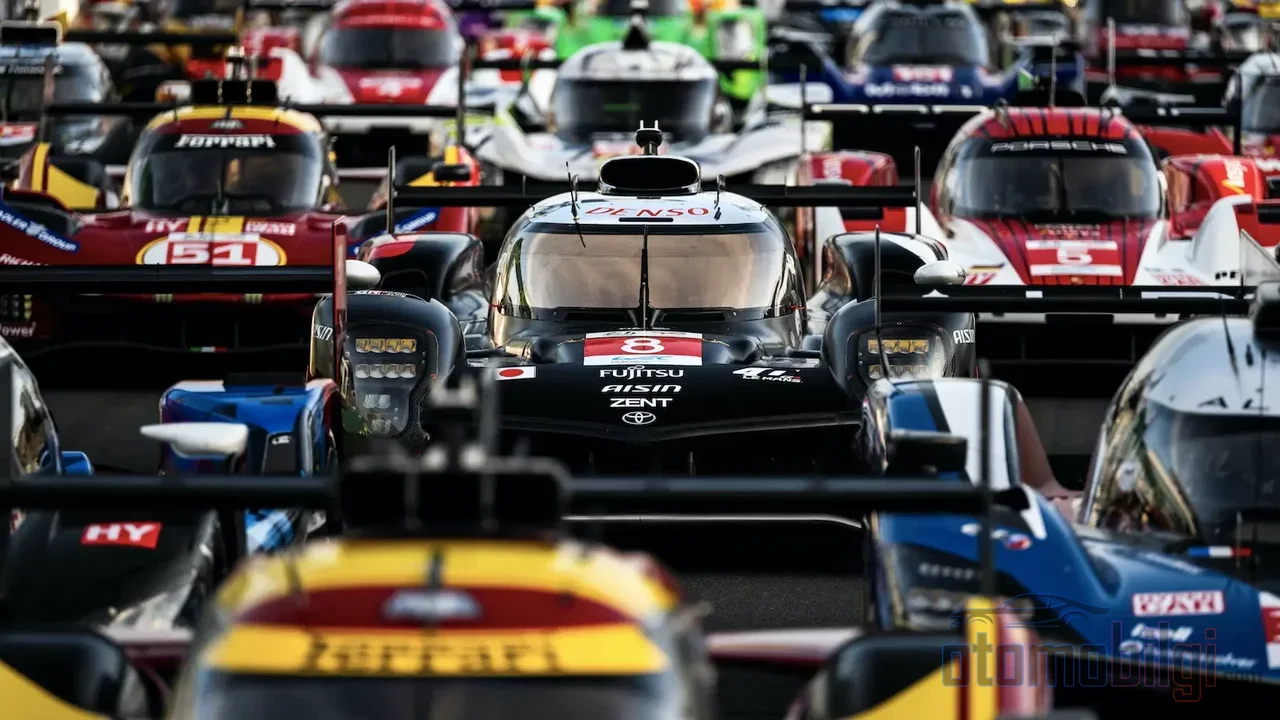
Imagine cars battling it out on track in the same class, at the same event, and even in the same lap: one has a 4.6-liter twin-turbo V8, another a 3.0-liter V6, and a third one with a 3.5-liter V6 growling. Normally, such variety would be the death knell of Fair Play. But in the World Endurance Championship's (WEC) Hypercar class, this is quite the opposite - it is the very system itself. So why did the regulators open the door to such different architectures instead of forcing everyone to use the same engine? And are the three giants' engine choices really just engine choices, or strategic decisions that shape the character of the cars? Let's dive in.
Why are Hypercar rules so free when it comes to engine architecture?
Those who watch F1 know: there, the powertrain layout is defined down to the millimeter. The WEC's Le Mans Hypercar (LMH) regulations, on the other hand, follow a completely different philosophy; the principle of free engine architecture applies, and there is complete freedom in the number of cylinders as well. A V6, V8, straight-six, or even theoretically a rotary engine can knock on the door. The aim is not to force manufacturers into a single template, but to allow each brand to bring its own engineering identity to the tracks.
In the first rules approved in 2019, purpose-built (bespoke) engines for prototypes or modified versions of hypercar engines were allowed; for road-car-based vehicles, a production-based powertrain was mandatory. Then in 2020, the FIA made changes bringing the Hypercar rules closer to the LMDh regulations, and today two different regulations (LMH and LMDh) race together in the same class, under the Balance of Performance (BoP) glove. This system does come at a price: fitting two different rulebooks into a single performance window makes BoP a constantly debated topic.
V6, V8, or flat-six? What difference do engine layouts really make?
Let me make a simple analogy: think of the cylinders as a bookshelf made of books. In an inline layout, they all stand in a single row; orderly, but the bookshelf goes on and on. In a V layout, there are two rows with an angle between them; the bookshelf gets shorter but takes up more space. In a flat (boxer) layout, the bookshelves are laid completely on their side; the result? A very low, sprawling structure. In other words, the engine's center of gravity drops.
Each layout has different trade-offs: packaging, smoothness, weight, cooling, cost, and the performance balance. There is no single best layout that fits everyone; engineers choose the one best suited to the car. Nor is Porsche's attachment to the flat-6 without reason: the flat-6 is a much shorter and more compact unit than alternatives like the V6 or inline-6; and compactness directly determines where you can place the engine in a race car and how you shape the car's center of mass. Looking at the field, the picture is striking: everything from high-compression, low-displacement engines to twin-turbo V6s is spinning in the Hypercar class.
Three choices from three giants: Why did Ferrari, Toyota, and Porsche choose different engines?
Now let's get to the tastiest part of the job. Let's take a close look at the three cars competing in the same class:
| Car | Engine | |
|---|---|---|
| Ferrari 499P | 3.0-liter twin-turbo V6 hybrid | Front electric motor engages above 190 km/h |
| Toyota GR010 Hybrid | 3.5-liter twin-turbo V6 hybrid | 680 PS four-wheel-drive hybrid, lithium-ion battery |
| Porsche 963 | 4.6-liter twin-turbo V8 hybrid | LMDh prototype with a Multimatic chassis |
Ferrari 499P: compact V6 and a part-time all-wheel-drive trick
Ferrari designed its 3.0-liter twin-turbo V6 hybrid powertrain almost exclusively for the prototype; its engineers developed ad-hoc solutions aiming to pull the total weight down. The real trick lies on the electric side: the electric motor on the front axle kicks in only above 190 km/h. In other words, the car is rear-wheel driven at low speeds and all-wheel driven at high speeds - a part-time 4WD solution designed in full compliance with the rulebook. This gives Ferrari the freedom to shape both grip and weight distribution exactly as it wants.
Toyota GR010: massive V6 and a legacy of experience
Toyota relies on a 3.5-liter twin-turbo V6 and a hybrid system with a lithium-ion battery; when the GR010 Hybrid debuted in the LMH class in 2021, it came with a 680 PS all-wheel-drive powertrain. The interesting thing is this: this engine is not the engine of the previous TS050 Hybrid LMP1 car. Displacement grew from 2.4 liters to 3.5 liters, while remaining a twin-turbo V6. The car itself also grew: 250 mm longer, 100 mm wider and 100 mm taller than the TS050, and a full 162 kg heavier. Toyota's choice is part of a strategy to carry its years of hybrid durability experience into the new rulebook.
Porsche 963: the arrival of the V8 is no surprise
Porsche's 4.6-liter twin-turbo V8 is derived from the engine of the hybrid 919; according to Race Car Engineering's technical analysis, the unit comes from a modern root based on the RS Spyder, and the 963 received its homologation as early as January 2023. The Xtrac seven-speed sequential gearbox was also inherited directly from the race car, with significant adjustments. In other words, Porsche is not running an engine built from scratch; it places a proven architecture onto the LMDh chassis. But pay attention: the debate continues that the 963 has the highest minimum weight and the lowest power capacity compared to its rivals on the grid, and that it is hitting the ceiling under the current regulations. No matter how smart your chosen architecture is, the BoP always has the final say.
Highlights
- The LMH regulations allow complete freedom in engine architecture; the number of cylinders is also free.
- Ferrari 499P: 3.0L twin-turbo V6, front electric motor active above 190 km/h.
- Toyota GR010: 3.5L twin-turbo V6 hybrid, 680 PS, 162 kg heavier than the TS050.
- Porsche 963: 4.6L twin-turbo V8, derived from the engine of the hybrid 919.
- The BoP applies a performance ceiling of 650-700 hp to Hypercars; the current regulations are locked in until 2029.
Why were the hybrid systems designed so differently?
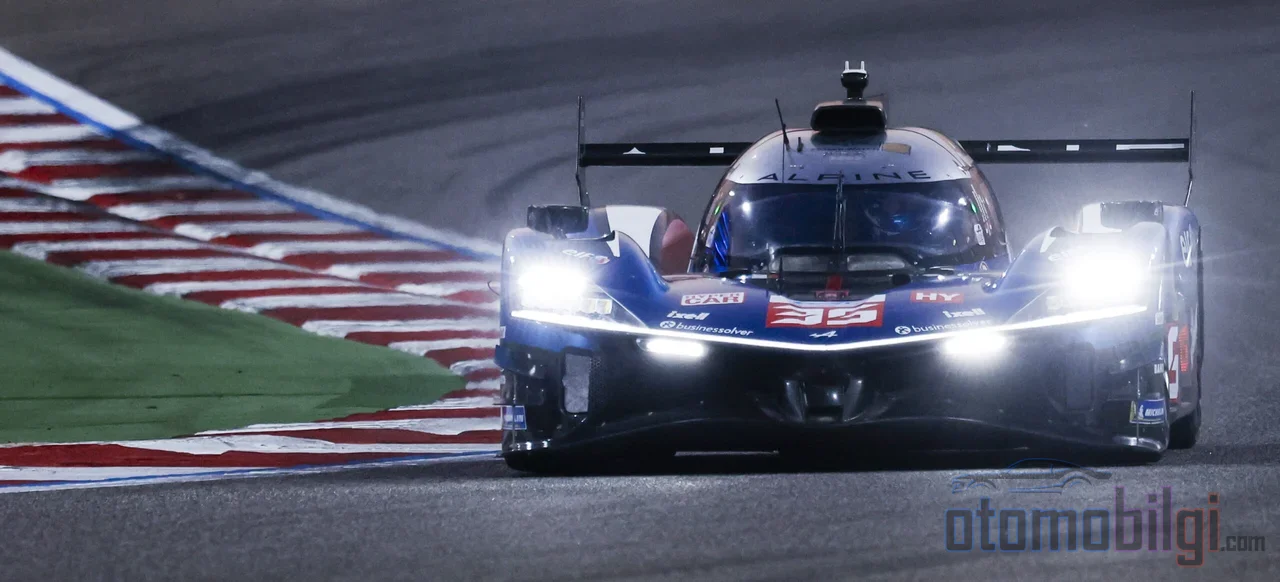
All three cars have hybrid systems, but each uses its hybrid in a different place and for a different purpose. Ferrari places electric motors on the front axle and engages them at high speed to create part-time all-wheel drive. Toyota has also fitted an electric motor to the front axle, but its large-displacement 3.5-liter V6 powers the rear; the total system produces 680 PS. Porsche's system likewise draws on its own hybrid heritage. In other words, hybrid is not a single solution; it is three separate engineering answers built around weight distribution, handling, and power delivery character. That is why, while watching the Hypercar class, you can see three different traction behaviors at the same corner entry - and all of them within the rules.
What is Balance of Performance (BoP) and how does it balance this diversity?
So how do cars with different displacements, cylinder counts, and hybrid configurations race fairly? The answer: BoP. According to Le Mans' official statement, BoP is a series of technical adjustments applied mainly to weight and power; the key to the Hypercar and LMGT3 regulations. The logic is this: to make brand diversity possible in exchange for preventing a manufacturer's engineering department from winning every race. It allows different models to be developed within the class without expensive development wars exploding.
Today's BoP ceiling puts the cars in the 650-700 hp band, and the current regulations are locked in until 2029. The calculation is not as mysterious as it might seem: data such as each car's best 10 laps, 60 percent of the best laps, a three-race rolling average, and top speed are taken into account; engine performance is measured live on the track. So while you watch Le Mans, an algorithm in the background is constantly adjusting your favorite car's weight and power.
But BoP has a price. A critical perspective questions whether the WEC is resorting to increasingly extreme measures so that every Hypercar can reach the same lap time: the interventions made to balance things out can somewhat erode the spirit of the technology race. In addition, it brings complications such as two different regulations (LMH and LMDh) coexisting in the same class and BoP changes being subject to Le Mans' approval. It is not at all surprising that newcomers still struggle to understand BoP after Spa or Le Mans; let us say from the start that it is not a perfect science.
Reliability and durability: What is the secret of engines that do not blow up over 24 hours?
The golden rule of endurance racing is simple: to finish is to win. The durability strategy here is directly reflected in engine choices. Almost none of the Hypercars in the field are designed from scratch with bizarre engines run from race to race; as seen in the examples of Alpine, Aston Martin, BMW, and Porsche, most teams use proven engines. Porsche's 4.6-liter V8 is an evolution of an old racing engine, and Toyota's 3.5-liter V6 is built on previous-generation experience. Reliability engineering is worth just as many points as outright power.
An interesting exception also disappeared into history with Aston Martin's entry: before it, the 4.6-liter 90-degree V8 was the only engine derived from a road car (the unit in the Porsche 963). Aston Martin's engine is also expected to be fundamentally no different from the 96.5 mm bore required by the regulations. Meanwhile, from the 2025 season onward, the requirement for every Hypercar manufacturer to enter with at least two cars thickened the field; more cars, more engines, more variety.
Why do manufacturers choose different engine layouts? - The short answer
Since we asked the essence of the question, let's give the clear answer: Manufacturers choose different engine layouts because each configuration involves different packaging, center of gravity, cooling, and cost trade-offs; engineers choose the one best suited to their car's targeted grip, weight distribution, and durability profile. Ferrari chose compactness and part-time all-wheel drive, Toyota large displacement and hybrid experience, and Porsche its proven V8 heritage. Since the rules allow freedom in architecture, these choices do not exclude one another; because the BoP seats them all in the same performance window, the on-track variety becomes both technical richness and competition itself. In other words, this variety is no coincidence; it is a deliberate design of the regulations.
What will the period ahead bring: more variety?
The 2026 season also brings new layers of variety: Hypercars now use Michelin Pilot Sport Endurance tires designed with 50 percent renewable and recycled materials, and new brands are joining the field; Genesis's 2026 WEC entry is also a current example of how teams balance speed with durability. It is also being said that major revisions to the Hypercar BoP are expected. And there is an unverified rumor: The claim that Ferrari's 2026 engine strategy prioritizes power first and leaves reliability for later, exploiting a gap in the FIA's rules, is circulating only in forums; there is no official confirmation, so read it as speculation. But this much is certain: as long as the regulations are locked in until 2029, V6s, V8s, and perhaps other layouts in the future will keep growling in the same class. Which engine would you bet on to break through - the agility of the compact V6 or the torque wave of the V8? Let's meet in the comments.
Sources
- Le Mans Hypercar - Wikipedia
- CAR DETAILS | 2025 | WEC - TOYOTA GAZOO RACING
- Toyota Launches GR010 Hybrid; Technical Details Revealed - Sportscar365
- Ferrari 499P: A New Era in Endurance Racing (official press release)
- The 963 - Porsche Motorsport
- Porsche 963 LMDh/GTP Hybrid Prototype Technical Insight - RaceCar Engineering
- What is "Balance of Performance"? - 24h-Le Mans
- FIA WEC BoP Process Explained (2025)
- The Engines Of Hypercar - DailySportscar
- FIA, ACO announce regulatory changes for Hypercar, LMP2 and hydrogen - Racer