What Is the Difference Between LMDh and LMH?
Share This Page
While watching the cars ahead at Le Mans, something crossed your mind: Ferrari and Porsche are racing in the same class, yet on paper the cars have almost nothing in common. One is a hybrid, the other is not. One's chassis is built in-house by its manufacturer, the other's comes off the shelf. So how do these two balance out over the same lap? Solving this dual system at the heart of the WEC Hypercar class - LMH and LMDh - is one of the most enjoyable steps toward truly understanding endurance racing.
Two Regulations, Two Different Stories: Where Did LMH and LMDh Come From?
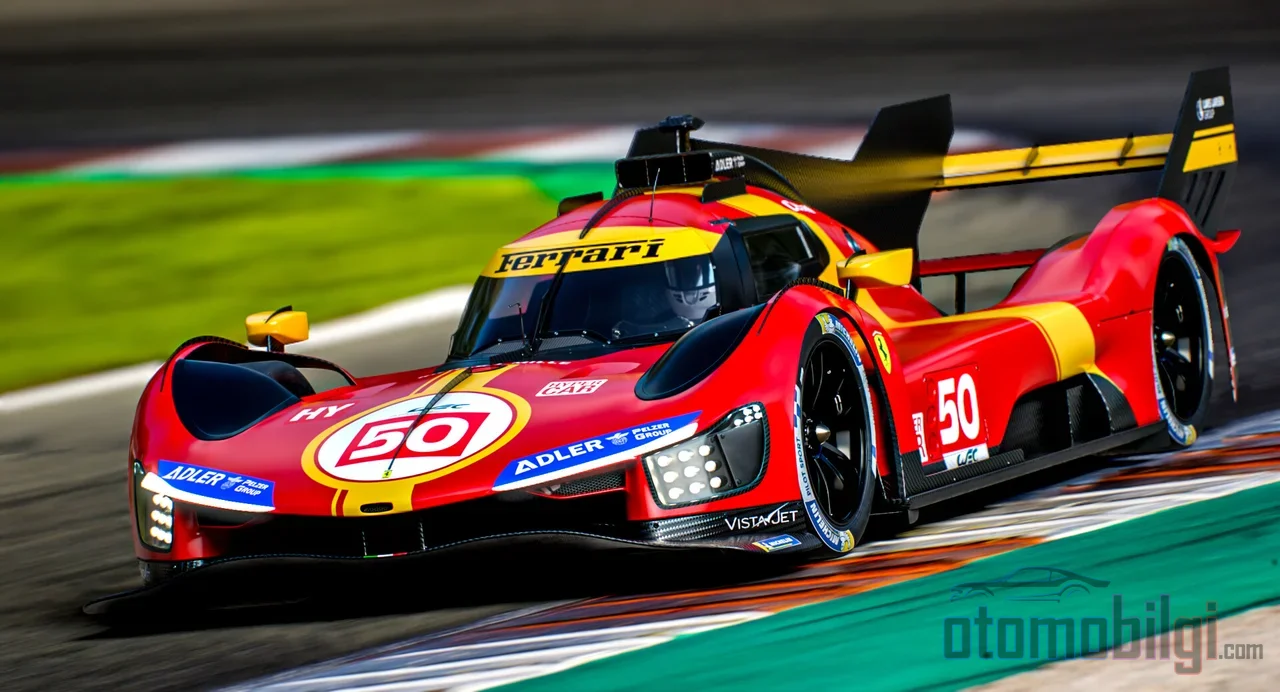
First, let's decode the acronyms, because each one tells a story. LMH, that is Le Mans Hypercar, is a joint regulation by the ACO and the FIA. It was designed to replace LMP1, but unlike that class's flying, expensive, manufacturer-scaring philosophy; it offers more cost-effective design flexibility. LMH cars can race only in the WEC and at Le Mans.
LMDh, that is Le Mans Daytona Hybrid, is a younger project. Announced at a joint press conference held in Daytona on January 24, 2020, this regulation was born as the successor to DPi on the IMSA side, and was written from the start with a plan to "converge" with LMH - that is, to one day meet on the same tracks. That plan worked: LMDh cars first appeared in the WEC in 2023, and that same year they entered IMSA's GTP class with the 24 Hours of Daytona. In other words, LMDh holds dual citizenship; LMH, meanwhile, is an option with a visa valid only for the WEC.
Highlights
- Both classes are limited to a minimum weight of 1,030 kg and a maximum power of 520 kW (698 hp) including the hybrid system
- The LMDh chassis can only be sourced from four suppliers: Dallara, Ligier, Multimatic, Oreca
- The LMDh hybrid system comes as a single-supplier approach: motor-generator from Bosch, battery from Williams Advanced Engineering, gearbox unit from Xtrac
- According to the ACO, the cost of running two hypercars is 80% lower than the old LMP1
- FIA, ACO and IMSA announced a single unified platform for Hypercar from 2030 onwards
Technical Differences: Mandatory Hybrid, or Off-the-Shelf Chassis?
Here's the tastiest part. The philosophy of the two regulations reveals itself in how they approach the hybrid system. In LMDh, the hybrid system is mandatory and comes as a single-supplier approach: Bosch's motor-generator, Williams Advanced Engineering's battery, Xtrac's gearbox-hybrid unit. The system drives only the rear axle and kicks in above 120 km/h, recovering up to 200 kW of energy. Think of it this way: everyone takes the same box and fits their own engine into it. Everything inside the box is standard; the engine outside is entirely yours.
In LMH, on the other hand, the architecture is almost entirely in the manufacturer's hands. The hybrid isn't even mandatory; if a manufacturer wants, one axle can add up to 200 kW of electric power; if it prefers, it can stay non-hybrid. While Toyota and Ferrari chose the hybrid path, Aston Martin confidently uses the Cosworth-developed 6.5-liter naturally aspirated V12 in the Valkyrie AMR-LMH as the class's only non-hybrid, non-front-drive, two-wheel-drive car. On the internal combustion engine side, displacement and architecture are already free in both classes: Peugeot has signed off on a 2.6-liter turbo V6, Toyota on a 3.5-liter twin-turbo V6.
Chassis, Weight, and Aerodynamics Rules
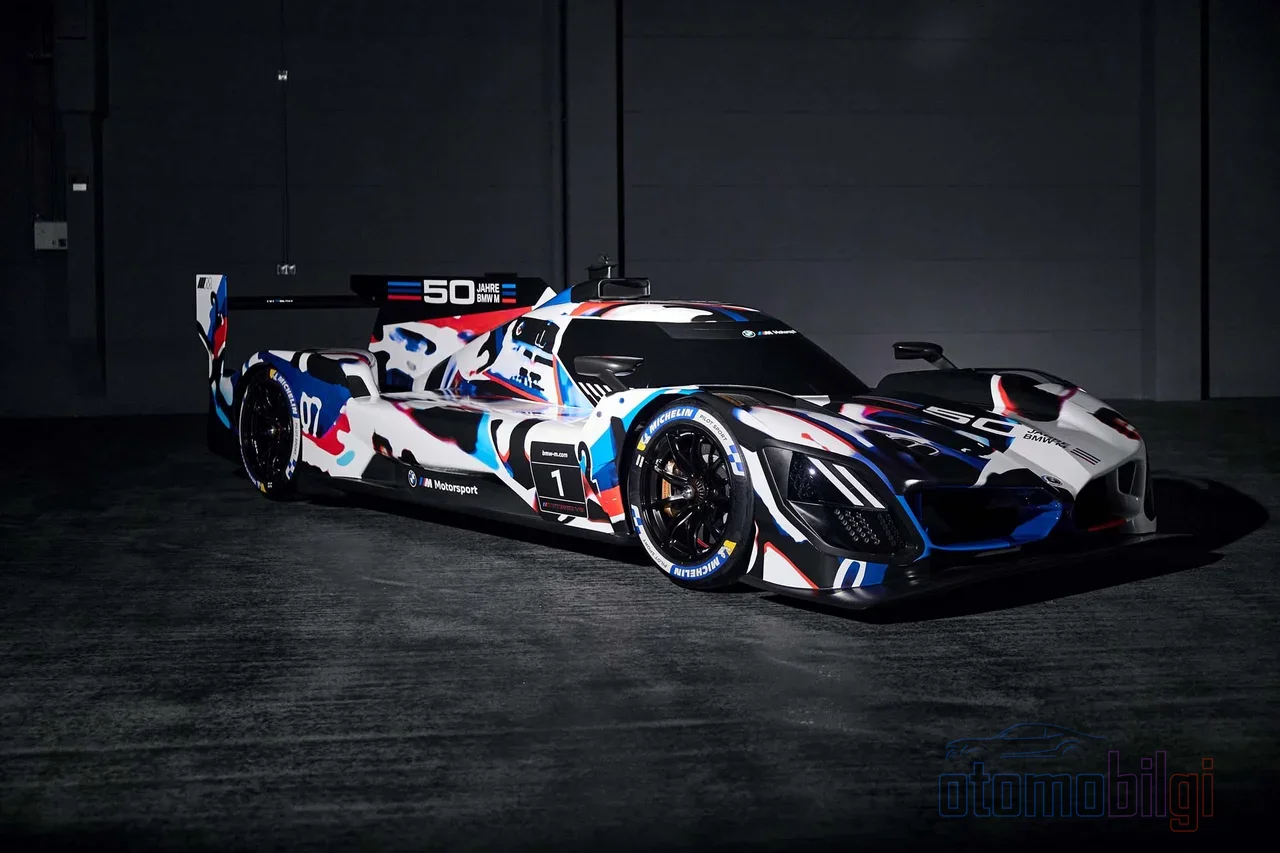
On the chassis side, the difference is even clearer. In LMDh there are four approved suppliers: Dallara, Ligier, Multimatic, and Oreca. Porsche 963 gets its chassis from Multimatic, Cadillac and BMW from Dallara, Acura and Alpine from Oreca, and Lamborghini from Ligier. Common dimensions are also fixed: 3,150 mm wheelbase, 2,000 mm width, 5,100 mm length. In LMH, however, the chassis is fully manufacturer-developed; there is even the possibility of two-way derivation from a road car. Article 19.1 of the regulations requires the production of 20 units of road-legal cars to enter the category - meaning LMH truly has a connection to a hypercar.
On weight and aerodynamics, the two classes are locked together. The minimum weight is 1,030 kg in both; the downforce/drag ratio is limited to 4:1 and only a single adjustable aerodynamic element is allowed. Peugeot's famous wingless 9X8 was a bold idea tested precisely within this constraint; in 2023 it returned to a more conventional design. The performance difference is also minimal: for example, the Toyota GR010 is 17% heavier and 32% less powerful than the old LMP1-era TS050, but on a short track like Spa the lap difference stays under 2 seconds. The rule writers got exactly what they wanted.
| Feature | LMDh | LMH |
|---|---|---|
| Origin | Joint IMSA + ACO regulations | ACO + FIA regulations |
| Series it can race in | WEC and IMSA (GTP) | WEC / Le Mans only |
| Hybrid system | Mandatory, single supplier (Bosch-Williams-Xtrac) | Optional, architecture free |
| Chassis | Dallara, Ligier, Multimatic, Oreca | Fully manufacturer-developed |
| ICE power ceiling | 470 kW (630 hp) | 500 kW (671 hp) |
| Total power (ICE + hybrid) | Max. 520 kW (698 hp) | Max. 520 kW (698 hp) |
| Minimum weight | 1,030 kg | 1,030 kg |
| Road car requirement | None | Requirement to produce 20 road-legal units |
Cost: Which Regulation Opened the Door for New Manufacturers?
In my view, this is the most critical point of this dual structure. The whole purpose of LMDh is to offer a controllable budget; chassis are sold with a cost cap of $409,000 (excluding the gearbox), and a complete LMDh car, excluding the internal combustion engine, costs around 349,750 euros. The standard hybrid package also supports cost efficiency. In short, LMDh works like a box office selling the Hypercar entry ticket at a discount.
On the LMH side, no overall budget cap has been announced; design freedom naturally can bring higher development costs. But the picture is not one-sided: A cost cap of 3 million euros was set for the supply of ERS systems in LMH to customer teams, and the overall picture is again far better than LMP1's extravagant days. Most of the newcomers - such as Ford, McLaren and Genesis on the Hyundai side - therefore preferred LMDh; while the more mature names fond of design freedom stayed in LMH.
Balance of Performance: How Are Different Philosophies Equalized?
Here is the magic formula that allows the two rule sets to coexist peacefully on the same track: Balance of Performance, or BoP for short. Its logic is very simple and can be explained with an everyday analogy - if everyone races on their own bicycle, it doesn't matter that the bikes are different; you lighten the heavy one, fit a slight speed limiter to the light one, and the odds are evened at the starting line. In the WEC too, BoP adjusts each car's weight, maximum power output and, in LMH, the speed threshold at which four-wheel drive engages. The aim is for hybrid and non-hybrid, four-wheel drive and two-wheel drive to genuinely be able to battle; while also giving the teams further back a chance to win and not breaking the spirit of the development race.
BoP can be controversial too, let's not hide that: who got how much of an adjustment is discussed after every race. But the FIA side has renewed its next-generation BoP system for greater stability, and the weight-power map for the 2026 championship is being kept secret. In other words, this subtle game played with scales and the pedal behind the scenes is the real competitive framework behind the class's visible heroes, the Ferrari, Toyota and Porsche names.
Who Is on the 2026 Grid, and Which Path Did They Choose?
Looking at the 2026 Hypercar grid, the strength of the dual system is evident: giant names like Aston Martin, Alpine, BMW, Cadillac, Ferrari, Genesis, Peugeot and Toyota are in the same class. The LMDh side is experiencing notable expansion: Genesis's GMR-001 made its debut with the 2026 6 Hours of Imola, while Ford (with an Oreca chassis) and McLaren's MCL-HY (Dallara) are joining in 2027. Ferrari, meanwhile, is adding a third 499P in 2026, taking the field with three cars; Alpine is on the grid with its pair of A424s and the 3.4-liter Mecachrome engine.
The big surprise came from the Porsche camp: the 963 is not on the WEC's 35-car 2026 entry list, and the team is parting ways with Team Penske in 2026; Porsche's WEC adventure continues in LMGT3 with Manthey. On the other hand, Ferrari has committed its loyalty to WEC Hypercar through the end of the 2029 season - meaning one of the class's most ambitious names is staying for the long term. The fact that LMDh cars can run both in IMSA (where they are called GTP) and in the WEC under the same basic homologation also fuels this mobility.
The Future: Is a Single Regulation Coming in 2030?
So will this dual structure last forever? The answer seems to be no. The FIA, ACO and IMSA have announced a single, unified technical platform for the Hypercar class from 2030 onward; and H2 Hypercars are said to follow the powertrain and hybrid principles of the 2030 regulations as well. The goal is to offer existing and potential manufacturers a long-term environment of stability. Steps heralding this have already been taken: The Hypercar and LMDh homologation cycle has been extended until 2029, and manufacturers have been granted a total of five "joker EVO" development rights across the class.
Of course, the merger doesn't make everyone fully happy: while a single platform promises manufacturers stability, its narrowing of technical options is a point of criticism. Moreover, new doors are also opening on the LMDh side - from the 2026/27 season onward, these cars will be able to compete with Pro/Am Hypercar entries in the Asian Le Mans Series. So no matter how unified the regulations become, the rise of Hypercar shows no signs of slowing.
In short: What Is the Difference Between LMDh and LMH?
Let's summarize, because that's what we promised at the start of this page: LMH is the ACO's original Hypercar regulation that gives manufacturers full design freedom; LMDh is the "entry ticket" of IMSA origin, with four approved chassis suppliers and a standard hybrid package that keeps costs under control, eligible to race in both the WEC and IMSA. Both share the same 1,030 kg weight and roughly the same 520 kW power ceiling, and are equalized for the same battle through Balance of Performance. One gives you a ready-made base, onto which you put your own engine; the other draws its own car from scratch, but you bear the cost and the risk. The answer to which path is right is clearly written on the grid: both work, and Hypercar's rich manufacturer list exists precisely thanks to this duo.
Which one do you find more appealing: the LMH path that stamps your own signature from scratch, or LMDh, entering smartly within budget? Let's meet in the comments - I'm eagerly waiting to see how Ford and McLaren's entry will change this picture in 2027.
Sources
- LMDh - Wikipedia
- Le Mans Hypercar - Wikipedia
- Le Mans Hypercar: LMH and LMDh 2026 guide
- LMDh Technical Regulations (IMSA/ACO)
- Le Mans Daytona hybrid system - Bosch Motorsport
- Single technical platform announced for Hypercar class from 2030 - FIA WEC
- 24 Hours of Le Mans - The 2026 Hypercar class preview
- Hypercar Homologation Cycle Extended to 2029 - Sportscar365
- Porsche 963 absent as WEC publishes 2026 entry list - Motorsport.com
- The ACO turns 120 - 24h-lemans.com