Porsche 919 Hybrid: The Story of Three Le Mans Victories
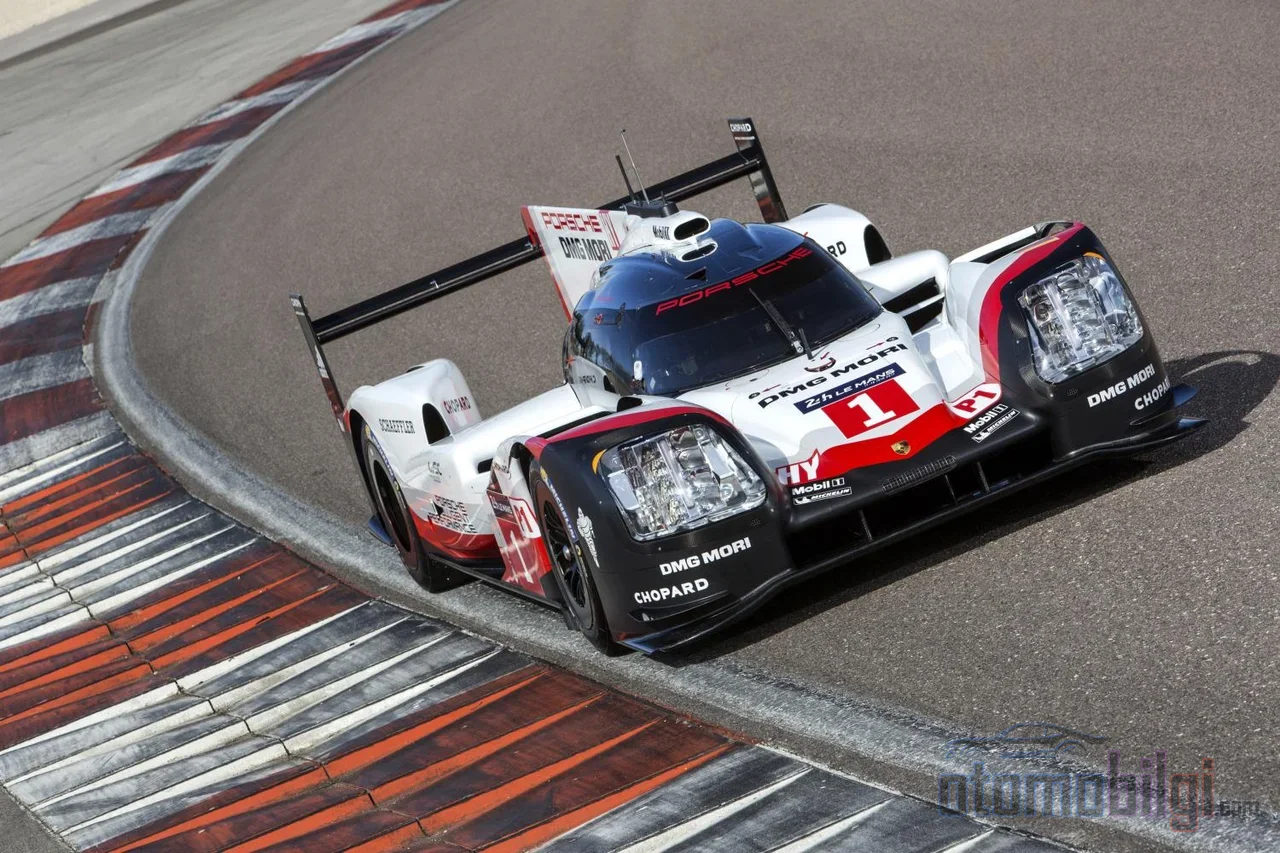
Imagine you're on a June night in 2015, sitting in the Le Mans grandstands as the clock shows the first signs of morning. Toward the end of the 24 hours, Porsche's number 19 car takes the lead, with an F1 driver who came as a guest that year at the wheel: Nico Hulkenberg. And at that moment, one of the most intriguing projects in automotive history receives its first major medal. The hero of that night was the Porsche 919 Hybrid, and it would bring two more victories in its wake. What's more, its story doesn't end with those three cups; the car's spirit still influences even today's WEC Hypercar regulations. If you're ready, let's get to know this turbocharged V4 monster up close.
What Is the 919 Hybrid and How Was It Born?
The idea for the project emerged in mid-2011, at the desks in Weissach. Two months later came the official announcement, and the team grew rapidly: Alex Hitzinger, coming from the F1 world, was appointed technical director, and Fritz Enzinger took over as head of the project. Porsche assigned 200 full-time employees to this car at its headquarters in Weissach. So this was not an experimental project; it was a full-fledged mobilization.
But would such an investment really be made in a car? The answer is simple: Porsche had not produced a factory prototype in the top category since 1998. The 919 Hybrid was not only the first Porsche prototype after the RS Spyder, it was also the first factory move after the LMP1-98. A total of 9 chassis were produced, and the name was not chosen in vain: As a continuation of legendary names like the 917, 908 and 906, it also became a symbol of the transition to hybrid technology.
Highlights
- Consecutive 2015, 2016 and 2017 24 Hours of Le Mans victories
- Approximately 900-1,000 hp system power in the race version, all-wheel drive with a dual hybrid system
- A lap record of 5:19.546 at the Nordschleife with the 919 Evo (June 29, 2018)
- 17 wins in 34 races, 20 pole positions, and 3 consecutive championships for both drivers and manufacturers
Its Technical Heart: The Turbocharged V4 and Dual Hybrid System
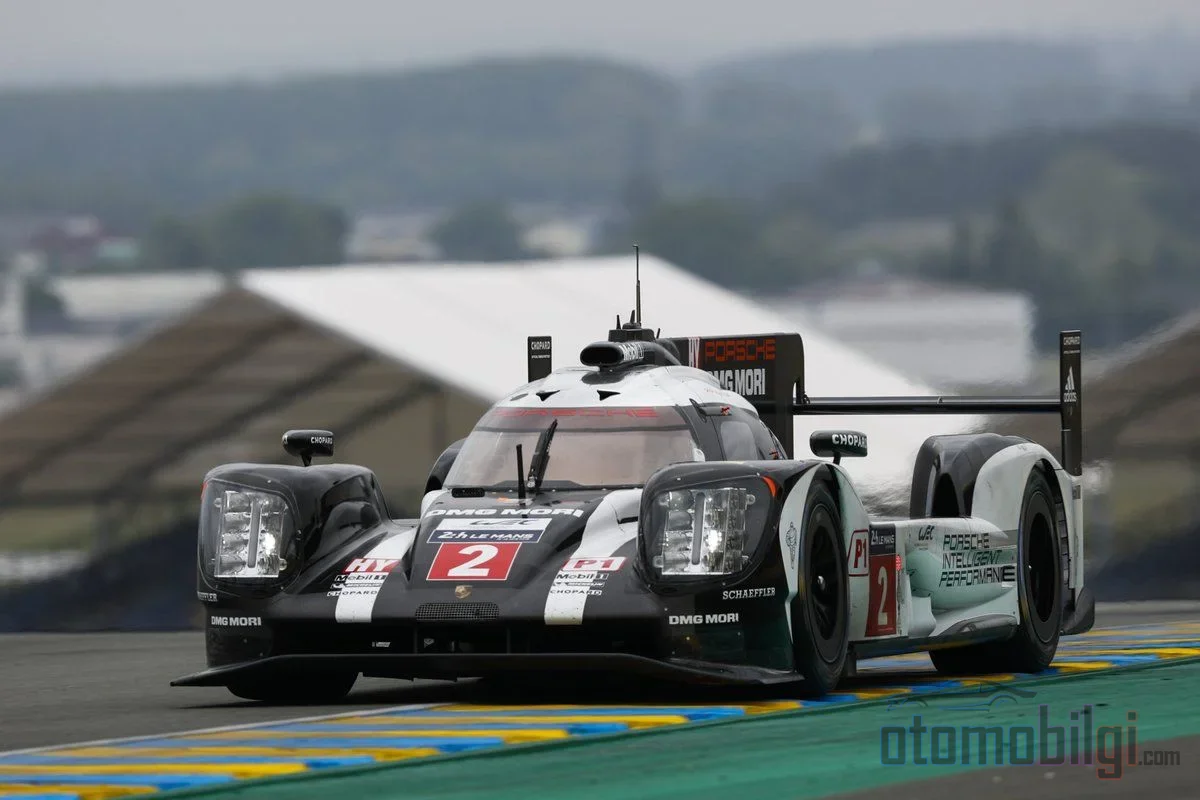
When you open the hood (assuming this car even has one), what awaits you might surprise you: A mono-turbo V4 engine with a 2.0-liter displacement and a 90-degree angle. This engine, coded 9R9 by Porsche, revs up to 9,000 rpm and produces about 500 hp. Do you know what's most interesting? Just like in a Formula car, the engine was designed as a load-bearing part of the chassis. In other words, if you press on the engine, you damage the car. The exact opposite of the engine mount logic in your daily car.
But the real magic of the 919 lies on the hybrid side. Just think: the car has two separate energy recovery systems. One converts the heat of the exhaust gases into electricity with a twin-turbine generator; the other collects kinetic energy during braking via the motor-generator (MGU) on the front axle. Water-cooled lithium-ion battery packages located on the passenger side handle storage, and these batteries also soften turbo lag. At the moment of acceleration, when the motor on the front axle kicks in and sends about 400 hp of extra power, the car temporarily becomes all-wheel drive and total power can climb up to 1,000 hp. This thrust, kicking in suddenly on corner exit, is a complete nightmare for the rivals.
The car evolved over time: In 2014 it was homologated in the 6 MJ energy class (the design was actually intended for 8 MJ), in 2015 it moved to the 8 MJ class and hybrid power rose to 294 hp. In 2016, due to electric/fuel restrictions, the engine was lightened to 480-495 hp, but thanks to the 800-volt battery the total power was kept at around 900 hp. By 2017, 60 percent of the energy was coming from braking and 40 percent from the exhaust turbine; the turbine was spinning above 120,000 rpm.
| Feature | Value |
|---|---|
| Engine | 2.0 L V4, single turbo, direct injection (Porsche 9R9) |
| Internal combustion power | Approximately 500 hp (2016: 480-495 hp) |
| Hybrid power | 2015: 294 hp; 2016: 400+ hp on the front axle |
| Total power | Approximately 900-1,000 hp (transient) |
| Transmission | 7-speed electro-hydraulic sequential |
| Weight | 870 kg (from 2015 onwards) |
| Tires | 360 mm Michelin |
2015: The First Victory of the Turnaround
2014 was a learning year: the first race came at Silverstone, and the first win came at São Paulo at the end of the season. The real explosion happened in 2015. The trio of Bernhard/Hartley/Webber won four of eight races, bringing the drivers' and manufacturers' world championships to Porsche. But the Le Mans victory came from another trio: Bamber/Hulkenberg/Tandy, in the third 919, won both Spa and the 24 Hours of Le Mans.
That year the car also saw a serious technical leap: thanks to the new one-piece chassis, the weight dropped from 900 kg to 870 kg. In addition, special liveries were prepared for the three cars; the number 17 car was red, saluting the first overall victory, which came with the Porsche 917 in 1970. In other words, Porsche had dressed its own history as a stage.
2016 and 2017: The Years the Peak Was Proven
2016: The Second Round of Championships
The trio of Dumas/Jani/Lieb won Silverstone and Le Mans, and became drivers' champion at the end of the season; Porsche also secured its second consecutive manufacturers' championship. Standing on both the drivers' and manufacturers' podiums two years in a row proved that the project was now a balance of strength, not luck.
2017: The Radicalized Final Version
Things changed in 2017: Dumas and Lieb left, replaced by Tandy joining Neel Jani and André Lotterer, who came from Audi. When Webber retired, Bamber paired up with Bernhard/Hartley. The car itself was also almost completely rebuilt; 60-70 percent of the 2017 version was new. The new rules brought restrictions and cost control with two aerodynamic packages, yet despite this the team sharpened the car to the bone.
The result? Imagine a car at Le Mans that takes victory by coming back from 13 laps behind. Really: The trio of Bamber/Bernhard/Hartley managed to take the lead despite a serious lap loss during the race. Three more races were won that same season, and in Shanghai Porsche secured its third consecutive drivers' and manufacturers' championship. The project's overall record is also impressive: 17 wins from 34 races, 43 podiums, 20 pole positions and 6 world championships. After 2017, Porsche turned to Formula E and the project was shut down; the ending wasn't bad at all while it was at its peak.
919 Evo: Where Races End, Records Begin
The story seemed over, but Porsche had one more surprise up its sleeve: the 919 Evo, introduced in April 2018. This car was no longer built for racing, but for pure speed. The fuel flow restriction was removed; the engine rose to 720 PS, the electric motor to 440 PS, and according to Porsche's announcement the system power reached 1,160 hp. With the air conditioning, wipers, and headlights removed, 39 kg of weight was shed, bringing the car down to 849 kg. On the aerodynamics side, with active DRS, an enlarged rear wing, and an extended front diffuser, 53 percent more downforce was generated compared to the 2017 Spa qualifying version.
First, at Spa, Neel Jani set 1:41.77, the fastest unofficial lap of that era. The real finale came on June 29, 2018: Timo Bernhard lapped the 20.832 kilometers of the Nurburgring Nordschleife in 5:19.546, with an average speed of 233.8 km/h. The record that had stood at around six minutes since May 1983 was improved by roughly 52 seconds. The car even hit 350 km/h at the Antoniusbuche section. Even today, this lap remains one of those classics that locks viewers to their screens.
The Legacy It Left in Today's Hypercar Order
So what is the 919's connection to today? The short answer: its official successor, the Porsche 963 (LMDh), and the Hypercar order in which it races. The mid-2010s LMP1 hybrid arms race lit the fuse for manufacturers' return to endurance racing; today the 2026 WEC grid hosts 14 manufacturers. In the Hypercar class there is no restriction on engine type, hybrid systems are free, and except for one version (the Aston Martin Valkyrie with its naturally aspirated V12), all cars are hybrid. With the Ferrari 499P, Ferrari is chasing back-to-back victories and is committed to the class until the end of 2029; let's also add that Ferrari expanded the grid with a third 499P in 2026. Alpine, BMW, Cadillac, Peugeot, Toyota, and even new names like Genesis are part of this order.
The 919's direct influence on the LMH rulebook may be a debated topic; but this much is clear: Porsche's dual energy recovery, the corner-exit advantage from battery power, and its hybrid-focused engineering approach laid the groundwork for today's manufacturer competition. In today's Hypercar class, balance mechanisms such as the success handicap system are discussed; the cost and aerodynamic restrictions introduced to LMP1 in 2017 were the first steps of this search for balance.
To put one fact plainly: the 919 Hybrid is the strongest stone in the bridge stretching from the end of the LMP1 era to today's open and crowded Hypercar order. Three Le Mans victories, six world championships, and a Nordschleife record that seemed unbreakable... When these numbers come together, the word legend is no exaggeration. Which of today's Hypercar cars do you think will one day write a career similar to the 919's legacy? In my opinion, it's worth watching.
Sources
- Porsche 919 Hybrid
- Technical check: 919 Hybrid Evo
- Watch the Porsche 919 Hybrid Evo's Nürburgring lap
- History of the Porsche 919 Hybrid and its three wins at the 24 Hours of Le Mans
- Porsche 919 Hybrid Evo Sets New Fastest Nürburgring Lap
- FIA WEC 2026 Provisional Entry List
- Success Handicaps Set to Be Introduced to Hypercar in 2026
- Porsche 919 (9R9-2014)