What Happens If the WEC Energy Limit Is Exceeded? Penalties and Rules
Say you're on screen during the Le Mans night, a Hypercar leading the leaderboard dives into the pits, and next to it there's that little percentage indicator. But have you ever wondered: does that percentage show the real fuel tank? The answer is both yes and no. And this is exactly where WEC's cleverest rule comes into play: the stint energy limit. On this page, we'll talk about who sets that limit, how, and based on what. If you're ready, let's dive in, because once you learn this, the way you watch races will change, promise.
What Is the Virtual Energy Tank?
In the WEC, the amount of energy a car can spend before returning to the pits is determined not by the physical fuel tank, but by a regulatory mechanism called the virtual energy tank. This tank is measured in megajoules (MJ) and represents the sum of the fuel consumed by the internal combustion engine and the torque produced by the hybrid system. In other words, the total energy the car sends to the wheels is collected in a single account, without asking whether it's gasoline or electricity.
Think of it this way: your phone has both wireless charging and wired charging; the bill deducts both methods from a single package. WEC cars are the same. Turbocharged gasoline engine, hybrid system, LMGT3's different rules... Whatever you use, the MJ package allocated to you for that race is shared.
So how is this package measured? Torque sensors mounted on the rear axle (on both axles in LMH cars) and on the driveshaft, resistant to heat and electromagnetic fields, continuously monitor how much energy the car uses. On the LMGT3 side, energy consumption is calculated from the integral of these torque measurements. So the rule isn't just on paper; it's physically measured inside the car. And what happens if a sensor fails? At 2023 Portimao, the No. 7 Toyota lost serious time for exactly this reason.
Highlights
- Stint energy is measured in megajoules (MJ) and is completely separate from the physical fuel load.
- The energy allocated to each car varies by car and track under the BoP.
- Ahead of the 2026 Lone Star Le Mans, Hypercar stint energy was reduced by around 10-15%.
- Hypercar maximum power is 500 kW, minimum weight is 1030 kg.
- At Le Mans, a car refuels roughly 30 times in 24 hours.
Who Determines and How Is the Energy Allocation Set?
Here's the heart of the page. The stint energy allocated to each car is part of the Balance of Performance (BoP) process managed by the FIA and the ACO. So the MJ value doesn't come from a fixed rulebook; it is determined separately for each car and for each event. The LMGT3 technical regulations make this explicit: the energy used in a stint cannot exceed the MJ value defined in that event's BoP table.
The BoP has three main adjustment screws: minimum weight, permitted power, and maximum energy per stint. These are readjusted from race to race based on race results. The Ferrari 499P received a 12 kg weight increase and a 4 kW power reduction under BoP ahead of the 2026 Le Mans; On the LMGT3 side, a weight penalty called success balance is applied (in all races except Le Mans).
An interesting detail: fuel flow rates are no longer restricted. While in the past the amount of gasoline you could draw per second was limited by the rules, what matters now is the fill rate of the virtual tank, again in MJ. When the refueling sensor in the pit detects fuel, the virtual tank is considered filled; it is an entirely virtual process, and no electrical energy is added.
What Do Engine Types and Class Differences Change?
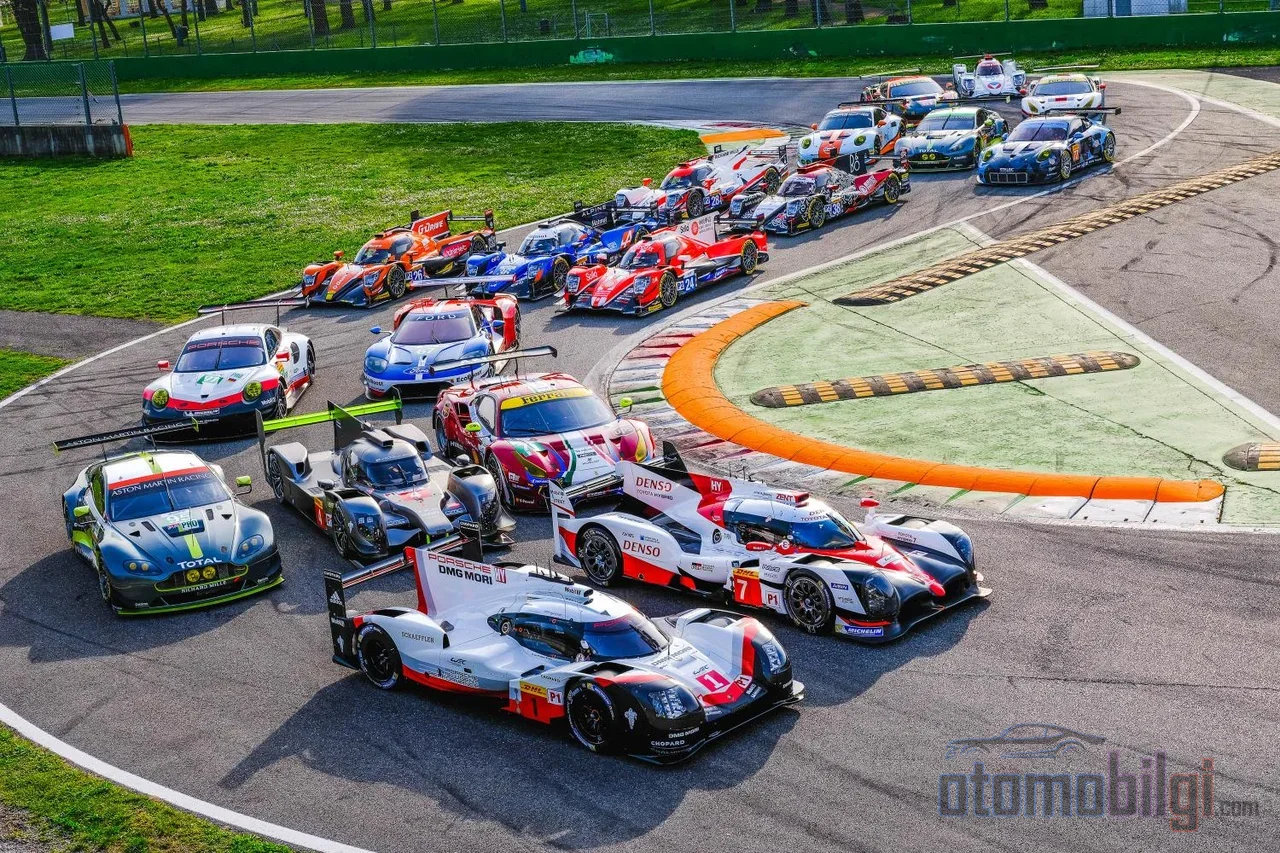
The most beautiful thing about the Hypercar class is that different engineering philosophies can race on the same track. LMH and LMDh platforms, hybrid and non-hybrid designs, different engine types... All in the same category. What makes this mosaic possible is BoP, and stint energy sits at the center of this balancing system.
There are fixed lines, of course: In Hypercars, maximum power is 500 kW, minimum weight is 1030 kg, Michelin tires are mandatory, and there is the three-professional-driver rule. On the tank side, the maximum fuel capacity for Hypercars is 75 liters (2023 data). But from 2026 onward, an important turning point occurred: all newly homologated Hypercars are required to include an Energy Recovery System (ERS). The non-hybrid prototype era has effectively closed.
Things work differently on the LMGT3 side. According to a BoP document of the 2025 season, LMGT3 cars were given a stint energy ranging between 669 and 702 MJ, varying by car. On the Hypercar side, the exact MJ values in the current 2026 BoP tables are not yet widely published; the most concrete example we have for comparison is IMSA data: In 2023, the limit, which was 920 MJ at the start of the year, had dropped to 902 MJ by the Indianapolis round.
How Does the Energy Limit Shape the Tank and Pit Stops?
Here is the mind-boggling part: teams can freely choose the actual amount of fuel. But carrying more than the virtual energy capacity simply means unnecessary weight. So even when you can fit 75 liters into the tank, if BoP gives you, say, 700 MJ and 60 liters is enough for that energy, you choose to stay light rather than carry the excess. This is the basic endurance math: a stint lasts roughly between 45 minutes and 1 hour.
So what happens if the limit is exceeded? The penalties are heavy. Under IMSA rules, the first violation adds a 100-second wait penalty to the pit stop, and with each subsequent violation the penalty grows in multiples of 100. The logic is similar in WEC: the virtual tank is not depleted during the race, but the price of exceeding the limit is paid on the track.
Are the Virtual Tank and Real Fuel the Same Thing?
Not exactly, and this distinction keeps teams' strategy desks busy. While no energy is spent in the pitlane, real fuel is used during tempo laps and pit transitions. So there is a small but strategic gap between virtual energy and real gasoline. The car can fill the virtual tank even without taking fuel, while plugged in.
The Le Mans Scenario: 30 Stops in One Night
At the 24 Hours of Le Mans, a car refuels roughly 30 times over the course of the race. The strategy team plans three variables together: stint energy limit (which determines how many laps you can run), pit stop duration (refueling time and virtual tank fill rate) and the number of stops. Bourdais's approach is a good example of this: if roughly 25 seconds of energy is added, rather than filling the car in exactly 25 seconds, it can make more sense to take two-thirds of the tank plus a bit more and shorten the stop.
Fuel-saving techniques (such as lift and coast) also map directly onto energy saving; if a driver lifts off slightly early, both petrol and virtual energy build up at the same time. The TotalEnergies-produced 100% renewable Excellium Racing 100 fuel used in the series since 2022 has also changed the environmental side of things: it delivers at least 65% greenhouse gas savings compared to conventional fossil fuel.
How Does BoP Intervene in the Energy Limit?
When people hear BoP, most think of weight, but energy allocation is an adjustment just as powerful. The FIA and ACO carried the BoP experience they had gained in GT racing since the mid-2000s into the Hypercar era, and now they calibrate weight, maximum power and stint energy together at every race.
A live example of this happened before round 5 of the 2026 season, the Lone Star Le Mans race (COTA, Austin, September 4-6, 2026). The WEC significantly reduced Hypercar stint energy. Toyota technical director David Floury expected the reduction to be around 10-15%; Brendon Hartley, meanwhile, said it meant a loss of roughly 3-4 laps per stint. The result: a normally six-stint strategy turns into seven stints, and despite the shorter stints, more double-stint tire runs are required. Cadillac driver Jack Aitken believes the purpose of the reduction is to prevent Hypercar and LMGT3 pit-stop cycles from overlapping, but the FIA and ACO have made no official statement. One more note: from 2026 onward, the FIA stopped publishing lap-based BoP details, meaning following it from the outside is harder than before.
Why Does Such a System Exist?
The short answer: fair racing and cost control. If a more efficient car could run longer and make fewer pit stops, the winner would be engineering budgets, not racecraft. The virtual energy tank brings everyone to the same energy budget; torque sensors limit development costs, while BoP ensures that different designs (LMH, LMDh, hybrid, non-hybrid) can race meaningfully in the same category. The concept is not new either: LMP1 cars were also subject to per-stint fuel and per-lap energy limits, and this system has officially existed since the Hypercar class replaced them in 2021. Even IMSA moved to the same energy calculation philosophy with the LMDh rules in 2023, so that cars from the two series could be equalized against each other.
In short: Megajoules Run the Race
So the clear answer to the question at the beginning: In the WEC, stint energy limit is a maximum energy budget, measured in MJ, set individually for each car and each race by the FIA and ACO through the BoP process, and monitored via the torque sensors on the car. This budget varies by class and engine type, and directly determines the number of pit stops and stint planning. The next time you see that percentage on the screen, you now know: that indicator is not fuel; it is counting megajoules, the real currency of the race.
Sources
- How virtual energy has become a defining principle in Hypercar racing
- FIA WEC Regulations
- WEC prepares shorter Hypercar stints for Lone Star Le Mans
- Pit stop tactics: a major factor at the 24 Hours of Le Mans
- WEC Regulations - TotalEnergies Competition
- About 2023 WEC - Toyota Gazoo Racing
- What is Virtual Energy (NRG)? - Le Mans Ultimate Guide
- Hypercars Facing Reduced Stint Lengths at COTA
- What is maximum stint energy (MJ)? - Reddit r/wec