How Did the Aston Martin Valkyrie Become a WEC Hypercar?
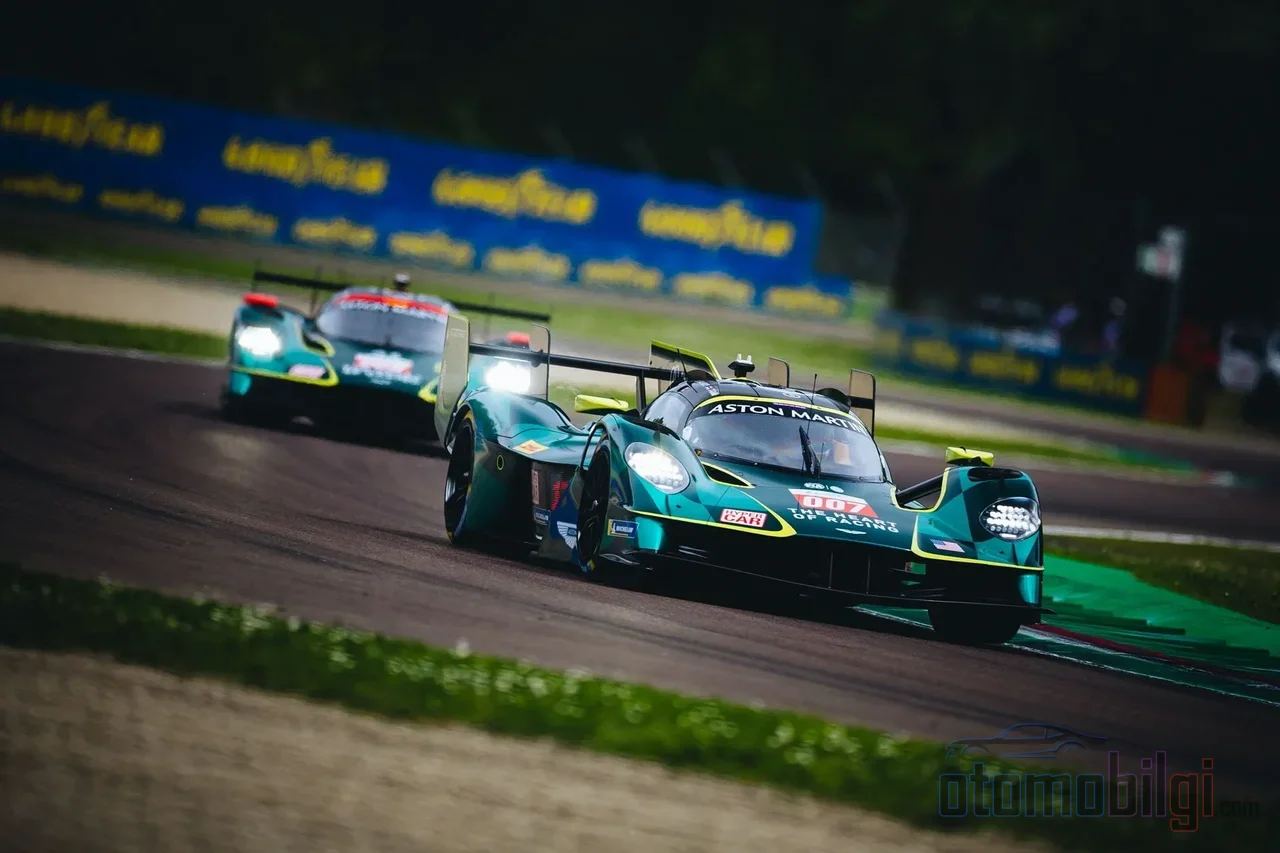
Think about it: You have one of the most extreme road hypercars in the world, with an atmospheric V12 that revs up to 11,000 rpm and produces over 1000 horsepower. Then someone comes along and says we will take this car, remove its hybrid system, cut its power nearly in half, strip away the flashiest parts of its aerodynamics, and take it to the 24 Hours of Le Mans. Sounds like madness, doesn't it? Well, the story of the Aston Martin Valkyrie's transformation into a WEC Hypercar is exactly that: the effort of translating the road car's story into the iron discipline of endurance racing. And within this journey there are engineering choices that make the Valkyrie unlike any rival on the grid.
So what did this transformation actually change? Which parts were removed, how was the engine adapted, and why does the car race without a hybrid? Let's start from the beginning.
The Road Valkyrie: The Starting Point of the Transformation
The Valkyrie is Aston Martin's road hypercar, born and developed with Red Bull and bearing the traces of Adrian Newey's aerodynamic philosophy. The 6.5-liter 65-degree V12 engine developed by Cosworth produces over 1000 bhp in standard form and can rev up to 11,100 rpm. Peak torque is 740 Nm @ 7,000 rpm according to manufacturer data, while on the road car's own promotional pages, total output with KERS hybrid support rises to around 1130 bhp. In other words, this is a road car that has been trying to behave like an F1 car since day one of the series.
The aerodynamic side is equally ambitious: the body features a large open underfloor working on Bernoulli and Venturi principles. Ground effect, meaning accelerating the air passing under the car and lowering the pressure to stick it to the ground, is at the heart of the Valkyrie's identity. Its weight is lowered by the carbon fiber used extensively throughout the body.
So far, so good. But the moment you step into the world of racing, the picture changes.
Highlights
- The Valkyrie is the only car on the WEC Hypercar grid without a hybrid system
- The road car's V12 was reduced from over 1000 bhp to the 500 kW (671 bhp) regulation limit
- The AMR-LMH is the first sports prototype to race with a V12 in the top class of endurance racing in 14 years
- The ACO extended the current Hypercar homologation cycle until 2029
- In the 2026 WEC, the Valkyrie recorded eight consecutive point finishes before Fuji
Adapting the Powertrain: From 1000 Horsepower to 500 kW
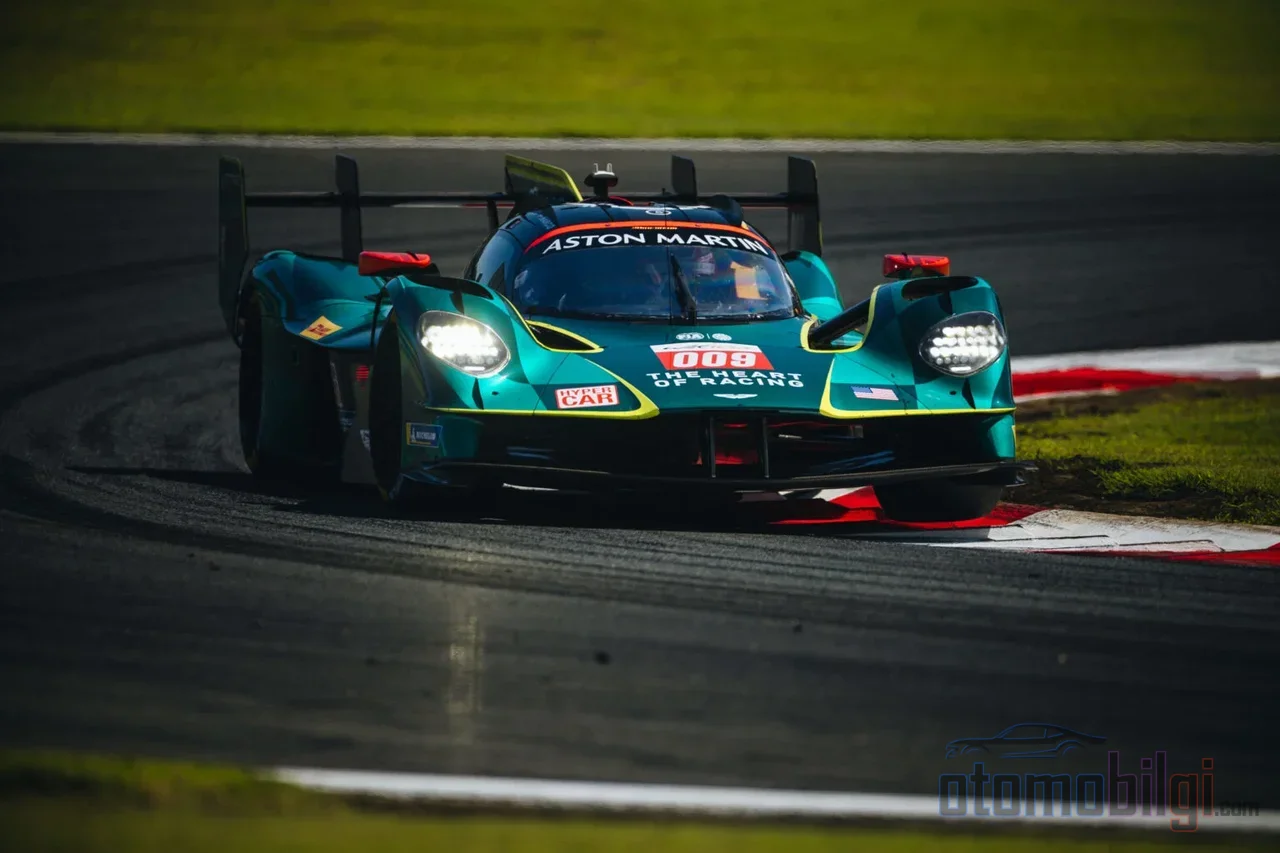
One of the most striking rules of the Hypercar class is the power cap: WEC and IMSA's GTP regulations hold engine output at a strict limit of 500 kW (671 bhp). That legendary V12 that revs to 11,000 rpm runs at roughly two-thirds of the road car's power on the race track. Imagine: the engine still has the same character, the same sound, but a regulatory framework has been drawn around it.
What makes it even more interesting is this: The Valkyrie is the only Hypercar on the grid that does not use a hybrid system. While the Toyota GR010 Hybrid, Ferrari 499P, Porsche 963, Peugeot 9X8, BMW M Hybrid V8 and Alpine A424 are hybrid-powered, the Valkyrie takes a completely different path: naturally aspirated V12 only, rear-wheel drive. This is the car's engineering signature, radically diverging from other manufacturers.
But this choice also comes at a cost. The high torque produced by the engine can make the car unstable in certain phases of a corner; this character, inherited from its road car specification, becomes a variable that must be managed in racing conditions. Torque management is one of the ongoing engineering agendas of this project.
Aerodynamic Transformation: What Was Removed, What Was Rewritten?
The road-going Valkyrie's aerodynamic repertoire was the hardest part to deal with under LMH regulations. A significant portion of the active aerodynamic elements and ground effect had to be abandoned in the racing conversion as required by the rules. In other words, some of the car's most characteristic features simply could not be found in the homologation process.
So what took their place? The aerodynamics of the Valkyrie's track-focused Valkyrie LM version were developed from scratch to meet the ACO/FIA LMH homologation criteria: the Adjustable Aerodynamic Device (AAD), front wing elements and a floor with Venturi tunnels. The spring and damper systems were also completely re-optimized for control of the aerodynamic platform. In short, the car preserves its road-going sibling's philosophy but lives with a new aerodynamic map permitted by the regulations.
The Homologation Journey
Homologation means the official approval of a race car's compliance with technical rules and the freezing of its design. During this process, the Valkyrie reached the point of freezing its design as it passed technical inspection ahead of its first race in Qatar. Moreover, this freeze is long-term: The ACO extended the current homologation cycle until 2029. In other words, once approved, the aerodynamic identity remains closed to major changes for years. The main tool available to manufacturers who want to make developments is the limited upgrade rights known as the evo joker; Aston Martin is evaluating its first major upgrade for 2027, and it is also notable for being the only manufacturer not to have used this right so far.
From Road Car to Racer: Comparative Table
| Feature | Valkyrie (Road) | Valkyrie AMR-LMH (Race) |
|---|---|---|
| Engine | 6.5 L naturally aspirated V12 (Cosworth) | Same base, modified for racing |
| Power | Over 1000 bhp (1130 bhp with KERS) | 500 kW limit (671 bhp) |
| Maximum revs | 11,100 rpm | Limited by regulation |
| Peak torque | 740 Nm @ 7,000 rpm | Managed with race settings |
| Hybrid system | KERS present | None, the only non-hybrid Hypercar on the grid |
| Aerodynamics | Open to active aerodynamics | AAD, front wing, Venturi floor |
| Chassis | Carbon fiber monocoque | Carbon fiber chassis optimized for racing |
Entry into the Calendar and Its Position in the 2026 Season
Valkyrie, through the Aston Martin and The Heart of Racing (THOR) partnership, took its place on the Hypercar grid, which featured 14 manufacturers on the 2026 provisional entry list. The car holds the title of being the first sports prototype to race with a V12 engine in 14 years in top-class endurance racing. The 2026 WEC calendar is eight races long: A journey stretching from Imola to Spa, from the 24 Hours of Le Mans to the first WEC race at Circuit de Barcelona-Catalunya in series history, and to the final 6 Hours at Monza on November 8.
The driver line-up remained unchanged in 2026 as well: Tom Gamble and Harry Tincknell in the #007, with support from Ross Gunn; Alex Riberas and Marco Sørensen in the #009.
What Does the Season Table Say?
Valkyrie scored points in every race it entered in 2026; Before Fuji, it had eight consecutive point finishes. Two fourth places came: The 6 Hours of Spa and the Lone Star Le Mans at COTA. At COTA, the #007 missed the podium by less than three seconds and came within fractions of pole position. Before Barcelona, the manufacturer stood sixth with 54 points in the FIA Hypercar Manufacturers' Championship. Fuji, however, was the turning point: In 2025, the first Hypercar points had been taken exactly here, with the #009 finishing fifth. At Fuji 2026, both Valkyries started in the top six for the first time; The #007 led a stint of the race, while the #009 battled for the podium until the final Safety Car.
Challenges and How It Differs from Other LMH Cars
Every beauty comes at a price. At the 2026 24 Hours of Le Mans, the best of the two non-hybrid Valkyries finished eighth, several minutes behind the winning Toyota; The car struggled with a noticeable aerodynamic drag problem. The car also struggles on street and bumpy circuits on the IMSA side. This picture also reveals the limits of the road-car-based concept.
The picture summarized by Ian James, head of THOR, is striking: With the evolution of the class, staying with the same car and being pinned to the performance window is not working as expected; The sweeping changes announced by Ferrari are testing this assumption. That is why Aston Martin is evaluating its first major upgrade for 2027, namely the evo joker right. Development is being carried out under the control of Multimatic, Ian James and Aston Martin.
On the other hand, the concept's strength is also real: The racing version starting out more prepared than its rivals gave the team more time to work on reliability and race setup. And the car is genuinely reliable; Although podiums are hard to come by, it finishes races consistently in both series. The team's only podium was the second place at last year's IMSA finale, Petit Le Mans; In the 2026 WEC, however, the points streak and that fiercely competitive performance at COTA show that the trajectory is moving in the right direction.
Conclusion: What Happened as Valkyrie Transformed into an LMH?
The short answer is this: Aston Martin modified the road Valkyrie's 6.5-liter V12 to comply with the 500 kW regulation limit, removed its hybrid system entirely, stripped most of its active aerodynamics and instead developed a homologation-compliant aerodynamic package consisting of AAD, a front wing and a Venturi-tunneled floor, froze the car's identity in the homologation cycle extended to 2029, and entered it into the WEC calendar.
This road differs radically from rivals like the Ferrari 499P or Porsche 963, which were designed for racing from the ground up. There is no hybrid, but there is the character of a V12 that breathes at 11,000 rpm. Podiums are still limited, but reliability and points consistency are solid. The 2027 evo joker upgrade will be the next chapter of this story; if Aston Martin solves the drag and torque management balance, this transformation story fully deserves to be crowned with a podium. Do you think the Valkyrie, with its bold road-car origins, is the most interesting experiment of the Hypercar era?
Sources
- Valkyrie chasing more 2026 FIA World Endurance Championship points on Barcelona debut
- Valkyrie chasing more 2026 FIA World Endurance Championship points as it returns to Fuji Speedway
- Aston Martin evaluating first major upgrade for Valkyrie hypercar
- Aston Martin Valkyrie V12 turns the hypercar engine up to 11,100
- Aston Martin Valkyrie AMR-LMH
- Hypercar Homologation Cycle Extended to 2029
- Aston Martin Valkyrie will race with unchanged line-up in 2026
- Aston Martin exploring new areas of performance with Valkyrie