Sébastien Buemi: The Architect of Four Championships in WEC
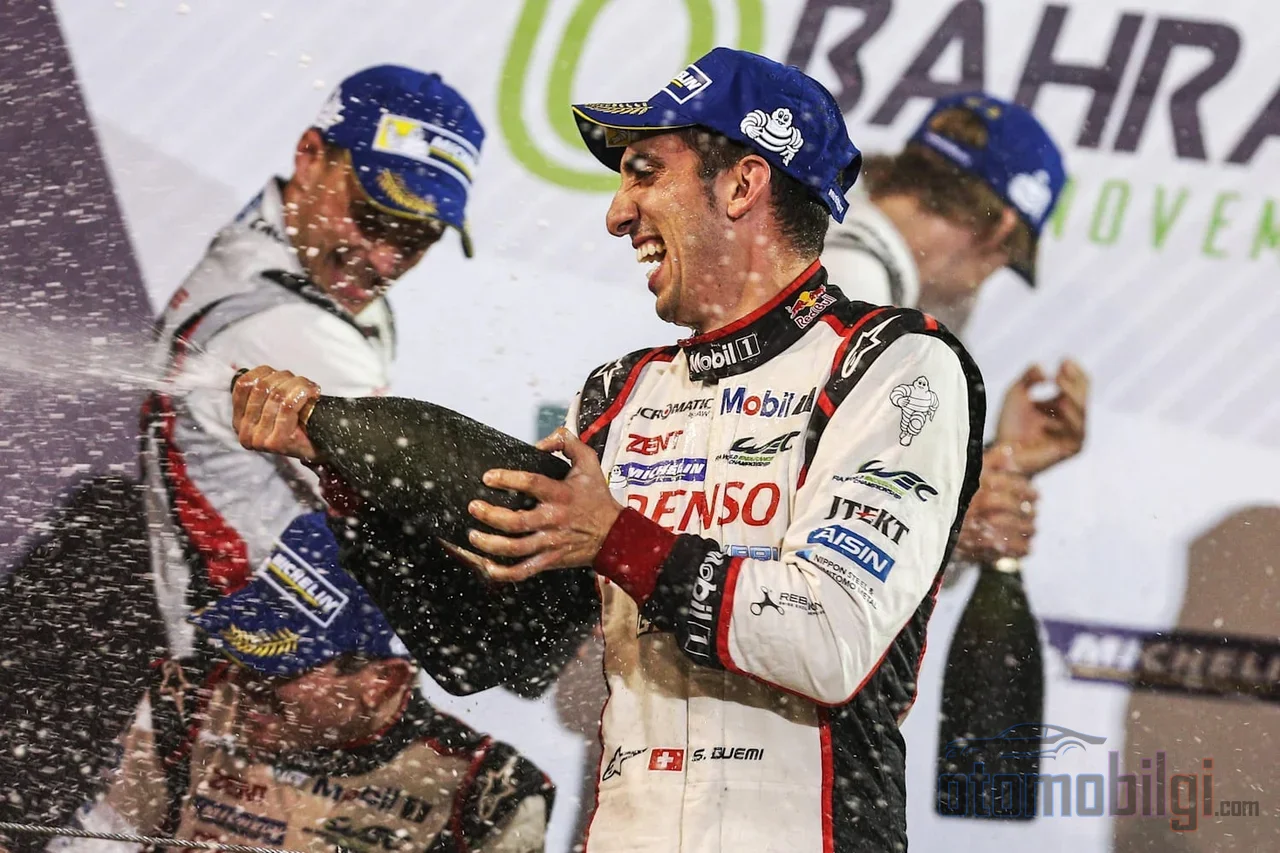
How many drivers get to lose a Formula 1 seat and become one of the greatest endurance racing drivers in history? Sébastien Buemi's story is exactly that rare scenario. When Toro Rosso shut its door on the Swiss driver at the end of 2011, his name could have been added to the list of drivers whose careers had ended. But instead, he chose the tougher of the two possible paths and opted for endurance racing, and the partnership he built with Toyota has turned into four world championships and four Le Mans victories to date. So how many times has Buemi won the WEC title, and where does this consistency come from?
A Career Arc Stretching from Formula 1
Born on 31 October 1988 in the town of Aigle, Switzerland, Buemi truly has motorsport in his blood: his cousin Natacha Gachnang and his grandfather Georges Gachnang were also racing drivers. After karting, he finished third in German Formula BMW in 2004, second in 2005, and took second place in the Formula BMW World Final the same year. What followed was the classic single-seater ladder: He finished the 2007 Formula 3 Euroseries second behind Romain Grosjean, raced for Arden International in GP2, and completed the 2008 GP2 Asia Series in second place.
This path carried him to Toro Rosso's F1 seat in 2009, and his rookie season was not bad: He scored points in his first race at the Australian GP, and as the most impressive rookie of the year, he closed the season with 16 points in 16th place. He finished in 16th place. But his three-season F1 stint is summarized as 55 races, 29 points, and zero wins. There was also a nightmare scene along the way: During 2010 Chinese GP practice, his front suspension broke while braking at a speed above 300 km/h, and both of the car's front wheels flew off. Fortunately, no one was hurt, but the images showed just how demanding an environment Buemi was racing in.
In December 2011, when Jaime Alguersuari and Buemi left Toro Rosso, they were replaced by Daniel Ricciardo and Jean-Éric Vergne. This sudden decision by Red Bull's young driver program, which turned out to be in his favor, became the most interesting turning point of the story. Because Buemi's ties with Red Bull were never completely severed: He had become a test driver in 2008, served as test/reserve driver again in 2012-2014 and 2019, and this relationship lasted a full 22 years.
Highlights
- 4 WEC world championships (2014, 2018-19, 2022, 2023) - a record he shares with Brendon Hartley
- 4 overall Le Mans victories (2018, 2019, 2020, 2022), all with Toyota
- Completed 100 races in the WEC; the first driver in history to achieve this
- 15 Le Mans starts since 2012, with 9 podium finishes
- 2015-16 champion in Formula E, with 14 wins
The Long-Lasting Partnership Built with Toyota
For a driver who has lost his F1 seat, endurance racing is usually read as a second choice. With Buemi, the situation was reversed: He joined the WEC with Toyota in 2012 and spent that season preparing for Le Mans with the TS030 Hybrid. The first experience was brutal - his teammate Anthony Davidson's heavy crash after colliding with a GT Ferrari knocked the team out of the race. But that crash was the first scene of a story that would later span four championships.
From that moment on, Buemi took his place at the center of Toyota's endurance project. He is one of the rare names considered to be a WEC driver racing with the same manufacturer since 2012, and this continuity is truly rare in modern motorsport. Now that a full 14 Toyota seasons are behind him - while it is difficult even for an F1 driver to stay with a single team that long, this loyalty on the endurance front was rewarded with records.
How Were the Four World Championships Won?
2014: The First Crown
The first championship came in 2014, and it was a story of complete domination with the TS040 Hybrid: 4 wins and 7 podiums in 8 races. It is also notable that he won the championship together with Anthony Davidson - the harmony of the two British-accented drivers (one of whom is actually Swiss but built his entire career in British racing culture) was the cornerstone of Toyota's power that year.
2018-19: The Comeback That Extended to Le Mans
From 2014 to 2018, the pressure from Porsche and other manufacturers delayed Toyota's overall classification success, but Buemi's patience did not falter. He won his first overall classification victory at the 2018 Le Mans and capped the same season with the 2018-19 WEC championship. The most critical feeling on the road to this double victory was this: he showed that a career in endurance racing can be rebuilt not with the loss of a seat, but with a team.
2022 and 2023: The Peak in the Hypercar Era
When the WEC's Hypercar era began, you might expect many to think Buemi's star would fade - but the opposite happened. He won his third world championship in 2022 and his fourth in 2023, and these two crowns came even though the transition from LMP1 to Hypercar completely changed the rules. This means a shared record with Brendon Hartley: no WEC driver in history has surpassed four championships.
Le Mans: 15 Starts, 4 Wins, 9 Podiums
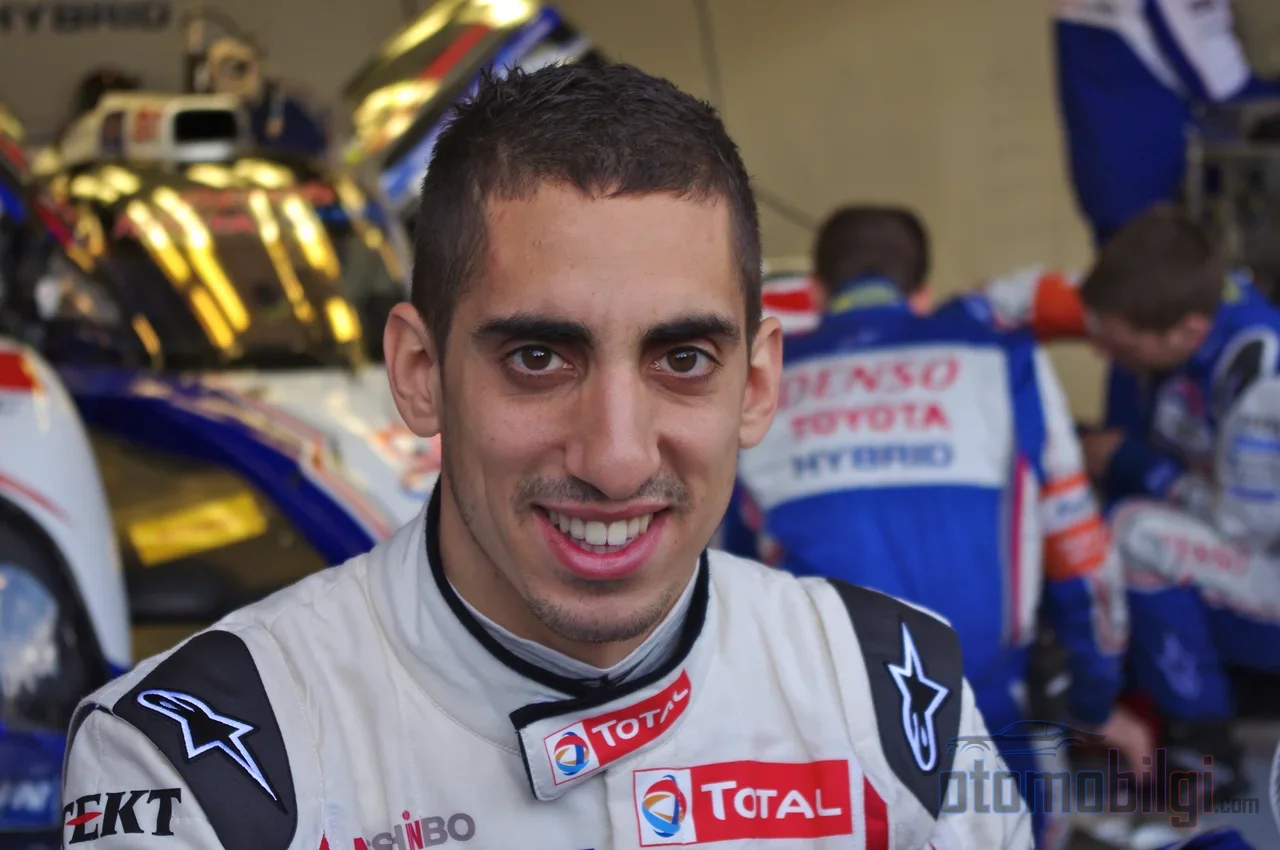
In Le Mans' 24-hour trial, Buemi's record goes beyond impressive: 15 starts, 4 overall classification wins (2018, 2019, 2020 and 2022) and 9 top-three finishes. He won the 2022 victory with the number 8 car alongside Brendon Hartley and Ryō Hirakawa, and that year's victory was Toyota's fifth consecutive Le Mans win - also Buemi's fourth, the highest level reached by a Swiss driver.
This consistency is no coincidence. By the nature of endurance racing, most drivers (that is, skilled but inexperienced white-collar talent) make occasional mistakes, while Buemi remained consistent enough to take on a leadership role in three different car generations (TS030, TS040, GR010/TR010). If you want a comparison: In the WEC, the figures of 29 wins and 58 podiums speak for themselves - a level no WEC driver in history has reached.
The 100-Race Milestone and His Role in 2026
In September 2025 in Barcelona, Buemi became the first driver to reach 100 races in WEC history. Considering that he missed only three races from 2014 to 2022, it is easy to guess how demanding a balance (consistency + success) this figure required. The career trajectory seems to coincide exactly with the fact that a championship is possible in the WEC: The most flawless example of drivers who moved from F1 to endurance racing.
In the 2026 season, the picture is familiar: Toyota is racing under the TOYOTA RACING banner and has rolled out an updated version of the TR010 Hybrid (3.5-liter V6 twin turbo). No change in the No. 8 car: The trio of Buemi, Hartley and Hirakawa is on duty; While in the No. 7, Kobayashi, Conway and de Vries are present. Things also went well during the season - wins were collected from the 6 Hours races, and in the 2026 Hypercar Drivers' Championship the No. 8 crew leads with 114 points. Remembering that in the second hour of the 2026 Le Mans, Buemi was 29 seconds ahead in the No. 8 TR010 proves he is still at the top.
The Formula E Leg: The Renaissance Man of Motorsport
Buemi's career outside the WEC is not empty either. Since Formula E began in 2014, he has been one of the series' most successful names: 160 starts, 14 wins, 36 podiums, 17 poles and a single world championship (2015-16). At the end of that season, it came down to the fastest lap bonus point with Lucas di Grassi, and Buemi emerged as champion. He shares second place in the wins ranking, level with António Félix da Costa.
After spending his Renault and Nissan years under the e.dams banner, he moved to Envision Racing in 2022. Announcing before the 2026 London E-Prix that he would leave Formula E, Buemi is moving into an advisory role and will focus entirely on his WEC career with Toyota. The reason is probably simple math: There are still things to win in the WEC, and as one ages, endurance racing actually rewards cold-blooded experience more than the speed of youth.
The Points System and the Real Difficulty of the Championships
Understanding the WEC's championship math gives a better sense of the scale of Buemi's success. While the winning crew in a 6-hour race takes 25 points, second settles for 18 and third for 15; In 8-10 hour races these points increase roughly 1.5-fold, and a multiplier is applied at Le Mans. Pole position in Hyperpole each round carries an extra 1 championship point. In the manufacturers' championship, the best-placed car of the factory team scores the points. So four world championships mean staying at the top of this non-distorted but patience-demanding system for years - not winning every race, but never letting any race go to waste.
Conclusion: Is Consistency a Talent?
Sébastien Buemi's story proves that there is another world behind Formula 1's merciless door. Four WEC world championships, four Le Mans victories, being the first driver to reach 100 races in the WEC, and a crown in Formula E - all of these fit into a single career. He grew not in the shadow of the decision that closed that door in his face, but in the light of the 14-season partnership he built with Toyota.
When examining legendary driver profiles, dramatic victory stories usually stand out. Buemi's is different: little drama, plenty of consistency. With the right team, the right manufacturer, and the composure that endurance racing demands, he is a living example showing that a driver who left Formula 1 could become the most successful WEC driver in history. The fact that he is still behind the wheel of the No. 8 Toyota in 2026 shows the last page of the story has not yet been written.
Sources
- Sébastien Buemi - Wikipedia
- Getting to know: Sébastien Buemi - FIA WEC
- Sébastien Buemi - Prize list & statistics - 24h-lemans.com
- Insight: How Buemi Became Central to Toyota's Success
- Why Buemi embodies the FIA WEC's 100-race journey - RACER
- WEC - Toyota Racing (official)
- Sébastien Buemi – Career Stats, DriverDB
- Points System - FIA WEC
- Buemi's final Formula E weekend - FIA Formula E