André Lotterer: The Last Diesel-Era King of Le Mans
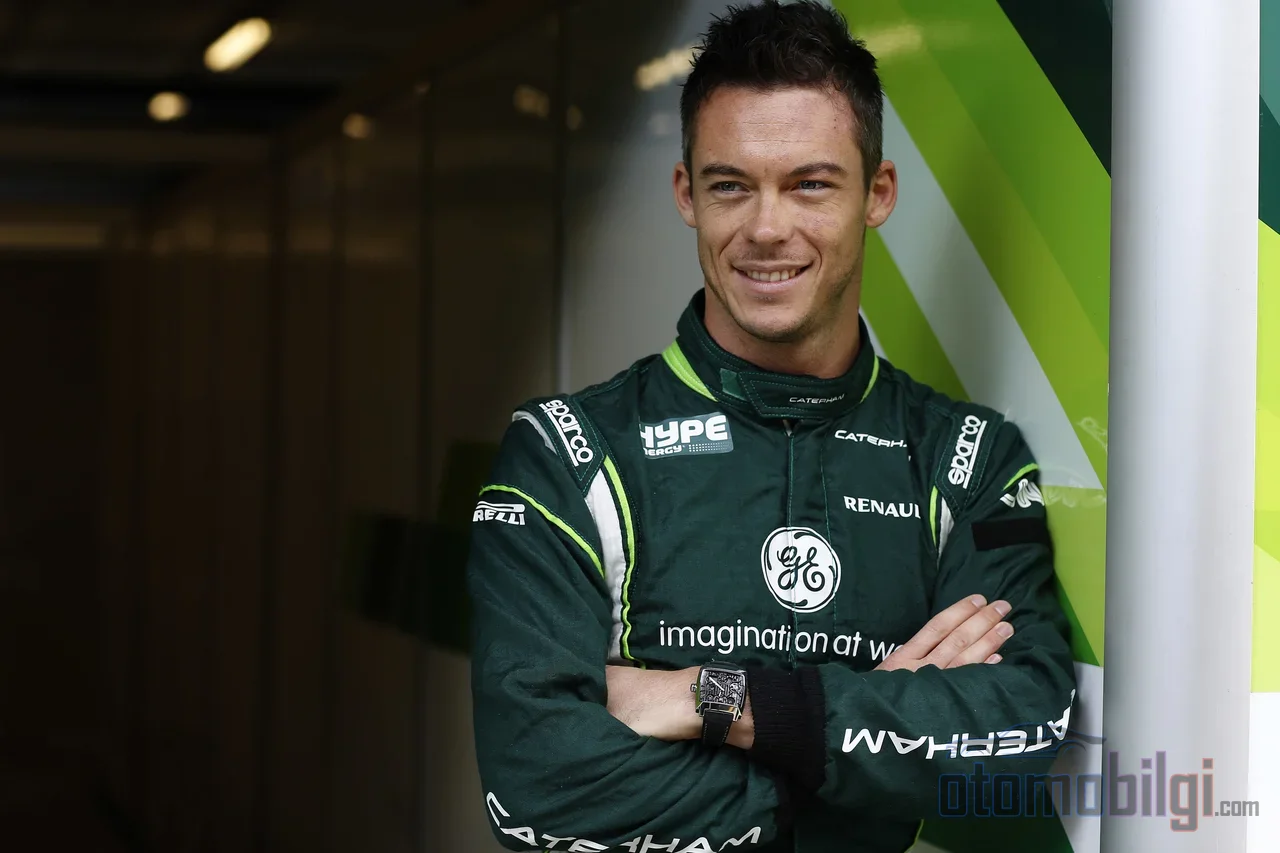
Suppose we ranked the loudest names in endurance racing: Tom Kristensen's nine Le Mans victories, Buemi's consistency, Kobayashi's fast lap records... But have you ever wondered about the man who always made it to the podium with the same calm smile in the background, who won Le Mans three times without ever shouting or making a fuss? Yes, I'm talking about André Lotterer. He's such a quiet legend that his F1 career lasted a total of one and a half laps, yet he collected three trophies at Le Mans. How, you ask? Let's get started, because there's a hidden heroism in this story.
From the Karting Track to Jaguar's Seat
André Lotterer was born on November 19, 1981, in Duisburg, Germany. He grew up in the Belgian town of Nivelles with his German-Peruvian father and Belgian mother; he started karting at the age of seven. So he was a kid who had taken the seat and devoted himself to racing while still in primary school. Then he grew tall as a pole, got faster, and in the early 2000s he entered Jaguar's F1 radar.
Between 2000 and 2003 he tested Jaguar's F1 cars, and in 2002 he became their official test driver. Sounds nice, doesn't it? But here's the bitter part: No race seat was offered for 2003. The team preferred Mark Webber and Antônio Pizzonia. Imagine getting so close to an F1 door only to have it slam in your face. Most drivers would have stumbled here. Lotterer, however, packed his bags and went to a completely different continent: Japan.
The Japan Years: An Unforgettable School
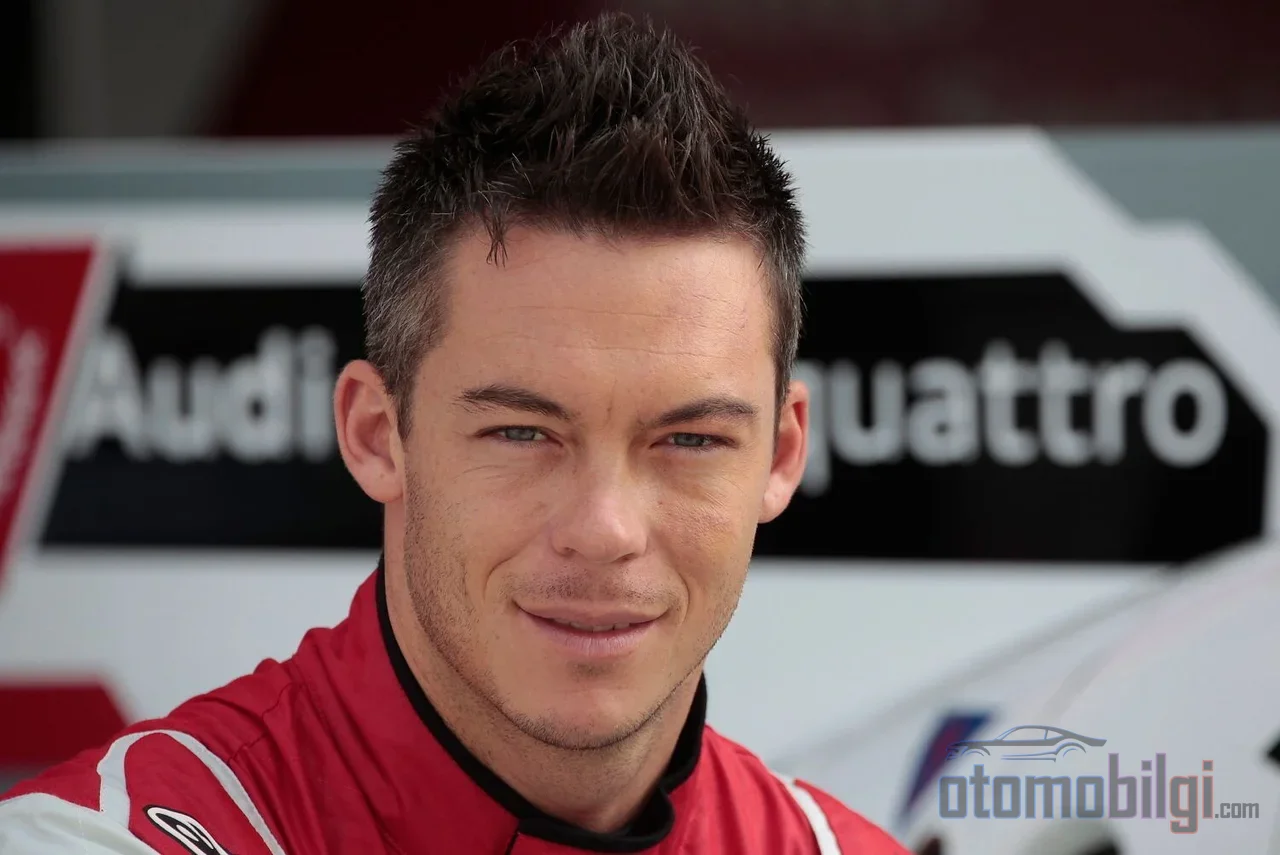
For Lotterer, Japan wasn't an exam but a school. He won the GT500 championship in Super GT in 2006 and 2009 (with TOM'S and the Lexus SC430), and in 2011 he reached the Formula Nippon (today's Super Formula) championship. Let's look at the numbers: In Super GT, 70 races and 5 wins; in Formula Nippon/Super Formula, 123 races and 24 wins between 2003 and 2017. That means a craft learned week by week, track by track, over many years.
It was precisely during this period, in 2009, that he made his Le Mans debut with the Audi R10 TDI of the private Kolles team. When third driver Narain Karthikeyan dislocated his shoulder, they completed the race as a duo with Charles Zwolsman Jr. and finished seventh in the overall classification. Seventh place, on the first attempt, with an incomplete lineup. It was already clear that Le Mans was written in this man's future.
Highlights
- Overall Le Mans victories: 2011, 2012 and 2014 (all with Audi Sport Team Joest)
- WEC driver championships: 2012 (Audi) and 2024 (Porsche)
- WEC career: 79 races, 12 wins, 42 podiums, 14 pole positions
- The F1 adventure: One single race at the 2014 Belgian GP, ending after one lap with a mechanical failure
- Currently: Development driver for the Genesis Magma Racing #17 GMR-001 Hypercar
The 2011 Le Mans: The Night Everything Changed
Let's return to that famous night in 2011, because in Lotterer's own words, his life changed that night. Audi had come with the newly designed R18; the car, carrying a compact V6 TDI diesel engine, was targeting the brand's 10th overall victory at Le Mans. But things didn't go as planned: Two of Audi's three cars were knocked out of the race due to crashes.
Only one Audi remained, along with three fast Peugeot 908s. The trio of Marcel Fässler, Benoit Tréluyer and Lotterer defended the win inch by inch and crossed the line ahead of the second-place Peugeot by only 13 seconds. Think about what 13 seconds means in a 24-hour marathon like Le Mans: it's a gap as small as a shoelace at the finish line of a school marathon, but the trophy is yours. This victory was also Audi's 10th overall win at Le Mans. In later years, Lotterer recounts this moment by saying that the 2011 victory changed their lives.
The Peak of the Audi Era and the 2012 Championship
The year immediately following 2011 was even sweeter. 2012 was the opening season of the FIA World Endurance Championship (WEC), and Lotterer, once again together with Fässler and Tréluyer, won the first WEC drivers' championship. The trio that had won Le Mans just a year earlier now adding a world championship to their names... That's what you call a textbook example of consistency.
In 2010 they had finished Le Mans second with the Audi R15 TDI plus (despite the Peugeots' dominance in the first half of the race), in 2009 they had finished seventh, in 2011 they were champions, and in 2012 world champions. Every rung of the ladder had been climbed one by one. And the third trophy? That would come two years later.
The 2014 Victory: The Last King of the Diesel Era
In 2014, Lotterer claimed his third Le Mans victory with the Audi R18 e-tron quattro. This car was a small technology monster: a V6 compound turbo diesel engine, a hybrid system with an MGU mounted on the front axle, and that year's generation was described as the most complex race car Audi had ever built. According to the accounts, on the road to victory, two turbochargers were replaced on two cars within a total of 20 minutes during the race; in other words, this trophy was the reward for an exam the maintenance team had worked through all night.
The 2014 victory also has a symbolic side: this is known as the last diesel car to win Le Mans. We can say the diesel era came to an end through Lotterer's hands. How cool an ending is that, right?
Long-Term Harmony: The Real Formula Behind Championships
So what makes Lotterer different? The short answer: continuity. In endurance racing, victories depend not on a single fast lap, but on driver-team harmony spread across years. Between 2012 and 2016, Lotterer raced uninterrupted with Audi Sport Team Joest; the trio he formed with Fässler and Tréluyer worked like an organism that read each other in lap times, tire management and pit stop strategy. Lotterer is regarded as one of the greatest sports car endurance racers of his generation and one of the most experienced single-seater drivers in history.
But there was one problem in his career: manufacturers' programs ended not by his decision, but by the decision of the boards. Audi withdrew from the WEC after 2016, and Lotterer moved to Porsche in 2017 (in the No. 1 car with Nick Tandy and Neel Jani; he had even received an offer from Toyota at the start of his road). After Porsche withdrew from LMP1, he went to Rebellion Racing in 2018-19 (alongside Neel Jani and Bruno Senna). Same story, different jersey. The man never stops, he just changes teams.
F1 and Formula E: Short But Colorful Detours
Now let me tell you the ironic part of the day. He entered F1 with Caterham at the 2014 Belgian Grand Prix, replacing Kamui Kobayashi; as a three-time Le Mans winner, he started from 21st position, ahead of his teammate Marcus Ericsson. The result? Mechanical failure, one lap, over. A grand total of one-and-a-half laps of an F1 career. He was invited again for the Italian GP but declined.
In Formula E, he raced in 81 events between 2017 and 2023: During his spells at Techeetah (with Jean-Éric Vergne), Porsche and Andretti, he took 8 podiums and 2 pole positions, but the championship remained out of reach. He claimed his first pole position at the 2019 Rome ePrix and finished the race second. In September 2023 he left the series and focused entirely on the WEC. Was it the right call? Absolutely: juggling both sides in his forties required choosing one of them.
A Second Crown with Porsche and the Genesis Era
He returned to the WEC in 2023 with Porsche's Hypercar (LMDh) project; he raced in the No. 6 car alongside Kevin Estre and Laurens Vanthoor. He had admitted that after a four-year gap he felt like a stranger again. But no matter: in 2024, the same trio delivered Lotterer's second WEC world drivers' championship, 12 seasons later. The first title came with Audi in 2012, the second with Porsche in 2024. Two different brands, two different generations, the same man.
Despite winning the world championship that year, there are also stories telling that Porsche showed him the door - and that is the truth of the matter. But Lotterer did not give up once again: In December 2024 he joined Genesis and is leading the development of the GMR-001 LMDh prototype together with Pipo Derani. In the 2026 season he is racing in Genesis Magma Racing's No. 17 car, alongside Luis Felipe Derani and Mathys Jaubert.
And a sweet current detail: On October 18, 2026, during the Korean round, Lotterer's car took pole position in Hyperpole. About his young teammate Jaubert's performance, Lotterer said a star was born. On the same day, at the 6 Hours of Barcelona race, Toyota finished one-two and secured the manufacturers' championship, while Lotterer's slide at corner 5 also went down in the record books. So he is still pushing the limits.
So How Did Lotterer Achieve His Three Victories at Le Mans?
The clear answer I promised: André Lotterer won Le Mans in 2011, 2012 and 2014; in all three he was at the wheel of Audi Sport Team Joest. The formula is simple but requires mastery: the lasting harmony of the trio he formed with Marcel Fässler and Benoit Tréluyer across the years, calmly withstanding thwarted car development (the accidents of 2011, the turbo problems of 2014), and maintaining a long-term racing acumen polished in Japan throughout 24 hours.
And a change of perspective is also needed: Three wins may seem modest next to Tom Kristensen's record of 9 overall victories and his streak of 6 consecutive wins between 2000-2005. But Lotterer's story is not one of records, it is a story of consistency. Walking out of F1's one-and-a-half-lap door and climbing to the top of Le Mans three times is not something everyone can do. The man who is today building Genesis's Hypercar project from scratch is still at work at nearly 45, in one of the race's most crowded eras, on a field where 14 manufacturers compete.
Do you think Lotterer's fourth Le Mans win will come? With a Genesis looking for a star, and a young teammate like Jaubert who is still being born... I would definitely say "yes," but it is hard to predict when and how this quiet legend will do it. Isn't that what his whole story is about anyway?
Sources
- André Lotterer
- andré lotterer
- 24 Hours of Le Mans - André Lotterer: Our lives changed the day we won in 2011
- 24 Hours of Le Mans - André Lotterer, the leader of the rebellion
- He won the world title, then Porsche showed him the door - Evo
- Caterham replace Kobayashi with Lotterer for Belgium - Formula1.com
- The bizarre 1.5-lap F1 career of a racing great - The Race
- André Lotterer - Hyundai Motorsport