How Did Kamui Kobayashi Become a WEC Legend at Toyota?
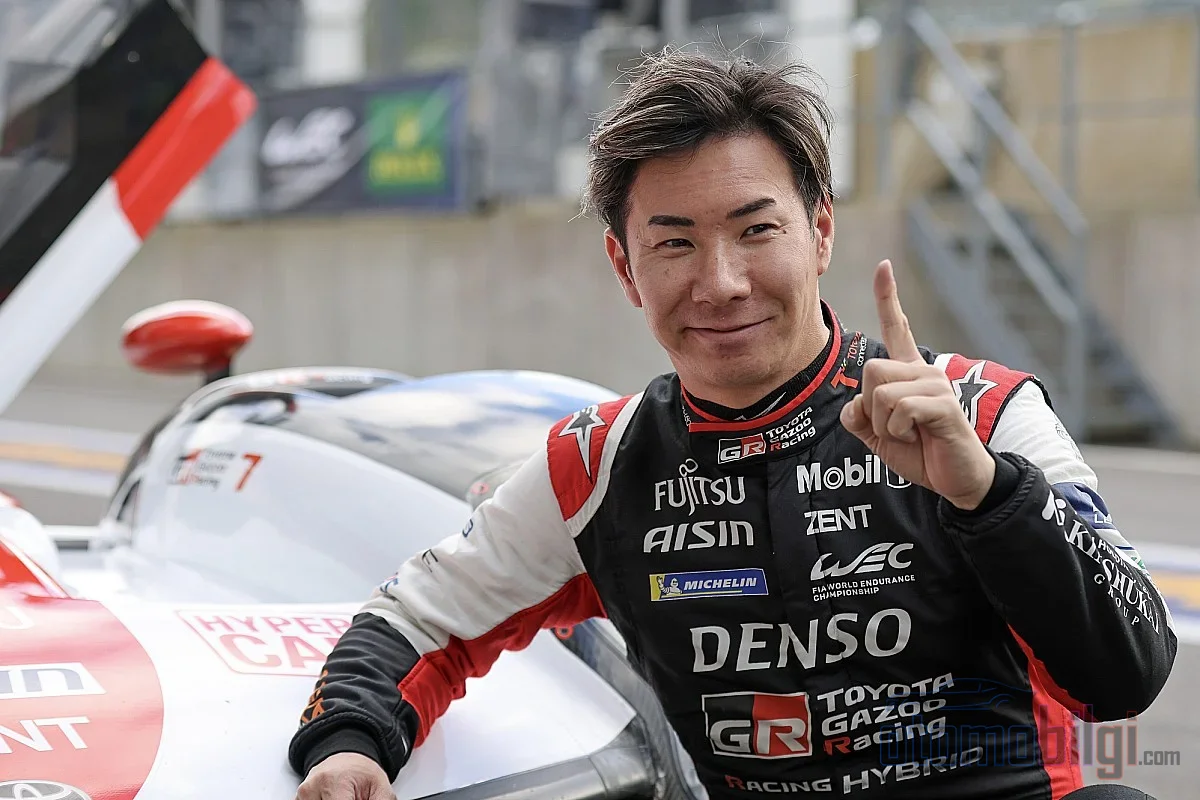
Imagine you have a 13,629-kilometer circuit stretching into the night, headlights dimmed into the darkness, and you are at the limit of the tires, breaking the all-time record at Circuit de la Sarthe with a lap of 3 minutes 14 seconds. And not by a narrow margin; more than two seconds ahead of the nearest competitor. That record has stood since 2017 and nobody has even come close. So how did the man who set that lap go from being a Formula 1 "close call" story to becoming Toyota's endurance legend? If you are ready, let's look at Kamui Kobayashi's journey; because this story has speed, strategy, and even two Le Mans victories.
Kobayashi's story goes far beyond the cliche of "a driver who couldn't find what he wanted in F1 enjoying a second spring in his career in endurance racing." This man didn't just adapt; he gradually became both the on-track, point-scoring face of Toyota's WEC program and the boss making the decisions at the table. Two roles, one name. How, you ask? Let's dive in.
An Aggressiveness Misunderstood in Formula 1: Who Is Kobayashi?
Born on September 13, 1986, in Amagasaki, Japan, as the son of a father who ran a sushi restaurant, Kamui Kobayashi's very name is privileged: It comes from "Kamuy," a deity in Ainu mythology. Whether it's fate or coincidence, I can't say, but the man bearing this name displayed truly divine speed on the race tracks.
His F1 career spanned 2009 to 2014, with Toyota, BMW Sauber/Sauber, and Caterham; 75 starts, 125 points, one fastest lap, and a podium at Suzuka at the 2012 Japanese Grand Prix as the most special moment of his career. That third place is not to be underestimated: It took exactly 22 years for a Japanese driver to reach the podium at Suzuka after Aguri Suzuki's success in 1990. One of the most emotional moments in F1 history, in other words.
But what made Kobayashi Kobayashi was his driving style more than the podiums. In 2009, the young driver who suddenly entered F1 in Brazil after Timo Glock's injury made a name for himself with his aggressive overtakes in his very first races; Jenson Button was so impressed that he would say he found this pace crazy and extremely aggressive. Martin Brundle, meanwhile, praised in his time that famous braking style, where he would defend even at a point where he was late by slamming on the brakes at the last moment. This identity of "masterful overtaking," which sometimes seemed risky in F1, stood like a mine of gold waiting to be turned in endurance racing.
Highlights
- His 3:14.791 lap record set at the 2017 Le Mans still stands
- In the WEC, 2 drivers' championships (2019-20 and 2021), 19 wins, 21 pole positions
- 2 overall victories at Le Mans: 2021 and 2026
- Combining driving with Toyota WEC team principal duties since December 2021
- As team principal, 3 consecutive World Endurance Manufacturers' Championships (2022-2024)
The Move to the WEC: From a Ferrari GT Seat to Toyota LMP1
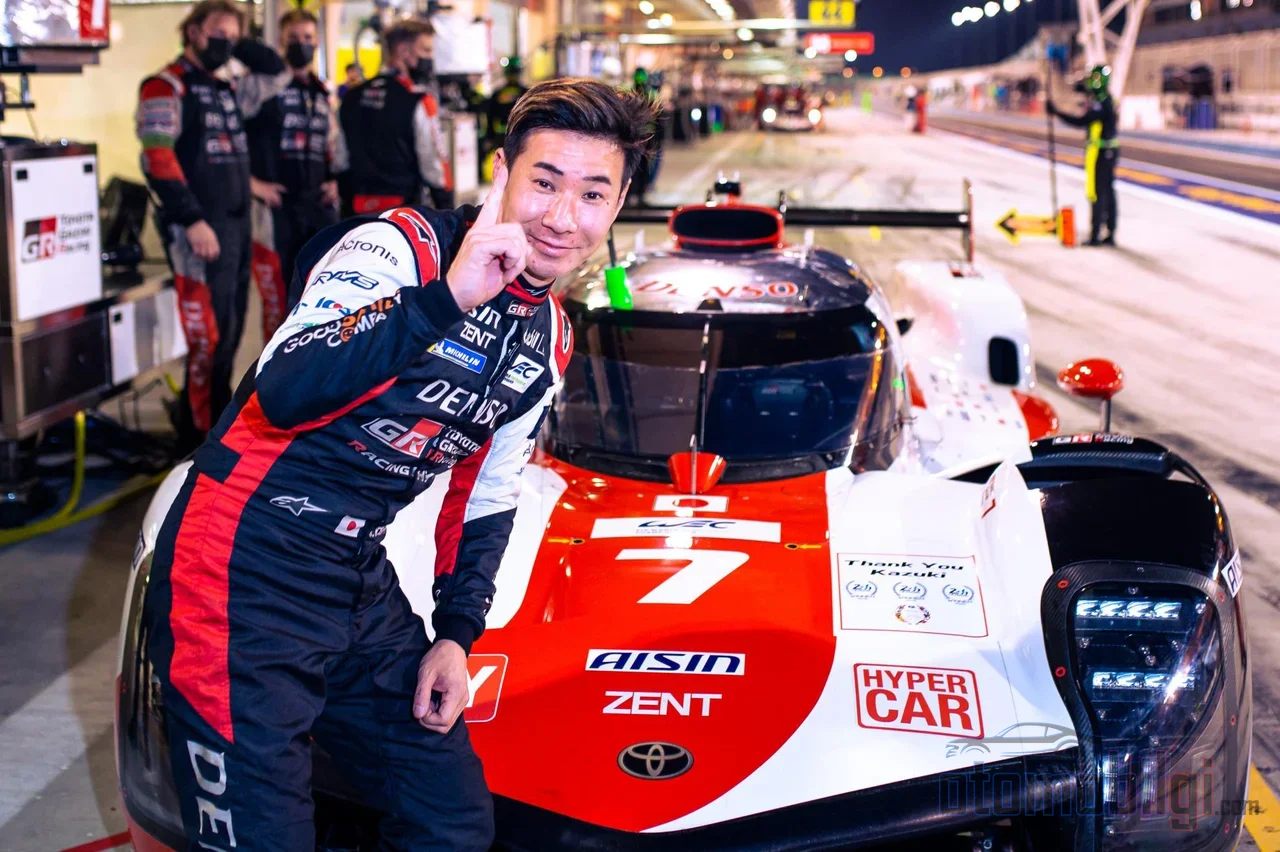
Kobayashi's endurance adventure began in 2013, at the wheel of a Ferrari 458 GT with AF Corse. In the GT class, he gradually learned the intricacies of this discipline: Managing tires, lapping with fuel saved little by little, tolerating traffic for 24 hours straight. Then came the big move in 2016, when he joined Toyota Gazoo Racing's LMP1 program. He took his first WEC victory that same year, in the 6 Hours race at his home circuit, Fuji. Could there be a sweeter start for the Japanese driver than winning at Toyota practically at home?
From that day to this, a career has accumulated whose statistics you need to take seriously: 84 WEC starts, 19 wins, 21 pole positions, 15 fastest laps and roughly 50 podiums. But beyond the numbers, the real story should be told through the expertise shown in Toyota's transition from the LMP1 diesel-hybrid era to Hypercar. Kobayashi was right at the heart of that transition; together with Conway and José María López, he won back-to-back world championships in the 2019-20 and 2021 seasons.
First Encounter with Le Mans and a Bitter Second Place
The 2016 24 Hours of Le Mans was a turning point for Kobayashi - unfortunately not a sweet one. When Toyota lost the victory in the final laps and finished second that year, this result is remembered as one of the deepest breaking points of the team's years-long heartache. Who could have known that day that Kobayashi would make up for that pain with victory exactly five years later?
The Lap Record: Why Are Le Mans' Fastest Minutes Still Kobayashi's?
Let's take a closer look at that famous lap, because this is perhaps the most striking part of this page. In 2017, Kobayashi broke the all-time record at Circuit de la Sarthe with a 3:14.791 lap in qualifying in the Toyota TS050 Hybrid. When you consider driver class rather than the car that set the record lap, it is very clear that this time is the benchmark; a lap in which the nearest rival was more than two seconds behind is practically another layer in qualifying.
So why can't this record be broken? The answer is technical and somewhat melancholic: The Hypercar cars that replaced the LMP1 hybrids cannot match their predecessors in lap times. Since 2017, hundreds of racing and qualifying laps have been run at Sarthe, but that 3:14.791 still stands tall. Kobayashi's fastest in-race lap of the Hypercar era is also his own: 3:27.749. In other words, while this man holds the old era's record, he has also set the fastest lap of the new era. Imagine it: the fastest laps of two different eras, both bearing the same name's signature.
Kobayashi's Role on Track: The Handshake of Aggression and Endurance
Names like Sébastien Buemi are known as drivers who manage endurance through engineering intelligence and data analysis. Kobayashi's approach is the other side of this story: shaking hands with long-distance discipline at an aggressive pace. A driving style that ignores anyone saying "back off, go easy on the throttle," yet knows how to stay right at the limit for 24 hours.
The strategic counterpart of this style is seen in concrete examples. In the analysis ahead of the 2024 Austin race, it was emphasized that Kobayashi had to finish the final 30 minutes on less fuel than his rivals at an efficient pace; in other words, aggressive but fuel-conscious driving was exactly his job. In that same season's rainy victory at Imola, he himself openly admitted the car wasn't the fastest that week, but the team's tire change decisions and the right timing brought the win. Aggression alone isn't enough; victory comes only when it combines with a team capable of making the right decision at the right moment.
There's one more detail that doubles the value of the record: at Le Mans, even qualifying sessions are subject to fuel consumption limits. So when Kobayashi set that legendary 2017 lap, he couldn't even open the throttle at some points due to mandatory fuel saving. It's like throwing punches like a boxing machine with your hands and feet tied. Now think once more about why that record has never been broken.
Team Principal Kobayashi: Two Roles in One, From the Cockpit to the Table
In December 2021, Toyota made a surprising announcement: Kamui Kobayashi would replace Hisatake Murata as team principal of the WEC program. In other words, the man would both drive the car and sit at the table making decisions. It sounds impossible, but the results speak for themselves: Under Kobayashi's leadership, Toyota won the World Manufacturers' Championship three times in a row from 2022 to 2024.
Kobayashi is also a critical figure for the Hypercar project. The Toyota GR010 Hybrid was developed by Toyota Gazoo Racing Europe for the Le Mans Hypercar regulations, and Kobayashi was one of the key drivers in that process; he didn't hide how much he loved the car and the concept, or his satisfaction at being part of the project to bring performance back to Le Mans. The GR010 Hybrid, the 2026 car, features all-wheel drive with a 3.5-liter twin-turbo V6 hybrid engine; but since the Hypercar rules tightly control development, what could be done was mostly limited to a wheel size change, and the engine remains restricted to roughly 680 horsepower through balance of performance (BoP). In such an era, the role of a successful Hypercar driver in "determining the fate" of the team becomes even more valuable.
2021 and 2026: The Story of Two Le Mans Victories
Kobayashi has started Le Mans exactly 12 times since 2013; he finished on the podium 8 times and won the overall classification twice. He took the 2021 victory from pole position together with Conway and López. With that victory, he became the fourth Japanese driver to win Le Mans, and moreover the second Japanese driver to achieve it with a Japanese manufacturer. There are also the 24 Hours of Daytona victories with Wayne Taylor Racing in 2019 and 2020, proving he has lifted trophies on two continents of the endurance world.
The truly emotional moment came in 2026. Toyota renewed all six of its Hypercar drivers for 2026: the trio of Conway–Kobayashi–de Vries in the #7 car, and the lineup of Buemi–Hartley–Hirakawa in the #8. Kobayashi, Conway and Nyck de Vries won the 2026 Le Mans with the #7; Toyota reached victory after 381 laps with a margin of 10.913 seconds. This went down in the records as Toyota's 6th overall victory in Le Mans history. went down in the records as an overall victory. The emotion Kobayashi summed up after the victory fit into a single sentence: They had waited a very long time. The road from that bitter second place in 2016 to this victory in 2026 had taken a full decade.
Where Does Toyota Stand in the 2026 Season?
As of the season, Toyota is leading the Hypercar Drivers' Championship; It has also taken the lead in the Manufacturers' classification and holds a 40-point advantage over Ferrari. It was announced that the "success handicap" system would come into effect in Hypercar in 2026, and that BoP would first be applied through homologation parameters, then implemented throughout the season with a moving logic. With Ferrari adding a third 499P (the #83 run by AF Corse) to the grid, the Toyota–Ferrari–Porsche rivalry has heated up considerably. In such an environment, Kobayashi, who is both a team principal and a driver producing pole positions and fastest laps, is an indispensable asset for Toyota.
A small additional note for those who are curious: Kobayashi has also tried his hand in different disciplines. In 2023 and 2024 he made two NASCAR Cup Series starts with 23XI Racing, and in 2025, after an 11-year gap, he completed a Formula 1 test with the Haas VF-23 at Paul Ricard. But his heart, it seems, still beats in the midnight stretches of the Sarthe. So How Did Kobayashi Become a WEC Legend?
The short and clear answer is this:
The short and clear answer is: Kamui Kobayashi combined the aggressive pace he brought from F1 with the endurance discipline, won two world championships and two Le Mans victories with Toyota, holds the all-time Le Mans lap record, and since 2021 has served as both driver and team principal, running a program that has won three manufacturers' championships under his leadership.
"Aggressive" and "enduring" are thought to be opposites of each other; yet Kobayashi is living proof that the two can exist at the same time. whereas Kobayashi is living proof that the two can exist at the same time. In an era that narrows with lap time limits, fuel restrictions, and BoP, a driver who knows how to stay on the edge is more valuable than one who is simply fast. Kobayashi's story is not about speed, but about knowing where, when, and how much of that speed to spend. When you follow the path from that 2016 night that cast a shadow over Le Mans to the 2026 victory, you see that a racing driver can rebuild both himself and his team. And it's a good thing he did; because it still gave us an unbreakable lap record and a combination of roles once called "impossible."