What Is Hyperpole in the WEC and How Does It Work?
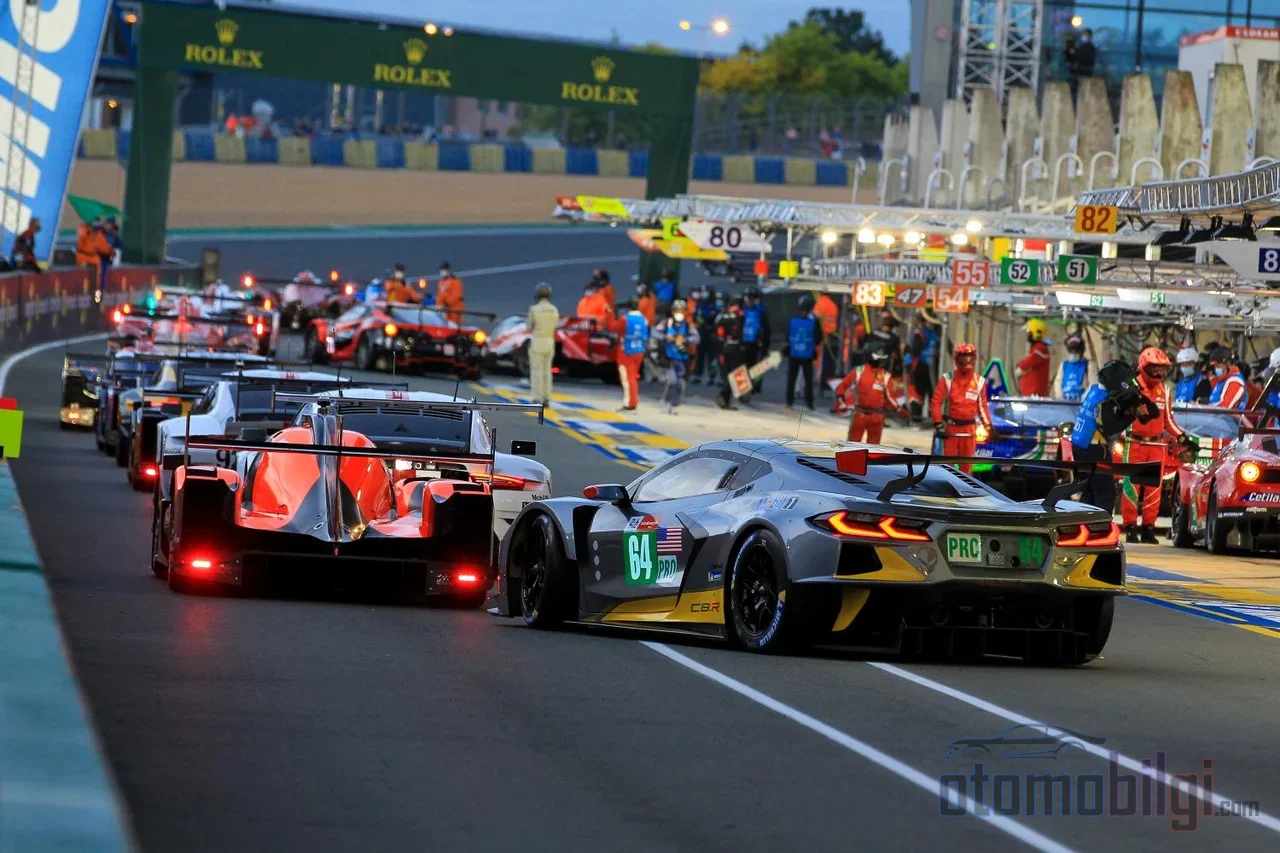
Think of the moment when tension in the garage peaks during a WEC weekend: the clock ticking, the tires fresh out of the blankets, and the driver taking a deep breath while putting on the helmet. Because the session ahead may be the fifteen minutes of the entire weekend that measures the purest speed. So why is this session not just an ordinary qualifying lap but referred to by a separate name, Hyperpole? The answer is far more interesting than we might think.
What Exactly Is Hyperpole and Where Did It Come From?
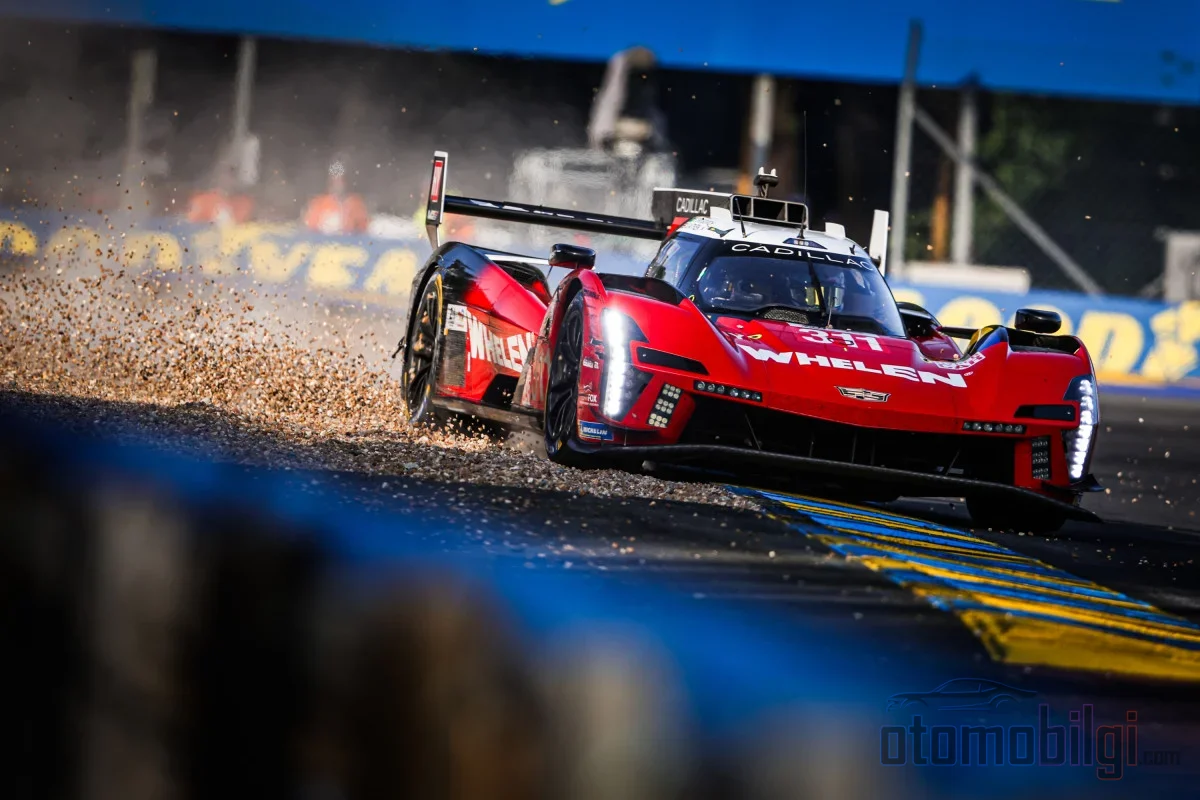
Let's start with the basics. In endurance racing, cars don't lap alone; dozens of cars share the same lap at once, even more than sixty at Le Mans. Traffic is inevitable in qualifying sessions too: a favorite driver who catches a slow car ahead can ruin their lap and drop to the back of the grid. Hyperpole was born as a solution to exactly this problem. Introduced at the 2020 24 Hours of Le Mans, this format was designed to give the fastest cars a chance at clean-track, truly pure speed, free of yellow flags and traffic.
The idea is simple: the normal qualifying session serves as a preliminary round, and the fastest cars advance to a small and clean final. Just like the final of a singing competition; those who stand out in the first round take the stage once more, and the real ranking is decided there. Here's what you're wondering: who do you think won the first Hypercar era Hyperpole? The answer is 2021 and the name is Kamui Kobayashi: his 3:23.900 lap in the #7 Toyota GR010 Hybrid immediately showed how seriously the format should be taken. There's no need to exaggerate to describe how much importance Kobayashi places on these sessions; nearly all drivers want to be part of these short sessions.
Key Highlights
- Hyperpole was introduced at the 24 Hours of Le Mans in 2020; the aim is pure speed free of traffic and yellow flags.
- In the standard WEC format (since 2024), a 12-minute qualifying for each class, followed by a 10-minute Hyperpole with the fastest 10 cars.
- At Le Mans, a two-stage system since 2026: the fastest 15 cars advance to Hyperpole 1, the first ⟦1111⟧ to Hyperpole 2.
- Pit stops and refueling are banned in Hyperpole; there's a limit of 8 tires per session.
- Historical data is clear: pole position doesn't mean winning the 24 Hours.
How Does Qualifying Work on a Standard WEC Weekend?
That said, not every race is Le Mans. On normal race weekends of the World Endurance Championship, that is, the 6-hour races, the format is more streamlined. According to the rules updated in 2024, qualifying is split into separate blocks for the Hypercar and LMGT3 classes. Each class first runs its own 12-minute first qualifying session; all class cars are on track. Then the exciting part begins: the fastest 10 cars from the first session advance to the 10-minute Hyperpole session, where the front rows of the grid are decided.
Why does this structure make so much sense? Because the two classes' cars have very different performance levels. Hypercars are prototypes, while LMGT3 cars are racing versions closer to road cars. If you mix the two in the same session, traffic increases and fairness within classes becomes harder. Separate blocks allow each class to lay down clean laps within itself. Don't you think a final should be one where everyone can be as comfortable as possible on track?
Le Mans 2026: How Does the New Two-Stage Format Work?
The 24 Hours features the largest grid in world endurance racing, and its qualifying is correspondingly more layered. In the format applied at Le Mans from 2026 onwards, qualifying begins with two separate first qualifying sessions: one for LMP2 and LMGT3, one for Hypercar. Each session lasts at least 30 minutes. The system then turns into a qualifying pyramid:
- Hyperpole 1 (H1): The fastest 15 cars of each class take part; the session lasts 20 minutes. Cars that fail to make the top 10 but remain in H1 take grid positions 11-15. take those grid positions.
- Hyperpole 2 (H2): The first 10 cars battle for pole position in the 15-minute final. Before this two-stage structure was introduced, the number of cars advancing to Hyperpole from each class was lower in the standard format.
With the new arrangement, the number of cars reaching the second stage in LMP2 and LMGT3 increased by three, and two more cars in each class can now fight for pole. In other words, the final is more crowded and the uncertainty of the outcome is higher. That is, the final is more crowded and the uncertainty of the outcome is higher. It is no coincidence that the pole margin at the 2026 Le Mans was the closest in the event's history; With the Hypercar field this tight, every tenth matters.
| Standard WEC Race | Le Mans (since 2026) | Le Mans (since 2026) |
|---|---|---|
| 12 minutes per class | Two separate sessions, at least 30 minutes each | First stage |
| - | H1: | 20 minutes, fastest 15 cars Final session |
| 10 minutes, fastest 10 cars | H2: | 15 minutes, first 10 cars Where pole is decided |
| In the Hyperpole session | In Hyperpole 2 | Class separation |
| Class separation | Hypercar and LMGT3 in separate blocks | LMP2+LMGT3 together, Hypercar separate |
How Is the Car Prepared for a Single Fast Lap?
A qualifying lap is like a small sprint within an endurance race, and teams position themselves accordingly. The rules of Hyperpole clearly reflect this sprint character: Refueling during the session is not allowed. In other words, however much fuel is loaded into the car, the session is run on that fuel. On the tire side, however, the choice is free, but there is a limit for the session: 8 tires. since new tires deliver maximum grip on their first laps, timing is everything. And there is also work to be done with the track itself.
In practice sessions, cars run with race setups, heavy fuel, and in traffic. In Hyperpole, however, the equation changes from top to bottom: But in Hyperpole, the equation changes from top to bottom: less fuel, fresh tires and a track free of traffic. As Kevin Estre, racing on the Porsche GT side, also emphasized, driving the car at Le Mans in these conditions is a special pleasure; although it is known that the starting position does not determine the race, trying to be at the front matters. In other words, Hyperpole adds a sprint dimension to the 24 Hours and offers drivers an experience they could not have on a normal weekend. Estre's emphasis on the absence of traffic in the same session is not in vain: a single lap on a clean track that no more than six cars can share during the day is the purest form of a driver's ability.
Does Pole Position Win the Race?
Now we come to the most crucial question of the matter. For someone used to watching Formula 1, pole position is almost like a crown; but in an endurance race, things are completely different. Past data is candid: the teams that won Hyperpole in the LMP2, LMGTE Pro and LMGTE Am classes in 2021 (JOTA, Hub Auto Racing, Dempsey-Proton) did not win their races. If you go back one year, the result does not change: the Hyperpole winners in LMP1, LMGTE Pro and LMGTE Am in 2020 (#7 Toyota, Porsche GT Team, Luzich Racing) did not celebrate victory either.
The reason for this is quite logical. In a 24-hour race, the car completes the lap thousands of times, makes dozens of pit stops, gets caught in a midnight downpour, and comes face to face with at least one mechanical or strategic surprise. Being ahead in the first corner provides a pleasant comfort, but what determines the name on the trophy is reliability and strategy at hour the reliability and strategy at hours per speed. On the other hand, the value of pole is not zero either: the car starting at the front stays one step ahead of the first-lap battles, gets clean air, and gives the team a psychological advantage. In a period when the Hypercar grid is this tight, the pole margin shrinking to millimeters, in my opinion, also shows how hard that single lap is being pushed.
Rule Differences Between Classes: Who Can Be at the Wheel?
To fully understand how Hyperpole works, there is one more layer: driver rules. In the LMP2 class, a new rule is in effect; in qualifying sessions, only the driver with the lowest FIA rating on the team can take the wheel. This can be considered an extension of the bronze driver rule already applied in LMGT3. The logic is also understandable: rather than pro drivers determining the qualifying sessions alone, the aim is for the team's qualifying duty to be distributed more evenly. So even if you are the fastest name in an LMP2 team, you may watch from the seat on qualifying day. Harsh but fair.
On the LMGT3 side, however, there is a move in the opposite direction: in Hyperpole, only the Silver driver rule was removed, and teams were given more freedom in distributing driver roles. This actually also summarizes the character difference between the classes. LMGT3 is a class closer to road cars, with a driver lineup spread across a wider spectrum; LMP2, on the other hand, is built on a balance that needs more protection with its Pro-Am structure. Two different philosophies living side by side within the same organization is one of the things that makes watching the WEC such a rich experience.
In short: What Is Hyperpole, and Why Is It So Special?
Let me wrap up all the questions in your head in a single sentence: Hyperpole is the second stage of WEC qualifying; it is a short sprint session in which the fastest cars from normal qualifying (top 10 in the overall WEC, first 15 and then 10 in Le Mans' two-stage format) take part, and the front rows of the grid are decided by pure speed without traffic or fuel concerns. On standard weekends this is a single session, while on Le Mans' massive grid a two-stage qualifying pyramid has been applied since 2026.
So why is it so beloved? I think the answer is simple: an endurance race is a matter of patience, but both the spectator and the driver occasionally need that moment of pure speed. Hyperpole is like a 100-meter final sprinkled into the middle of a 24-hour marathon. Pole doesn't guarantee winning the race - history has shown this time and again - but it gives the weekend a hero. I'm sure that the next time you watch a WEC race, you'll look at the qualifying segments with a new eye. Which class's session is up next, and who stayed in the top 10 and who got stuck in H1? That's the moment you'll truly understand the format.
Sources
- 24 Hours of Le Mans – Hyperpole explained
- The new, improved 24 Hours of Le Mans Hyperpole
- Race Weekend Format – FIA WEC
- 24 Hours of Le Mans 2026: Schedule, News & Start List
- Genesis Magma Racing's 2026 WEC Season Guide
- 2026 FIA World Endurance Championship
Historical examples and driver opinions that the starting position does not determine the race are based on publicly available race records summarized on this page.