Timo Bernhard: From 56th Place to Le Mans Victory
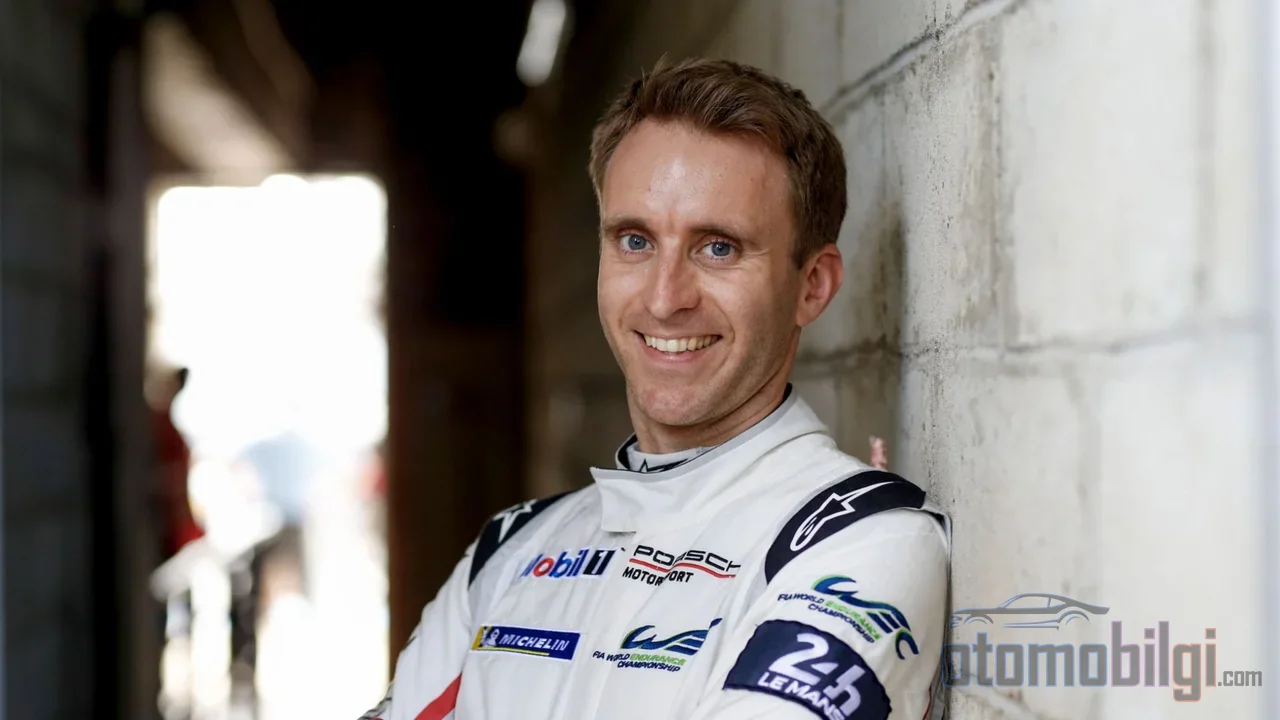
Imagine you are at the start of a race, and your car limps into the garage in the early morning with a serious problem. Roughly two hours lost, you are 56th in the standings, and ahead of you lie the most brutal 24 hours in the world. Most teams are mentally finished at this point. But at the 2017 Le Mans, the No. 2 Porsche rowed its way out of exactly this situation to climb to the top step of the podium. One of the names holding the steering wheel of that car was someone who had built his career from scratch, transforming from a young karting athlete into one of the most versatile endurance drivers in the world: Timo Bernhard.
On this page, we will tell the story of Bernhard's exit from the Porsche youth program, his development in LMP2 and LMP1, his 2015 and 2017 WEC drivers' championships, and his 2017 overall Le Mans victory. If you are ready, buckle up.
From the Porsche Youth Program to Factory Driver
Timo Bernhard was born on February 24, 1981, in Homburg, in the Saarland state of Germany. He started karting in 1991, when he was only 10 years old. In 1995, he became the German Junior Kart Champion and finished the CIK/FIA Junior World Championship in fifth place. In 1998, he moved to Formula Ford, and the following year he finished third in the German Formula Ford championship. It looks like a classic formula ladder, right? But this is exactly where the story changes direction.
On May 19, 1999, Bernhard signed the Porsche Junior contract. Just imagine: The door of one of the world's most prestigious sports car manufacturers opens for an 18-year-old. At that moment, no one knew that this would be the first step of a partnership lasting more than 20 years, two world championships, and two Le Mans victories. Years later, even Bernhard would say that when he started as a junior, he could not even have imagined that one day he would race for the overall victory at Le Mans. Eighteen years later, that dream would come true.
He rose rapidly from the youth program: In 2001, he won the Porsche Carrera Cup Germany championship. In 2002, he claimed GT class victories at both the 24 Hours of Daytona and the 24 Hours of Le Mans. At just 21 years old, there was a driver on the grid who was a class winner in two legendary endurance races.
Highlights
- 2015 and 2017 WEC World Drivers' Championships
- Overall Le Mans victories in 2010 (Audi) and 2017 (Porsche)
- Five-time overall winner of the 24 Hours of Nurburgring, an all-time record
- The record lap of the 919 Hybrid Evo at the Nordschleife with 5:19.546 (2018)
- The ninth driver to complete the unofficial Triple Crown of endurance racing
How to Brew an Endurance Master: ALMS and Audi Years
LMP2 championships with Penske
Bernhard's development throughout the 2000s is a textbook example of how a driver becomes "versatile." In 2004, he became ALMS GT class champion together with Jorg Bergmeister; they won six of nine races. He had already won the 2003 24 Hours of Daytona overall with the Porsche 911 GT3-RS.
The real leap came between 2006 and 2008. Racing the Porsche RS Spyder in the LMP2 class with Penske Racing, Bernhard became LMP2 champion in 2007 and 2008. But in 2008 it took not just the class but the overall championship as well. That same year, it won the 12 Hours of Sebring overall. Its overall victory at Mid-Ohio in 2006 with an LMP2 car was the first sign of prototypes beating their big brothers. Think for a moment about what it means to overtake the big cars with a small class car: it is something like a flyweight knocking out heavyweights.
2010: First Le Mans victory with Audi
In 2009-2010, Porsche loaned Bernhard to Audi for selected races. Here is where coincidence (or fate) came into play: In the 2010 24 Hours of Le Mans, he won overall at the wheel of the Audi R15 TDI together with Romain Dumas and Mike Rockenfeller. Moreover, with 397 laps and 5,410.713 km, they also broke the distance record that had stood since 1971. His first Le Mans victory had come in a rival manufacturer's car. Keep that detail in mind, because the second one with Porsche would be far more dramatic.
Meanwhile, Bernhard won the 24 Hours of Nurburgring overall in 2006, 2007, 2008, 2009 and 2011. With five victories, he holds the all-time record for this race. He is also the ninth driver to complete endurance racing's unofficial Triple Crown, with overall victories at Daytona (2003), Sebring (2008) and Le Mans (2010, 2017). So let us put it simply: This man cannot find a race he is going to lose.
WEC Championships with the Porsche 919 Hybrid
When Porsche began developing the 919 Hybrid in preparation for its return to LMP1, the driver who first drove the car in its initial function test (rollout) in 2013 was once again Bernhard. Being the first to take the wheel of a brand-new car that no one had ever driven is the most tangible form of a manufacturer's trust in a driver. 2014 was the 919's first season; Bernhard, along with Mark Webber and Brendon Hartley, finished the championship ninth with 64.5 points. It was a learning year.
2015: First world championship
In 2015, everything fell into place. The number 17 Porsche 919 Hybrid was shared by Bernhard, Hartley and Webber; the team won four races during the season and the WEC World Drivers' Championship went into Porsche's pocket. The manufacturers' championship also belonged to Porsche. At Le Mans, however, they had to settle for second place.
2016 was somewhat tougher: he finished fourth in the drivers' standings with 134.5 points, but the victories at Nurburgring, Mexico, COTA and Shanghai showed just how competitive the season actually was.
2017: Peak year and the legendary Le Mans
In 2017, Bernhard teamed up with Hartley and Earl Bamber in the number 2 car and finished the season at the top with 208 points. Victories at Silverstone 2, Spa 3, Le Mans, Nurburgring, Mexico and COTA, a fourth place at Fuji, and second places at Shanghai and Bahrain... Porsche also won the manufacturers' championship. The numbers may look cold, but the heart of the season beat in a single race.
June 18, 2017, the 85th running of Le Mans. The car of the Bamber, Bernhard and Hartley trio initially suffered serious problems and dropped to 56th place with a loss of about two hours. Those who stay up until dawn know: Winning a race from that far back almost seems like a movie script. But in a 24-hour race, a team that never gave up took the lead in the early afternoon on Sunday and crossed the finish line first after 367 laps. This victory was Porsche's 19th overall Le Mans win, and it came three years in a row. For Bernhard, it was a taste of victory earned with the brand, coming 18 years after that junior contract in 1999.
Porsche 919 Hybrid: Not Just a Race Car
Bernhard's WEC career cannot be mentioned without talking about the 919 Hybrid, because this car was one of the most fascinating engineering experiments of the hybrid era. Consider this: A 2.0-liter turbocharged V4 internal combustion engine drove the rear axle (under 500 hp), while an electric motor delivering over 400 hp was mounted on the front axle. Total system power was around 900 hp. Running on a lithium-ion battery and an 800-volt architecture, this setup looked like it had leapt onto the racetrack from a future road car.
And of course, the 919 Hybrid Evo that arrived in 2018. In this version with the restrictions removed, the internal combustion engine produced 720 hp and the MGU 440 hp; a total of 1,160 hp, meaning 53 percent more power than the race version. On June 29, 2018, Bernhard set a lap of 5:19.546 in this car on the Nurburgring Nordschleife, beating by 51.58 seconds the almost untouchable record Stefan Bellof had held with the Porsche 956 since 1983. A 35-year-old record! The Evo also reached a speed of 369.4 km/h that year. It is hardly surprising that Bernhard sees this car as his favorite.
| Specification | 919 Hybrid (Race) | 919 Hybrid Evo |
|---|---|---|
| Internal combustion engine | 2.0 L turbo V4, <500 hp | 2.0 L turbo V4, 720 hp |
| Front axle electric motor | Over 400 hp | 440 hp (MGU) |
| Total system power | Around 900 hp | 1,160 hp |
| Electric system | Lithium-ion, 800 volts | Unrestricted race configuration |
Life After the Track and a Lasting Legacy
In December 2019, Bernhard brought his factory driver career at Porsche to an end. In doing so, he left with the title of the longest-serving factory driver in the brand's history, and he continues his journey as a Porsche brand ambassador. At the same time, together with his father Rudiger, he took over the reins of the KUS Team75 Bernhard team. In 2019, he was inducted into the FIA Hall of Fame. Still active: In 2025, he took part in the historic La Carrera Panamericana rally on behalf of Porsche. In FIA driver categorization, he was in the Platinum class until 2026; from 2027 onward, he will be assessed in the Gold category.
There is also the statistical side of the coin: Bernhard started at Le Mans 12 times in his career (from 2002 onward), taking two overall victories and three podiums. He is the only Porsche factory driver to reach championship status in every category of the Porsche Pyramid. GT, LMP2, LMP1, Daytona Prototype... A driver who adapts to whatever class you place him in rarely comes along.
So what does this career tell us? The short answer is this: Timo Bernhard is one of the most durable and versatile drivers in WEC history; his career, patiently woven, stretches from a youth contract in 1999 to the world championships of 2015 and 2017, and from there to the 2017 Le Mans victory that started from 56th place. Speed alone is not enough; you also need to work with the right team, at the right time, with the right brand. Bernhard's story tells exactly this.
Sources
- Timo Bernhard - Porsche Newsroom
- Timo Bernhard - Wikipedia
- Bernhard: 20 years of Porsche - PorscheSport
- End of an era as Timo Bernhard hangs up his helmet - Paddock Legends
- Porsche 919 Hybrid - Wikipedia
- From P54 to P1: 919 Hybrid wins at Le Mans - Porsche Newsroom
- Porsche wins 24 Hours of Le Mans for 19th time - FIAWEC
- Technical check: 919 Hybrid Evo - Porsche Newsroom