Ferrari 499P: A Le Mans Victory Half a Century Later
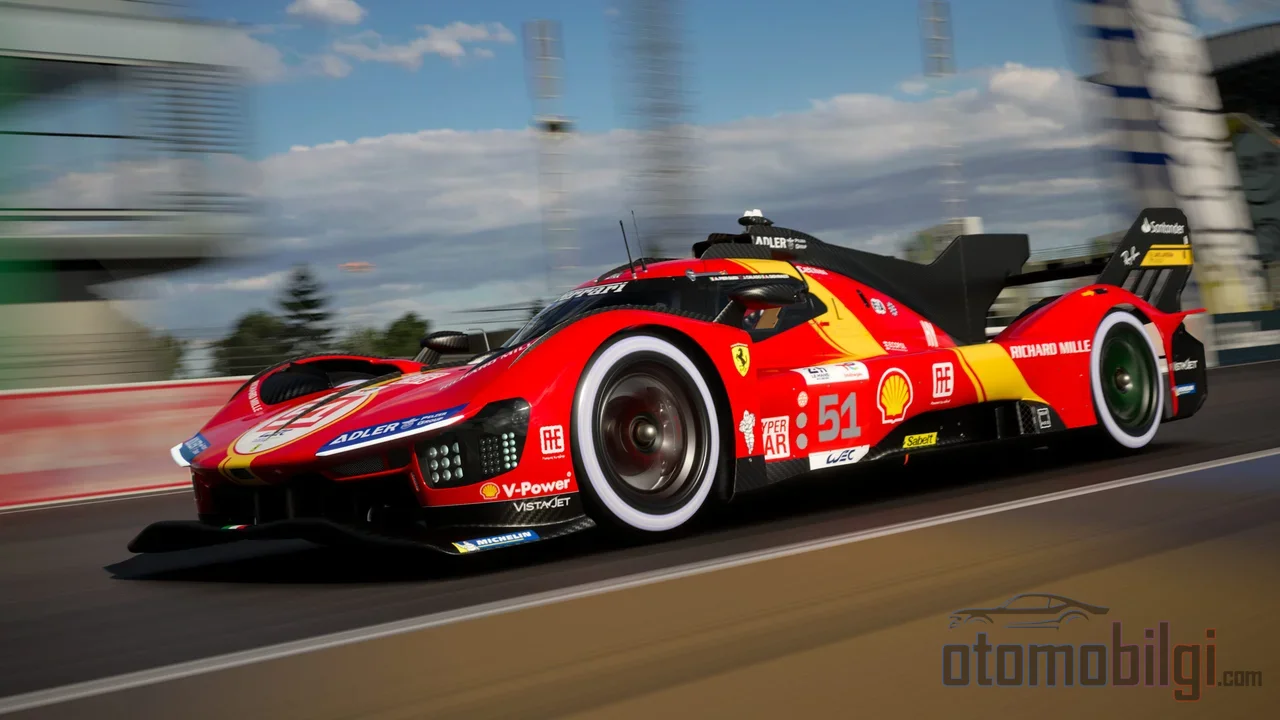
Half a century. For exactly 58 years, the red flag never waved on the most famous circuit of Ferrari's ancestor car... pardon, the red car never once made it to the top step. After the victory won in 1965 with the Ferrari 250 LM, Le Mans' overall classification became, for Ferrari, a wound that only festered with time. Ford's 1-2-3 finish in 1966 even became the subject of a movie of its own. Then 2023 came, the 100th anniversary of the race arrived, and so did the Ferrari 499P. So why couldn't Ferrari win for such a long time, and how did the comeback become so striking?
What Happened After 1966? The Silence That Came After Six Years
First, let's set the scene: Ferrari won six consecutive overall classification victories at Le Mans between 1960 and 1965. The 1965 win was the brand's sixth in a row and its seventh within eight years. In other words, when it came to Le Mans, Ferrari wasn't just competitive, it was an outright ruler.
Then 1966 came, and the Ford GT40 took the stage and ended the streak with a 1-2-3 finish. Some will remember this story from the 2019 film Ford v Ferrari. From that moment on, Ferrari never won the overall classification again. The 250 LM's victory remained the last entry for a full 58 years. What do you think, how does such a long silence affect a brand? Ferrari's answer was clear: to wait patiently, to wait for the right rulebook.
How Did the Hypercar Rules Open a Door for Ferrari?
The FIA published the Le Mans Hypercar technical rulebook on December 5, 2018, and these rules offered manufacturers incredible freedom. You could freely choose the engine type, draw the design with your own hand; performance is also controlled based on results, meaning the shape of the cars is not interfered with by the rulebook. Power is limited to 671 bhp, minimum weight is 1,030 kg, and a "performance window" is defined for the aerodynamic side. LMH cars race together with LMDh cars under Balance of Performance, or BoP, balance.
Ferrari did not miss this opportunity. It officially announced it would enter the Hypercar category and set up the program with AF Corse. AF Corse is an Italian team founded in Piacenza in 1995 by former racing driver Amato Ferrari, with deep ties to Ferrari. The entry is made under the name "Ferrari - AF Corse": the factory entry comes from Ferrari, the racing operations from AF Corse. Under the leadership of Design Director Flavio Manzoni and Technical Director Ferdinando Cannizzo, the team had its chassis built by Dallara and unveiled the 499P at the Ferrari Finali Mondiali in October 2022. The first race was the 2023 1000 Miles of Sebring - and the car took pole right there!
Highlights
- Ferrari's last overall victory at Le Mans was in 1965; it returned in 2023 with the 499P.
- The 499P uses a twin-turbocharged V6 of 2,992 cc plus a 200 kW (268 hp) electric motor on the front axle.
- The #51 car won the 2023 centenary race, covering 342 laps.
- Ferrari won Le Mans three times in a row, in 2023, 2024 and 2025.
- The car that won in 2025 was not a factory car, but an AF Corse customer car.
The Technical Description of the 499P: Hybrid But Classic Ferrari Style
| Specification | Value |
|---|---|
| Engine | 2,992 cc, 120° twin-turbo V6 (F163CG) |
| Electric motor | 200 kW (268 hp) on the front axle, active above 190 km/h |
| Transmission | Xtrac 7-speed |
| Battery | 800/900 V |
| Weight | 1,030 kg |
| Power limit | 671 bhp |
| Brakes / Tires | Brembo carbon / Michelin |
The nice detail is this: this V6 shares the same engine architecture as the Ferrari 296, but it was built as a fully stressed member for racing. So instead of gluttonous apartment-block gas, think race tune. The driver line-ups were ambitious too: Fuoco, Molina and Nielsen in the #50; Calado, Giovinazzi and Pier Guidi in the #51. And the 499P does not have the standardized parts found in LMDh cars; so it is a more original design.
2023, The Race of the Century: How Was Toyota's Streak Broken?
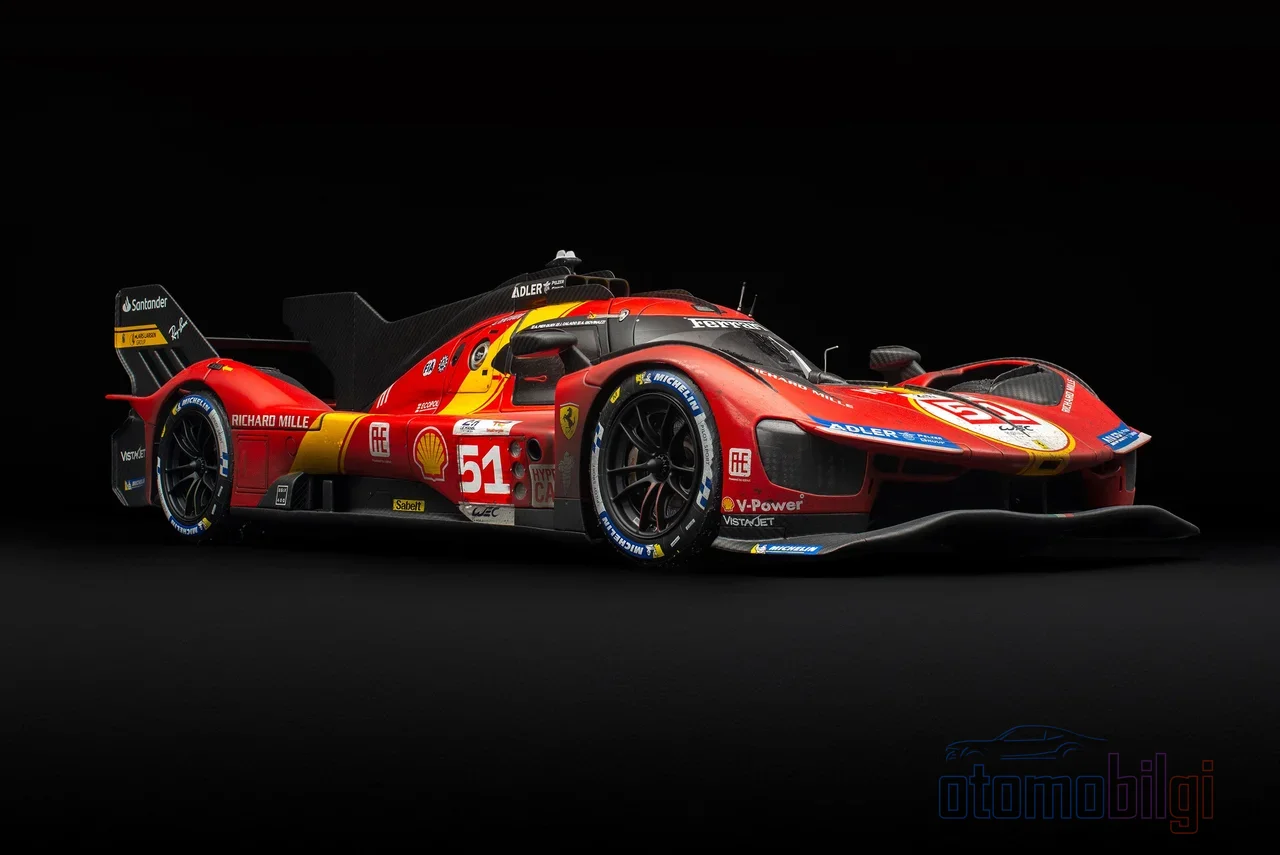
2023 was passing with all the fanfare of Le Mans's 100th anniversary, and Toyota Gazoo Racing arrived as favorites with five consecutive wins. The race, true to its name, turned into an endurance test: some called it an "endurance race", meaning the sturdiest, not the fastest, survivor wins. That was exactly what was debated - as Toyota's streak was broken, how much of Ferrari's success came from advantage is still a topic of conversation.
But the result was there for all to see: the #51 499P, with Pier Guidi, Calado and Giovinazzi, finished first covering 342 laps. Along the way, Pier Guidi overtook the Toyota #8 (Buemi) and took the lead. This was Ferrari's first overall Le Mans victory in 58 years. Look at the beauty of the statistic: the car carries the number #50, because exactly 50 years later Ferrari was playing for overall victory with a factory-backed sports prototype. Although Toyota smiled with a 1-2 in Bahrain at the end of the season, it was Ferrari's return that painted the bigger picture.
2024 and 2025: Winning Is Easy, Keeping on Winning Is Hard
I think the real story starts here. Winning once can be luck; but in a row? In 2024, Ferrari brought the marque's 11th Le Mans victory for a second consecutive time: the #50 499P (Fuoco, Molina, Nielsen) won, the #51 finished third. That year the Porsche 963 had become competitive, and the Ferrari-Toyota-Porsche trio had turned into a championship battle; Ferrari finished third in the manufacturers' championship, but the winner on track was red once again.
2025, however, made a completely different point. The #83 customer/AF Corse car - with the Kubica, Ye and Hanson line-up - delivered Ferrari's third consecutive victory. The winning car covered 3,276 miles in 24 hours at an average speed of 136.5 mph. So it was not the factory's car but an independent team's car at the top; this shows how well suited the hypercar era is to Ferrari. Kubica and Ye became the first Le Mans winners from Poland and China respectively. Porsche attacked at the last moment and prevented Ferrari's clean 1-2; the factory's own cars finished 3rd and 4th, and the #50 was even later disqualified for a technical infringement. So even victory was not smooth, but with that third trophy Ferrari had made a "treble".
Pit Strategy: Winning Le Mans by Stopping for Less Than an Hour
Let me tell you something that will sound strange to you: Winning Le Mans requires spending a total of less than an hour in pit stops. Fuel, tires, driver change - all included. LMP2 cars stop every 35-40 minutes, GT cars roughly once an hour; Hypercars keep a rhythm somewhere between the two. Drivers usually run 2-4 stints without switching. It's like keeping your rhythm while running a marathon without even drinking water: every stop means seconds lost. That's exactly why the Ferrari-Toyota-Porsche triple battle is so often won not on the track, but precisely at this engineering and strategy table.
So What Happened in 2026, and Where Is Ferrari's Le Mans Story Heading?
With the rule change after 2025, all Hypercars underwent re-homologation at the WindShear wind tunnel in North Carolina. The 499P was updated with a front dive plane 60-70% smaller, a redesigned engine cover, and a revised floor. Ferrari has committed its program through 2029 and entered 2026 with these small updates. The result? As every streak breaks one day, Ferrari's streak ended in 2026: The 499P failed to reach the podium at Le Mans for the first time, with its best car finishing 5th. . Oh well - four years of dominance has long since taken its place on the shelves as one of history's most striking comeback stories.
For those curious about the answer, let's clarify: Ferrari had last won Le Mans in 1965 with the 250 LM and didn't take another overall victory until 2023. As for the 499P, in the WEC it has so far collected 8 wins in 25 races, 26 podiums, 10 poles and 6 fastest laps. In the 2025 season, Ferrari drivers took the drivers', teams' and manufacturers' championships and closed out the top three in the standings, essentially having a dominant year. The 2026 season is still ongoing; Ferrari currently sits third in the manufacturers' standings, and the #50 car won Lone Star Le Mans. So the story isn't over, a new page has just been opened. And in my opinion, that's the best part: A brand that waited 58 years swept up three trophies in one go and is now cooking up new plans behind the scenes. How far away do you think the next victory is?
Sources
- Ferrari 499P
- 24 Hours of Le Mans 2023 - Ferrari Hypercar
- A look back at the Centenary: Ferrari's tour de force with the 499P Hypercar
- Le Mans Hypercar
- Ferrari commits to FIA WEC with new Hypercar
- 24 Hours of Le Mans - Ferrari to partner with AF Corse
- Privateer Ferrari wins Le Mans 24 Hours for historic three-peat
- All About The Ferrari 499P
- No. 83 Ferrari Wins Le Mans as Porsche Mounts Late Challenge
- Pit stop tactics: a major factor at the 24 Hours of Le Mans