The Class System at Le Mans: Why Is Every Car on the Track Racing Differently?
Share This Page
The craziest detail that sets the 24 Hours of Le Mans apart from other races is this: three different classes of cars race on track at the same time, and each class has its own winner. So there isn't just one championship trophy; each of the Hypercar, LMP2 and LMGT3 classes competes for its own crown within its internal ranking. The overall winner is the car that covers the greatest distance in 24 hours. Does that sound strange? Once you get used to it, it stops feeling weird - and how!
Highlights
- As of 2026 there are 3 classes on track: Hypercar, LMP2 and LMGT3.
- The track, Circuit de la Sarthe, is 13.626 km long.
- The 2026 entry list features 62 cars, of which 18 are in the Hypercar class.
- To be classified, cars must complete at least 70% of the overall winner's distance.
- The 2025 race was watched live by 332,000 people.
How does the class system work at Le Mans?
In a normal race, everyone competes for the same thing: finishing first. At Le Mans, however, each class runs its own race; the other classes act more like traffic that has to be shared on track (albeit much faster traffic). Even the official presentation describes this as "three races in one race." Each class winner receives a separate award, and an overall classification champion is also determined.
So how did this come about? When the race was first run in 1923, its purpose was to showcase "Sports Cars" sold to the public. In other words, manufacturers brought the cars they sold, and these competed. Over time, the cars split into two: prototypes developed for the track on one side, and GTs that still carried road car DNA on the other. Today's three-tier structure evolved exactly from these roots. Classes group cars with similar characteristics; this way, teams with the same budget and the same philosophy compete fairly among themselves.
The classification rule is also interesting: cars that complete at least 70% of the distance covered by the overall winner are classified. In other words, a car that wants to win its class must first finish the race - that's what they call an endurance race. Among cars completing the same number of laps, total completion time is decisive; in 2011, the top two cars finished 355 laps, and the gap between them was just 13 seconds. 13 seconds at the end of 24 hours - can you imagine?
The three classes on track: Hypercar, LMP2 and LMGT3
Now let's get to the real issue. Each of these classes is a completely different world; each has its own technical rulebook, its own budget logic and its own heroes.
Hypercar: Two philosophies at the top
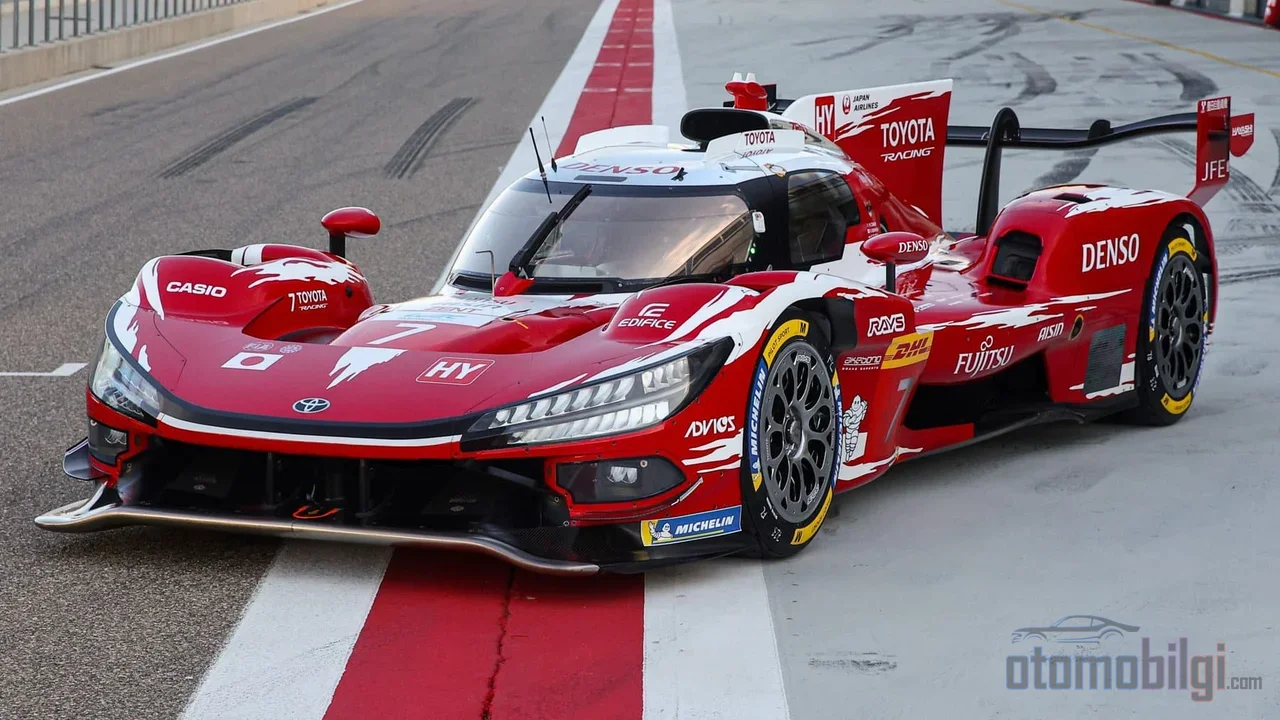
The Hypercar class was introduced in 2021 and replaced LMP1. The elegant idea here is this: offering manufacturers two different paths. The LMH regulation allows great freedom in architecture; there is even the possibility of adding a hybrid system to the front axle. LMDh means taking a more controlled road: you build your car on a common platform developed by Dallara, Multimatic, Ligier or Oreca. The aim is to increase technical diversity while keeping costs from skyrocketing. The two philosophies meet in a single class, and only the Hypercars are realistically fighting for overall victory.
In 2026, something new is also coming: the success handicap system, already applied in LMGT3, is being extended to the Hypercar class as well. The logic is simple - a car that wins too much is slowed down slightly, making the racing more competitive. But note: the success ballast applied to LMGT3 cars is excluded at the 24 Hours of Le Mans. In other words, there is no handicap at "the big race"; everyone races against themselves.
LMP2: The arena of independent teams
LMP2 is a class made up of closed-cockpit racing-purpose prototypes, reserved for independent (privateer) teams. The technical side is very tightly controlled: there are only four chassis manufacturers (Dallara, Ligier, Oreca, Riley/Multimatic) and a single engine supplier - a 4.2-liter Gibson V8. So everyone races with the same heart and a similar skeleton; it is the drivers, strategy and teamwork that make the difference.
There is also a balance rule for driver lineups: each lineup must include at least one Silver or Bronze rated driver. If a Bronze driver is in the lineup, the car also competes in a separate "LMP2 Pro/Am" classification. In 2021, to guarantee the lap time gap between Hypercar and LMP2, the LMP2 cars were deliberately slowed down; the power of the Gibson engine was reduced. Because in this race, the test is not just speed, but the safe coexistence of cars running at different speeds.
LMGT3: Road cars in racing form
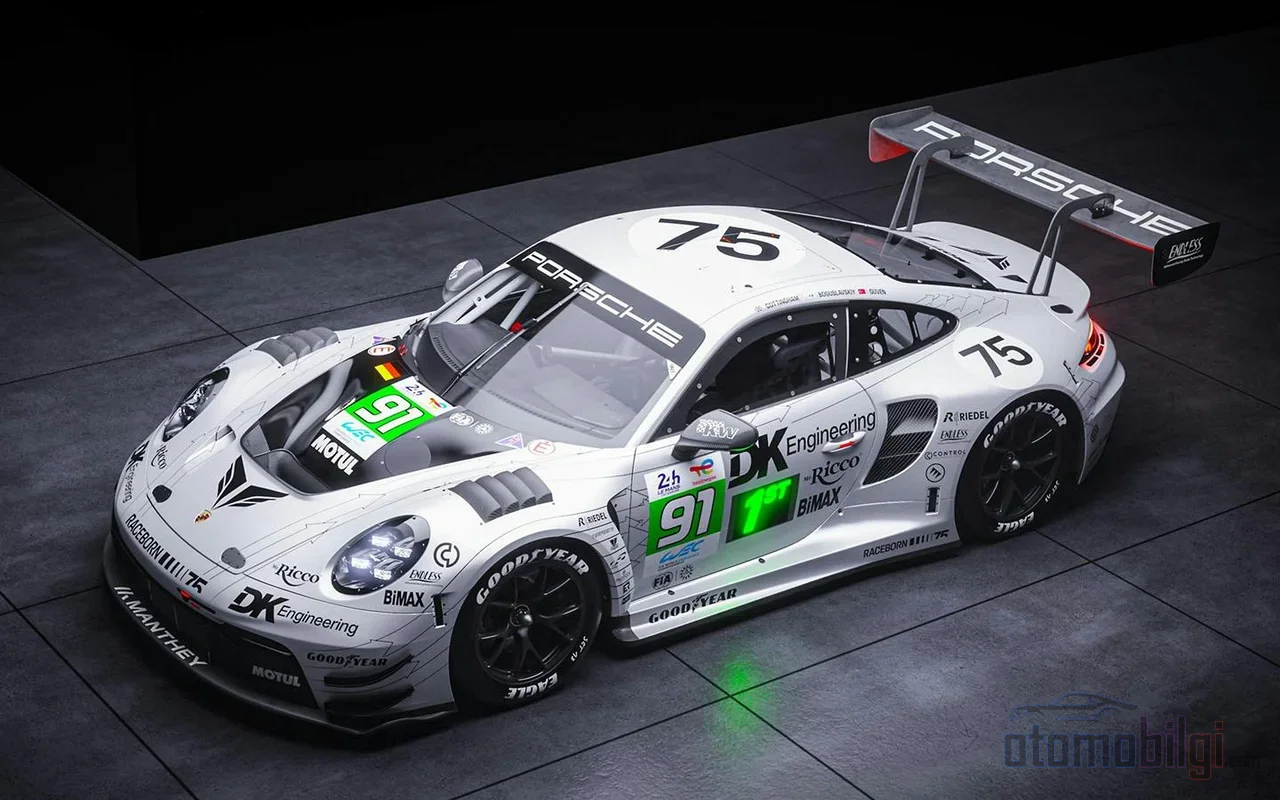
LMGT3 replaced the LMGTE regulations (in force since 2012) in 2024 and is based on the current FIA GT3 platform. The beauty here is this: the cars racing are the racing versions of cars you can actually buy. Manufacturers must produce more than 2,500 road vehicles per year - meaning the car in the showroom is a genuine series-production car. Giant names such as Aston Martin, BMW, Corvette, Ferrari, Ford, Lexus, Mercedes-AMG, McLaren and Porsche are represented by privateer teams.
The driver rule is again balance-focused: each lineup must include at least one Bronze and one Bronze/Silver driver. Equipment specific to multi-class racing is also added: illuminated digital panels and position lights. At night, on a 13.6 km circuit, spotting a Hypercar coming up behind you early is a matter of life and death, so these lights do serious work.
| Class | What is racing? | For whom? |
|---|---|---|
| Hypercar | LMH design freedom or LMDh common platform | Manufacturers, overall victory contenders |
| LMP2 | 4 approved chassis + single Gibson V8 engine | Independent teams |
| LMGT3 | FIA GT3 platform, series-production link | Manufacturer brands, privateer teams |
Blue flag: The most critical moment of multi-class racing
The official blue flag tells the driver that a faster car is behind and that they need to give way. In a multi-class race, this is the hero's daily job: when a Hypercar comes around to lap a slower LMGT3 car, the blue flag is waved. The LMGT3 driver must slow down and make the pass easy - and do so without disrupting their own race, their own braking points and rhythm. Doing this flawlessly for 24 hours is genuinely a very tough job.
How is it done in practice? Different approaches are debated in sim racing and racing communities: the slower car doesn't have to leave the racing line; it can stay on the line and make the pass easier by slightly lifting off the throttle on the straights. The system side has also advanced considerably: automatic alerts can notify the driver when a car about to lap them is approaching; rules going as far as penalties can kick in if no pass is made within two sectors. The fact that blue flags are "advisory", meaning how a violation is interpreted, is still a matter of debate - but one thing is clear: at Le Mans, courtesy in traffic can overcome a whole lap's difference.
Multiple winners in a single race: How is it presented to the audience?
Admit it, it sounds like a mathematical puzzle: how can a race have three winners? Le Mans's answer is a very clear presentation language: the "three races in one race" narrative. When it's finished, both the overall classification and each class's own standings are announced separately, and each class's winner is awarded separately. This is reflected on the podium too: each class's winner has their own celebration. If you're an LMP2 fan, even if your car is 10th in the overall standings, the class victory is your victory.
The number of classes can sometimes be confusing; you may come across the phrase "4 classes at once" in some content, and even experimental concept cars like Garage 56 are classified in the results but are not expected to be competitive. The official table is clear: as of 2026 there are three classes racing - Hypercar, LMP2 and LMGT3. The Garage 56 program started in 2012 and continues to test experimental technology; even though its name appears in the results, it's a separate story, a separate box.
There are also interesting details in the rulebook: three drivers per car are mandatory; within any 6-hour period, you can drive at most 4 hours, and in total at most 14 hours behind the wheel. In 2017, a rule was added that kicks in when the air temperature reaches at least 32 °C : 30 minutes of rest after 80 minutes of uninterrupted driving. So Le Mans puts not just the car, but the drivers too, through an endurance test.
How did the class system evolve historically?
This system didn't appear all at once; it took shape step by step. The first race was held on 26-27 May 1923; it was initially designed as a three-year event under the Rudge-Whitworth Triennial Cup, and this idea was abandoned in 1928 . In the early period, Bugatti, Bentley and Alfa Romeo stood out. Since the race showcased cars sold to the public, classes were naturally determined based on production cars.
Over time, prototypes and GTs separated, and the number of classes changed over the years. the 1970s oil crisis also influenced the evolution of the classes: the Group C formula, which limited fuel economy, was born exactly in that period. So the class system is not just a speed category; it is also a reflection of the technical, economic, and safety agendas of its era. Today's three-class structure (hypercar / prototype-2 / GT) is the result of this long evolution.
And this class system also has an impact beyond the track: Le Mans is known as the birthplace of innovations flowing from racing to road cars. Hybrid systems (flywheel, supercapacitor, battery; in gasoline and diesel versions) were supported in the LMP category in the 2000s; the point where technological innovations like disc brakes seeped into consumer cars also dates back to this history. So the roots of a technology you see on your street may extend back to a Le Mans night.
How does race day unfold? Strategy and format details
In 2026, the qualifying format also changed: on Thursday, 24 LMP2/LMGT3 cars (12 per class) a 20-minute first segment, and only the top eight advance to the next round. The entry list is already crowded: for 2026, 62 cars and three classes, of which 18 are on the Hypercar roster. Imagine this crowd on the track like an army - lap differences, blue flags, and pit strategies are all managed together.
The distance side also speaks the language of numbers: the Le Mans record was 5,410 km in 2010; that is roughly six times the distance of the Indianapolis 500. Modern winners usually cover over 5,000 km . So for 24 hours, you are covering lap after lap almost without stopping. The spectator side has never faded either: the 2025 race drew 332,000 people, and for the 2026 race week, around 350,000 spectators were expected.
The prestige of this race is on another level too: Le Mans is part of the Motorsport Triple Crown (along with the Monaco GP and Indy 500) and the Endurance Triple Crown (along with the Daytona 24 and Sebring 12). Looking at the all-time records, you once again see how deeply rooted the class system is: the most successful driver is Tom Kristensen (9), the most successful team is Joest Racing (15), and the most successful manufacturer is Porsche (19).
Conclusion: Why is this complex system so beautiful?
It may seem confusing at first, I admit. But once you figure out the logic, you see how cleverly designed an organism Le Mans is. Instead of a single championship, three separate stories, three separate heroes, three separate technical philosophies. While the Hypercar team races for overall victory, an LMGT3 team is making history in its own class - on the track at the same time. Blue flag moments, Pro/Am balances, handicap systems... all of these make this multi-class balance possible. There are three separate races to watch over 24 hours; which would be your favorite? I say learn the classes first, then choose.
Sources
- Le Mans Car Classes - Hypercar, LMP2, LMGT3
- 24 Hours of Le Mans
- How does the 24 Hours of Le Mans work? A beginner's guide
- Regulations - FIA World Endurance Championship
- Success Handicaps Set to Be Introduced to Hypercar in 2026
- Le Mans 24 Hours qualifying format change explained
- Le Mans Classification Rules - The 70% Rule
- 2026 provisional entry list - ACO
- Le Mans Hypercar
- Le Mans Prototype
- Flags, safety procedures and penalties explained
- Everything You Need to Know about the 24 Hours of Le Mans
- The 24 Hours of Le Mans is racing's super-sized event