Why Did Cadillac Return to Le Mans With Its Hypercar?
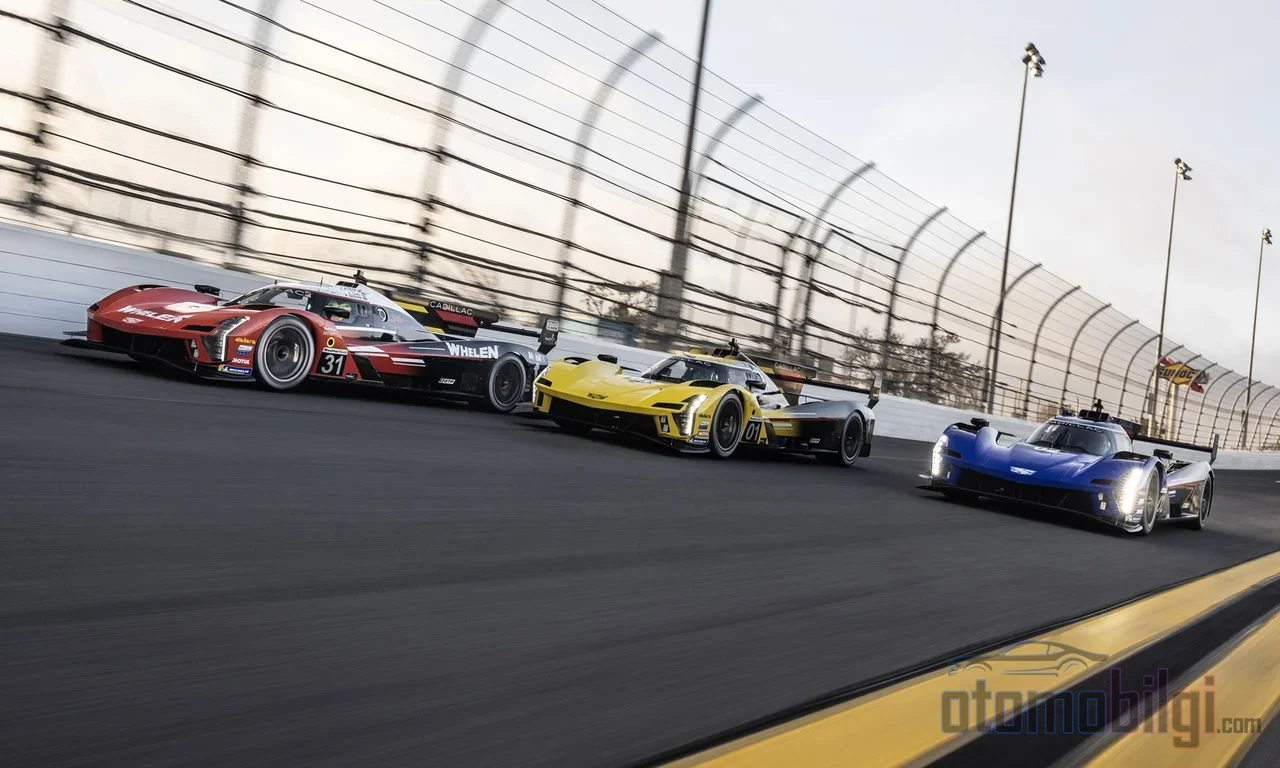
Sleeping in a "hilton" made of buses on the pit wall at Le Mans and watching an object that carries around a plastic-capped ink bottle all day... It's not a joke, it's real. Would you like to imagine, even for a moment, what it takes to win at Circuit de la Sarthe since 1923? This page is all about exactly that question: What does it mean to hold your car, your tires and your nerves like iron for 24 hours straight?
What Happens Over 24 Hours? The Anatomy of a Day-Long Marathon
Let's start with the big picture. Le Mans is run on a vast circuit made up of public roads near the city of Le Mans in France, and it has a single goal: whoever completes the most laps after 24 hours wins. This is not the "fastest one overtakes and finishes" logic of a formula race. Here, in addition to speed, endurance is essential. You push your engine, transmission, suspension and tires for an entire day; even a single loose screw can erase you from the finish list.
With a history dating back to 1923, the race has been the stage for almost every major technological leap in automotive history. The disc brakes, direct injection systems, and even hybrid powertrains you use in an ordinary street car today all hit the roads only after proving themselves in this "twenty-four-hour war in slow motion." Manufacturers use this place like a testing laboratory; winning is prestige, enduring is proof.
Key Highlights
- The race has been run since 1923; the winner is the team that completes the most laps in 24 hours.
- The track length is approximately 13.6 km; its most famous section is the Mulsanne Straight.
- There are three keys to a winning plan: reliability, pit strategy and driver rotation.
- The most successful driver is Tom Kristensen - holder of nine victories.
- The top class today is the Hypercar category, in which hybrid prototypes compete.
Circuit de la Sarthe: The Track Is a Hero in Its Own Right
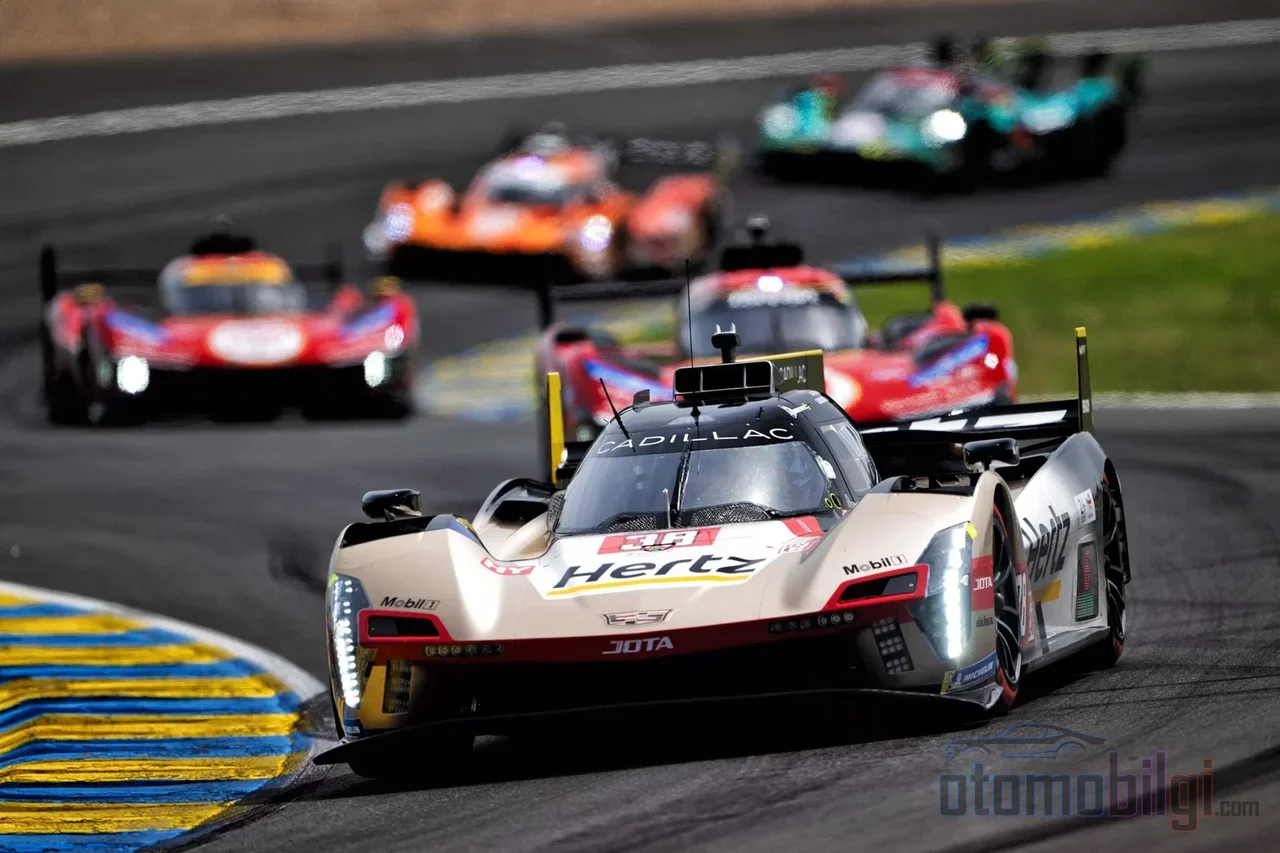
The official name of the Le Mans circuit is Circuit de la Sarthe, and its length is approximately 13.6 kilometers. What does this mean? Almost five times the length of a normal formula track! And many of the places we call "corners" here are actually public roads: village passages, corridors of trees, safety barriers laid over local roads. As you race along the track, there are fields, village houses, and hundreds of thousands of enthusiastic spectators per kilometer by your side.
The star of the track is the Mulsanne Straight, named after the village of Mulsanne it passes by. In this section, which stretches up to six kilometers, cars go flat out, rocketing forward like missiles. On this straight, where speeds climb above 300 km/h, it's not just the driver's excitement being tested - the engine's and the tire's endurance are pushed to their limits too. In the 1990s two chicanes were added, and today you cannot pass along the straight without slowing down twice - so the era of endless full throttle is over, but the section is still the heart of the track.
Beyond that, the track has corners that have become legendary. The Dunlop Bridge is the driver's first big test coming out of the start, while the Porsche Curves take their name not from the certification grandstands at the gates of the circuit, but from the German marque's past success. This is a beautifully clean "super high speed" corner - if we don't count the certification corner at the gates of the circuit, it would be more accurate to say it takes its name from the German marque's past success - can you imagine a car passing through here in the middle-of-the-night fog?
Legendary Battles: From Ford-Ferrari to Audi, All the Way to Mazda
Thinking of Le Mans as just "a race with long roads" is a big mistake. Some of the greatest clashes in automotive history took place within this event. The story of the Ford GT40, which launched a factory-wide assault to stop Ferrari in the 1960s, is so impressive that even today it is the stuff of movies. The 1966 race where Ford achieved victory is the best example of how merciless competition between brands can be.
Then the scene changed. In the 1980s, cars like the Porsche 956 and 962 kept their classes at the top practically without letting anyone else in. The 2000s, meanwhile, were the era of diesel prototypes like the Audi R10 TDI: The years when Audi nearly turned Le Mans into its own garage cemented the race's identity as a technology hub. And in 1991, history was written: The Mazda 787B became the first Japanese car to win Le Mans, winning with its rotary engine - and not a boxer, but an entirely different engine philosophy!
As you can see, the winner can be a different brand, a different country, and a different engine type every time. Le Mans is not a setup where "the richest team wins" even once; it is a matter of strategy, endurance, and a bit of luck.
The Formula for Winning: Reliability, Pit Strategy and Driver Rotation
So how does a car endure for 24 hours? The secret lies in three words: reliability, plan, rotation. First, reliability: prototype cars are incredibly fast, but at the same time incredibly fragile. An electronic failure, an oil leak, or a minor gearbox problem can instantly turn hours of leadership into ashes. That is why teams try to keep the car not at its most performant level, but at its most sustainable level - running the marathon like a sprint is certain defeat.
Second is pit strategy. You don't use pit stops just to change tires; refueling, driver changes, and minor repairs are all planned down to the second. A pit strategy mistake can have heavier consequences than leading 10 laps on track. Third is driver rotation: each car runs with at least two, usually three drivers, and each driver takes turns at the wheel. It is impossible for a single driver to drive at maximum concentration for 24 hours - which is why stints, i.e. wheel turns, are calculated minute by minute in advance.
And night driving is a test of its own. In moments where rain, fog, darkness, and speeds of around 300 km/h combine, the driver can see only a handful of meters ahead. That's exactly why Le Mans winners are regarded as "the most complete drivers in the world."
The Hypercar Era: Today's Ultimate Battle
The top class of the race today is the Hypercar category. Giant brands like Ferrari, Toyota, Porsche, and Cadillac compete here with their hybrid-powertrain prototypes. These cars both carry on the Le Mans tradition and serve as open-air laboratories for the electric and hybrid technologies that will eventually reach the roads. Thanks to a balancing system called balance of performance (BoP), cars from different brands can run at closely matched performance levels; in other words, each car's power, weight, and aerodynamics are adjusted to prevent a "the most expensive car wins" logic.
Don't you think that's crazy? From a group of engineers' idea in 1923 to "let's see if the car can last 24 hours" to today, this track actually tells how technology developed worldwide. Disc brakes, hybrid systems, direct injection - all of them were introduced to the world on the arena stage of this giant marathon.
Why Do They Race on the Same Road for a Whole Day? Here's the Real Answer
Now let's give a clear answer to the opening question. What makes Le Mans' 24-hour marathon so special is that speed and endurance are tested at the same time: the winning team is the one that can run the fastest yet most reliable car, with the smartest pit strategy and the most efficient driver rotation, smoothly for an entire day. In other words, it's not just the "most powerful engine" that wins; it's the triple partnership of engineering, planning, and human endurance that wins. The fact that legendary driver Tom Kristensen sits at the top with nine victories is proof of this: the secret to building a career at Le Mans is not a single perfect lap, but playing flawlessly for twenty-four hours straight.
That's why Circuit de la Sarthe is not just a track, but the most grueling examination center of automotive technology. A car standing perfectly still on the pit lane in the morning can still be standing there in the evening; a team leading in the evening can fall behind by midnight. No one is guaranteed the finish line, and everyone gets up to build something better next time. And this never-ending story of endurance is exactly what sets Le Mans apart from the Formula of racing.
Sources
- A peek inside the LeMans Cadillacs
- Briggs Cunningham
- History of Corvette Racing - GM Media Press Kit
- Corvette Racing
- Cadillac DPi-V.R
- Cadillac V-Series.R
- Cadillac finishes third at Le Mans - GM News
- Cadillac returns to Le Mans with eyes on endurance classic - GM News (2026)
- Cadillac improves V-Series.R Hypercar aero for 2026
- Cadillac Still Fighting to Prove Itself at Le Mans - The Drive