McLaren F1 GTR: How It Became the Road Car That Won Le Mans?
Share This Page
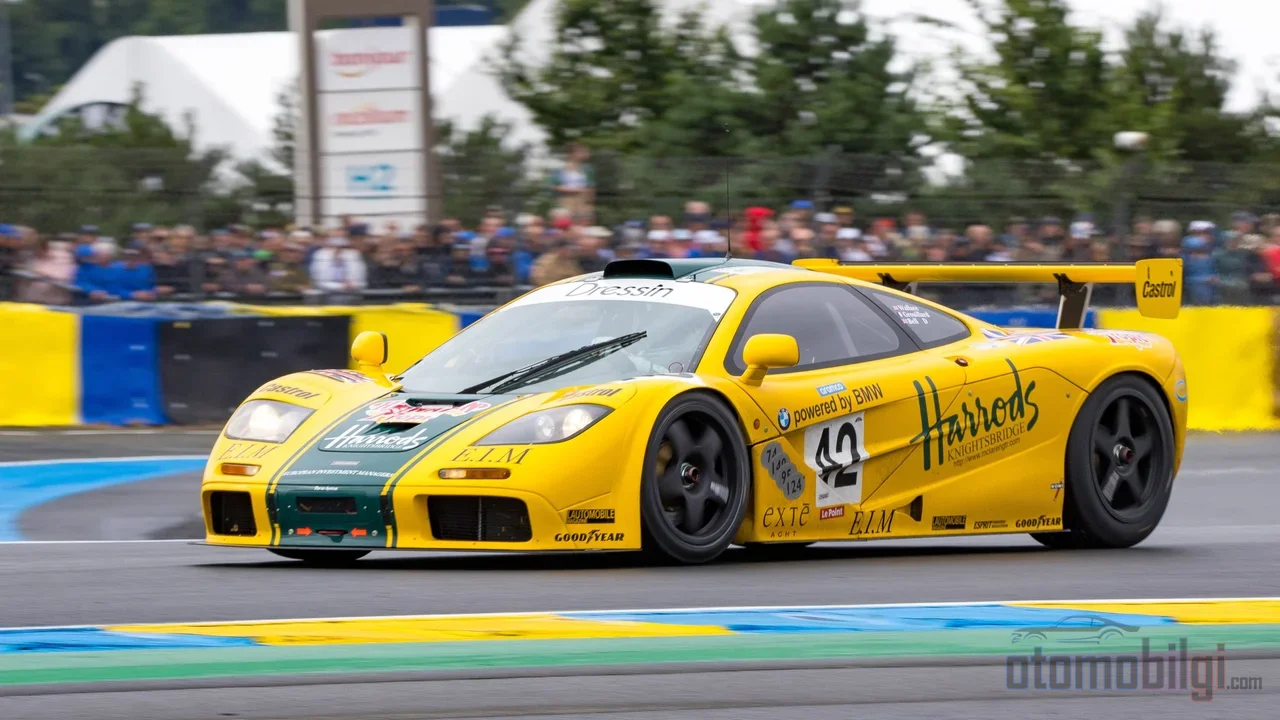
The McLaren F1 GTR won the 1995 24 Hours of Le Mans, leaving the factory prototypes behind - and it did so with a machine that still carried road car DNA under its hood. So how did a road car win the world's toughest endurance race? The answer lies in a story of lucky coincidences, solid engineering, and a bold private team.
Highlights
- Date of victory: June 17-18, 1995, with the #59 Kokusai Kaihatsu Racing car
- Drivers: JJ Lehto, Yannick Dalmas, and Masanori Sekiya
- The winning car completed 298 laps (more than 2,500 miles) and won by a single lap
- McLaren became one of only three manufacturers to win Le Mans on their first attempt
- The winning #01R chassis was sold at a record price of $34,655,000 in 2026
A Car Never Designed as a Race Car in the First Place
It all started with an idea in Gordon Murray's head. When designing the McLaren F1, what he had in mind was not a racing machine; he wanted to build the best road car in the world. A central driver's seat, two passenger seats on either side, butterfly doors, a naturally aspirated V12... All of these were intended for road use. So the ancestor of the car that won Le Mans in 1995 was actually designed to sip morning coffee and drive in traffic. Madness? A little, yes.
But sometimes life moves faster than its plan. In the mid-90s, the BPR Global GT Series was born, and wealthy racing enthusiasts began knocking on McLaren's door. Names like Ray Bellm and Thomas Bscher wanted a racing version of this magnificent automobile. Murray resisted at first, but as the pressure grew, the door cracked open. Eventually, the F1 GTR was born, and McLaren produced only 28 units in total: 9 in 1995, 9 in 1996, and 10 in 1997 specification.
From Road Car to Race Car: What Changed?
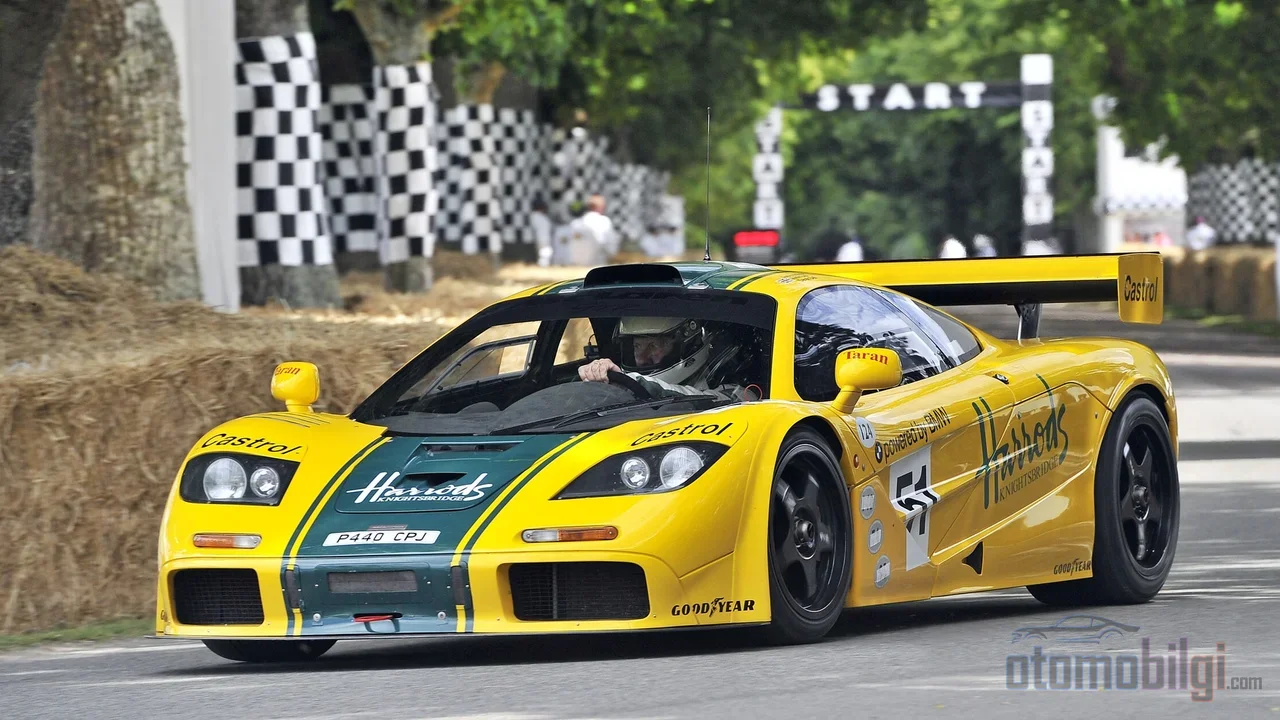
The transformation remained much gentler than you'd think - and that's exactly why the story is so compelling. The central seating position, butterfly doors, and standard gearbox were kept as they were. What was added? Carbon brakes, a rear wing, and cooling ducts. The 1995 version produced downforce along the roofline enough to press the car to the ground at 100 mph. Let me make an analogy: in a normal car, you feel the car settle slightly to the ground as you accelerate; in the GTR, this feeling stuck you to the road like a superhero's cape.
And here's the sweetest irony: BMW's S70/2 6,064 cc naturally aspirated V12 was restricted to approximately 600 PS in the race due to the air restrictor. So the race car was producing less power than the road car! Still, in practice it set the highest speed of the year on the Mulsanne straight: 281 km/h. Power isn't everything, is it?
Kokusai Kaihatsu: The Private Team That Won Le Mans
Here are the least known heroes of the story. The winning car was not McLaren's official factory entry. It was a private team called Kokusai Kaihatsu with Japanese sponsor Ueno Clinic, and the track operation was run by team principal Paul Lanzante, who was entering Le Mans for the first time. What's more, the car used was chassis #01R: It had been converted from the chassis of the road car numbered #019 and was McLaren's own test car. It entered Le Mans just once, won, and then never raced again. It is currently kept at McLaren. In my opinion, it's the coolest retirement a car could have.
Behind the wheel was a mixed lineup: JJ Lehto, Yannick Dalmas with four-time Le Mans winning experience, and Masanori Sekiya. This trio managed the rotation flawlessly over 24 hours. Dalmas's experience is thought to have been particularly critical; in a race like this, a driver who keeps a calm head and knows how to finish is worth its weight in gold.
The 1995 Race: Why Did the Favorites Fade?
Before the race, everyone had their eyes on the bespoke WSC-class prototypes. These were machines built from scratch for Le Mans, open-cockpit, fast but fragile. Then the weather turned bad, and 1995 came to be remembered as one of the wettest Le Mans races in history. The wet track hit the prototypes in two ways: engine problems and accidents. Two Porsches, including the leading Gulf McLaren, also paid the price. The GT1 cars, meanwhile, kept running like an old Nokia - barely, but they finished.
As the race drew to a close, the picture was striking: five McLarens were still on track while only three WSC cars remained. In the final laps, there was a head-to-head duel between the Kokusai Kaihatsu car and the Courage prototype, and victory came with one of the narrowest margins since the 1950s. The result? An overall victory, not a class win. An outright victory that also passed the Kremer and Courage prototypes. 7 of the 28 F1 GTRs entered this race, and the finishers came 1st, 3rd, 4th, 5th and 13th. . A brand taking four of the top five spots on its first attempt had never happened before.
Why Did Porsche and Toyota Fall Behind?
On the Porsche side, things were heartbreaking: In 1995, they had no car at all capable of rivaling the F1 GTR. Toyota and Honda had entered the GT classes with the Supra and NSX, but were far from overall victory. The real red meat of the competition became the WSC prototypes destroying themselves. The hero of the race was enemies so fast that they finished themselves off before the enemies were finished.
Think of it this way: Le Mans is a race resembling a marathon. While everyone who wins the sprint collapses an hour later, the runner who keeps a steady pace moves ahead. The robustness of McLaren's design came into play exactly here; the foundation Murray laid as a road car was built well enough to withstand 24 hours of torment.
What Happened After the Victory? The GT1 Explosion and the End of an Era
This victory was the spark. In the 1995 BPR season, McLaren caught a crazy streak: it won the first four races (Jerez, Paul Ricard, Monza, Jarama) and swept the top five positions at Nürburgring. Other manufacturers woke up, and a short but fiery GT1 era began.
- 1996: The Porsche 911 GT1 arrived and things got tougher; six McLarens finished but behind the 911 GT1s and the winning Porsche LMP.
- 1997: The Mercedes CLK-GTR seized the advantage; McLaren cars finished 2nd and 3rd overall, taking a 1-2 in the GT class. The Longtail version reached 317 km/h on the Mulsanne - the rival 911 GT1 Evo was at 326, the Nissan R390 at 319 km/h.
- 1998: BMW Motorsport moved from its temporary partnership with McLaren to its own LMP project, the V12 LM, McLaren withdrew factory support and the GT1 class was discontinued at the end of that year due to Mercedes dominance.
That's why the McLaren F1 GTR holds a special place: it is called the last road-car-based vehicle to win Le Mans. After that, the victory podium was left to prototypes built entirely from scratch.
What's Happening Today? The F1 GTR Legacy Lives On in 2026
In honor of the victory, McLaren built five F1 LM examples, and the story never ended. In 2026, the winning #01R chassis went to a record price of $34,655,000 at auction. (Let me also note: don't confuse this car with the 1996-spec car with the #10R plate owned by Nick Mason - the two are different.) McLaren also paid tribute to the legacy of this victory with the 720S and 750S Le Mans special editions, and the MCL-HY hypercar was introduced as the spiritual successor to the F1 GTR.
| Specification | McLaren F1 GTR (1995) |
|---|---|
| Engine | BMW S70/2, 6,064 cc naturally aspirated V12 |
| Power (in race trim) | Approximately 600 PS (restricted by air restrictor) |
| Top speed (practice, Mulsanne) | 281 km/h |
| Total chassis produced | 28 (9 of them 1995 spec) |
| 1995 Le Mans result | Overall winner (298 laps, 1st and 3rd-4th-5th-13th) |
| After the race | The winning car never raced again |
Is This Victory the Biggest Surprise in History?
Some call it luck: the rival prototypes broke down, it rained, they were in the right place on the right day. Some look at the integrity of the design: Murray's flawless engineering revealed itself over 24 hours. I think it was a part of both - but remember, even Ferrari couldn't win Le Mans on its first attempt. Luck only finds those who are prepared, and this car was prepared. On that rainy June night in 1995, a road car made history. Do you think this fairy-tale story will ever be repeated?
Sources
- McLaren F1 GTR
- 1995 24 Hours of Le Mans
- F1 GTR
- Our legendary Le Mans triumph told by those who lived it
- Inside the McLaren that won its first and only race at Le Mans
- Remembering The McLaren F1 GTR That Won The 24 Hours of Le Mans in 1995
- How the McLaren F1 GTR won the '95 Le Mans
- McLaren F1 GTR 95 Guide
- The McLaren 720S Le Mans pays tribute to the F1 GTR's 1995 triumph