How to Make a Perfect Start From the Card?
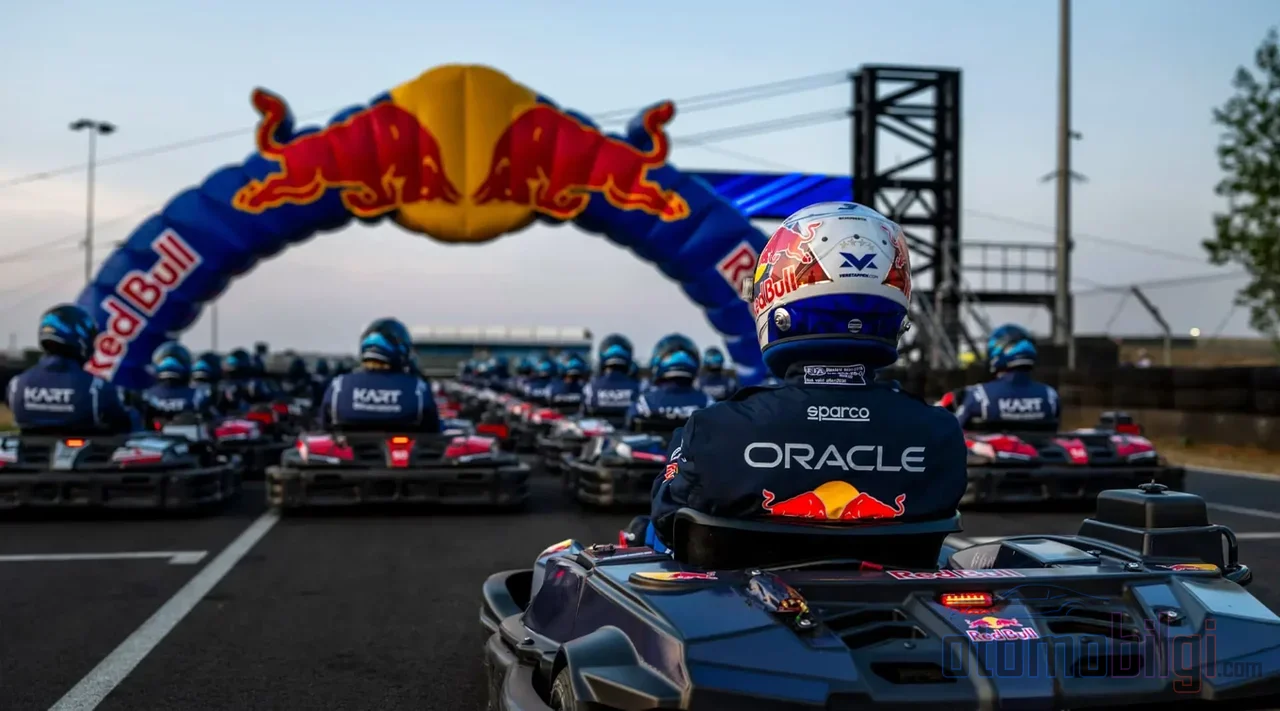
The lights go out, your heart is in your throat... and the next five seconds are perhaps the most critical moment of the 15-lap race. I'm serious: in karting, the start and those few seconds up to the first corner are always one of the average 4-5 critical moments in a race. So how do you nail a perfect start? Here's what most drivers get wrong: the start doesn't begin the moment the lights go out. It has already been won or lost in the formation lap before those lights come on, in the clutch setting, even in which row you line up in on the grid.
In this guide we won't just walk you through the flow of race day; you already know that flow. Our business is more specific: those glorious few seconds from the start line to the first corner. Clutch bite, rev window, tire temperature, the inside-line calculation and the first braking point. Let's get started, because you're on the grid and the green flag is coming soon.
Standing Start or Rolling Start? A Game That Changes With the Format
First, the basic question: how do karts begin a race? There are two formats. In a standing start, the karts set off from a fixed point with their engines running. In a rolling start, after the formation lap, the karts begin the race while in motion, crossing the start line in two parallel rows.
In Europe, nearly all categories use a rolling start; the standing start is essentially something specific to geared, i.e. shifter, karts. In Türkiye, according to national rules, the race begins in a single row, and after one lap the race truly begins anew on the start-finish straight with the green flag waved by the race director. A false start is also defined by the rules: in the launch phase, if a kart leaves the marked corridor with all four tires before the start is given, a penalty is incurred.
Why does this distinction matter? Because the correct launch technique changes according to the format. If you start from standstill, the heart of the matter is the clutch bite and the rev window. If you start rolling, the real issue is the formation lap: warming up the tires, not disrupting the corridor order and applying throttle at exactly the right moment. In other words, two formats, two different skill sets.
The Highlights
- In Europe, nearly all categories use a rolling start; the standing start is essentially unique to shifter karts.
- According to CIK-FIA rules, the start corridor is two meters wide, in two lanes, up to 110 meters before the start line; the yellow line is crossed 25 meters before the line.
- The penalty for overtaking during the formation lap is 5 seconds or disqualification from the heat.
- On the first lap, everyone brakes earlier than expected; if you enter with your normal braking point, you'll dive into the pile-up ahead.
- In a 15-lap race there is an average of 4-5 critical moments, and the start is always at the top of that list.
The Rule Architecture of the Rolling Start: The Corridor, the Yellow Line, the Green Light
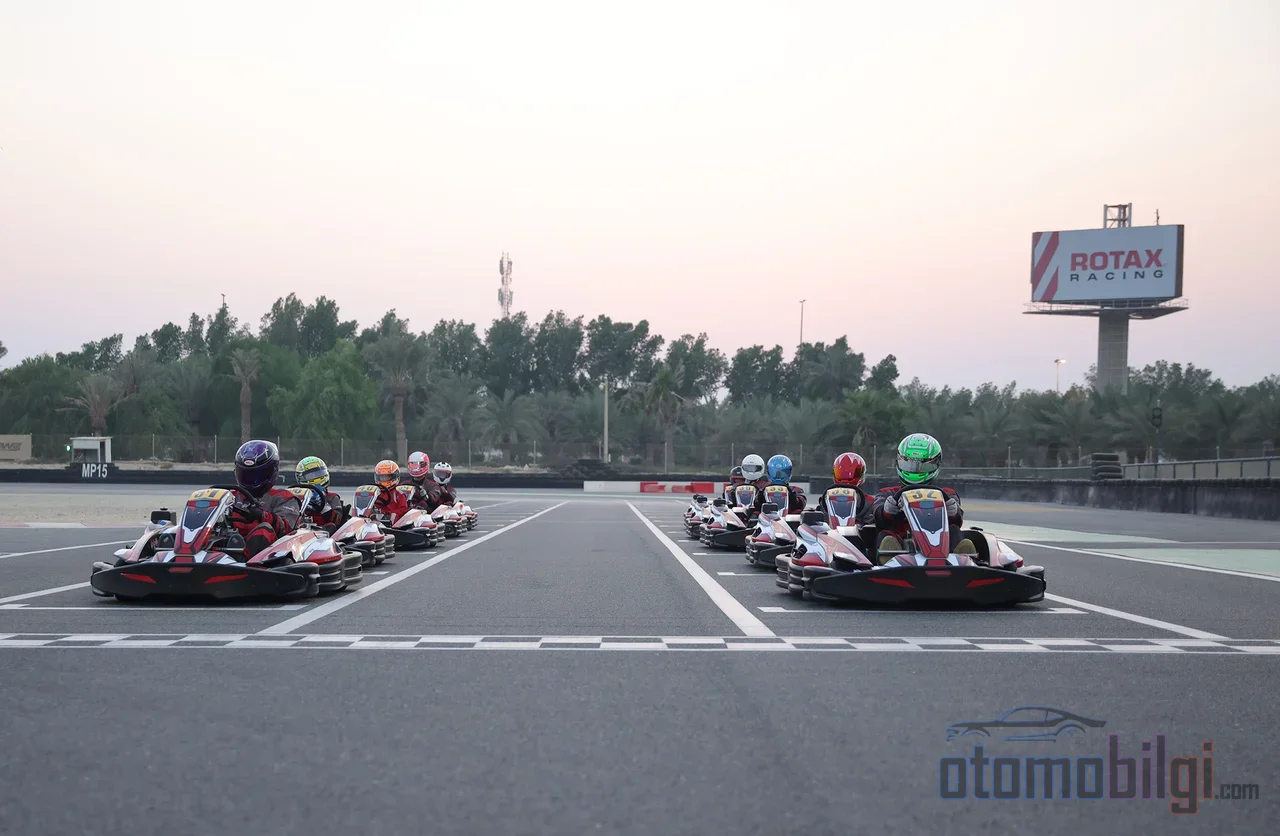
The rolling start works like an official choreography and knowing the steps is essential. First you leave your grid position and take the formation lap: position is maintained, no one passes anyone. As the kart grid approaches the start straight, the karts line up in two parallel rows and move forward at a constant speed. If the formation is correct, the race director gives the start with a green light or flag; if it is not, the start is canceled and the procedure is repeated.
The dimensions of the choreography are also clear. According to CIK-FIA's 2026 sporting instruction rules, the start corridor extends up to 110 meters before the start line, bounded by white lines, and consists of two lanes 2 meters wide. A yellow line is painted 25 meters before the start line. Leaving the lane before the lights, or starting early or late, is penalized. In repeated false starts, the race is stopped with a red flag and a new procedure starts within 30 minutes with the same grid. A late driver may return to the grid position without crossing the red line and without blocking others.
In short, trying to win before the lights is the quickest way to lose the race right at the start line. Patience is the rule.
Clutch Engagement and Rev Window: Read This If You Are Starting From a Standstill
A standing start is karting's purest mechanical exam, and at its center is the clutch. The clutch must be set so that the engine stays at its maximum torque revs during starts and corner exits. Thanks to spring settings, the engagement revs can be changed; in setups from a well-known clutch brand, this setting can typically be raised by 100-200 RPM, because every setup works most efficiently at a specific torque and engagement rev. A concrete example: In blueplate class races, the stall speed, meaning the revs at which the clutch fully engages, is kept at around 3500 RPM.
An analogy from daily life: clutch tuning is like choosing which gear the chain should be in on a bicycle to be ready for a climb. If you set it to engage at too low revs you bog down, and if you wait at too high revs you spin the tires uselessly in the first few meters. The goal is to launch right at the bottom of the engine's torque peak.
In a geared kart, a standing start follows a clear sequence of steps: roll into the grid box in neutral, pull in the clutch, shift down into first, press the throttle and raise the revs, then launch. Memorize the sequence; trying to remember which gear you are in on the grid - that is exactly the race you lose at that moment.
Formation Lap: The Real Secret of the Start Lies in the Tires
Now let's move on to the part most beginners overlook. Kart tires cannot be pre-heated the way they are in Formula 1; since more than 20 minutes pass between the tent and the track, whatever extra heat you have is lost on the way. Your only chance to warm up is the formation lap. Driving on cold tires is like driving on ice, and in the opening laps no one can set the race's fastest lap.
The warming technique is not drawn with the steering wheel through the classic zigzag, as is commonly believed. The correct method is to keep the kart constantly on three wheels using the brakes, the throttle and body weight - that is, to keep the tires under load; because tires heat up under load, while on the straights the load is almost zero. Caution: if you drift onto the dirty surface outside the racing line, you pick up debris on the tires and cool them down. When the pressure is low, stay away from dirty areas.
Why Do Front Tires Struggle?
Rear tires are driven, so they warm up easily with throttle. Front tires, however, only warm up when braking shifts weight forward; the solution is to brake hard and attack corner entries aggressively. The method of scrubbing the front tires using the extra steering angle seen in formula cars is not considered correct in karting. In a shifter kart, being gentle with the throttle on the formation lap also matters: if the rears warm up too early while the fronts stay cold, be ready to eat understeer, that is front push. Both the brakes and the engine must be warm; Max Verstappen is known to have held the radiator cap open during the start and opening lap of his old karting races.
Then there is the fine point of carburetion. In junior categories with diaphragm carburetors, the lean carb setting was kept dry during the final part of the formation lap; because excess fuel causes a delay in throttle response and reduces maximum launch acceleration. This is exactly why, in Verstappen's junior category videos, one hand is seen on the steering wheel and the other on the carburetor.
And don't forget: even a small pressure change like half a PSI can completely alter the kart's grip, balance and lap times. In the rain, pressures 5-8 PSI lower than the dry setup enlarge the contact patch and increase grip.
Inside Line or Outside Line? Strategy on the Grid
You know the phrase that has been repeated for years: always take the inside line. This is mostly true; the inside line means a shorter distance, and accidents usually carry toward the outside of the corner due to centrifugal force, so starting from the outside lane usually costs you 2-3 positions. But treating it as a fixed rule is a mistake. The inside line is often crowded and karts run bumper to bumper; every start is different, look ahead of the grid and at the drivers around you.
The finest example of this is the 2013 Bahrain World Championship final: a driver starting from the outside of the fourth row made a better start than expected, took the lead on lap nine and finished second, enough for the title. The outside line move works three times out of four on the first lap, but the fourth time it can be a disaster; whether to take the risk is your decision.
The Elastic Game from Pole Position
If you are on pole position, the rules of the game change: you set the pace. The legendary example is Max Verstappen's technique at a winter cup in Lonato. By rule, if the driver on the second row stays ahead of you at the moment of the start, they receive a time penalty; Verstappen, knowing this, lets the second-place driver edge slightly ahead of him; when the lights go out, the rival slows down to avoid a penalty, and at that exact moment he opens the throttle suddenly, not gradually but all at once; he even adds a small touch of the brake to heighten the surprise. The result: a gap of two kart lengths and an exit through the first one or two corners that requires no defending. If you are on the second row, it's the reverse: never let the leader get ahead of you, and always check your series' specific start rule and penalty in the pre-race regulations.
Slipping Away from the Rival Without Contact
The lights are out, now what? The goal is to close off the inside line before the heavy braking zone. Braking later than your rival to pass them at the entry of a curved braking zone (out-braking) is a classic move, but the basic principle is this: drive predictably and calmly. Sudden, panicked movements cause contact. In a successful pass you take the position safely, you don't cut off the acceleration, the kart stays under control and you avoid unnecessary contact. Remember, in karting the slipstream, that is, tucking in right behind the kart ahead to reduce air resistance, opens the passing door with the distance it gains on the straights; but focus not on entry speed but on corner exit speed. And of course, without knowing the track well you can't decide where to make an attack.
Braking Point at the First Corner: The Meters Where the Most Wins Happen
Here is the number one cause of crashes in racing: judgment of proximity, that is, perception of distance and speed. In the first lap everyone brakes early because everyone is waiting, because everyone is on the defensive. If you brake at your normal braking point, you dive into the pile of karts ahead and the crash is your fault. The first lap rule is simple: brake earlier than everyone.
Technically, braking works like this: press the brakes hard, almost to the point of locking, and progressively reduce the pressure as you approach the apex. A corner consists of four parts: braking point, turn-in point, apex and exit. To find your braking point, you can approach the ideal point by braking progressively later during practice sessions; in low-grip conditions, light trail-braking, that is, slowly releasing the brake while continuing to turn, helps rotate the kart.
There's also eye work: look far ahead to see the dirt on the track, that is, the dust off the racing line, early. A driver who sees the dirt brakes a meter or two earlier and stays on the ideal line; even if you can't gain positions from rivals who run wide, you don't lose any.
First Lap Psychology: Attack or Defend?
Coming out of the first lap with a defensive mindset is a big mistake; if you don't pass, you get passed. The smart plan is this: enter the first corner with the kart ahead; if they're not defending, try the pass, and if they're half defending, try again at the second corner. Adjust your risk appetite according to the situation: risk increases in a sprint race and decreases when you're calculating for a championship. The race is 15-20 laps, there's time. The golden rule is this: you can't win the race on the first lap but you can lose it.
After the lights go out, don't overthink; the moment you start thinking you start making mistakes, drive on instinct. And watch out for the sleeping driver syndrome: if your brain is in sleep mode during the opening lap, you lose, because if the others notice you're a slow starter, they'll come over you in the first lap. According to video observations from Verstappen's youth years, in the first lap on cold tires he gained roughly 5 tenths of a second on his rivals, and in the following laps an estimated difference of 1-1.5 tenths; these figures aren't timing data, they're estimates made from watching, but they paint a clear picture: the one who starts awake opens the gap in the first lap.
How Does a Perfect Start Transform the Race?
So what is the impact of all this on the race result? There's a measurable metric: first lap position gain or loss according to grid order. Some very fast drivers lose an average of 5 positions on the first lap, while some gain 2-3. A driver who starts from the back and finishes the start in the front row has no speed problem; the problem lies in race intelligence and decisions. A good start doesn't just mean a few places gained; it means a clean first lap with clear air, away from the risk of accidents, and it means settling one of the 4-5 critical moments from the very beginning.
The good news is this: starting ability isn't innate, it develops with training. Reaction time can be trained with ball athletes, juggling, and reaction lights. Watching the starts of all track categories on video and building a database, mentally rehearsing 3-4 possible scenarios, and establishing your own alertness routine before the start (music, jump rope, pumping the brakes before getting in the kart) makes a difference.
In short, the answer: a perfect kart start is the work of a driver who launches with a rev window suited to the format, warms the tires correctly during the formation lap, calculates the risk of contact and chooses their line in advance, and enters the first corner braking before everyone else. If everything is ready before the lights go out, the rest is instinct. Game time!
Sources
- Kart Race Starts and First Lap: How a Rolling Start Works
- Karting Rolling Start: Rules and Technique
- Rolling start in karting: key to safer, smarter race starts
- Karting Regulations - Motorsport UK
- TOSFED 2026 National Karting Rules
- FZ Shifter Standing Start Guide
- Bully Clutch Setup
- Bully Clutch Stall Speed
- Karting Tips: Mistakes Novices Make
- How To Overtake Like A Pro