24-Hour GT Racing: An Endurance Test and Beyond
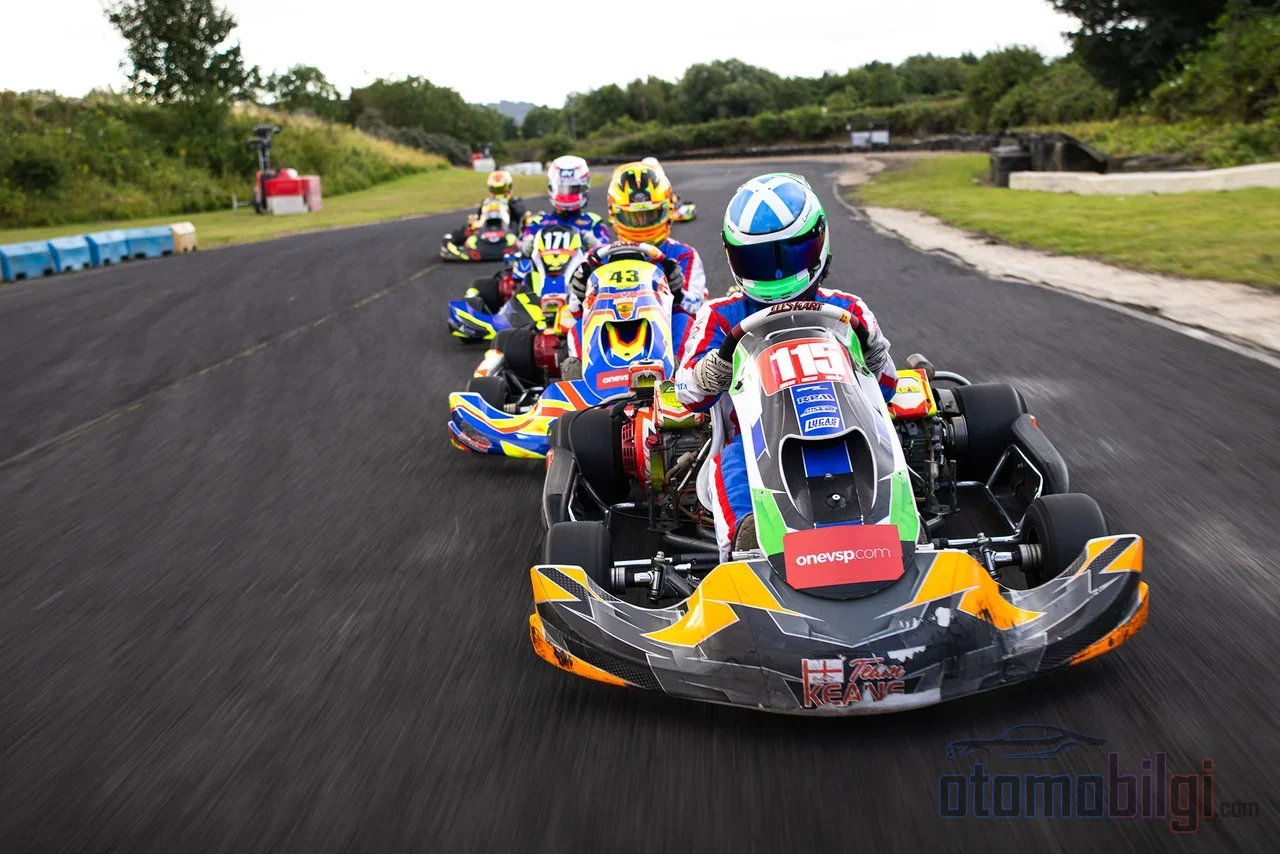
It's midnight, the track is pitch dark, the kart's headlights illuminate only a few meters of road, and you're in the middle of a race you still have to drive for 14 more hours. This is not a video game scene; it's an ordinary moment in a 24-hour kart endurance race. So how does a kart last 24 hours, and who actually determines the winner: the fastest driver, or the smartest team? If you're used to sprint races, the logic of this format will seem absurd at first glance.
The Fundamental Rule of Endurance Racing: Not the Fastest, but the One Who Goes the Farthest Wins
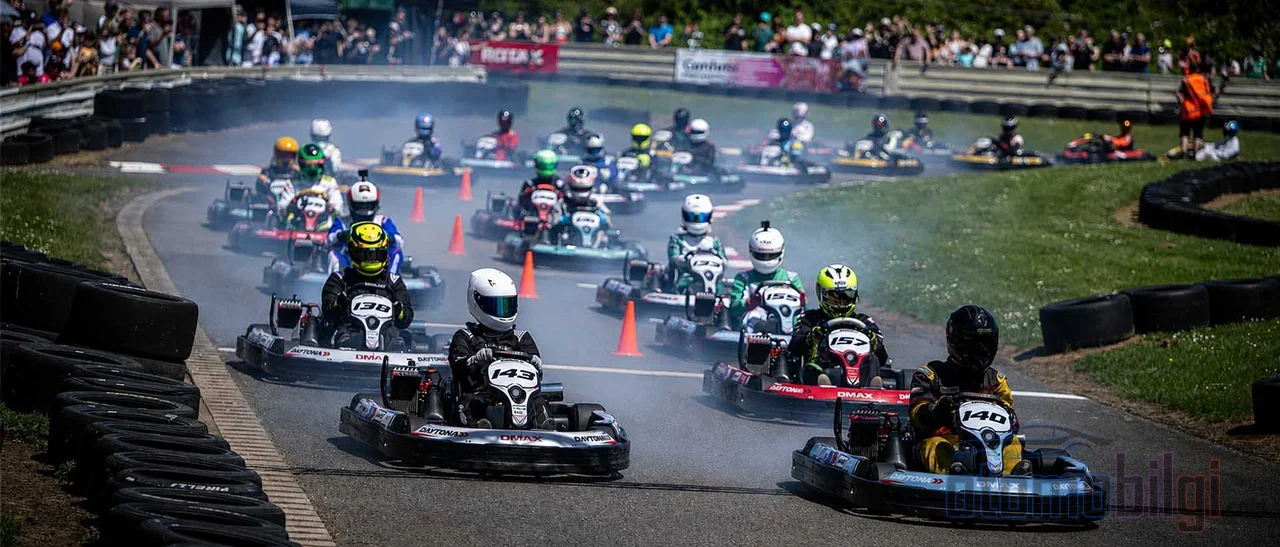
In sprint kart races, things are simple: heat races are run, the final comes, and after 8-12 laps the winner is decided. The emphasis is on speed; a single good braking move or a bold overtake can carry you to the podium. In the endurance format, however, this logic is turned upside down: the winner is determined not by a single moment of speed, but by the total distance covered over 24 hours, avoiding breakdowns, and pit efficiency.
The origin of this principle isn't even karting. The car endurance race at Le Mans, run since 1923 and the oldest endurance race still held in the world, was designed with exactly this philosophy: the goal is to reward not the fastest machine, but the most reliable and efficient one. Modern Le Mans cars cover more than 5,000 kilometers in 24 hours; the record was set in 2010 with 5,410 kilometers. 24-hour kart races are run by the same measure; only the scale shrinks.
Key Highlights
- In a 24-hour kart race, the winner is determined not by the fastest lap, but by the total distance covered in 24 hours
- A full tank of kart fuel lasts, in most formats, nearly two hours
- At some events, a kart change every four hours is mandatory
- Italy's 24-hour race has a rule requiring at least 30 mandatory driver changes
- The format is open to amateurs: rental kart teams of 3-4 people make up a significant part of the grid
Where Is 24-Hour Karting Held? Examples From Around the World
The format is now institutionalized worldwide. In England, Teesside Motorsports organized a continuous 24-hour rental kart endurance race on July 10-12, 2026, as a tribute to the Le Mans circuit. At the same organizer's British 24hr event, the Hire Kart and Owner Driver classes raced side by side on the same grid for 24 hours. Silverstone hosted the first 24-hour karting event on its circuit in 2026; in Italy, the 24 Hours Karting of Italy, run at Castelletto, opened its doors on March 15, 2026.
In Europe, this scene is so well established that dedicated calendar resources listing 6-hour, 12-hour, and 24-hour rental kart endurance races are in circulation. On the US side, the picture is similar: Bushnell Motorsports Park offers a program of endurance events, including a 24-hour race. So the marathon of karting is no longer a curious winter night project; it's a regular entry on the international calendar.
Team Setup: Going It Alone Is Forbidden in Karting
In a sprint race you are alone on the starting line; here, you are part of a team. The question of the day is: how many people do you need to share 24 hours? In real events, amateur teams of 3-4 people are quite common, and the rules actually require it. Italy's 24-hour race has a minimum of 30 driver changes requirement; meaning rotation is not a choice, it is the rule. It is therefore no surprise that amateur teams comfortably take refuge in the rental kart side of such a firmly established format in the calendar and the rules; in karting communities online, experiences are shared of 4-person teams preparing for these races with four-stroke rental karts.
At the core of the rotation logic there is a single risk: the tired driver. The goal is to put a rested driver at peak performance in the cockpit for every stint (that is, every uninterrupted driving segment). Think of an exam block in an intermediate class: you want to go into each lesson rested and with a fresh mind; if you go into four lessons in a row tired, you will underperform in all of them. In 24-hour karting you learn the same lesson at a much higher price. In addition, there is an interesting detail: there is no single best formula for splitting stints; amateur teams discuss their stint plans in advance even in short 2-hour races, and over 24 hours this discussion can stretch across calendar weeks.
Fuel, Tire and Kart Change Strategy
This is where the format's real cleverness lies. In a 24-hour kart race, a full tank of fuel lasts almost two hours; which means the team has to make pit decisions dozens of times over 24 hours. The choice of fuel amount varies according to driving style and pit window; every liter is part of the strategy. In the 24 Hours of Le Mans car race there is a requirement of roughly 30 refuelings over 24 hours, and every second determines pit tactics; the same way of thinking applies in karting, only the scale is different.
Karting's own signature that sets it apart from car endurance racing is the kart swap: at some events, for example at Bushnell, the kart is changed at every pit stop. Continuing with a spare kart in place of a faulty or underperforming kart turns, in karting, into a parts swap completed within minutes what in car racing is a repair process where mechanics spend hours in the pit. In some formats this is even a rule: a kart change is required every four hours. In Italy, on the other hand, only one technical stop is provided for front tire changes during the night section; this rule, which shows that tire performance in night conditions is a separate strategy item, is considered a signature of the format.
A nice example for those who want to see how the weather can play out: Buckmore Park's 24-hour race in 2026 was a year where it rained in every single lap. In variable conditions, teams that set up their tire and pit tactics correctly closed in on the competitors ahead by up to 33 seconds. This is a format where speed is not enough and the right decision makes the difference.
Night Driving: The Format's Toughest Part
The daytime section still feels like a "kart race"; at night it turns into a completely different sport. Light fades, reference points disappear, cooling changes tire and engine performance, and fatigue weighs heavily on top of it all. It is no coincidence that the 24-hour race in Italy dedicates its mandatory nighttime technical stop entirely to changing the front tires; because the tire's character changes at night, teams need to reassess their hand. Taking a stint at night carries a completely different responsibility than taking the same stint in daylight. That is why team managers describe this format as a "race of strategy"; every minute of the clock means a decision.
Garage Discipline: What Happens at the Moment of Failure?
The hidden hero of endurance racing is the garage team. When the kart fails or the tires wear out, the team must have a calm, rehearsed routine: swapping the kart in the pit, transferring the driver safely, and making up the lost seconds in the next stint. In the Le Mans car race, the rule that the engine must be switched off while refueling and that mechanics cannot work on the car means countless restarts and creates a discipline that tests reliability. A similar order is needed in karting: the spare kart being ready, the pit crew's roles being clear, and the driver change having been rehearsed. For amateur teams, this means a preparation process that starts well before the race; who will do what in the pit, how many seconds the kart swap will take, and when someone will go in for their overnight sleep? Without answers to these questions, 24 hours on the grid turns into a long nightmare of a night.
The Differences Between Sprint and 24 Hours at a Glance
Placing the two formats side by side clearly shows how wide a world karting opens onto:
| Feature | Sprint Race | 24-Hour Endurance |
|---|---|---|
| Duration | Races of 8-12 laps | 24 uninterrupted hours |
| Criterion for the winner | Finishing order in a single race | Total distance covered |
| Format | Heat series and final | Qualifying sessions and continuous race |
| Team structure | Single pilot | Team of 3-4, mandatory rotation |
| Pit strategy | Almost none | Fuel, tire and kart swap decisions |
| Night driving | None | The most challenging part of the format |
So Why Is This Format Considered Karting's Toughest Test?
Here is the clear answer to the question: The 24-hour kart race is considered karting's toughest test because it tests every skill you know in karting all at once, continuously, day and night. A single fast lap is not enough; teamwork, rotation, fuel and tire strategy, garage discipline, and fatigue management are just as essential. The balance between speed and the risk of failure is the tension at the heart of the format; the winner is not the fastest machine, but the machine still on track at the end of 24 hours.
Moreover, this challenge is not the privilege of an exclusive group. Thanks to rental kart classes, amateur teams can also enter this marathon; Even the Le Mans car race itself is described as an event open to amateur participation, and in 2025 it drew 332,000 spectators. On the karting side, the level of professionalism also varies from event to event: some are a true marathon under field conditions, others an unforgettable weekend with a group of friends. But the same rule applies in both: 24 hours tests you, your kart, and your team. Which do you think is harder: going two hours without sleep, or making the right decision at the pit exit at 3 a.m. on cold tires?
Sources
- 24 Hours of Le Mans
- Le Mans 24hr - Karting
- Le Mans and its events
- The Role of Strategy in Endurance Racing: More Than Just Speed
- Endurance Racing - Bushnell Motorsports Park
- Rental Kart Endurance Races in Europe - KartRadar
- Endurance race strategy - opinions? : r/Karting
- Silverstone 24 Hour Kart Race 2026 | Part 3