How to Overtake Rivals in Karting?
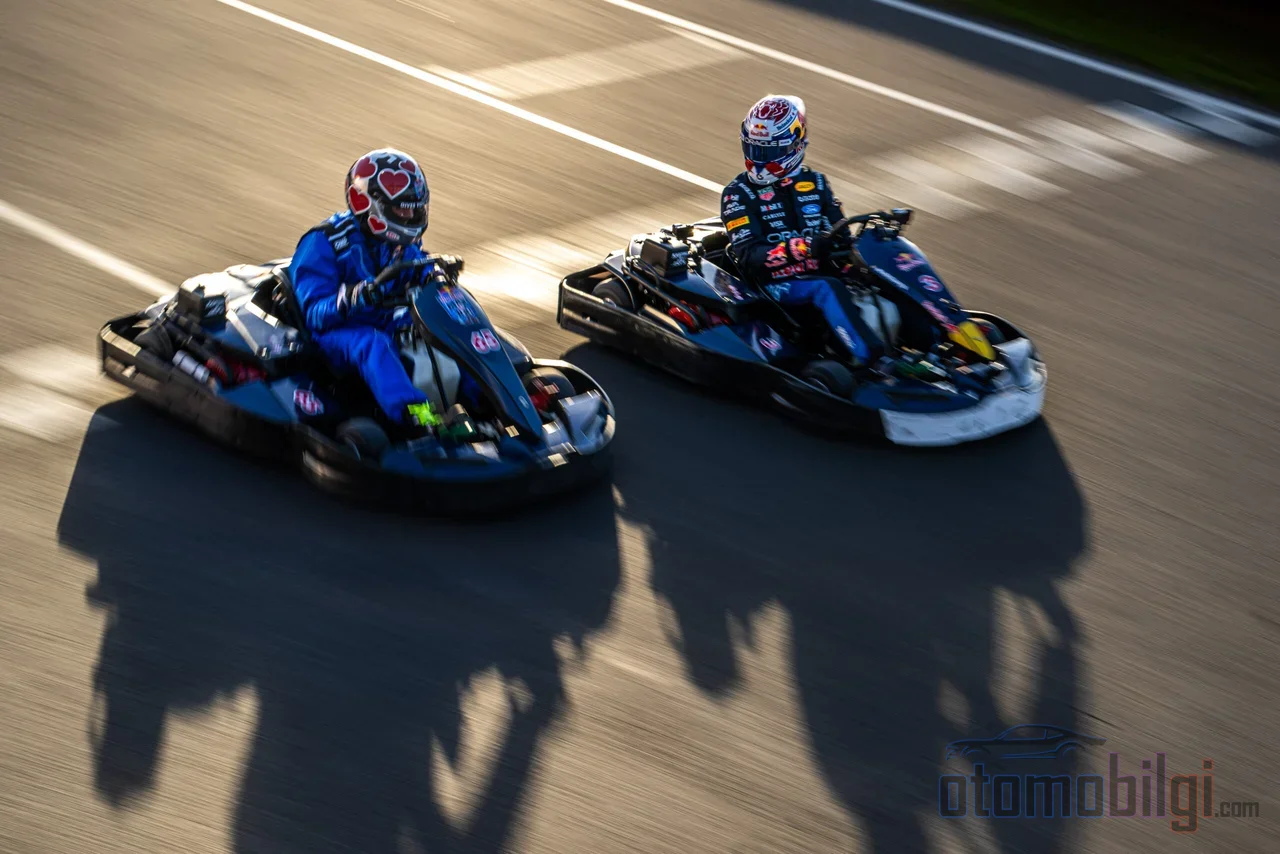
You're in the final corner, the kart ahead is half a kart-length in front, and a straight is coming up. If you lift off, can you pass? If you make a move, is there a collision risk? This is exactly the moment of overtaking in a race: with the right move you make the podium, with the wrong one you end up in the grass. On this page we won't go back over starting technique or the basics of braking; those are the job of separate pages. Here we focus on a single question: how do you overtake a rival mid-race, depending on the corner type and braking point?
Slingshot: Riding the Slipstream on the Straight
One of the oldest overtaking techniques in motorsport is the slingshot. The logic is actually like drafting behind a pickup truck on a bicycle: as the kart ahead moves forward, it leaves behind a disturbed, low-pressure zone of air. If you settle into that gap, you accelerate faster at the same throttle with less air resistance, build up momentum, and the moment you exit into clean air, you convert the accumulated speed difference into a pass. The same physics works everywhere, from Formula to IndyCar and NASCAR.
But is this effect really felt in karting? Yes, but there's a threshold: the slipstream effect becomes noticeable at speeds above roughly 64 km/h and can gain you a few hundredths of a second per lap. Don't expect magic on slow tracks; on fast tracks with long straights, it can change your fate. A small bonus: leaning slightly forward on the kart on straights reduces your own air resistance and widens the gap a little more.
Key Takeaways
- The slipstream effect becomes noticeable at speeds above roughly 64 km/h
- The slingshot can gain you a few hundredths of a second per lap
- The best overtaking points are hairpins, chicanes and the ends of straights
- In defense, a single change of direction is legal; repeated moves are penalized
- Corner exit speed is more valuable than entry speed: slow in, fast out
Why Is Timing Everything?
The critical detail of the slingshot is this: the moment you exit the slipstream, full aerodynamic drag kicks back in. So your advantage lies in the extra momentum you built while drafting. If you pull out too early, your speed advantage is doomed to melt away. The right moment is to launch out of the tow as you approach the end of the straight and carry your increased speed alongside your rival. Also, in karting, following through corners can turn into a disadvantage: disturbed air reduces grip, and you're left behind your rival at corner exit. The slipstream is a weapon for straights, not for corners.
Overtaking by Corner Type: Hairpin, Chicane and the Inside Attack
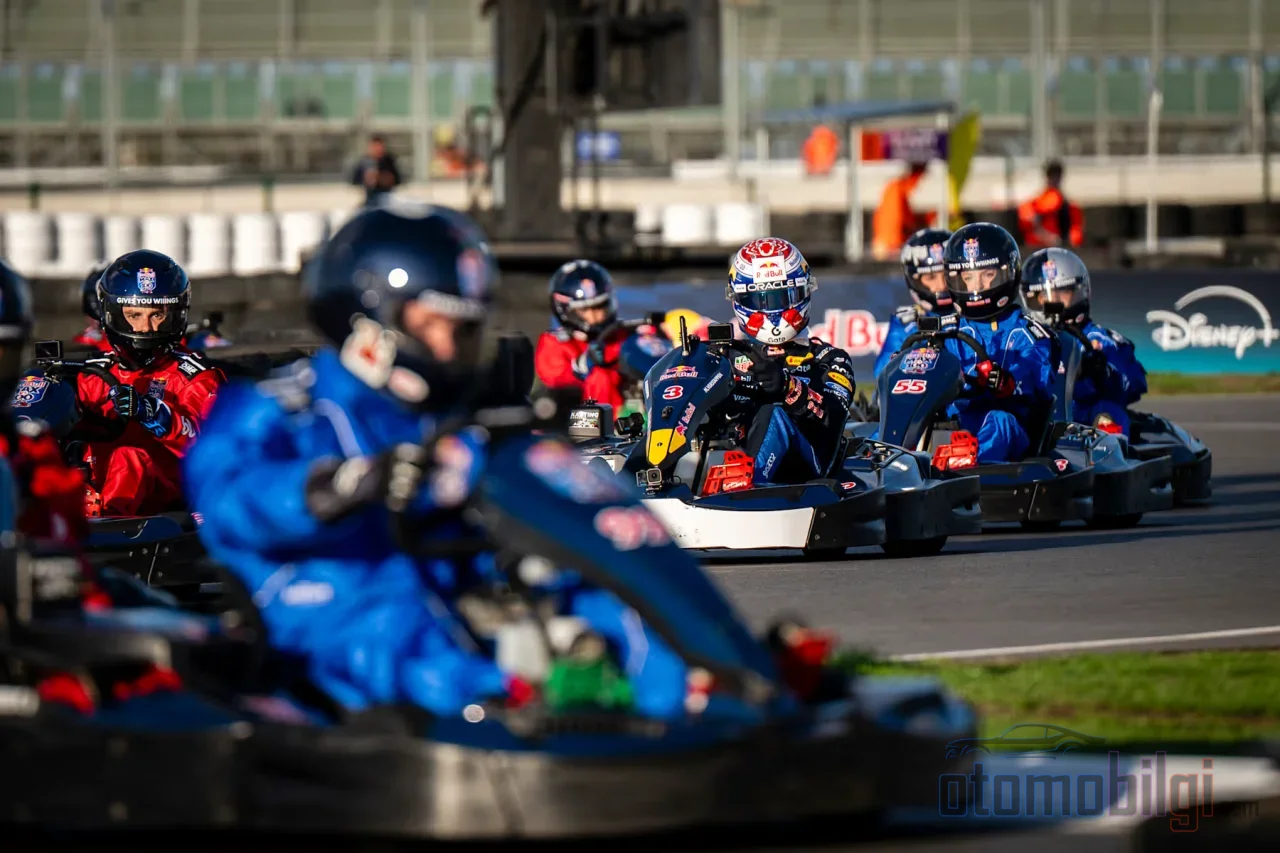
Why are the best overtaking points always corners? Because that's where the track's hardest sections are. Anyone who brakes early or exits a corner slowly leaves an open door for you. But which move to make in which corner, that's the real question.
Hairpin and Chicane: The Price of Braking Early
Because hairpin corners are so sharp, most drivers brake earlier than necessary. If you delay braking until the last possible moment, you can slip past on the inside of your rival at the entry. The same logic applies to chicanes: where everyone slows down too much, clean braking carries you forward. It's a kind of game of chicken: the one who brakes latest wins, but if you brake too late the wheels lock and you run off the track. Trying to pass the kart directly in front of you and hitting its rear can be grounds for a black flag; aggressiveness and aggression are not the same thing.
Switchback: Losing to Win
The switchback is perhaps the most elegant move. You exit the previous corner faster than your rival, carry that speed advantage down the straight, attack on the inside at the braking point and cross his line. Contrary to how it looks, sacrificing a bit of speed at corner entry and accelerating hard on exit lets you preserve the momentum you carry all the way to the next straight. A similar variation: brake slightly more than usual and enter wide, then turn in late to the apex and accelerate harder than your rival on exit.
Passing on the Outside: The Brave Man's Line
If a corner is immediately followed by one in the opposite direction, the outside line can be worth gold. It's played in three steps: first, stay close to your rival around the apex, because if a gap opens there's a risk of collision in the next corner. Then, approaching the second corner, try a late braking move along with throttle, but if you overdo it the rival exits before the apex. Finally, once you've safely passed the apex, pull away with throttle. If you miscalculate, they can push you toward the barrier; passing on the outside is a high risk, high reward move.
Racing Line and Braking Point: The Four Acts of a Pass
Every passing move is based on knowing the correct racing line. The racing line consists of four parts: the braking point, corner entry (turn-in), the apex and the exit. The correct line gives you later braking, a faster corner and earlier throttle. The golden rule is slow in, fast out: focus on exit speed much more than entry speed. A rival who dives into the corner hastily and comes out slow is like a ready-made gift for you to slingshot down the straight.
There's also a general principle for passing on the inside: passing on the inside pushes the rival off the line, and taking the inside early works. But beware, the inside line is the dirty part of the track; there you may need to brake earlier and practically park the kart, and that means extra braking distance. You have to stay on the inside until you complete the pass, otherwise you've only slowed yourself down.
Defending: One Move Is Legal, Two Moves Are a Penalty
Now it's time for the other side of the table: what will you do when you're ahead? The rule is clear: as long as it's safe, changing position once is defending and is legal. Zigzagging from one side to the other is blocking and is penalized. Race stewards take this distinction seriously; repeated directional moves are a matter of racing discipline rules.
On the straights, keeping your line in the middle is the classic way of closing off a potential pass on both left and right. Holding the inside line for the entire race is legal and generally considered smart, but since the inside line is dirty, you'll have to brake early and place your kart there. Another psychological weapon is the dummy, or feint move: make your rival think you'll go one way, then switch to the other side when you reach that block. And defense timing matters: only defend if the driver behind you is close enough to make a move. If they're a few kart lengths back, keep driving normally - don't slow yourself down unnecessarily.
Forcing the Rival Into Mistakes: Cold-Blooded Pressure
Racing is a completely different thing from setting hot laps: it's built on forcing your rival into mistakes or waiting for them to make one. An effective pressure tactic works like this: tuck in behind a good driver, shut down every move they make, and keep your kart off the center line to constantly mirror-fight them. A driver under pressure cracks sooner or later. Also, if the two karts ahead get tangled in a duel, both of them slow down; that's a ready-made passing opportunity for the third person. One warning: locking onto the kart ahead, meaning target fixation, is the classic mistake that kills amateurs' lap times. Watch your rival, but keep your eyes on the track.
Examples From the World Stage: The Art of Overtaking in FIA Karting
These tactics aren't just for weekend rental karters, of course. At FIA Karting world championships, overtaking maneuvers decide the fate of the race. In a race held in Braga, last year's Academy Trophy winner, a driver from Monaco, climbed to the second step of the podium with eye-catching overtaking maneuvers. At the 2025 FIA Karting World Championship, world champions were decided in the Junior and OK categories at the Kristianstad circuit, while the first round of the 2026 European Championship was held at the La Conca circuit in Italy.
The character of the track also shapes your overtaking strategy: on a fast-paced 1428-meter championship track with few heavy braking maneuvers, passes naturally rely on straights and slipstreaming. So the answer to the question of slingshot or inside attack lies hidden in the track at hand.
The Short Answer: How Do You Pass a Rival?
The summary of the summary, crystal clear: To pass your rival, first watch them and find their weak point; if they brake early, pass on the inside at the hairpin or chicane entry; if they exit slowly, slingshot around the outside on the straight and cut them off. If there's no way through, patiently wait for a clear opportunity, because half-hearted, indecisive moves lead to collisions. And don't forget: if your move isn't completed, your rival has the right to fight back in the next corner, and you're left with just one legitimate line change in defense.
Sources
- Go Karting Overtaking | How to Guide
- How to Defend Your Karting Position
- Overtaking When Go-Karting | Zamp Helmets
- Slipstreaming in Karting: How it Works and its Impact
- Overtaking in Karting: Pass and Defend
- 12 Go-Kart Overtaking Tips Every Racer Should Know
- Easthope master in Braga | FIA
- What Is a Racing Line?