Is Charging an Electric Vehicle in the Rain Safe?
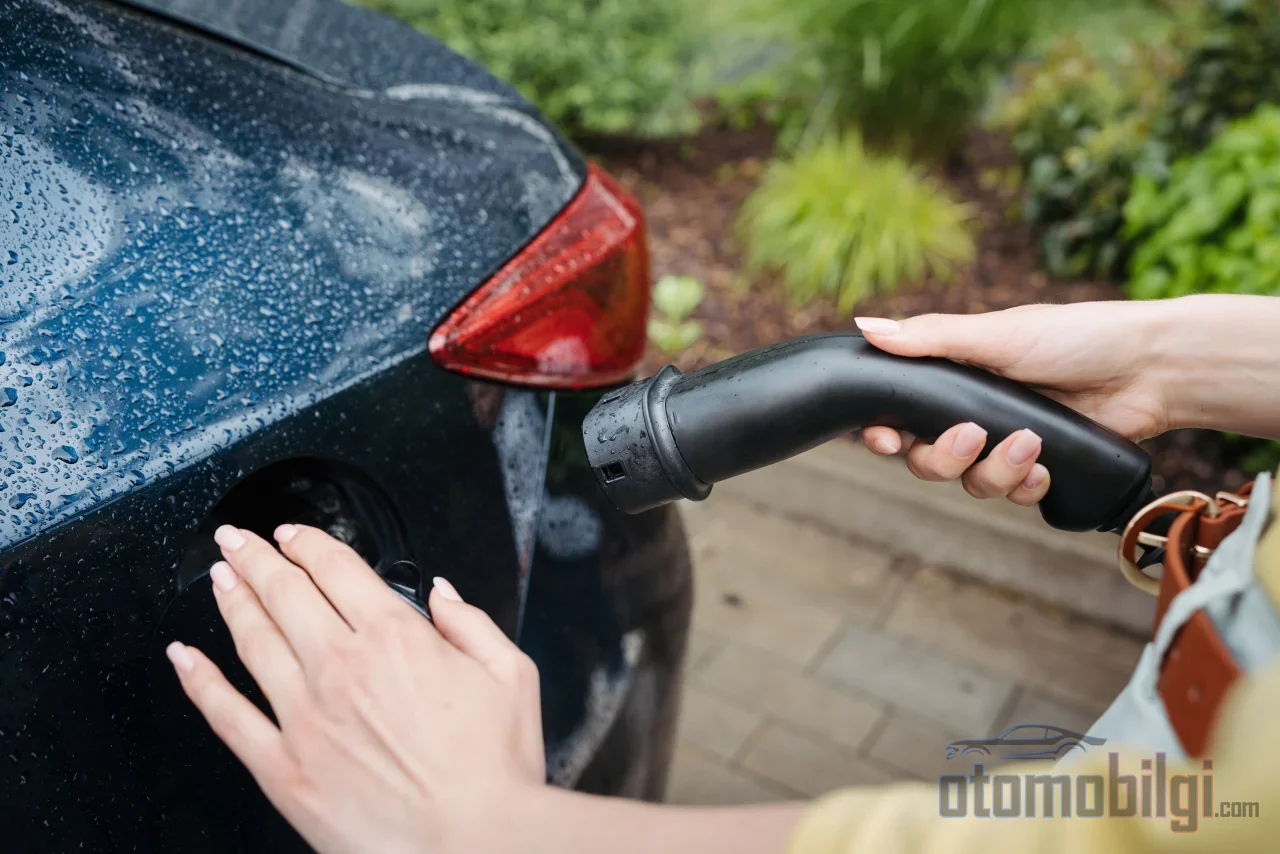
When it starts to rain, most electric vehicle owners pause for a moment in front of a public charging station: how safe is it to plug in this connector in wet weather? The question is entirely legitimate, because in everyday life, the combination of electricity and water can have deadly consequences. However, electric vehicle charging systems work very differently from the world this reflex assumes. The classic scenario where voltage reaches the pins the moment the plug is inserted does not apply here; the energy flow between the charging socket, the plug and the station is controlled by layered safety protocols.
In this guide, we will cover one by one why charging in the rain is safe under normal conditions, what IP protection ratings mean, why energy does not flow the instant the plug is inserted, and in which extraordinary situations (flooding, thunderstorm) you should postpone charging.
Short Answer: Is Charging in the Rain Safe?
Yes, it is safe. Electric vehicles and charging equipment are designed and tested to withstand all normal weather conditions, including rain. Public fast charging stations are required as a standard to meet at least the IP65 protection rating; this means withstanding water jets from every angle. Home wallbox devices are typically manufactured with IP54 or higher ratings. So normal precipitation, from light rain to downpours, is not an engineering problem for a properly installed charging system.
Highlights
- Public charging stations provide at least the IP65 water protection rating.
- Energy does not flow until the plug is fully seated and the digital handshake is confirmed.
- In the event of a critical fault, the high voltage is cut off within milliseconds.
- A station submerged in water should never be used.
- A new charge should not be started during a thunderstorm; an ongoing charge can continue.
What Is an IP Protection Rating and Why Does It Matter?
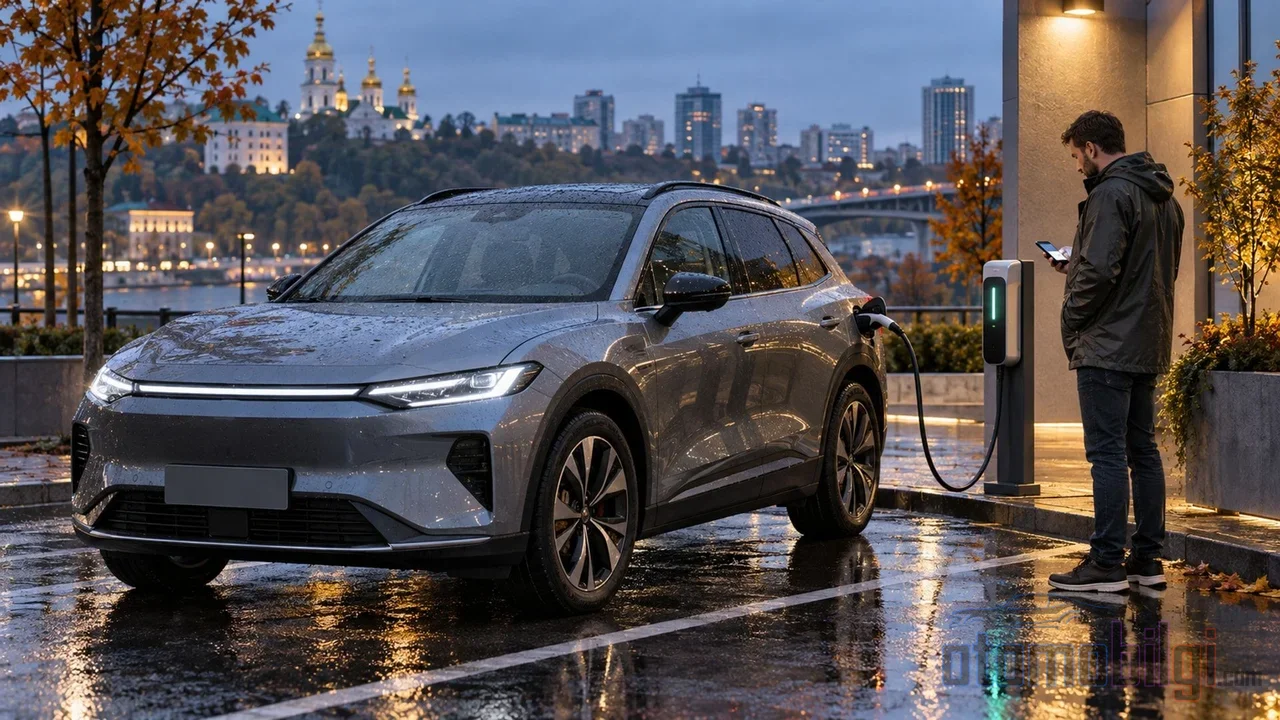
IP stands for Ingress Protection, and it is a two-digit classification tested according to the IEC 60529 standard. The first digit rates protection against solid objects, especially dust, from 0 to 6; the second digit rates protection against liquids, i.e. water, from 0 to 9. Therefore, a code like IP65 is not a single number, but a combination of two separate protection performances.
The meaning of the digits in the water protection position is roughly as follows:
| Second digit | Protection level |
|---|---|
| 3 | Resistance to water spray from every direction within 60 degrees |
| 4 | Resistance to water splashes from every direction |
| 5 | Resistance to low-pressure water jets |
| 6 | Resistance to high-pressure, powerful water jets |
| 7 | Resistance to short-term immersion of 30 minutes at a depth of 1 meter |
| 8 | Resistance to continuous immersion |
The practical implication is this: IP44 and above devices are suitable for general outdoor use. However, if more aggressive conditions such as heavy precipitation or a prolonged storm are involved, IP54 and above is preferred. Some industrial-scale ultra-fast charging units are manufactured with IP55 certification. These certifications are not just on paper; verifies protection against solid objects using a metal ball and probes, and protection against liquids using drip, spray, and immersion tests.
Why Doesn't Energy Flow Immediately When the Plug Is Connected?
The real engineering reason charging is safe in the rain lies hidden in the operating sequence of the charging system. Unlike a household outlet, no energy is present on the pins the moment the plug is inserted into the charging socket. The vehicle and the station first communicate through a pilot circuit; if the plug is not fully seated, no energy is ever supplied to it.
For charging to actually begin, the following conditions are met in order:
- The physical connection being fully and securely established.
- Completion of the verification process between the vehicle and the station, also known as a digital handshake.
- Passing multiple ground-fault checks.
- Verification of safety by the insulation monitoring system.
If any link in this chain does not give its approval, the current does not start. The connection is also monitored electronically while charging is in progress; when a fault is detected, an automatic high-voltage cutoff system cuts the power within milliseconds. On top of this, ground-fault circuit breakers, insulated connectors, sealed gaskets, and overvoltage protection against sudden lightning-induced voltage surges are added. The battery pack itself is carried in compartments sealed with multi-layer insulation.
So even if water found a contact path between the plug and socket, the likelihood of it encountering an active energy line at that moment is extremely low. For water to cause a short circuit, all of these layers would first have to fail at the same time.
Common Myths and Facts
Does touching the plug with wet hands cause electric shock?
No. Touching a wet charging handle or plug during charging is no more dangerous than touching your car's door handle. The multiple safety mechanisms in modern systems make electric shock practically impossible under normal conditions. Of course, this is not an invitation to carelessness; keeping your hands dry and not standing in a puddle while connecting is still a good habit.
Do wet cables cause short circuits and fires?
They do not. Charging cables are fully insulated; water on the outside cannot reach the conductors. Similarly, the concern that charging in the rain will cause water damage to the battery is unfounded, because electric vehicle batteries have sealed enclosures.
Is driving through a puddle in the rain dangerous?
Modern electric vehicles are built to withstand wet conditions, and driving through a puddle alone poses no risk. What really needs attention is the hydroplaning risk, that is, skidding on water, which applies to every vehicle; it is not a problem unique to electric vehicles.
Charging at a Public Station in Rainy Weather: Practical Tips
Even though the safety architecture is solid, a few simple habits make starting a charge on a rainy day completely hassle-free:
- When plugging in and unplugging, protect the charging gun with an umbrella if possible; before connecting, make sure the vehicle's charging port is dry.
- Check that the plug and the station side are dry and free of foreign matter; check the IP rating on the station's label.
- In heavy rain, prefer well-drained, elevated and, if possible, covered stations; prevent the cables from touching puddles.
- If there is significant standing water around, choose another charging point.
- When unplugging, follow the correct order: remove it from the vehicle first, then from the station.
There is another point to watch out for in the long term: high humidity can cause corrosion on connector pins over time. Using a corrosion-resistant spray and regularly checking the connection points manages this risk.
Is Charging in the Rain Different with a Household Outlet?
Yes, and the tone changes here. Wallbox devices are certified according to outdoor conditions; but 3-pin charging from a classic household outlet, especially in open areas in the rain, requires more caution. Keeping the plug and outlet dry and the cable being water-resistant are critically important. The risk of a cable run through a door or window gap creating a water contact point is real; if possible, a sheltered location such as on top of the vehicle or under a canopy should be preferred.
If portable charging units with built-in control units are used, the control box must be kept away from standing water, on an object such as a rubber block or a waterproof block. In summary: for a certified wallbox or a public station, rain is a routine situation; for a household outlet, however, the dry connection condition is enforced more strictly.
AC and DC Charging: What Is Their Relation to Rain?
AC charging is the slower method used at points such as a household outlet and a wallbox; the converter inside the vehicle converts alternating current into direct current. In DC fast charging, the AC-DC conversion takes place directly inside the station, and energy is delivered to the battery at much higher power. All public fast stations operate on the DC side.
In terms of rain safety, there is no practical difference between the two; both systems are equipped with the same IP certification, handshake protocol and insulation monitoring layers. The difference lies mostly in the use scenario: since DC stations are outdoors, practical precautions in rainy weather (dry port, protecting the gun) are applied especially there.
Flooding and Thunderstorms: Where the Line Is Drawn
A distinction must be made between normal precipitation and extraordinary conditions. Charging stations are resistant to water splash and short-term immersion, but they are not designed to operate continuously underwater. A station that is submerged or surrounded by water must never be used, no matter how waterproof it is. Modern stations have flood detection systems that trigger automatic shutdown when the water level becomes concerning, as well as emergency power cutoff systems; still, these systems do not make the decision in place of the driver.
If there is a risk of flooding, the right move is to unplug the cable before water reaches the charging unit or under the vehicle, and to move the vehicle to higher ground. Electric vehicles left in floodwater can pose a serious safety risk; battery damage in vehicles flooded by seawater is among the documented risks for passengers and emergency response teams.
The rule in a thunderstorm is this: do not start a new charge, but if charging is already in progress there is no obligation to interrupt it; a charging vehicle acts like a Faraday cage. Checking the connection points for damage after the storm has passed is the final step of the process.
Conclusion: Clear Answer and the Right Habits
Electric vehicles can be charged safely in the rain. Charging stations and sockets are certified with water protection of at least IP65 level, energy flows only after the plug is fully seated and digital verification, ground fault checks, and insulation monitoring are complete, and power is cut within milliseconds in the event of a fault. Common concerns such as water causing a short circuit, an electric shock from a wet touch, or water leaking into the battery are engineering-wise unfounded in modern systems.
The right habits are also simple: dry hands, a dry port, careful plug connection, and staying away from puddles. The boundary, however, is clear: postpone charging during floodwater and thunderstorms. Rain is not included in this; it is an ordinary weather condition for which the system was designed.
Sources
- Can You Charge an EV in the Rain?
- Rainy EV Charging Safety | Commercial Charger IP Rating
- Can I Charge my Electric Vehicle in the Rain?
- Is It Safe to Charge an EV in the Rain?
- A Teardown Study of Flood Damaged Electric Vehicles
- EV Charging in the Monsoon: Safety, Myths & Best Practices
- Charging an EV in the Rain: What You Need to Know