Extension Cord Fire Risk in Electric Vehicle Charging
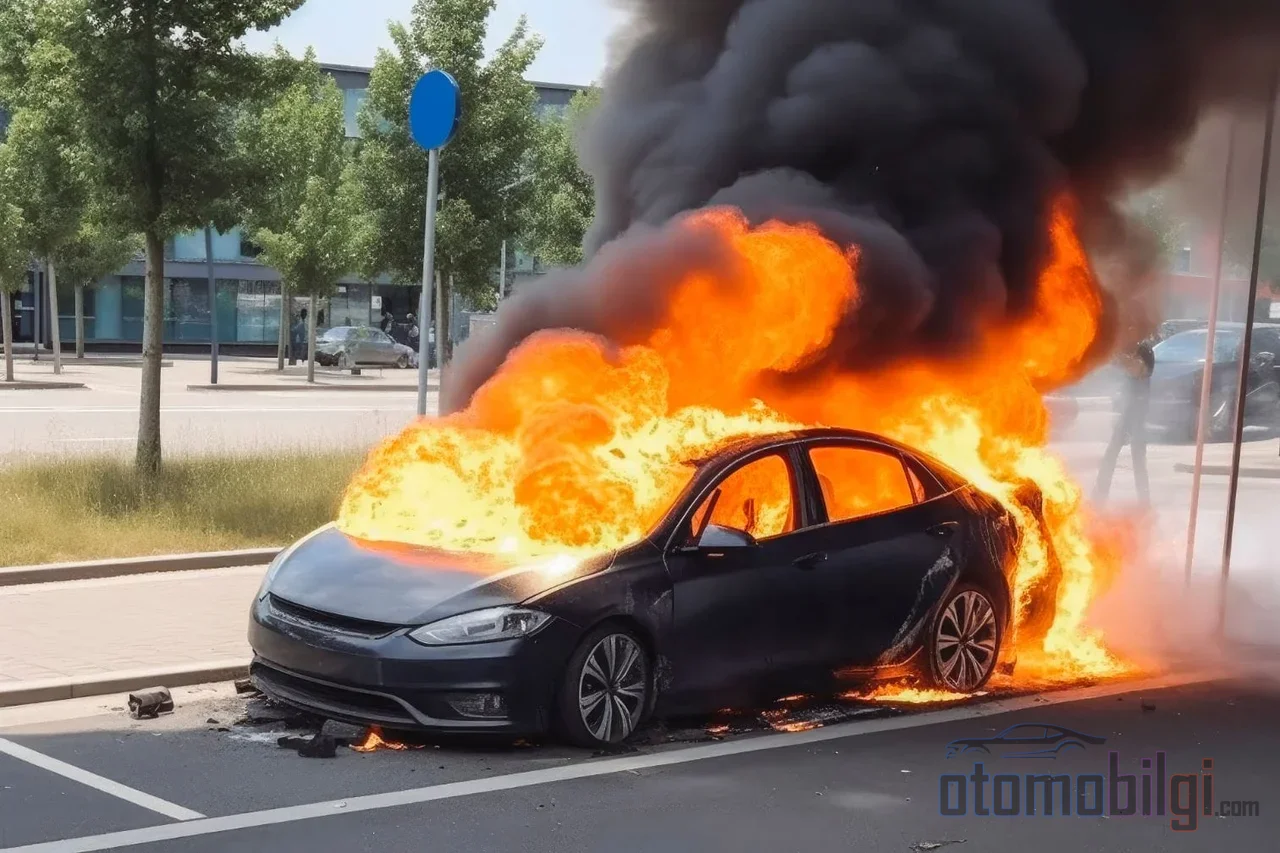
Most drivers who charge their EV at home reach for an extension cord first when the mobile charger's plug cannot reach the outlet. This seemingly innocent solution carries one of the quietest yet most serious risks of modern home electricity habits: passing a load that runs for hours, uninterrupted and at high current, through connection elements that were never designed for this job. Although the outcome is usually nothing at all, in the minority of cases we are confronted with melted plugs, scorched cables, and house fires. In this guide, we examine one by one the technical origins of the problem, all the variables from cable cross-section to plug quality, and the rules to follow if a truly temporary solution is needed.
Why Is EV Charging with an Extension Cord Risky?
EV charging produces a load profile unlike any other household appliance. A refrigerator runs intermittently, an iron shuts off within minutes; an electric vehicle, however, draws high current uninterrupted for 6-8 hours. While home chargers typically draw between 10A and 32A, a standard consumer extension cord is usually rated for only 10A or 13A. Even models that appear to have high ratings are not designed to carry the continuous load of EV charging.
The real issue is not the current value alone; it is the fact that the load is continuous. A vacuum cleaner drawing 13A briefly cannot be compared to a charger drawing the same current for hours. Prolonged load continuously stresses the thermal balance of the conductors and connection points, making the accumulated effect visible at every weak point.
Key Highlights
- Home chargers draw 10A-32A of current; standard extension cords are mostly rated for only 10-13A.
- The primary cause of outlet meltdowns is resistance-based overheating arising from poor contact.
- Chargers are usually protected to IP54 and above; consumer extension cords are mostly IP20 and below.
- Type 2 cable extensions are not standardized under IEC 62196; they may void the warranty.
- According to IEEE 141, a voltage drop exceeding 5% is considered unsafe.
Small Contact Surface, Big Heat
The physical problem with using extension cords and socket multipliers is that every added connection point is a potential failure point. At the plug-outlet contact, copper pins touch each other over a surface on the order of square millimeters. Even the slightest looseness, contamination, or corrosion on this surface increases contact resistance. At every point where resistance increases, heat is generated in proportion to the square of the current: under prolonged charging load, even a small increase in contact resistance produces a significant amount of heat. This resistance-based overheating is almost always the primary cause of outlet meltdowns.
Heat is a mechanism that feeds the problem on itself. Heated plastic loosens through deformation, loosened contact generates even more resistance, and the cycle progresses until it reaches the melting point. The point is that slight warming of a spread-out cable and charger is normal; there is a margin of tolerance, but the critical distinction is this: slight warming of a properly rated cable is not a problem; the real risk is localized overheating caused by poor contact. Distinguishing between the two is difficult for a home user, which is precisely where part of the risk comes from.
A Risk That Also Affects Protection Circuits
The extra connections in an extension cable do not only generate heat; poor contact and increased resistance can also cause residual current protection devices such as RCD/GFCI to fail. When the protection circuit is disabled, the last barrier that would protect a person in the event of a first fault also disappears. In addition, many extension cables have inadequate grounding or loose connections, creating a risk of electric shock; since the IEC 61851 standard makes the grounding safety check mandatory before charging, such connections may block charging from the start, or in faulty installations that bypass the check, they may remain as a hazard.
How Do Cable Cross-Section, Length, and Plug Quality Affect the Risk?
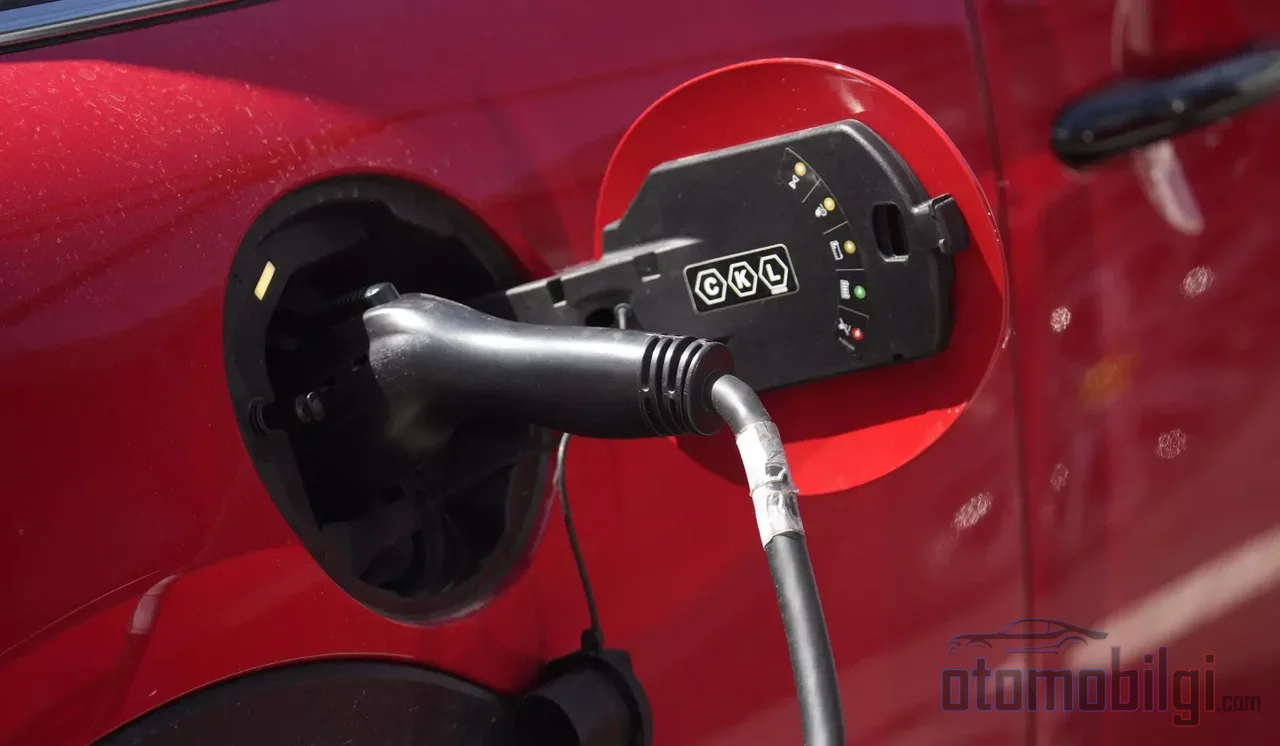
The danger of an extension cable cannot be reduced to a single variable; conductor cross-section, cable length, and plug-socket quality together determine the outcome. From an engineering perspective, all three affect the same physical equation, namely conductor resistance.
The cross-section issue also applies to in-wall wiring: installing home-type EV charging units generally requires 6 mm² or 10 mm² armored cable, and this value depends on the power of the charging unit and the cable length. Although a 4 mm² cross-section can technically meet the 32A standard, the cross-section directly affects heat generation, voltage drop, and long-term charging stability. A long extension cable with thin conductors loses on all three of these criteria at once. Copper conductor instead of aluminum, and a cross-section suited to the charger's current, are the fundamental parameters that determine the safe side.
Length, on the other hand, causes problems through voltage drop. Increased resistance and longer cable runs lead to voltage drop; according to the IEEE 141 standard, a voltage drop exceeding 5% is considered unsafe. Extension cables frequently exceed this threshold due to their small conductor cross-section and length. The IEC 60364-5-52 standard also sets conductor sizing rules to prevent excessive voltage drop and heating. The reduced voltage extends charging time and returns as heat at the connection points.
Plug quality is the most frequently overlooked variable. In cheap socket multipliers and repeater plugs, pin material, spring force, and plastic grade are low; these are the first elements to give in under continuous load. User manuals prohibit every kind of extension use other than temporary use, and the justification is precisely this chain of components: the ban is not legal caution, but thermal and electrical reality.
The Outdoor and Cable Reel Trap
The vehicle is mostly charged outside the house, on the street, or in front of the garage. In this scenario, a home-type extension cable faces a second disadvantage: protection class. EV chargers typically have an IP54 or higher protection rating, while consumer extension cords are mostly IP20 or lower; in outdoor conditions this creates a risk of water ingress and fire hazard. Additionally, a cable reel left coiled up is a heating factor in itself: a cable wound on the reel prevents heat from being dissipated, so if it must be used, the cable should be fully uncoiled. Cables must be kept away from flammable and combustible materials.
How Do Manufacturers and Standards Frame the Issue?
Car manufacturers, charger manufacturers, and national electrical regulations are in rare agreement on this matter: charging via an extension cord is prohibited. Under the US National Electrical Code (NEC), extension cords are designed only for short-term, temporary use; an 8-hour overnight charge is clearly outside this definition. In the United Kingdom, electrical safety organizations and fire services approach the issue with the same firmness. In Australia, some municipalities have announced that drivers charging via an extension cord run across the sidewalk may face penalties; a cable hanging in a public area is a separate safety issue beyond the electrical risk.
On the standards side, the picture is even clearer. The Type 2 connector system is covered under IEC 62196, and under section 62196-2 of this standard, Type 2 cables may not be modified or extended without conformity testing. Such extensions, which are not covered by the standard, may void the warranty. For installations requiring higher currents, IEC 60309 industrial-type connectors are recommended for loads above 16A; connections made through CEE-type sockets with certified products are defined as a safe and regulation-compliant extension method. This means the problem is not the existence of the cable, but the class of hardware used.
| Topic | Relevant Standard | Scope |
|---|---|---|
| Type 2 connector | IEC 62196-2 | Test approval required for cable extension/modification |
| Industrial plug and socket | IEC 60309 | Recommended for loads above 16A |
| Conductor sizing | IEC 60364-5-52 | Voltage drop and heating limit |
| EV charging equipment | IEC 61851 | Grounding check before charging |
| Protection rating | IEC 60529 | IP rating (IP54 and above) |
Why Are Socket Multipliers and Repeaters Even Riskier?
Compared to extension cords, socket multipliers and repeater plugs occupy the worst row of the problem table. The reason is simple: they load the same small contact surface with the total current of multiple loads, often all connected to a single wall socket. The rule that a high-current device must be plugged directly into a wall socket rather than a socket multiplier applies uncompromisingly to electric vehicle charging. An electric vehicle must never be charged through an ordinary extension cord or a multi-socket adapter.
Another practical warning concerns equipment choice: original Mode 2 and Mode 3 charging cables or products certified to international standards such as CE/UL should be used, and aftermarket products should be avoided. Damaged, crushed, or burn-marked cables must never be used under any circumstances; a plug that has overheated once will heat up much faster on the next use because its internal structure has been compromised.
If a Temporary Solution Is Needed: Rules That Limit the Risk
As a matter of real life, there may occasionally be no option other than reaching for an extension cord to the outlet. In that case, the goal is not to eliminate the risk but to reduce it measurably. No matter how complete the precautions taken are, charging outdoors with an extension cord should remain a temporary solution and must not become a routine method. The rules can be listed as follows:
- Choose a certified heavy-duty cable with copper conductors, sized appropriately for the charging current, and rated for continuous load.
- If you are using a cable reel, unwind the cable completely; a coiled cable increases heat buildup.
- If it will be used outdoors, prefer a product marked as suitable for indoor/outdoor use with a high IP rating.
- Plug the charger directly into a wall outlet; do not use outlet splitters, adapter plugs, or multi-outlet strips.
- At the start of charging and within the first hour, check the plug-outlet contact points by hand; if there is noticeable heat, stop charging.
- Keep the cable and plugs away from flammable materials, and do not leave them in the sun or on rusty surfaces.
- If possible, reduce the load by lowering the charging current through the vehicle or charger interface.
Following this list does not eliminate the risk of fire; it only reduces the likelihood of an incident. In expert discussions, the view is also put forward that a properly sized, fully uncoiled, and inspected-before-use cable carries a relatively low risk, and it is noted that the majority of the fires that have occurred stem from overlooked precautions. Even if this assessment is correct, the approach on which safety organizations and standards are based does not change: continuous high current does not constitute a safe category together with temporary equipment.
Can an Electric Vehicle Be Charged with an Extension Cord? Clear Answer
The direct answer to the question is this: an electric vehicle cannot be charged continuously and safely through an extension cord, socket splitter, or adapter plug into which you plug the mobile charger; manufacturers and standards prohibit this use because an uninterrupted load of 10-32A generates heat, melting, and fire risk in connections with insufficient rating and contact quality. Temporary and supervised use can be a tolerable risk when all precautions are taken; a permanent solution it is never.
The permanent solution has two headings: powering the charger from a wall outlet connected to a dedicated circuit with sufficient cross-section, or moving to a wallbox installation. A wallbox comes with correctly sized fixed wiring, protective circuits, and standard-approved connectors; this is the correct architecture for home charging in terms of safety and efficiency. The best way to end the extension cord debate is to build the infrastructure that makes the debate unnecessary.
Sources
- Why You Should Never Use an Extension Cord for EV Charging
- How Poor Cable Selection Causes EV Charging Fires
- Can You Safely Use an Extension Cord to Charge Your EV?
- What to Know Before Using a Level 1 Charger Extension Cord
- Is It Safe If My EV Charger or Cable Feels Hot During Charging?
- Can You Charge an Electric Car With an Extension Cable?
- Extension Cord Safety Tips
- Charging an EV? Don't Use an Extension Cord
- How Cable Cross-Section Impacts EV Charging Speed and Safety
- Electric vehicle charging safety guidelines