How Many Solar Panels Does It Take to Charge an Electric Vehicle?
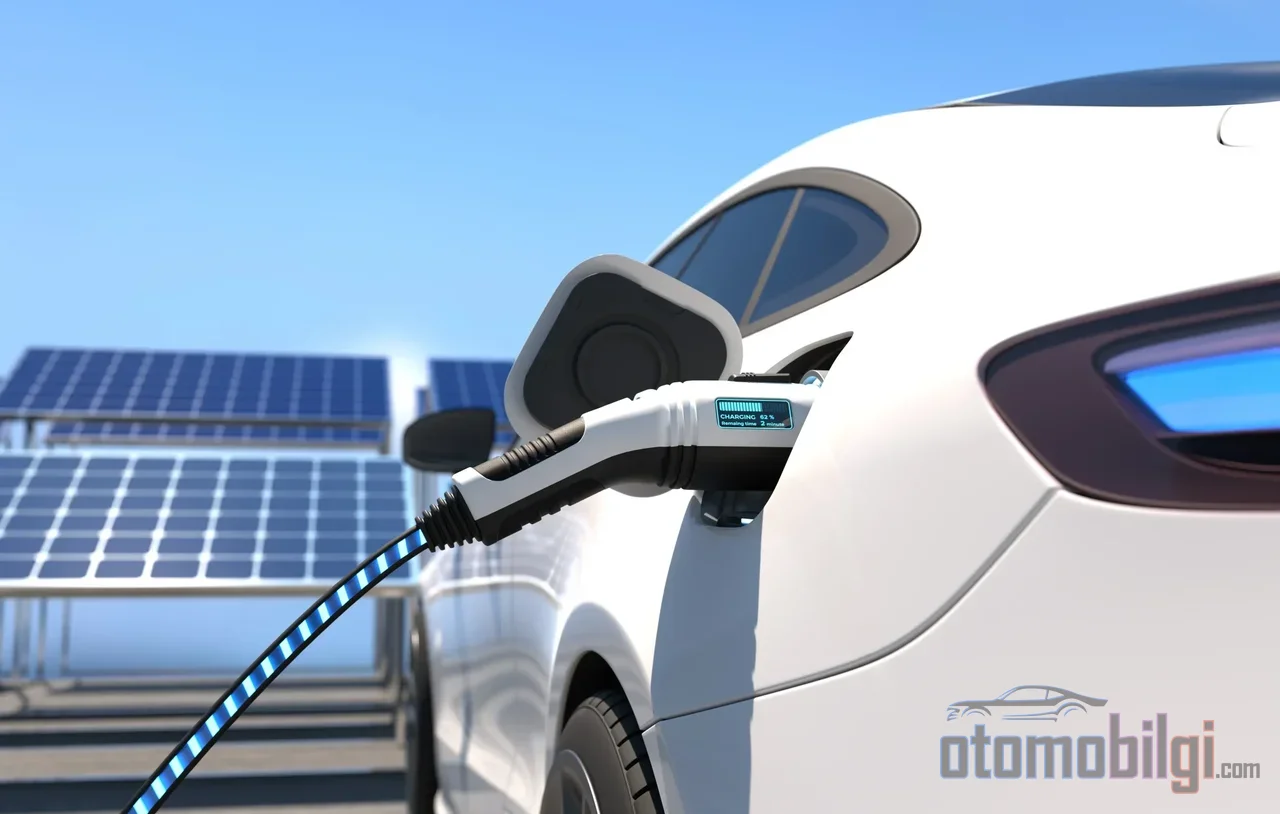
Your home solar panel system produces 5 kW at midday, the house consumes 2 kW, and the remaining 3 kW is sold at a low tariff. In the evening, however, you charge your vehicle with grid electricity priced at three to four times the selling tariff. This contradiction experienced by most solar system owners who drive electric vehicles is actually solved with a single chain of logic: instead of selling the surplus, directing it to the vehicle. On this page, we will cover, in order, the technical working principle of EV charging with PV surplus, the minimum equipment requirements, the panel count calculation, the charging modes, and the common misconceptions.
How Does Charging with PV Surplus (Surplus Charging) Work?
The essence of surplus charging is simple: instead of feeding the unused solar electricity to the grid, the wallbox directs it to the vehicle's battery. For this to work, the system must be able to measure the surplus. The way to do this is to install an additional electricity meter at the grid connection point. This meter measures in real time whether electricity is being fed into the grid or drawn from it. Wallboxes can detect the surplus within milliseconds; the value is either read by the meter connected to the wallbox itself or obtained from the inverter.
The measurement-control logic works through the following chain: as the surplus increases, the wallbox raises the charging current. When a stovetop is turned on at home or a cloud passes by, the usable surplus decreases and the wallbox lowers the current. Since this dynamic balance requires the entire system to work in harmony, choosing the components from the same manufacturer whenever possible provides a practical advantage.
A critical point: this capability lies not in the vehicle, but in the wallbox and the control system. All Type 2 connected electric vehicles can be charged with surplus charging. How many kilowatt-hours of energy per year come from the sun depends mainly on the hours the vehicle is parked at home, not on the vehicle's brand.
Key Highlights
- According to the IEC 61851-1 standard, the charging current is at least 6 A: on single phase ~1.4 kW, on three phase ~4.1-4.2 kW of minimum power.
- In a 730-household measurement, surplus charging increased the solar share used in charging by an average of 25 points; the average solar share was 53%.
- Grid electricity is 3-4 times the solar selling price in many regions.
- Not every smart wallbox performs PV tracking; a controllable wallbox plus a meter at the grid point (and usually an energy management unit) is required.
- Devices that do not switch phases scored ~10 points lower in the HTW Berlin performance index.
How Many Panels Provide How Much Charging?
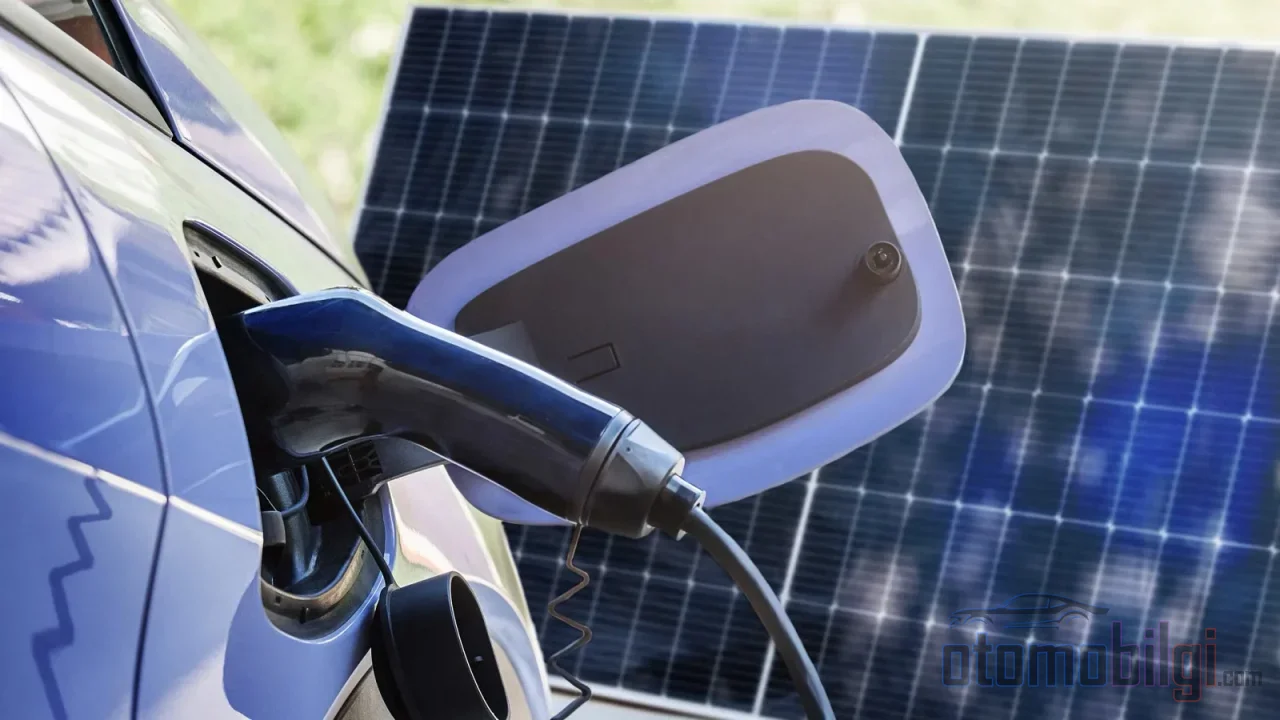
The calculation should start with the vehicle's consumption. Most electric vehicles consume 15-18 kWh per 100 kilometers. For a driver covering 50 km a day, this means roughly 8 kWh, and ~15 kWh for 100 km. With 40 km of daily use, the need drops to the 7-9 kWh band.
When we convert this to panel count, the picture becomes clear. For a daily charging need of 12 kWh, approximately 9 panels are calculated, assuming ~1.4 kWh of production per panel. In another approach, a 1 kWp panel produces 3.5-4.5 kWh per day. General estimates from sources concentrate in the average 5-14 panel range; 6-8 panels with high-efficiency panels, and 8-12 panels for a regular solar charging goal are typical values. A system of 6.6 kW and above is considered sufficient for most drivers.
The economic core is this: the solar electricity you generate yourself is the cheapest energy in your home. While selling surplus electricity in some markets is around 0.04-0.08 euros per kilowatt-hour, grid electricity that it replaces for vehicle charging is 0.16-0.28 euros. Selling cheap and buying back expensive squanders the system's biggest savings opportunity. In terms of scale, the average cost of a photovoltaic and self-consumption/vehicle charging system for 2026 is given in the 3,500-6,500 euro band.
Minimum Current Rule: The 6 Amp Threshold and Phase Selection
The 6 ampere base of IEC 61851-1
The standard sets the lower limit of the charging current that the wallbox will report to the vehicle at 6 amperes. Its conversion to power: approximately 1.4 kW on single phase, and 4.1-4.2 kW on three phases. Some vehicles do not start charging below 8 amperes; this is a detail that requires knowing your vehicle's behavior before choosing a device. When the surplus falls below this minimum, the wallbox either does not charge at all or draws support from the grid; the behavior varies from system to system.
Why automatic phase switching matters
A three-phase wallbox that operates fixedly on three phases has to wait until a surplus of 4.1 kW forms. Devices with automatic phase switching start single-phase at 1.4 kW with little surplus, and switch to three phases as power increases. This feature is strongly recommended by ADAC; without it, on fluctuating days charging constantly starts and stops, and some vehicles mistake this for a fault and cancel the process. In HTW Berlin's 2025 wallbox review, the performance indices - the measure of cost savings - of devices that do not switch phases and operate purely on three phases came out about 10 points lower according to the calculations. A small paradox: single-phase charging units in vehicles are generally less efficient than three-phase ones, meaning starting early has a small efficiency cost.
A single-phase wallbox, on the other hand, has no phase annotation problem; it already starts at 1.4 kW but its ceiling is limited to 7.4 kW. Some devices on the market go down to an even more sensitive threshold: for example, one manufacturer's Eco mode starts charging with a surplus of about 460 W (2 A); its Full Green mode charges entirely from solar only if there is sufficient surplus. Tesla's in-app surplus charging feature works only with Tesla Powerwall and requires at least 1.2 kW of stable surplus; the Wall Connector alone is not sufficient for this task.
What Is the Minimum Equipment to Start With?
The mandatory minimum is three parts: a controllable wallbox, a meter measuring the surplus at the grid connection point, and in most systems a small energy management unit. Surplus charging is technically impossible without a meter; without knowing how much current flows in which direction, you cannot establish control logic. A fixed installation must be done by a licensed electrician, the wallbox must be registered with the grid operator, and the inverter-wallbox compatibility must be confirmed from the manufacturer's documentation.
Device ecosystems are concrete examples of this logic: Models that go up to 22 kW, charge with surplus from 1.38 kW, and automatically switch phases require their own manufacturers' inverter and smart meter, while some work with a hybrid inverter and power sensor combination. The selection criterion is simple: which set of components closes the measurement-control chain completely and matches your vehicle's minimum current behavior.
Partial Solutions with a Standard Wallbox
If you already have a wallbox without PV tracking, you don't need to throw it all away. Devices that offer an open interface can be controlled with open-source energy management software such as EVCC. One example approach from user experiences is this: fill the battery to 70% with normal grid charging first, then complete the remaining part to 85% using only the surplus. Some portable charging units claim surplus charging without extra hardware; such claims remain at the level of user experience and should be verified before purchase.
The home battery topic is often asked: it is not necessary, because the vehicle is already a big battery on wheels. However, charging with solar in the evening-night hours is only possible if there is a home battery; in this case, the vehicle competes with the home battery for the solar surplus, and the priority order is adjustable in most systems. A reminder: the power on the wallbox is the device's upper limit, it does not mean the system will produce that power at all times. The actual charging power is limited by the vehicle's charging unit and the current generation; an 88.5 kWh battery fills in about 5.5-6 hours with 11 kW AC.
Charging Modes and the Cloudy Weather Reality
Systems usually offer three modes, and choosing the right mode depends on your usage pattern:
- Pure surplus mode: the cheapest option, but dependent on the weather and the time of day; it only charges when there is sun.
- Surplus + minimum grid power: always charges a little even if the surplus is insufficient, part of the electricity comes from the grid.
- Hybrid mode with target time: a goal is set such as the vehicle being full by 7 a.m. tomorrow; the system uses the sun to the maximum and completes the shortfall from the grid.
There are two common fears about cloudy weather, and neither is well-founded. The first: panels also produce on cloudy days, output drops compared to direct sunlight (sources mention a drop in the 20-65% range), but it does not fall to zero. The second: charging stopping as a cloud passes is not a malfunction, it is the system's normal behavior. The power breathes with the weather; fast in the sun, slow in the clouds, nonexistent in the evening. The expectation of uninterrupted charging at a steady speed is the source of the most common disappointment on this subject. That is why installers often set up the hybrid mode with a target time as the best compromise for solar charging: for drivers who commute during the day and cannot park the vehicle at home at midday, pure surplus mode is insufficient in practice.
A subtle issue that requires attention is the vehicles' sleep mode. During idle waiting, some electric vehicles can enter a deep sleep and may not respond when charging starts; minimum power settings and sleep mode behavior must be addressed during setup. Also, idle consumption of 2-5 W is considered low and does not meaningfully affect the total savings calculation.
Common Misconceptions and Planning Mistakes
- Not every smart wallbox performs PV tracking. Being smart means being controllable from an app; surplus charging is a separate capability and is impossible without a meter at the grid point. Simple chargers charge at a fixed power.
- Filling every day entirely with solar is not realistic. Capacity calculation must be done together with panel production and the actual charging schedule.
- Coordination with large consumers is essential. A heat pump, water heater, or home battery demands the same surplus; when components are run side by side without defining a priority order, the system is not efficient.
Is Surplus Charging Worth It? Short Answer
Let's answer the question in a single sentence: By charging with PV surplus instead of selling electricity to the grid at a low tariff, you replace the most expensive energy with the cheapest, and dynamic surplus control increases the solar charging share by an average of 25 percentage points. Yes, charging temporarily slows down; power adapts to the available surplus, and this is simply the price of using your own cheap electricity. It is worthwhile even in small systems, because it uses energy that would otherwise go to the grid; charging becomes less and slower, closing the hybrid mode gap. If the vehicle is not at home, the surplus is not wasted either - it is automatically fed into the grid.
The practical conclusion is summarized in three points: make PV compatibility the central criterion when choosing a device, clarify automatic phase switching and your vehicle's minimum current behavior in advance, and set up the mode that fits your daily schedule (for most users, hybrid mode with target hours). Surplus charging stands out as the most frequently used feature in customer surveys by manufacturers like go-e; the reason is simple: when its logic is set up correctly, it becomes the part of the system that pays for itself financially the fastest.
Sources
- Wallbox with surplus PV charging: How it works - ACTEC
- Surplus charging: charging only with your own solar power
- Best Wallboxes for Solar Surplus Charging in 2026
- How to Properly Plan a Wallbox with PV Surplus Charging
- Solar Charging - Activation and User Guide - Wallbox Support
- How Solar-Powered EV Charging Is Driving The Future Of Home Energy
- How Many Solar Panels Do You Need to Charge an EV?
- Charging an EV from solar surplus: how it works
- How To Prevent Your EV From Falling Asleep When Solar
- Guide to EV Charging with GES