Single-Phase or Three-Phase? The Difference That Determines Your Charging Speed at Home
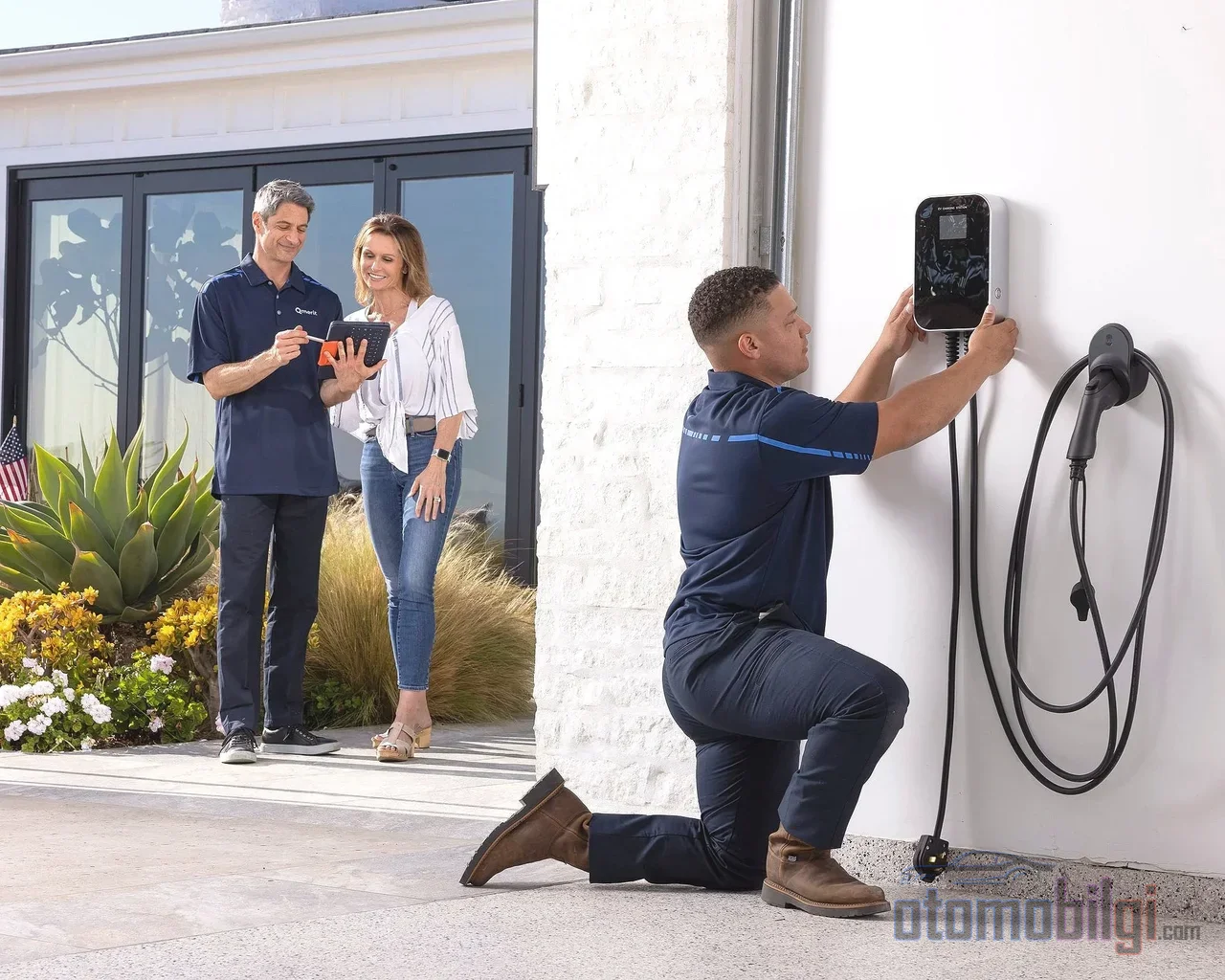
The first decision before buying a wallbox is usually the power choice: 7.4 kW, 11 kW, or 22 kW? Yet what really determines these figures is not the device's label but the phase structure of your home's electrical installation. At the same current value, a three-phase connection carries roughly three times more power than a single-phase connection; compared at 32 amps, the gap can open up to sixfold. In other words, the wall-mounted device's capacity is only the ceiling; the installation is what actually sets the speed. In this article, we cover in order the difference between single-phase and three-phase, how power is calculated, why your car sometimes charges at half the device's speed, and in which cases switching to three-phase makes sense.
Single-Phase and Three-Phase: The Math of the Power Difference
Single-phase (monophase) is the most common electrical connection in homes. A single alternating current wave is transmitted via two conductors, one phase and one neutral wire, at 230 volts. In this setup, the power a charger can draw is found by multiplying voltage by current: about 3.7 kW at 16 amps, and about 7.4 kW at 32 amps.
Three-phase (triphase) means three alternating currents flowing 120 degrees out of phase with one another. The line-to-line voltage rises to 400 volts, and power reaches roughly three times the product of voltage and current. The same 16-amp draw delivers 11 kW on three phases, and at 32 amps 22 kW. In other words, a 32-amp three-phase connection carries six times more power than a 16-amp single-phase connection.
Beyond the numbers, there is also a physical advantage: in a three-phase system, at least one phase is always at peak voltage, so power transmission is smoother. In single-phase, the voltage fluctuates with the wave; this does not make charging impossible, but it explains three-phase's efficiency advantage.
| Connection Type | Current | Typical Charging Power |
|---|---|---|
| Single-phase, 230V | 16A | 3.7 kW |
| Single-phase, 230V | 32A | 7.4 kW |
| Three-phase, 400V | 16A | 11 kW |
| Three-phase, 400V | 32A | 22 kW |
Highlights
- Single-phase homes usually cap at 7.4 kW; three-phase homes at 11-22 kW
- 32A three-phase delivers six times more power than 16A single-phase
- Most electric vehicles are limited to 11 kW on the AC side; cars accepting 22 kW are a minority
- The real charging speed is determined by the lowest limit among the car, the device, and the installation
- Plug-in hybrids mostly accept only single-phase 3.7-7.4 kW
The Onboard Charger Bottleneck: Not the Device, the Car Is the Limit
The wallbox's power label is merely a permit document. What really determines how much the car draws in AC charging is its onboard charging unit (OBC). This unit converts alternating current into the direct current the battery accepts, and it also defines how many phases the car can use. The weakest link in the chain sets the speed: the lowest power supported by the device, the installation, and the car becomes the real charging power.
Two practical rules follow from this. First, when a device supporting 22 kW is connected to a car with an 11 kW OBC, charging still stays at 11 kW; this is not a fault, it is the vehicle's own limit. Second, phase mismatch: a single-phase OBC vehicle charges only on one phase at a three-phase station, while a three-phase OBC vehicle still charges on only one phase at a single-phase station. In both cases, no matter how many phases the interconnection allows, the vehicle cannot exceed its own capacity.
The distribution across vehicle classes is also clear: most fully electric models are limited to 11 kW (three-phase 16A) on the AC side, with vehicles accepting 22 kW AC being a minority. Plug-in hybrids, on the other hand, usually accept only single-phase 3.7 kW or 7.4 kW. When it comes to cable choice, flexibility is free: a 32A cable does not charge the vehicle faster, it only allows it; it can be used safely with 16A vehicles and points.
How Long Does It Take to Charge? Real Charging Times
The translation of the power difference into daily life shows most clearly in the times. Consider a 50 kWh battery: a full charge at 7.4 kW single-phase takes about 7 hours, while at 22 kW three-phase the time drops to just over two hours. Filling a 60 kWh vehicle's battery from 20% to 80% takes about 5-6 hours at 7.4 kW single-phase; at 11 kW three-phase it takes about 3.5 hours. For the same 60 kWh, on a 22 kW installation this window drops to 2.5-3 hours.
With larger batteries the difference becomes even more tangible. A 75 kWh vehicle gains about 75 km of range per hour at 11 kW and completes a full charge in around seven hours; at 22 kW it gains about 150 km of range per hour and the time is cut in half. For comparison: a basic 3.6 kW home charger can spread the same job over about 16 hours. Still, perspective matters - while DC fast charging allows 20-30 minute fills, home charging is by nature a long and calm overnight charge. For someone driving 15-20 km throughout the day, even 3 kW is often enough for overnight charging; the speed difference mainly comes in handy in scenarios requiring a top-up during the day.
Is My Home's Wiring Three-Phase? How to Tell
Look at the electricity meter
The quickest method is the meter label. If the meter reads 220/230V, the connection is single-phase; if it reads 380/400V or 3×220/380V, it is three-phase. If you want to be sure, you can call your electricity distribution company and ask about your subscription type; the phase information is included in the records.
Read the fuse panel
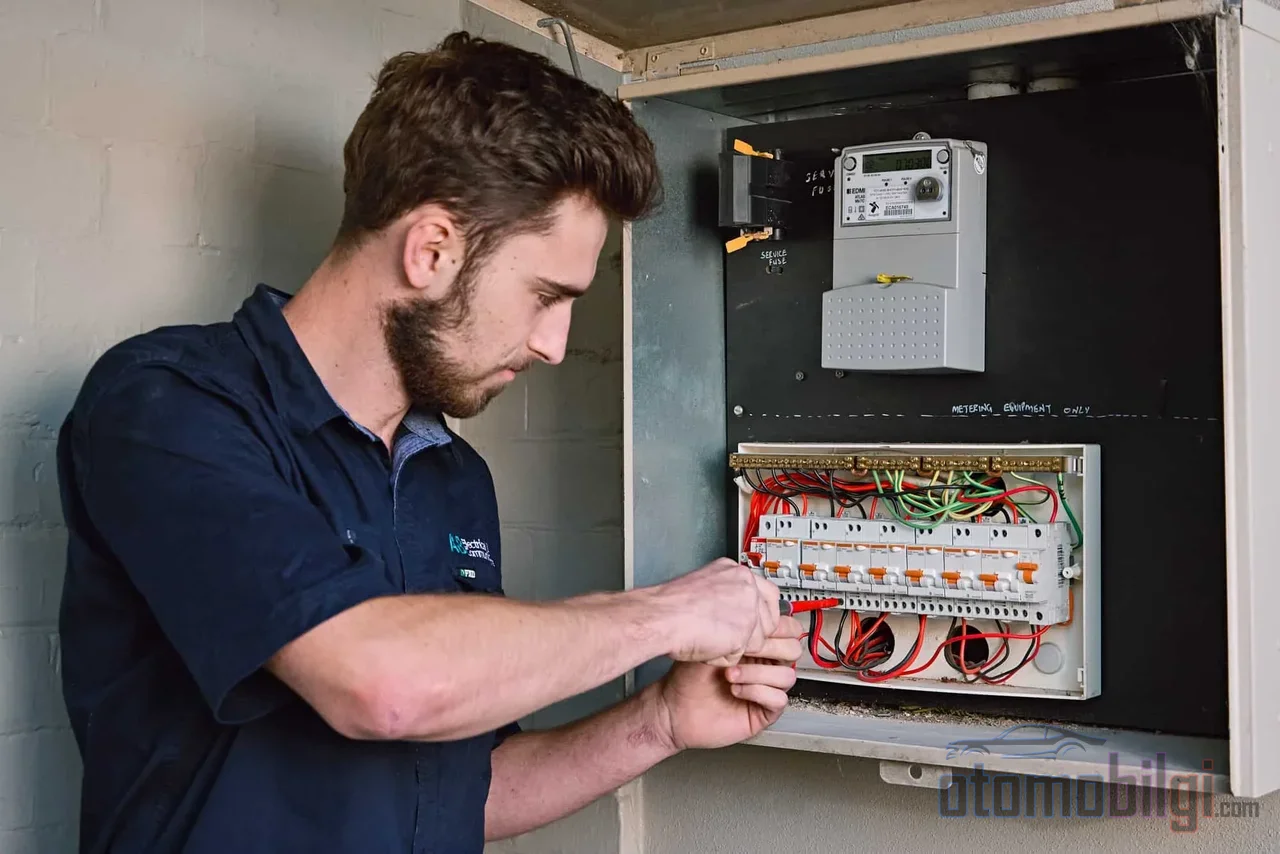
If the panel shows a single main switch and only L1 and neutral (N) conductors, the connection is single-phase. If the main entrance has three phase conductors L1-L2-L3 and the fuses are typically arranged in three groups, it is three-phase. An alternative check is the number of inputs on the residual current device or main fuse: a four-pole switch usually indicates a three-phase connection.
Relying on cable colors is the weakest method. According to the current standard, L1 is brown, L2 black, L3 gray, neutral blue, and ground green-yellow; but especially in older buildings this arrangement may differ, and an actual measurement must be made before any work.
Switching to Three-Phase: The Balance of Cost and Logic
If your home is single-phase and you are aiming for more than 11 kW, you will need to request a three-phase connection from your regional electricity distribution company. This process is not just a matter of submitting an application: the meter, main fuse and, in apartment buildings, the building riser may need to be replaced; the riser's capacity is checked, and project approval is obtained if necessary. Once the connection is complete, the existing single-phase circuits inside the home are distributed evenly across the three phases - and this distribution matters, because a single overloaded phase can trip the fuse, force excessive current through the neutral conductor, and destabilize the voltage. When a large load such as EV charging is added to the panel, rebalancing the loads is standard practice.
On the cost side, it is hard to draw a transparent picture, because the cost of the transition is not limited to subscription and connection fees; electrical installation labor and new equipment are also added to the items. While official items such as disconnection-reconnection and new connection fees remain at relatively low amounts, the real weight of the job lies in the in-home electrical work. For an honest estimate, you need to get a price from an electrician before applying, based on the scope of the work.
There is also a management dimension: when multiple vehicles at the same home charge on a single phase, imbalance between phases can occur. Smart wallbox load-balancing software dynamically adjusts charging speeds to prevent phase overload and exceeding the home grid's connected load limit. When the limit is exceeded, the result is simple: the fuse trips or the home experiences a brief outage.
Single-Phase or Three-Phase? Which Speed to Expect in Which Home
At the end of the article, let us wrap up the clear answer to the question. The electrical connection at home directly grades charging speed: on a single-phase installation, the realistic ceiling is 3.7-7.4 kW, a speed that comfortably fills a 60 kWh battery overnight. A three-phase installation multiplies the power by two to three times at the same current, opening up the 11-22 kW band. If your vehicle comes with a single-phase OBC, it will charge at single-phase speed even at a three-phase station; if your vehicle supports three-phase 11 kW, installing a 22 kW unit will not increase the speed. The real speed is always equal to the lowest common value supported by the vehicle, the unit, and the installation.
The decision logic also follows from this table. For a household with a single vehicle charging once a night, 11 kW is more than enough; most vehicles' OBCs are already limited to this level. 22 kW only makes sense if your vehicle actually accepts 22 kW AC and in intensive-use scenarios where the vehicle needs more than one charge during the day. The switch to three phases should be read as an infrastructure investment whose importance grows not only for today's speed, but as batteries get bigger and solar panel and energy storage integration becomes widespread. First check your vehicle's OBC capacity, then your installation's phase - the order should be exactly that.
Sources
- Single-Phase vs Three-Phase EV Charging
- 1-phase vs 3-phase charging & 16A vs 32A - Voldt®
- Understanding single and 3 phase EV charging
- Single-Phase vs Three-Phase: Differences, Power and EV ...
- Single Phase Vs Three Phase EV Charger: The Ultimate ...
- An 11 kW or a 22 kW wallbox - Mobility House
- Three-Phase or Single-Phase? - Mube Energy
- 11 kW or 22 kW? Wallbox Power Selection - Bemis
- Electric car charging times - Daze
- How Long Does It Take to Charge an Electric Car? - Pod Energy